
How to style vintage furniture is a question that comes up the moment you fall in love with a piece that already has a past. A carved sideboard, a leather armchair softened by decades of use, or a solid oak table with a few honest scratches can give a room something new furniture rarely offers: character. The trick is not to fill your home with old things, but to let each vintage piece earn its place, balanced by colour, scale and a little restraint.
Learning how to style vintage furniture well starts with a shift in mindset. Instead of asking whether a piece looks old, ask what it brings to the room. Warmth? Texture? A sense of history? When you can answer that, the rest of the styling decisions become much easier, and your home ends up looking collected rather than cluttered.
It also helps to think room by room. How to style vintage furniture in a hallway is very different from how to style vintage furniture in a busy family kitchen, because the demands on the piece change. A console that only holds keys and post can be purely decorative, while a dining table must survive daily meals, homework and the occasional spill. Let the job shape the styling.
Start With One Hero Piece
Every successful vintage room has a clear focal point. When you are learning how to style vintage furniture, resist the urge to buy five pieces at once. Choose one hero item, live with it for a while, and let it set the tone for everything that follows. A good first lesson in how to style vintage furniture is simply to observe the piece in your own light, at different times of day, before deciding what should sit beside it.
Let the Hero Piece Set the Tone
A hero piece should be the largest or most distinctive item in the room: a mid-century sideboard, an upholstered wing chair, or a farmhouse dining table. Place it first, then build the room around it. If the piece is dark wood, lighter walls and soft textiles will keep it from feeling heavy. If it is ornate, simpler companions will let its details shine.
Check Scale Before You Fall in Love
Vintage furniture was often built for larger rooms with higher ceilings, so measure twice. Leave at least 75 cm of walking space around major pieces, and check that doors, stairwells and hallways can actually accommodate the item on delivery day. A beautiful sideboard that blocks a walkway will never feel right, no matter how good it looks.
One practical part of how to style vintage furniture is learning to edit. If a piece arrives and the room suddenly feels crowded, move something modern out rather than squeezing everything in. Vintage pieces need breathing room to be appreciated, and a little empty space around them actually makes them look more valuable.
Mix Eras Without Creating Chaos
The most inviting vintage rooms are rarely from a single decade. A 1960s teak cabinet can sit happily beside a contemporary sofa, and a Victorian mirror can work above a modern console, provided something ties them together. Much of how to style vintage furniture comes down to this one skill: spotting the thread that connects pieces from different eras.
Follow a Simple 70-30 Rule
A useful guideline is to keep roughly 70 percent of a room in one dominant style and let vintage pieces make up the remaining 30 percent. That balance keeps the room feeling current while the older pieces add depth. If the proportions flip, the space can start to feel like a museum rather than a home.
Find One Common Thread
When mixing eras, repeat one element across the room: a wood tone, a metal finish, or a colour. Brass handles on a vintage cabinet echo nicely in a modern brass floor lamp, and the warm oak of an old table can be picked up in a new picture frame. These small echoes are what make mixed rooms feel intentional.
This is also where many people get stuck on how to style vintage furniture: they worry that mixing a 1930s mirror with a 1970s chair breaks some rule. It does not. What matters is that the pieces share a mood, whether that is warm and rustic or sleek and tailored. If the mood matches, the decades take care of themselves.
Build a Colour Palette That Flatters Old Wood
Colour is the fastest way to make vintage furniture feel at home. Old wood, aged leather and patinated metal all have warm undertones, so they respond best to palettes that share that warmth.
Use Warm Neutrals as a Base
Warm white, soft cream, greige and pale sage are forgiving backdrops for vintage pieces. They let the grain of the wood and the texture of old upholstery take centre stage, and they make small rooms feel brighter. Save bold colour for accents such as cushions, art and ceramics.
Repeat Wood Tones, Don’t Match Them Exactly
Perfectly matching wood finishes can look flat and showroom-like. Instead, aim for wood tones in the same family: warm walnut with honeyed oak, or dark mahogany with lighter teak. The variation reads as collected over time, which is exactly the feeling vintage styling should create.
Colour also solves one of the most common problems in how to style vintage furniture, which is a piece that feels too dark or heavy for its room. A pale wall behind it, a light rug beneath it, and one or two bright cushions nearby will lift it immediately, without any need to repaint or refinish the piece itself.
How to Style Vintage Furniture in Living Rooms
The living room is where most people first try out vintage styling, and it is also where mistakes are most visible. Keep seating comfortable, keep surfaces styled but usable, and let one or two pieces carry the vintage story. If you are wondering how to style vintage furniture without making the room feel old-fashioned, the answer is almost always contrast: one vintage anchor, surrounded by fresh, simple companions.
Style a Sideboard Like a Vignette
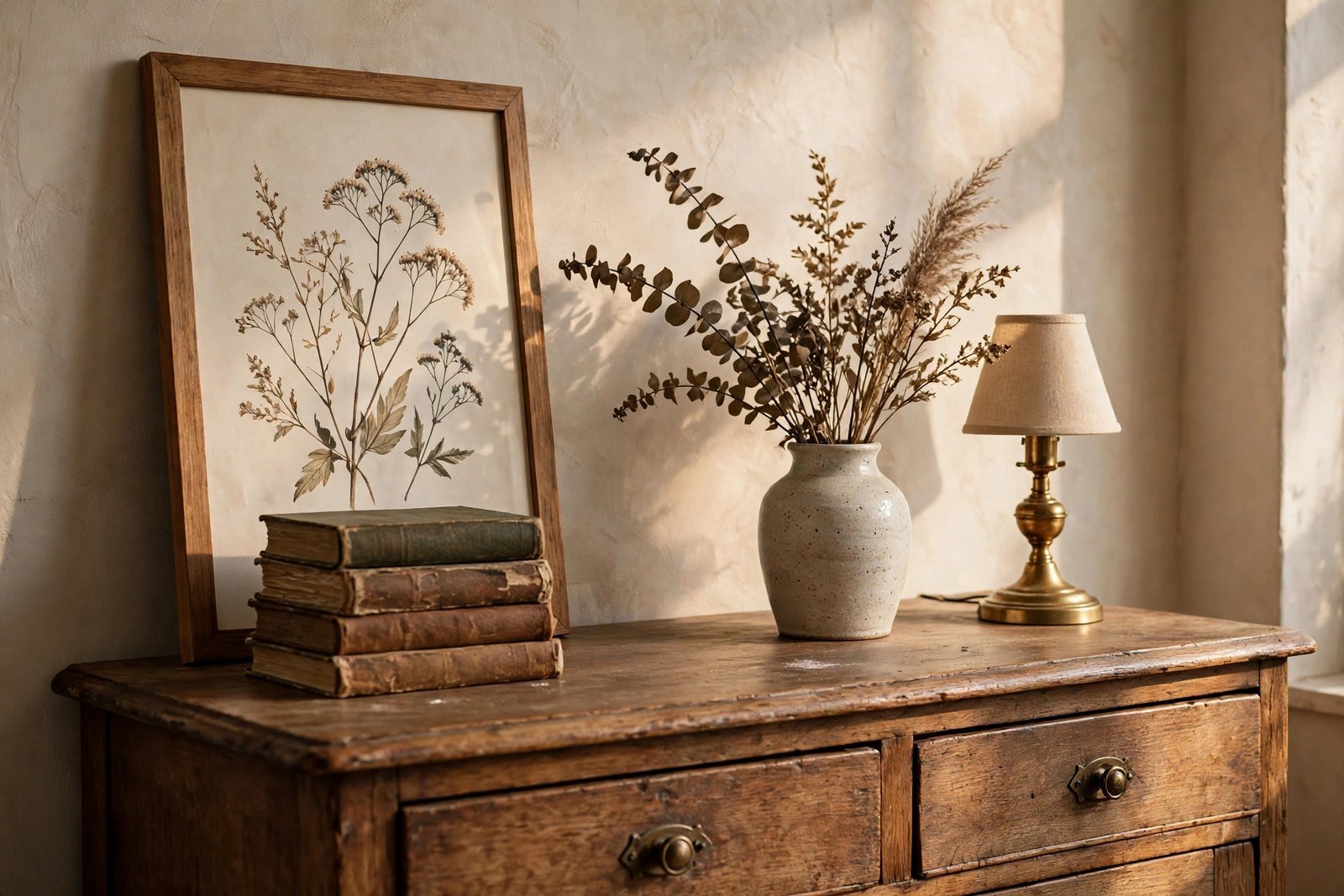
A vintage sideboard is a gift to anyone who likes styling surfaces. Start with a tall anchor, such as a mirror or a large piece of art leaning against the wall. Add a medium-height element, like a stack of books or a ceramic vase, then finish with something small and personal, such as a candle or a framed photograph. Step back and remove one item: the rule of three groupings usually beats a crowded display.
Pair Vintage Seating With Modern Comfort
Old armchairs look wonderful, but their cushions are not always kind to modern backs. Add a plump cushion in a contemporary fabric, drape a soft throw over one arm, and place a modern side table within reach. The chair keeps its character, and the room stays genuinely comfortable. If you are considering a painted finish for a tired wooden piece, these painted furniture ideas show how colour can give an old frame a second life without hiding its shape.
Lighting deserves special attention when you are deciding how to style vintage furniture in a living room. A warm-toned table lamp or a pair of wall lights will flatter old wood far better than harsh overhead lighting, and a soft pool of light over a sideboard vignette makes the whole display feel deliberate in the evening.
Take Vintage Style Into Dining Rooms and Bedrooms
Once the living room works, the same principles travel well. Dining rooms and bedrooms both benefit from the warmth of older pieces, as long as you keep everyday function in mind. Learning how to style vintage furniture in these private rooms is mostly about restraint, since comfort matters even more here than in showpiece spaces.
Create a Dining Table That Invites Lingering
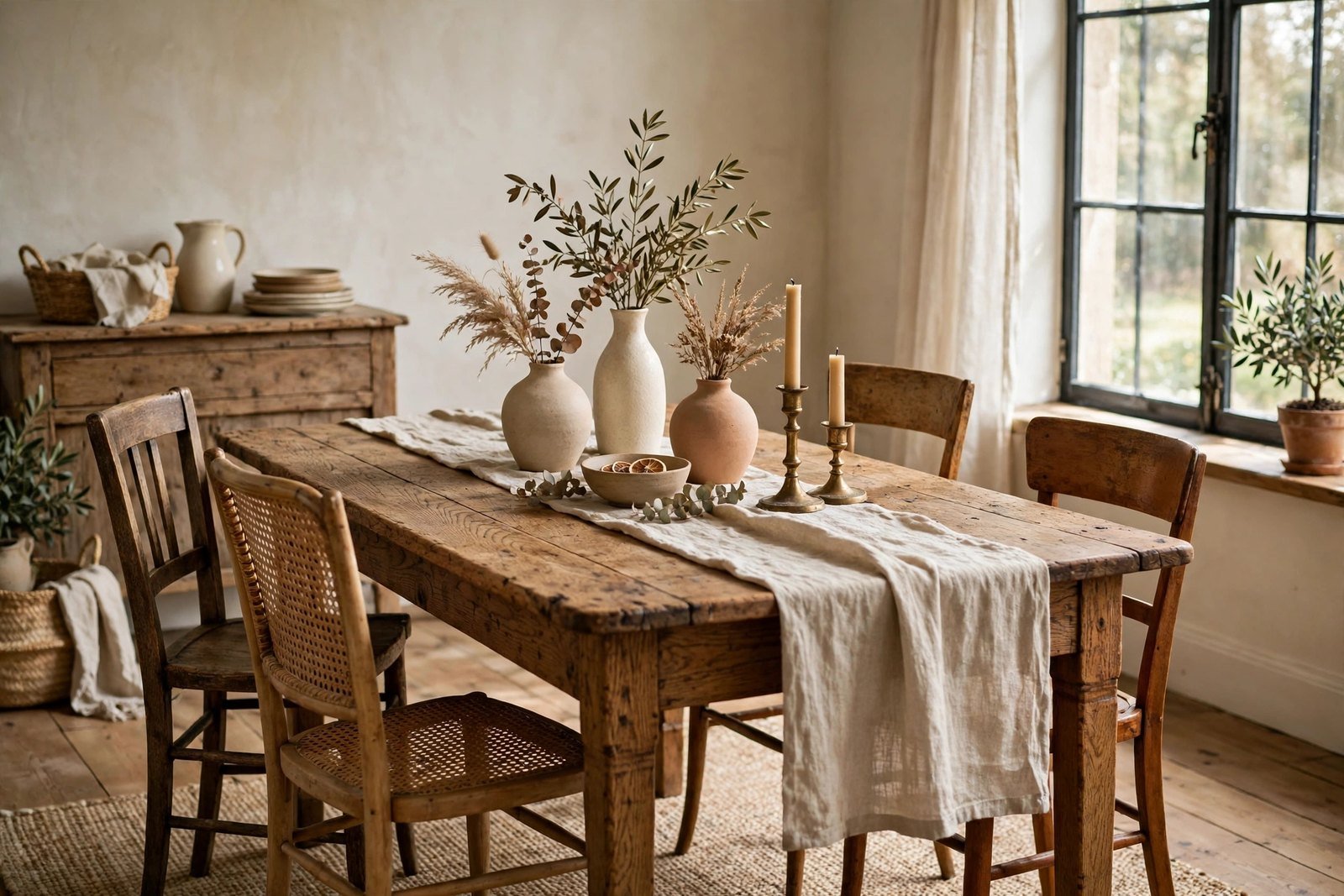
A vintage dining table does not need matching chairs. In fact, a set of mixed wooden chairs in similar tones often looks more relaxed and welcoming than a perfect set. Keep the centrepiece low so guests can see each other, use a simple linen runner, and add candles or a bowl of seasonal fruit for colour.
Let the Bedroom Stay Calm
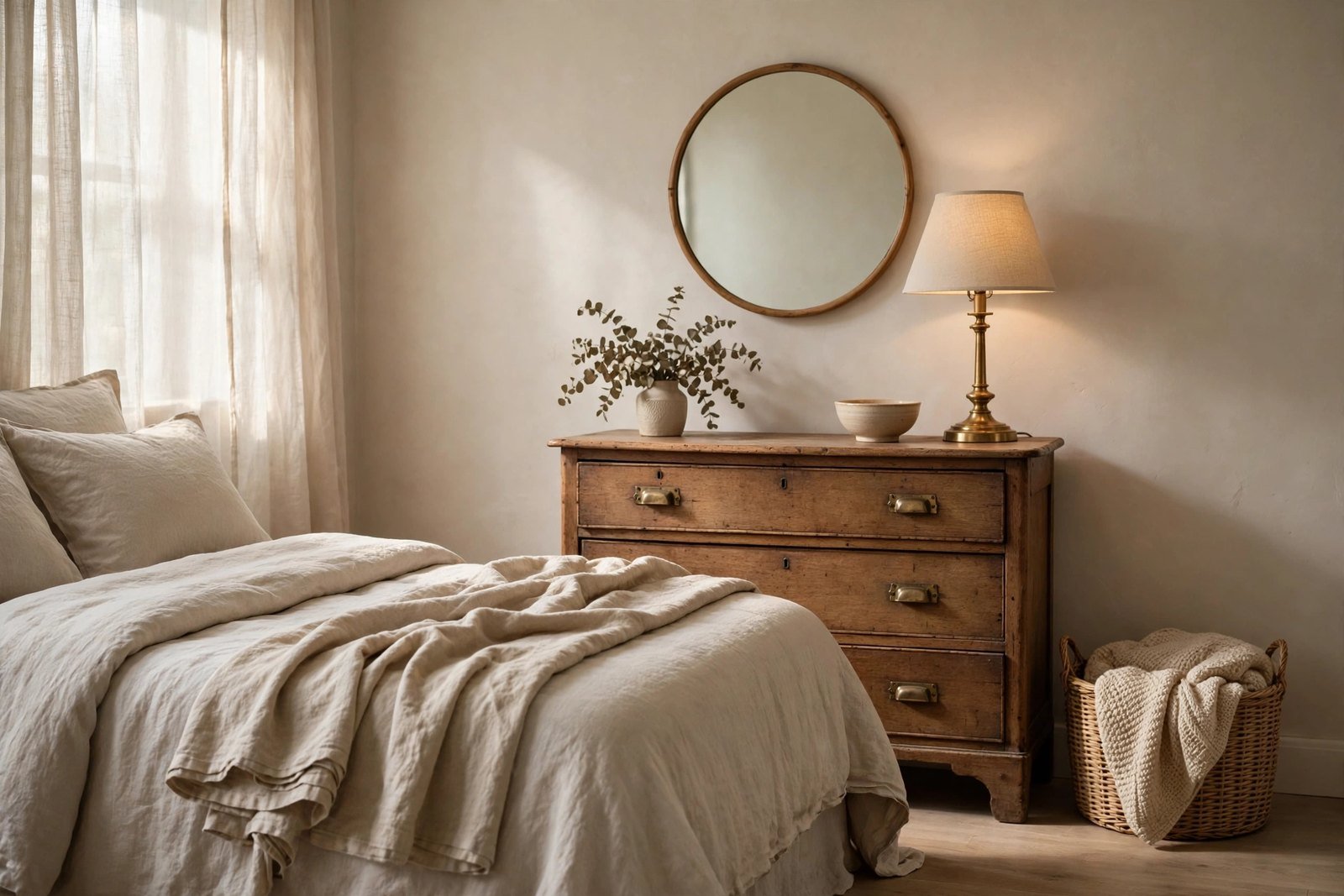
In bedrooms, vintage pieces work best when they are quiet rather than showy. A wooden dresser with a round mirror, a pair of bedside tables that do not quite match, or an old blanket box at the foot of the bed all add warmth without disturbing rest. Keep bedding simple and pale so the wood remains the star.
Anyone learning how to style vintage furniture in a bedroom should also think about texture. Linen bedding, a wool throw and a woven rug soften hard wooden surfaces and stop the room from feeling formal. The contrast between crisp modern bedding and an old wooden frame is one of the easiest wins in vintage styling.
Make Vintage Work in Small Spaces
Small rooms and vintage furniture can be a happy combination, but only with discipline. One generous piece usually serves a small space better than several small ones, which can quickly look like clutter. The golden rule of how to style vintage furniture in a small room is to let the piece breathe: clear the floor around it and keep neighbouring surfaces calm.
Choose Pieces That Work Twice as Hard
Look for vintage furniture with built-in storage: a sideboard that hides board games and table linens, a trunk that doubles as a coffee table, or a secretary desk that closes away a workspace. Multi-purpose pieces earn their floor space, and they keep small rooms tidy.
Use Light and Mirrors to Keep Things Airy
Dark vintage wood can absorb light, so balance it deliberately. Hang a mirror opposite a window, choose sheer curtains, and keep at least one light source at eye level, such as a table lamp on the sideboard. These moves stop a room full of character from feeling dark or closed in.
Small-space styling is a good test of how to style vintage furniture with restraint. Choose the single best piece for the room, style it well, and let everything else stay simple. One beautiful vintage cabinet in a calm room makes a far stronger impression than three competing pieces in a crowded one.
Buy Smart, Care Well, and Keep It Personal
Good vintage styling does not end at the shop door. Knowing how to check a piece before buying, and how to care for it afterwards, is what keeps it beautiful for another generation. In fact, knowing how to style vintage furniture and knowing how to look after it are two sides of the same skill, since a well-cared piece always styles more easily.
Check Joints, Drawers and Smell Before Buying
Open every drawer, wiggle every leg, and look underneath for repairs or woodworm. Solid joints, smooth drawers and a clean, dry smell are good signs. Surface scratches are easy to live with and often add charm, but wobbly frames and damp damage are harder fixes. For a broader look at sourcing and restoring older finds, this guide to decorating with vintage and antique finds covers eras, restoration basics and integration ideas in one place.
Clean Gently and Protect the Patina
Most vintage wood needs little more than regular dusting and an occasional wipe with a barely damp cloth, followed by a dry buff. Avoid harsh sprays and silicone polishes, which can build up and dull the finish. A little beeswax, applied sparingly once or twice a year, will feed the wood and keep its glow without erasing the patina that makes it special.
Budget for Character, Not Perfection
The best vintage rooms are built slowly. Set a realistic budget per piece, leave room for small repairs or reupholstery, and be patient: the right item at a fair price is worth waiting for. Thrift shops, auctions, estate sales and local marketplaces all reward regular browsing, and a piece you hunted for will always mean more than one bought in a hurry.
At its heart, knowing how to style vintage furniture is about confidence: trust one good piece, give it room to breathe, and surround it with colours and textures that let it shine. Mix eras with a light hand, keep function first, and let your home grow piece by piece. The result is a room that feels warm, personal and quietly timeless, a place where every item has a story and still earns its keep today.
If you take one lesson from this guide on how to style vintage furniture, let it be patience. The best vintage rooms are never finished in a weekend; they grow as you find pieces you truly love, and each new arrival has a ready-made home waiting for it.