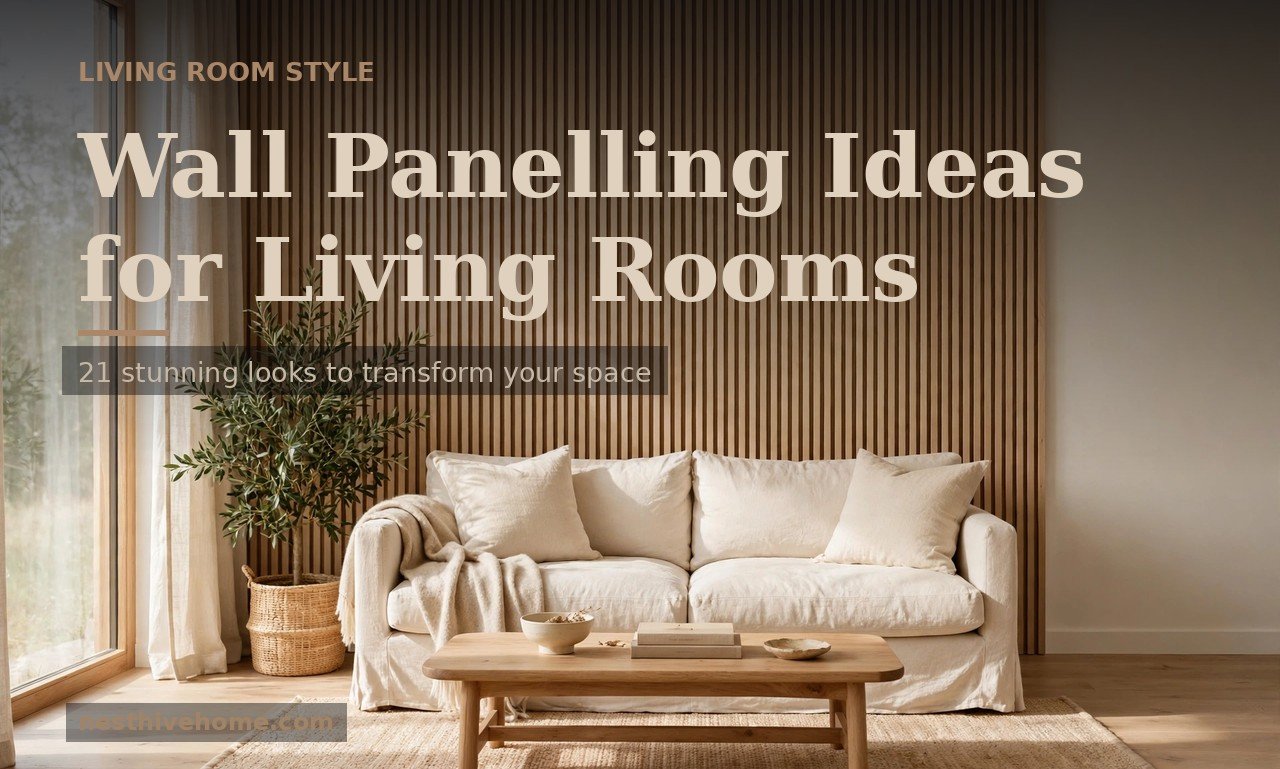
Wall panelling ideas living room owners actually love all share one thing: they treat the wall as part of the furniture, not as a blank background. Add slim oak slats, a painted grid of moulding or a run of white shiplap, and the same sofa, rug and lamp suddenly look deliberate. Panelling adds texture, shadow and craft that paint alone cannot match.
The trick is choosing a style that fits your room rather than copying a photo. Ceiling height, light, furniture and budget matter more than the trend of the month. This guide covers 21 practical ideas, grouped by style, then materials, costs and the mistakes to avoid.
Classic Wall Panelling Ideas Living Room Owners Love
Classic panelling never goes out of fashion because it is based on proportion, not decoration. These are the wall panelling ideas living room owners return to most often, and they work in period homes and modern rooms alike.
1. Board and Batten for a Clean, Tailored Look
Board and batten is the easiest classic to live with. Flat boards sit on the wall and slim battens run over the joints in a simple grid. Painted the same colour as the wall, it reads as quiet texture; a shade darker, it becomes a feature.
2. Picture-Frame Moulding for Instant Elegance
Picture-frame moulding is slim trim applied in rectangles, yet it changes a room more than almost any other single detail. It works best on a large, unbroken wall, where the frames can be generous.
3. Wainscoting With a Chair Rail
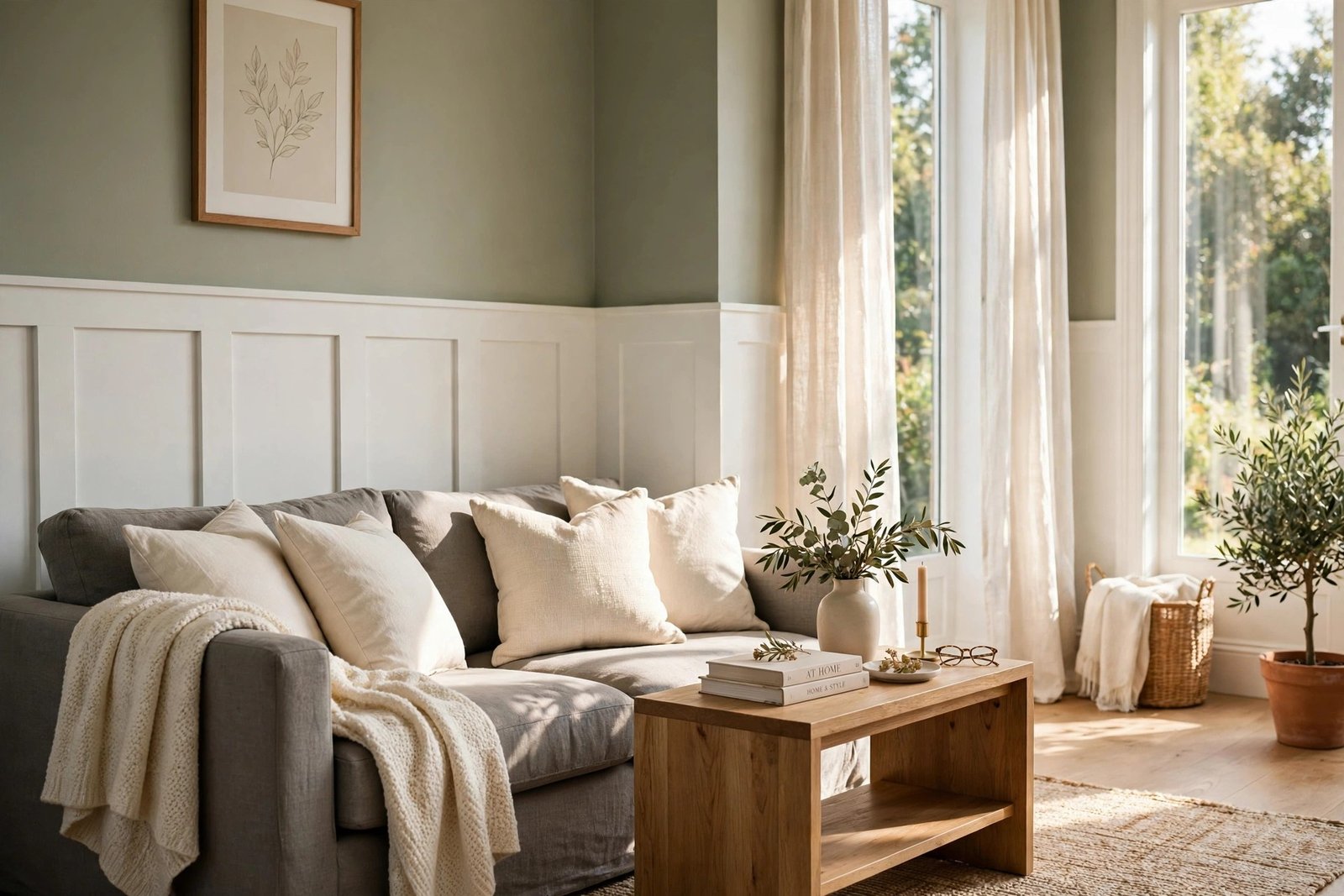
Wainscoting covers the lower third of the wall and finishes with a chair rail, a slim trim that gives the eye a resting line. It is practical as well as pretty: the lower wall takes the knocks from shoes, toys and vacuum cleaners.
Modern and Minimalist Panelling
Modern wall panelling ideas living room designers reach for tend to be flatter, simpler and more architectural. The lines are straight, the gaps are even, and the material does most of the talking.
4. Vertical Wood Slats for Warmth and Height
Vertical slats are among the wall panelling ideas living room designers recommend most for small spaces. Narrow oak or walnut battens run floor to ceiling with a small, even gap, drawing the eye upward and making the ceiling feel higher.
5. Fluted Panels for Soft, Rippling Texture
Fluted panels are half-round ridges set side by side, and they catch light in a way flat panels never do. In the morning they look soft and pale; in evening lamplight they throw gentle shadows.
6. Flat Shaker Panels for a Calm, Contemporary Feel
Shaker-style panels are flat rectangles with a simple recessed edge, bringing order without ornament. They suit new-build living rooms that feel plain, adding structure without pushing the room toward a period look.
7. Slim Shadow-Gap Panels for a Gallery Look
Shadow-gap panelling uses large flat panels separated by a narrow dark recess, so each panel appears to float. The effect is quiet and architectural, closer to a gallery wall than to traditional joinery.
Rustic and Cosy Panelling
Rustic wall panelling ideas living room schemes use texture and natural materials to make a room feel sheltered. These are the styles to reach for when a living room feels cold or echoey.
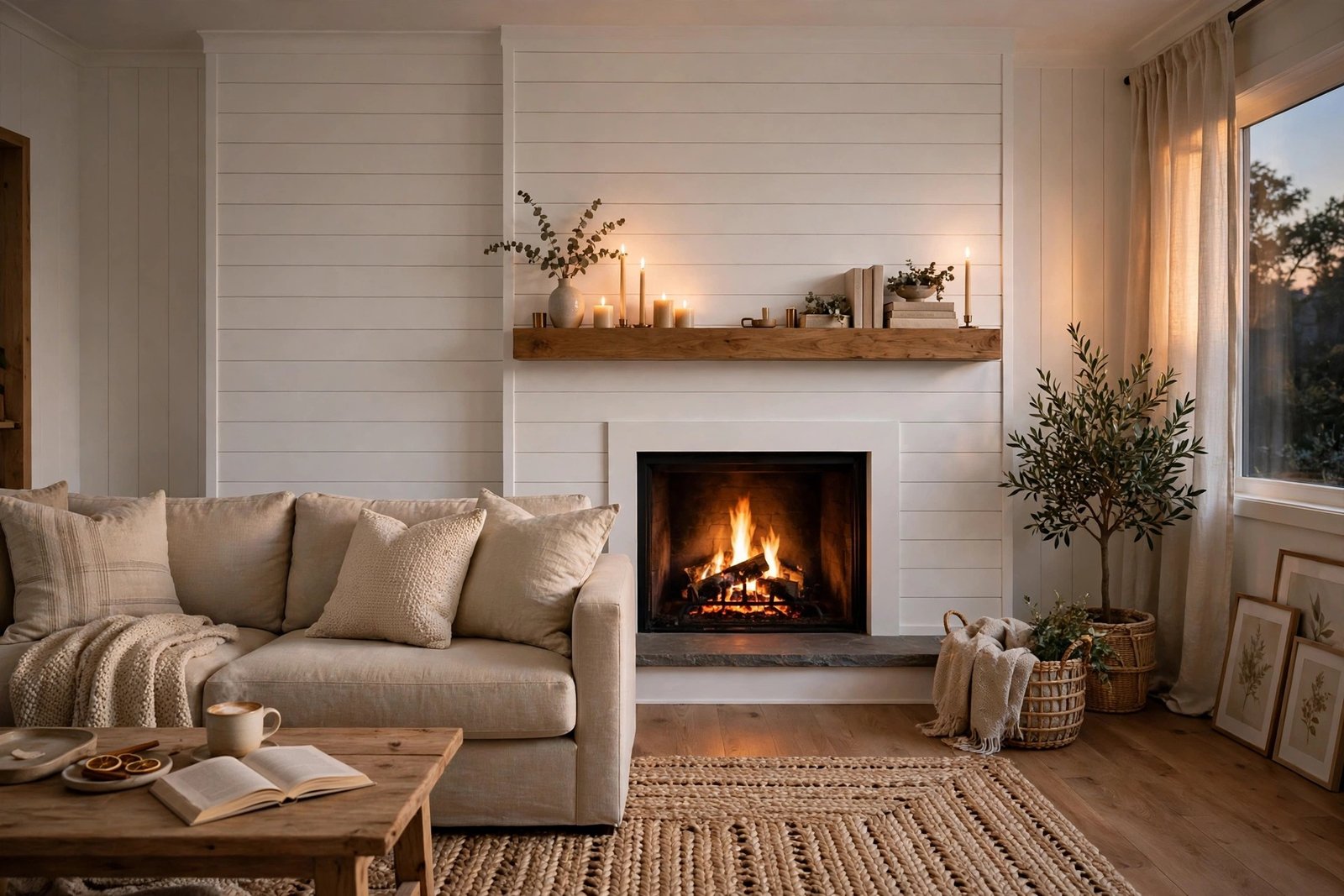
8. Shiplap Around the Fireplace
A shiplap fireplace wall is one of the cosiest wall panelling ideas living room owners choose for a first project. Horizontal boards wrap the chimney breast, and their lines make the fireplace feel wider and more settled.
9. Reclaimed Wood Planks for Character
Reclaimed planks bring knots, grain and colour variation that new timber cannot copy. One wall is enough; a whole room of reclaimed wood can feel like a cabin.
10. Beadboard Half Walls for Cottage Charm
Beadboard is narrow tongue-and-groove boarding with a small bead detail, and it is the classic cottage choice. Run it to half height with a small cap rail and paint it warm white.
Bold and Colourful Panelling
Bold wall panelling ideas living room makeovers often start with a colour decision rather than a material one. Paint transforms even the simplest moulding into a statement.
11. Dark Navy Geometric Panels for Drama
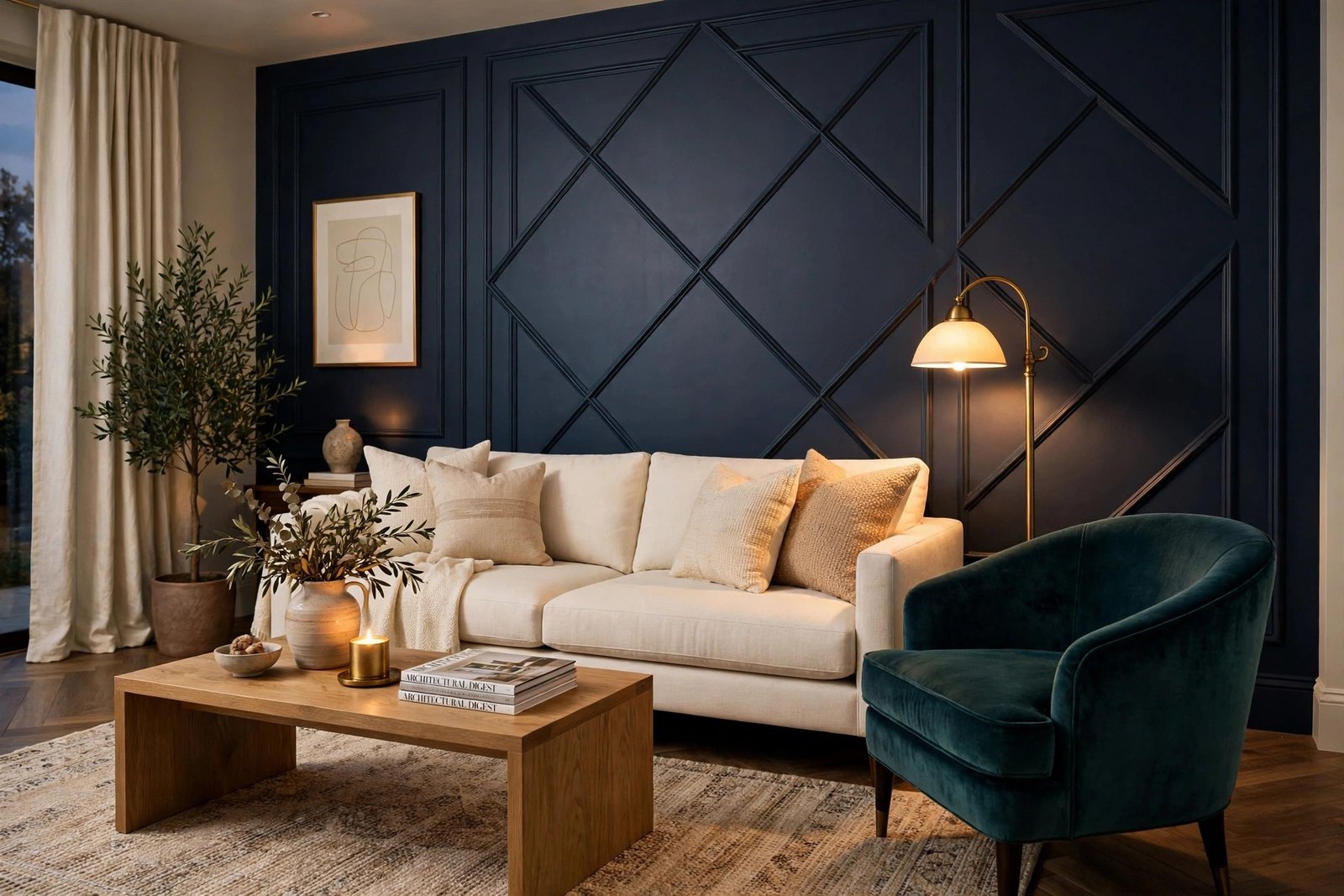
Deep navy is the boldest of the wall panelling ideas living room magazines feature this year. A diamond or grid moulding in navy turns a plain wall into architecture. The dark colour absorbs light, so the room feels intimate in the evening, while the moulding keeps it from looking flat.
12. Deep Green Panels for a Grounded, Natural Feel
Deep green is the easiest bold colour to live with because it behaves like a neutral. Sage and forest greens sit happily with oak floors, cream linen and leather, and they make plants look even better.
13. Two-Tone Panelling for Soft Contrast
Two-tone panelling paints the panels one colour and the wall behind them another, usually a shade or two apart. The result is softer than a single bold colour but more interesting than a plain wall.
14. Black Grid Panelling for a Modern Statement
Black grid panelling is the boldest choice in this guide, and it needs a room that can carry it. It works best on a single wall in a bright room with high ceilings, where the dark grid reads as architecture rather than a black hole.
Clever Panelling for Small or Awkward Living Rooms
Small rooms benefit from panelling more than large ones, because the texture gives the eye something to follow. The wall panelling ideas living room owners pick for compact spaces are usually half-height or single-wall styles, which add interest without closing the room in.
15. Half-Height Panelling to Keep the Room Open
Half-height panelling is the safest of the wall panelling ideas living room owners use in compact spaces. It gives the lower wall texture and protection while the upper wall stays plain, so the ceiling still feels high.
16. Panelling Behind the Television
A panelled TV wall is one of the most practical wall panelling ideas living room owners choose for open-plan spaces. Vertical slats hide cables and soften the hard edges of the screen, while flat panels frame it like a picture.
17. Panelling on One Wall Only
One panelled wall is often better than four. Choose the wall you face when you sit down, usually the sofa wall or the fireplace wall, and leave the rest plain. The room gains a focal point without feeling boxed in, and the cost stays low.
18. Panelling Around a Window or Alcove
Awkward features become assets with panelling. Frame a bay window with slim panels, line an alcove with beadboard, or run slats up the chimney breast and into the alcove beside it. The panelling turns an odd shape into a deliberate design moment.
Panelling That Works Harder
The most useful wall panelling ideas living room owners choose are not just decorative. These four ideas add storage, sound control or both.
19. Acoustic Slat Panels for Quieter Rooms
Acoustic slat panels are among the most practical wall panelling ideas living room owners choose when the room echoes. Wood battens fixed to a felt backing genuinely reduce echo in hard-surfaced rooms, so they are worth considering if your living room has wood floors, large windows and little soft furnishing.
20. Panelling With Built-In Shelving
Panelling and shelving work well together because the panels give the shelves a finished backdrop. Frame a run of open shelves with matching panelling, or set the shelves into a panelled recess so they look built in rather than added on.
21. Panelling With Hidden Storage
Flat panels can hide cupboard doors, a radiator cover or a media unit, so the wall looks seamless while the clutter disappears. The trick is to align the panel joints with the door edges and use push-to-open catches, so there are no visible handles.
How to Choose the Right Panelling for Your Living Room
Start with the room, not the product. The wall panelling ideas living room owners live with happily are the ones chosen for the room’s light and proportions, not for a photo. Tall rooms suit full-height panels; low rooms suit half-height or horizontal lines. Rooms with little natural light suit pale painted panels, while bright rooms can carry dark colours and strong timber. If you want more examples before deciding, the Wickes living room panelling guide shows full-wall, half-wall and feature-wall options with photos that make the differences easy to compare.
Material matters too. Solid wood looks the best and costs the most, while MDF panels are the standard choice for painted panelling because they are stable, smooth and affordable. Moisture-resistant MDF is worth the small extra cost if the living room joins a kitchen or a damp-prone wall.
How Much Does Living Room Wall Panelling Cost?
Costs vary by material and by whether you hire help, but a realistic budget for one feature wall helps before you start. The wall panelling ideas living room budgets stretch furthest are painted MDF and board and batten: usually around 150 to 300 pounds for materials on a 3 metre wall, or roughly 200 to 400 dollars in the US. Ready-made acoustic slat panels cost more, typically 60 to 120 pounds per square metre, while solid oak slats can reach 150 pounds per square metre or more. A professional joiner usually adds 300 to 600 pounds per wall for fitting and painting.
Paint is the cheapest way to change the look: a litre of good wall paint covers a panelled feature wall with two coats and costs less than a single panel.
DIY or Hire a Professional?
Most simple panelling is a realistic weekend DIY job if you are comfortable with a saw, a spirit level and a caulking gun. The wall panelling ideas living room DIYers finish first are usually board and batten, beadboard and picture-frame moulding, and pre-primed MDF strips make the job faster. The skills that matter most are measuring accurately and cutting square.
Hire a professional for anything that needs to look seamless, such as hidden storage, curved walls or full-height panels with no visible joints. A joiner will also handle uneven walls, which are common in older homes, by scribing panels to fit.
Styling a Panelled Wall Without Overdoing It
A panelled wall is already a strong feature, so the styling around it should be calm. The wall panelling ideas living room stylists recommend most all share one rule: keep the styling calm. Hang one large piece of art rather than a cluster of small frames, and keep the mantel or console clear enough that the panelling stays visible. A mirror works well because it doubles the light, but hang it on a flat panel section rather than across a moulding line. For more ways to balance a strong feature wall with the rest of the room, see our accent wall ideas for living rooms, which cover colour, art and furniture placement in more detail.
Colour is the other half of styling. If the panelling is dark, keep the sofa and rug pale; if the panelling is pale, add one deeper colour in the cushions or the curtains.
Mistakes to Avoid With Living Room Panelling
The most common mistake is panelling every wall in a small room, which makes the space feel like a box. Start with one wall and live with it for a month. The wall panelling ideas living room owners regret most are usually the ones chosen in a hurry, so match the panelling to the architecture you already have: ornate Victorian moulding looks wrong in a minimalist flat, and raw industrial slats look wrong in a cottage.
Other mistakes are practical. Skipping primer on MDF means the paint soaks in unevenly and the finish looks patchy. Uneven gaps between slats are visible from across the room, so use spacers rather than judging by eye.
Final Thoughts
The best wall panelling ideas living room projects start small, with one wall, one style and a clear idea of what the room needs. Whether you choose warm wood slats, classic board and batten or a bold painted grid, the goal is the same: a wall that feels finished, a room that feels intentional, and a living room you enjoy sitting in.