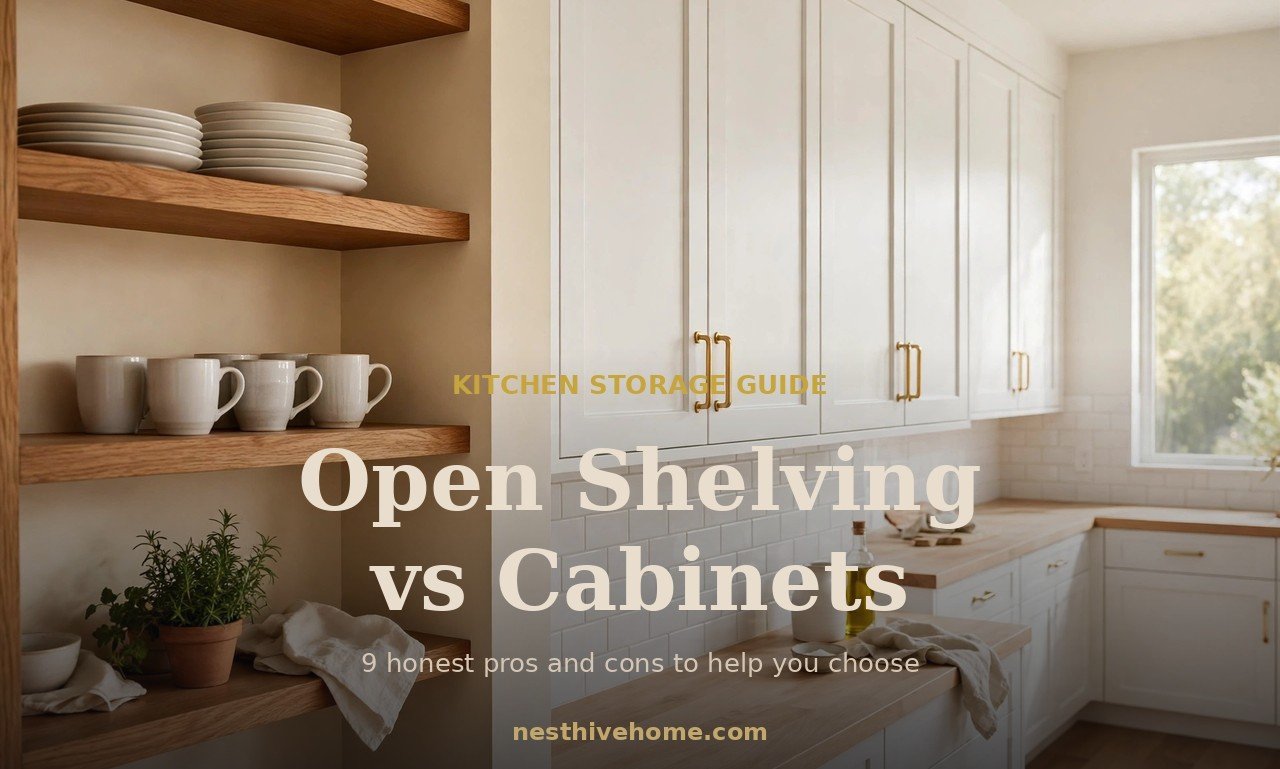
Open shelving vs cabinets is the kitchen decision that looks simple in photos and gets complicated the moment you think about real life. Open shelves promise an airy, curated kitchen where everything is within reach. Cabinets promise hidden storage, less dust and a calmer look. Both can be beautiful, and both can go badly wrong. This guide covers 9 honest pros and cons, the real costs and the hybrid mix most kitchens love.
What Open Shelving vs Cabinets Really Means for Your Kitchen
Open shelving means wall-mounted boards with nothing in front of them: every plate, mug and jar is on display. Cabinets mean enclosed boxes with doors or drawers, so everything sits behind a front. Glass-front cabinets sit between the two, giving display with dust protection.
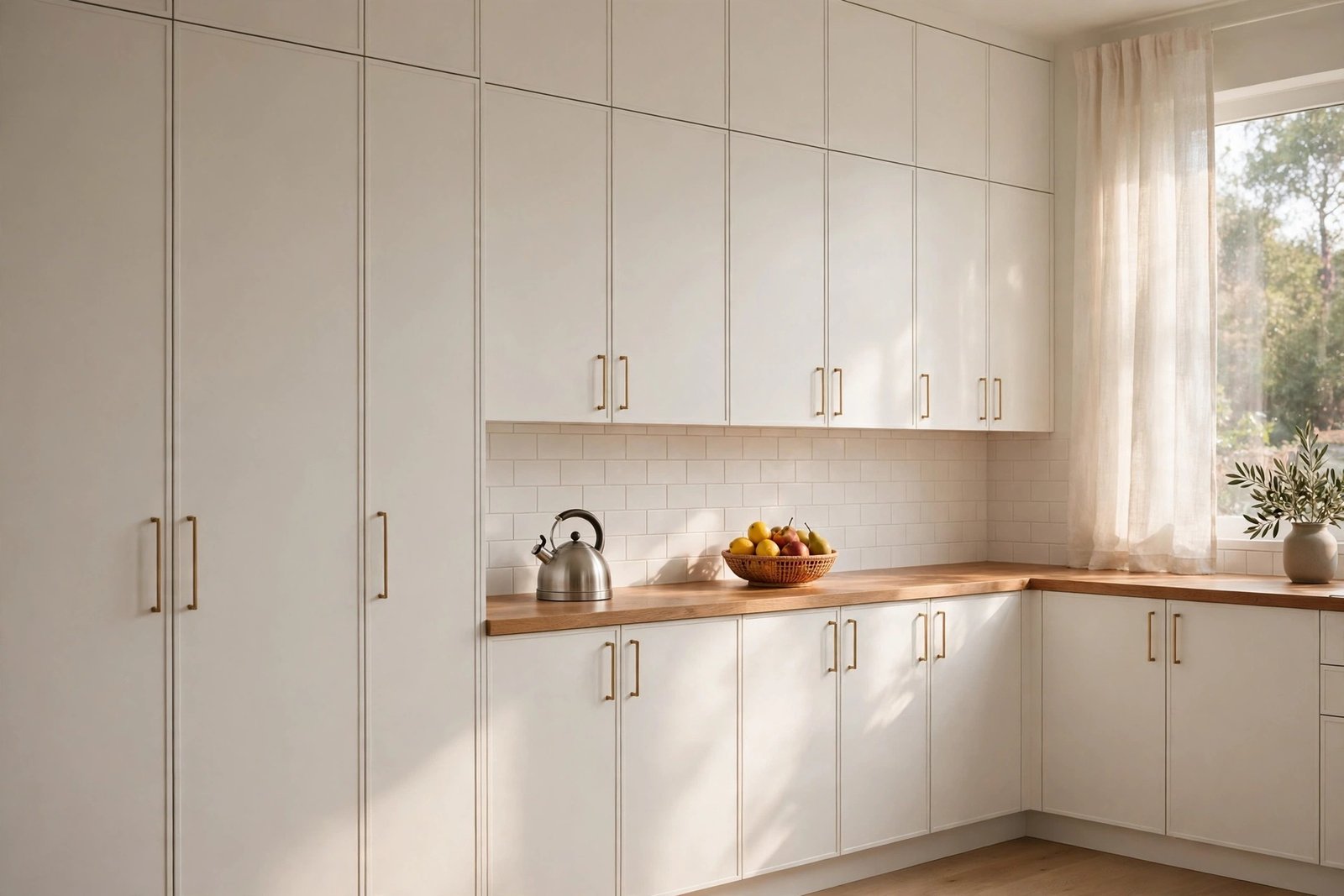
The choice changes three things: how much you can store, how much cleaning you sign up for, and how the room feels. A wall of white uppers can feel solid and complete, but also boxy in a small room. Two oak shelves in the same spot open the wall up, but they hold far less and show every fingerprint.
9 Open Shelving vs Cabinets Pros and Cons That Decide It
The open shelving vs cabinets debate has no universal winner: the right answer depends on how much you own, how often you cook and how much mess you can tolerate on display. Work through them honestly.
1. Storage Capacity: Cabinets Hold Far More
In the open shelving vs cabinets trade-off, storage is where cabinets win outright, and it is not close. A standard 900 mm wall cabinet holds three or four stacked layers of dishes. Two floating shelves hold two single layers, and nothing stacks high without looking precarious. In practice, a cabinet stores two to three times as much as the shelves that would replace it.
That matters most if you own a lot: bulk pantry goods, a slow cooker, three sets of mugs. Open shelves force you to own less, which some people love and others resent within a month.
2. Everyday Access: Shelves Win on Speed
For daily items, nothing beats an open shelf, and that is the core of the open shelving vs cabinets access argument. You take a mug down in one movement, with no door to open and no handle to find. Breakfast becomes a two-minute job, and putting things away is just as fast.
Cabinets slow you down: open the door, find the shelf, reach past the front row. The catch: the access advantage only applies to the items on the shelves. Everything else still lives in cabinets, so a shelf-led kitchen is a two-system kitchen, and the shelves only earn their keep if they hold the things you genuinely use daily.
3. Cleaning and Grease: The Hidden Cost of Open Shelves
Cleaning is where the open shelving vs cabinets balance often tips, and it is the con that surprises most people. Everything on an open shelf gathers dust, and in a kitchen, grease too. Cooking sends fine grease into the air, and it can travel 1.5 to 2 metres from the hob, settling on shelves and on whatever sits on them. A shelf near the cooker can feel sticky within a week.
That means wiping the shelves and washing the dishes that live on them before use. Plan on a weekly wipe for shelves in the cooking zone. Cabinets ask far less: wipe the fronts now and then, deep-clean inside once a season. If you fry food often, or you do not enjoy cleaning, this point should outweigh any photograph.
4. Visual Weight: Shelves Make Small Kitchens Feel Bigger
Open shelves remove visual bulk. A run of upper cabinets is a solid block that stops the eye; shelves let the wall show through, so the room reads larger, lighter and less boxed in. In a small or galley kitchen, that difference is dramatic, which is why open shelving vs cabinets matters so much in tight spaces.
The effect only works if the shelves stay calm. Cram them with mismatched jars and a tangle of mugs, and the wall looks busier than a cabinet ever did. Leave breathing room and keep the palette tight.
5. Cost: Shelves Are Cheaper Up Front
On cost, open shelving vs cabinets is a clear win for shelves, at least at first. A shelf is a board and two brackets; a cabinet is a carcass, doors, hinges, handles and installation, so the price gap is real. A solid oak floating shelf, 900 mm long, typically costs £40 to £120, plus £10 to £25 for brackets. A stock wall cabinet of the same width runs £150 to £400, and a semi-custom or custom unit can reach £500 to £1,500 or more.
But the saving shrinks once you count the whole kitchen. If removing uppers means adding a tall pantry unit to replace the lost storage, the bill climbs back up. Shelves save money when they replace a modest run of uppers in a kitchen with enough base storage already, not when they force you to buy storage elsewhere.
6. Clutter Control: Cabinets Hide the Mess
When it comes to clutter, open shelving vs cabinets is a question of honesty about your own habits. Cabinets are forgiving in a way shelves never will be. Mismatched mugs, plastic tubs and the blender you use twice a year all disappear behind a door. You can be in a rush, with guests arriving in ten minutes, and the kitchen still looks tidy because the mess is contained.
Open shelves offer no such mercy: everything you own is on show, all the time. Busy families, enthusiastic cooks and anyone who dislikes visual noise will be happier with more cabinets than they first planned.
7. Durability, Safety and What Goes Where
Safety is the least glamorous part of the open shelving vs cabinets choice, and the one most worth getting right. Cabinets protect what is inside: from humidity, cooking steam, knocks, and small hands and paws. Heavy items such as cast-iron pans are safer behind doors, and cleaning products and sharp knives belong in a cabinet, ideally with a child-safe latch, where children or pets live.
Shelves have their own safety rules. A loaded shelf is heavy, so fix it into studs or solid masonry, never into plasterboard with light fixings. Keep shelves away from the hob, and never put heavy or fragile items above head height.
8. Style and Display: Shelves Show Off Your Taste
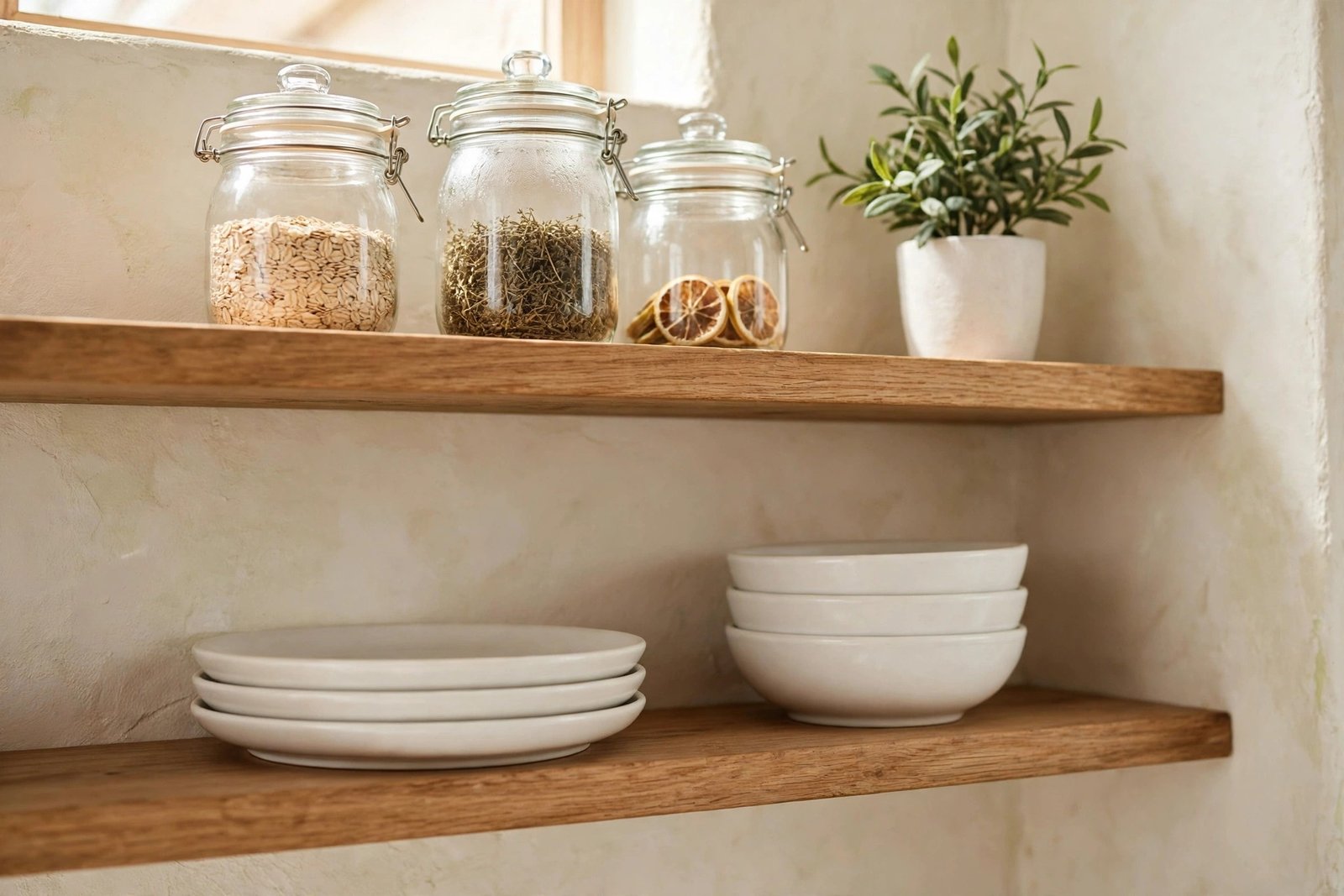
For pure looks, open shelving vs cabinets is the one contest shelves genuinely win. A cabinet wall is a blank surface; a shelf is a stage. Matching ceramics, cookbooks, a trailing plant and a piece of pottery give a kitchen warmth no cabinetry can match. Shelves are the fastest way to make a new kitchen feel like yours, and the cheapest way to refresh it later.
The trick is discipline. Group things in odd numbers, repeat one colour or material, and leave 20 to 30 percent of each shelf empty. One hero piece per shelf, a jug or a large bowl, anchors the display. Styled this way they look intentional and calm; filled edge to edge, they look like a storage problem wearing a disguise.
9. Resale Value: What Buyers Actually Prefer
Resale is the quiet factor in the open shelving vs cabinets decision, and it favours cabinets. Most buyers want storage: a kitchen with full upper cabinetry appeals to a broader range of buyers than one with shelves alone. A shelf-only kitchen can read as a lifestyle choice, fine if you plan to stay, but it narrows your audience when you sell.
That does not mean avoiding shelves. Keep at least one wall of cabinets, so the kitchen still works for the next owner. Shelves as a feature, cabinets as the backbone: that combination photographs beautifully and sells without apology.
Open Shelving vs Cabinets in a Small Kitchen
In a small kitchen, the open shelving vs cabinets question gets sharper, because every centimetre counts twice: for storage and for how the room feels. Shelves reduce visual bulk and can make a galley kitchen feel twice as wide, but they do not create storage, and a small kitchen needs storage most.
The practical answer for most small kitchens is a split: cabinets where storage matters, shelves where the eye rests. Keep uppers over the main worktop, and put one open shelf above the sink or coffee station for the things you use constantly. A tall pantry cabinet absorbs the bulk storage shelves cannot, and glass-front uppers offer a useful halfway house. Measure first: a shelf deeper than 300 mm will crowd a narrow walkway.
The Hybrid Kitchen: The Mix That Works Best
Ask most kitchen designers what they would put in their own home, and the answer is a hybrid: roughly 70 to 80 percent closed cabinets and 20 to 30 percent open shelving. It is the honest answer to open shelving vs cabinets: it does not ask you to be tidy all the time, only in one visible spot.
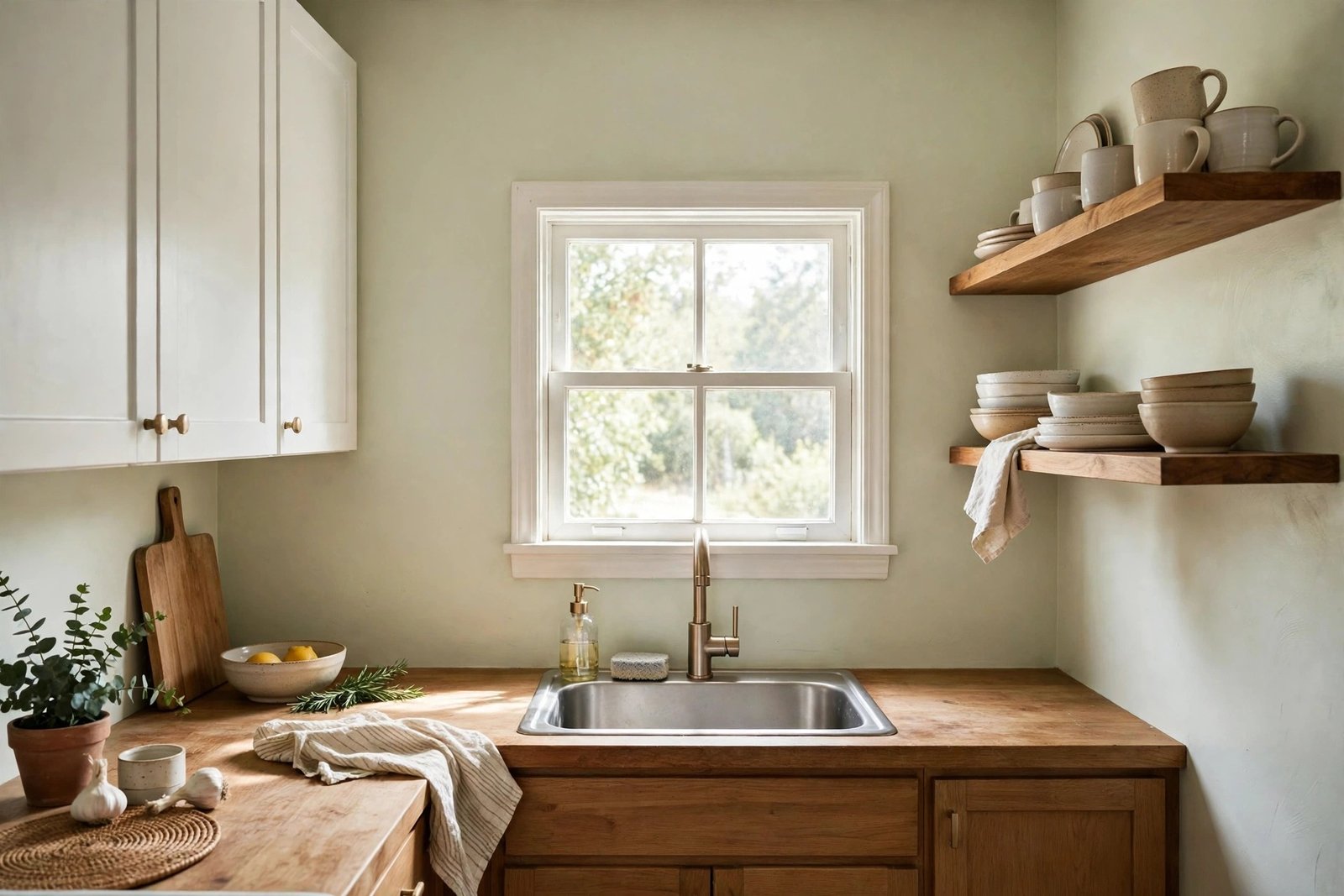
Place the shelves on the wall people actually look at, usually opposite the door or beside the window, and keep them away from the hob and the sink splash zone. Put everyday dishes, mugs and glasses there, and let the cabinets hold everything else: the food processor, the baking trays and the cleaning products. If you are rethinking the whole layout, freestanding kitchen ideas pair beautifully with a shelf-led wall, because a freestanding dresser or larder adds the closed storage shelves take away.
How Much Do Open Shelves and Cabinets Cost?
For a typical 900 mm run, expect £50 to £145 for a fitted open shelf with brackets, against £150 to £400 for a stock wall cabinet and £500 to £1,500 for a semi-custom or custom unit, before installation. Fitting a cabinet takes longer, so labour adds £50 to £100 per unit; a shelf usually takes under an hour to hang. Under-shelf LED strips, around £15 to £30 per metre, make the shelves glow in the evening.
For a detailed breakdown of open shelving vs cabinets costs, this guide to open shelving pros and cons compares a wall cabinet with the shelves that would replace it, shelf by shelf. The headline is the same: shelves cost less per metre, cabinets store more per metre, and the smart money usually buys a bit of both.
Styling Open Shelves So They Stay Beautiful
Good shelf styling is a habit, not a one-off photo shoot. Take everything off and put back only what you use weekly; the rest belongs in a cabinet. Use matching sets where you can, because five identical white bowls read as calm while five different ones read as clutter. Vary the heights, a tall jug beside a low stack of plates, and repeat one material, wood or ceramic or glass, to tie the display together.
Leave gaps: a shelf that is 70 percent full looks styled, while one that is 100 percent full looks like a cupboard with the door missing. Add one living thing, a small herb pot or trailing plant, and one non-kitchen object, a framed print or piece of pottery. Finally, give the shelves five minutes a week: a quick wipe and a tiny edit. That is what separates shelves that stay beautiful from shelves that turn into a dumping ground.
Mistakes to Avoid With Open Shelving vs Cabinets
The most common mistake in the open shelving vs cabinets decision is shelving the entire kitchen. A wall of shelves looks wonderful in a magazine and exhausting in real life, because every item needs styling, dusting and washing. Keep shelves to one wall, and let cabinets do the rest.
The second mistake is placement: shelves directly beside or above the hob, where grease and steam coat everything. The third is fixing: screwing a loaded shelf into plasterboard with light fixings. Always find the studs or use proper masonry fixings. The fourth is buying display dishes you never use. Shelves work when they hold the things you eat from every day; a shelf of ornamental plates you are afraid to touch is a museum, not a kitchen.
Final Thoughts: Which Should You Choose?
Open shelving vs cabinets comes down to five honest questions. How much do you own? If the answer is a lot, keep the cabinets. How often do you fry food? If the answer is most days, keep shelves away from the hob. How much do you enjoy cleaning and styling? If the answer is not much, cabinets will make you happier. Do you have small children or pets? If so, closed storage is not optional for the dangerous stuff. And are you selling soon? If so, a full run of cabinets protects your resale value.
If your answers point in different directions, that is the hybrid talking: cabinets for the bulk, shelves for the beauty. Start with one shelf run, live with it for a month, and let your kitchen tell you whether to add more. The best kitchens are not the ones that copy a photograph; they fit the people who cook in them, mess and all.