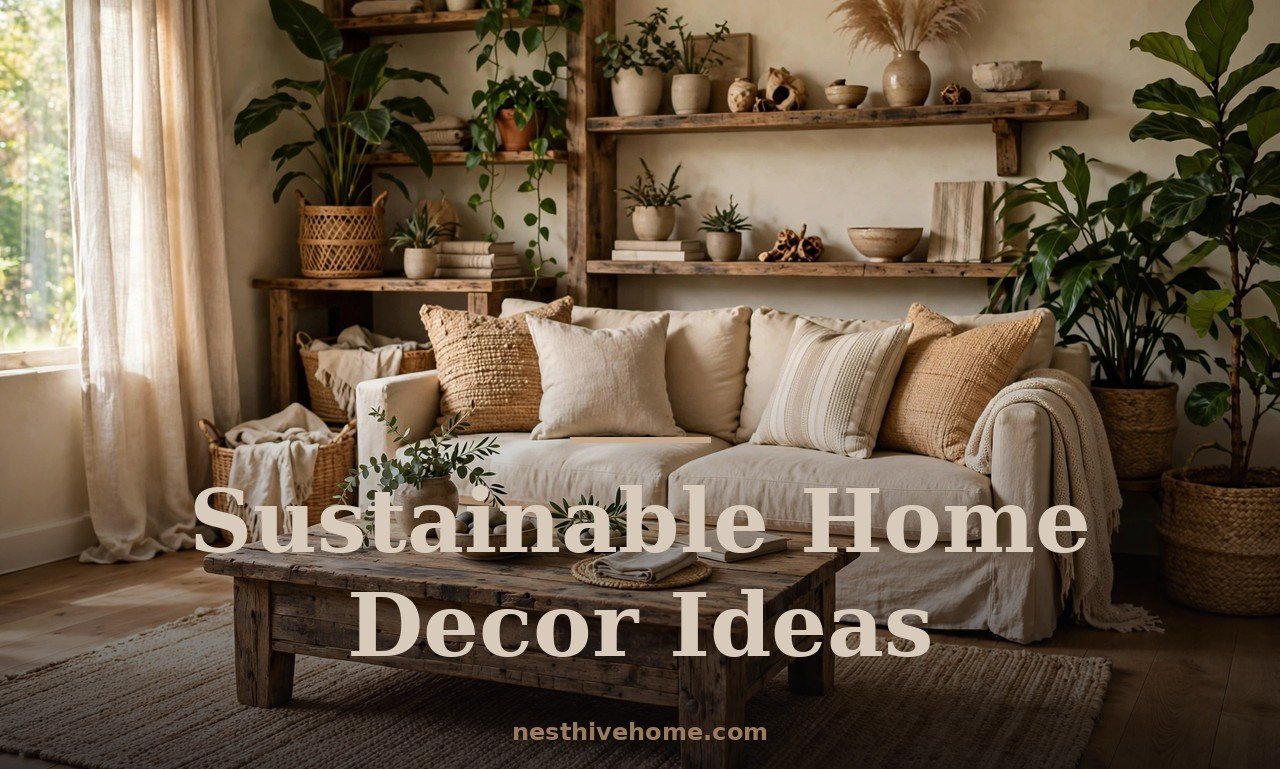
sustainable home decor ideas do not require a full renovation, a large budget, or a home that looks like a showroom for minimalism. They start with smaller, smarter choices: keeping what already works, choosing materials that last, and buying secondhand before buying new. A room decorated this way feels warmer, not stricter, because reclaimed wood, natural fibres, and vintage finds carry texture flat-pack furniture rarely offers. This guide collects 15 sustainable home decor ideas, grouped by room and budget, so you can start with one change this weekend and build a greener home over time.
1. Furniture First: Keep, Repair, and Buy Secondhand
1. Shop Your Own Home Before You Shop Anywhere Else
Before spending anything, walk through your home with fresh eyes. A bedroom side table might work beside the sofa, a mirror in a dark hallway can bounce light into the room, and a stored rug could ground the dining area. Moving pieces between rooms costs nothing, keeps good furniture in use, and often solves a problem you were about to spend money on. Live with the rearrangement for a week before deciding what is genuinely missing. This simple habit is the most sustainable of all sustainable home decor ideas, because the greenest piece of furniture is the one that already exists.
2. Buy Vintage and Secondhand First
Secondhand shops, charity stores, flea markets, and online marketplaces are full of solid wood furniture built to outlast most new pieces. Look for dovetail joints, real wood veneer rather than printed foil, and sturdy frames that only need a clean and a coat of wax. A vintage sideboard, a pair of brass lamps, or a well-made armchair can anchor a room for a fraction of the price of a new equivalent, often $50 to $300 compared with $600 or more new. Check for woodworm, wobbly legs, and musty smells, and measure doorways so a bargain does not become a delivery problem.

Styling secondhand finds, one of the most rewarding sustainable home decor ideas, is easy when you mix eras rather than matching everything. Pair a vintage wooden cabinet with a modern linen sofa, add a contemporary lamp, and let one older piece be the talking point. If a finish looks tired, sand it lightly and apply a natural oil or a low-VOC varnish instead of replacing the whole item. Small repairs — tightening a joint, replacing a drawer runner, re-covering a cushion — can add decades to a piece and keep it out of landfill.
3. Upcycle What You Already Own
Upcycling turns a tired piece into something you actually love. An old dresser becomes a bathroom vanity, a wooden ladder becomes a blanket rack, and leftover paint transforms plain pine shelves into a display. Keep the first project small: sanding and repainting a single chair teaches you the process without overwhelming a weekend. Use water-based paints and natural waxes where possible, work in a ventilated room, and test a finish on a hidden area first. The result is one of a kind, and nobody else will have the same piece — the personal payoff of sustainable home decor ideas done well.
2. Materials That Last: Reclaimed Wood, Bamboo, and Cork
4. Choose Reclaimed Wood for Statement Pieces
Reclaimed wood — timber salvaged from old barns, factories, and demolished buildings — brings instant warmth and history to a room. In sustainable home decor ideas, a reclaimed wood dining table, shelving unit, or headboard becomes a focal point, and every knot and nail mark tells a story. Expect $400 to $1,200 for a table — more than new pine, far less than new hardwood of similar character. Ask the seller where the timber came from and whether it has been kiln-dried and cleared of old nails. Sealed with a natural oil finish, reclaimed wood is durable, easy to repair, and ages gracefully instead of looking dated.

If a full table is beyond your budget, start smaller: sustainable home decor ideas need not start with the biggest piece. reclaimed wood floating shelves in the kitchen, a reclaimed mantel beam, or a chopping board made from offcuts. These touches add the same warmth at $40 to $150. Mix reclaimed wood with soft textiles and plants so the room feels lived-in, and avoid pairing it with too many rough textures at once.
5. Try Bamboo and Cork for Everyday Surfaces
Bamboo grows far faster than hardwood and regenerates without replanting, making it a sensible choice for cutting boards, trays, blinds, and flooring. Cork, harvested from cork oak bark without harming the tree, works beautifully as flooring, wall tiles, and pinboards, and feels warm and quiet underfoot. Both materials suit kitchens and hallways that take daily wear, which is why they feature in so many sustainable home decor ideas for busy homes. Bamboo blinds cost roughly $30 to $80 per window, while cork tiles run about $4 to $8 per square foot. Choose low-VOC adhesives and finishes, and look for FSC certification on bamboo flooring.
6. Pick Natural Stone, Glass, and Metal Over Plastic
When you need something new, favour materials that can be recycled or repaired: stone, glass, ceramic, and metal. A ceramic vase, a glass carafe, a cast-iron pan, and a marble chopping board will all outlast their plastic equivalents and look better as they age. Replace plastic items as they wear out, choosing one durable alternative each time. Keep an eye out for recycled glass vases and planters; like other sustainable home decor ideas, they combine a lower footprint with genuinely beautiful colour and texture.
3. Natural Textiles: Softer, Healthier, and Longer-Lasting
7. Dress Beds and Sofas in Natural Fibres
Organic cotton, linen, hemp, and wool breathe better than synthetic fabrics, wash well, and feel noticeably softer over time. Linen curtains filter daylight beautifully while letting air move, wool throws add warmth without overheating, and organic cotton bedding suits sensitive skin. Look for GOTS or OEKO-TEX Standard 100 certification. For bedrooms, natural fibres are among the most noticeable sustainable home decor ideas, because you touch these fabrics every day. A good linen duvet set costs around $80 to $180, and while that is more than a polyester set, it typically lasts years longer and improves with every wash. Wash in cold water and line-dry when you can to extend the life of every textile.

Layering is the secret to making natural fibres look generous rather than plain, and it is one of the cheapest sustainable home decor ideas: shop your linen cupboard first. Combine a linen base with a chunky wool throw, add cushions in mixed weaves rather than matching sets, and choose a palette drawn from nature: cream, sage, oatmeal, terracotta. Removable, washable covers are a practical win too: they let you refresh a sofa or chair without replacing it, and they make stain-prone homes with children or pets far easier to live in.
8. Choose Vintage Rugs and Washable Covers
A vintage or secondhand rug is one of the best sustainable purchases you can make. Hand-knotted wool rugs can last for generations, and older rugs often sell for far less than new machine-made copies. Check the backing, smell the rug before buying, and have it professionally cleaned once. If you need something fully washable, look for cotton flatweaves or recycled-material rugs, which handle family life and go through the machine. Either way, a rug is one of the most forgiving sustainable home decor ideas: it protects your floor, defines a seating area, and adds pattern without a single new resource being mined or manufactured.
4. Walls and Paint: Low-VOC Colour Done Right
9. Switch to Low-VOC and Natural Paints
Conventional paints can release volatile organic compounds for weeks, affecting indoor air quality. Low-VOC and zero-VOC paints cut those emissions sharply while offering the same colours and coverage. They cost roughly $35 to $65 per gallon in the US, or £30 to £55 in the UK. Ventilate while painting, choose a finish suited to the space — washable eggshell for hallways and kitchens, matte for bedrooms — and measure walls first so you buy only what you need. Leftover paint can be stored for touch-ups or donated through community paint reuse schemes — a tidy finish to sustainable home decor ideas for healthier rooms.
10. Try Limewash and Clay Plaster for Texture
Limewash and clay plaster give walls a soft, chalky depth that flat paint cannot match, and both are made from natural minerals with very low emissions. Limewash suits bedrooms and living rooms where you want gentle movement in colour, while clay plaster adds warmth and helps regulate humidity. Both are breathable, which suits older homes with solid walls. A bag of clay plaster costs around $40 to $70 and covers a good-sized wall; limewash goes on in thin, overlapping coats with a large brush. Practise on a sample board first, since the colour deepens as it dries, as with other sustainable home decor ideas using natural minerals.
11. Build a Gallery Wall From Secondhand Frames
A gallery wall made from thrifted frames is affordable, personal, and entirely reusable. Collect frames in mixed sizes over a few weeks, spray-paint them in one or two coordinating colours, and fill them with your own photos, children’s art, pressed leaves, or prints from local artists. Lay the arrangement on the floor first, photograph it, then hang it from the centre outward. If your taste changes, swap the art inside rather than buying new frames: gallery walls are lasting sustainable home decor ideas, and the wall evolves with you at almost no cost.
5. Sustainable Home Decor Ideas for Small Budgets
12. Swap to LED Lighting and Smarter Controls
Lighting is the quickest energy-saving upgrade in any home. LED bulbs use up to 80 percent less energy than old incandescent bulbs and last many times longer, so a whole-house swap often pays for itself within a year. Choose warm white bulbs (2700K) for living rooms and bedrooms and cooler daylight bulbs (4000K) for kitchens and workspaces. Add dimmers or smart plugs so lamps run only when needed, and put a timer on hallway lights. The whole project can cost under $50 for a typical flat, making lighting swaps the cheapest sustainable home decor ideas on this list, and the savings show up on every electricity bill after that.
13. Make the Most of Natural Daylight
Daylight is free, and designing around it reduces both lighting and heating costs. Replace heavy curtains with sheer linen panels that soften glare without blocking light, and place a large mirror opposite a window to double the brightness in a dark room. Pale, warm wall colours reflect light further into a room, and daylight-first thinking is one of the oldest sustainable home decor ideas, which matters in north-facing UK rooms and small-windowed flats. If you are repainting, a light warm white on the wall opposite the window is a simple change with a visible effect the same afternoon.
6. Greenery, Handmade Touches, and Buying Less
14. Fill Your Home With Plants and Propagated Cuttings
Houseplants soften hard edges, add colour year-round, and make a room feel alive. Start with forgiving varieties such as pothos, snake plants, and spider plants, which tolerate irregular watering and low light. Instead of buying a new plant for every pot, propagate cuttings from friends’ plants — a pothos cutting roots in water within weeks and costs nothing. Display plants in terracotta, ceramic, or secondhand pots, grouped at different heights, and water only when the top inch of soil is dry. If you are short on space, a single trailing plant on a high shelf changes the whole feel of a room — which is why plants remain the most popular sustainable home decor ideas for renters.
15. Buy Less, Buy Once, and Choose Handmade
The most sustainable habit is also the simplest: buy fewer things, and buy them well. Before any purchase, wait a week and ask whether you still want it, whether it replaces something worn out, and whether a secondhand version exists. When you do buy new, favour handmade pieces from local makers — a hand-thrown vase, a woven basket, a wooden bowl — which support craftspeople and last far longer than mass-produced decor. For readers weighing colour schemes alongside these choices, this guide to blue and white bedroom decor shows how a classic palette can work in a calm, lasting bedroom. Set a small monthly decor budget, such as $50 or £40, and spend it only on pieces you truly love; patience, not spending, is the discipline behind the best sustainable home decor ideas. Over a year, that discipline builds a home full of things with meaning, not a house full of clutter.
For more background, see this sustainable decorating guide, which explains non-VOC paint, FSC-certified wood, and secondhand sourcing in detail. Then pick one idea from this list — these sustainable home decor ideas work best one at a time — perhaps a vintage rug, a low-VOC repaint, or a propagated plant — and start there. Small, thoughtful changes add up, and a home built slowly from durable, natural, and secondhand pieces is one you will enjoy for years, with a lighter footprint to match.