

Dark ceiling ideas have moved from bold designer statement to mainstream decorating choice, and for good reason. A ceiling in charcoal, navy, deep green or true black can make a room feel warmer, more intimate and far more finished than standard flat white. The trick is knowing which shade, finish and room suit the look. This guide covers 10 dramatic looks, the paint colours that work hardest, the lighting that keeps things from feeling gloomy, and the mistakes that turn a stylish idea into a cave. Whether you are painting a single room or rethinking the whole house, you will find a version here that fits your home, your budget and your nerve.
Why a Dark Ceiling Works (and When It Does Not)
Dark ceiling ideas work because painting the ceiling dark changes how a room reads in three useful ways. First, it lowers the visual height of a tall, echoing room and makes it feel snug rather than barn-like. Second, it draws the eye upward and gives the room a focal point, which is why designers call it the fifth wall. Third, it hides the small sins of an imperfect ceiling: hairline cracks and uneven plaster disappear under a deep matte colour in a way they never do under white.
That said, a dark ceiling is not right everywhere. Very low ceilings, under 2.3 metres, can feel oppressive if the colour is too heavy and the lighting too weak. North-facing rooms need warm undertones and generous artificial light to avoid a grey, flat result. The darker the ceiling, the more deliberate the rest of the room must be: pale walls, warm wood, reflective surfaces and layered lighting keep the look elegant instead of heavy.
10 Dark Ceiling Ideas to Try in Every Room
When people search for dark ceiling ideas, they usually have one room in mind and one worry: will it make the space feel smaller? The honest answer is that a dark ceiling can shrink a room slightly, but the trade is almost always worth it: a room that feels a touch cosier but looks twice as considered is a good deal. These dark ceiling ideas cover every room in the house, so start with the space that suits you best.
1. Classic Charcoal in the Living Room
Charcoal is the safest, most forgiving entry point into dark ceilings. It reads as soft black in daylight and warm grey in the evening, suiting both bright, window-filled living rooms and moodier, lamp-lit ones. Pair it with cream walls, a pale sofa and warm oak, and the ceiling becomes a quiet frame rather than a shout. A coffered charcoal ceiling is one of the most architectural dark ceiling ideas for a plain box room, and it photographs beautifully. If you love deep green schemes, a charcoal ceiling also sits happily above a forest green living room decor scheme, tying the darkest tones together.
2. Navy Overhead in the Bedroom
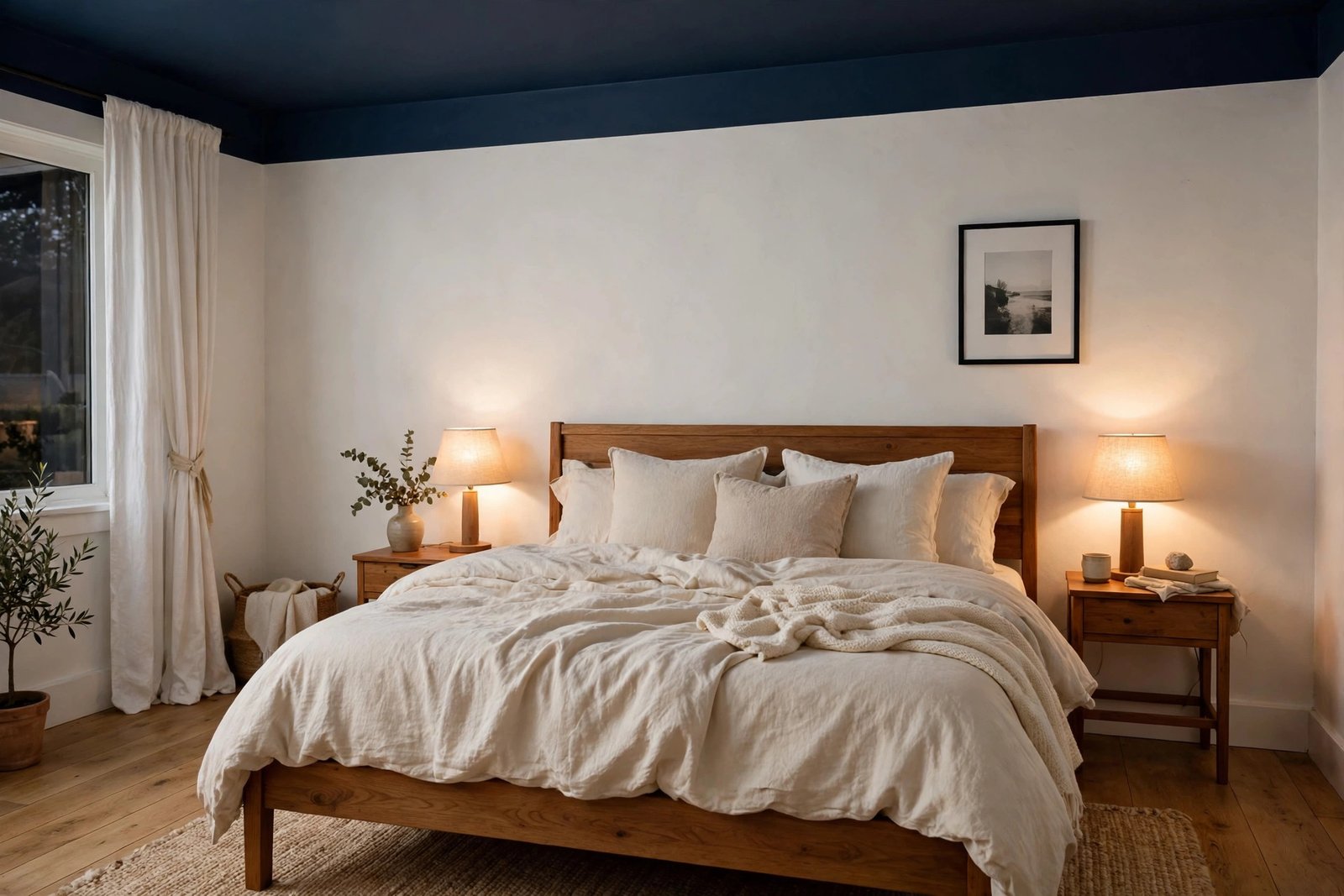
Bedrooms are made for dark ceilings. A deep navy overhead, like the one below, turns the bed into a cocoon and makes bedtime feel deliberate. Navy works especially well with warm wood, cream linen and brass lamps, because the warm tones stop the blue from feeling cold. Keep the walls pale and the bedding light, and the ceiling does all the drama. It is one of the most popular dark ceiling ideas for bedrooms, and it suits small rooms too, provided the lamps are warm enough.
3. Forest Green Over the Dining Table
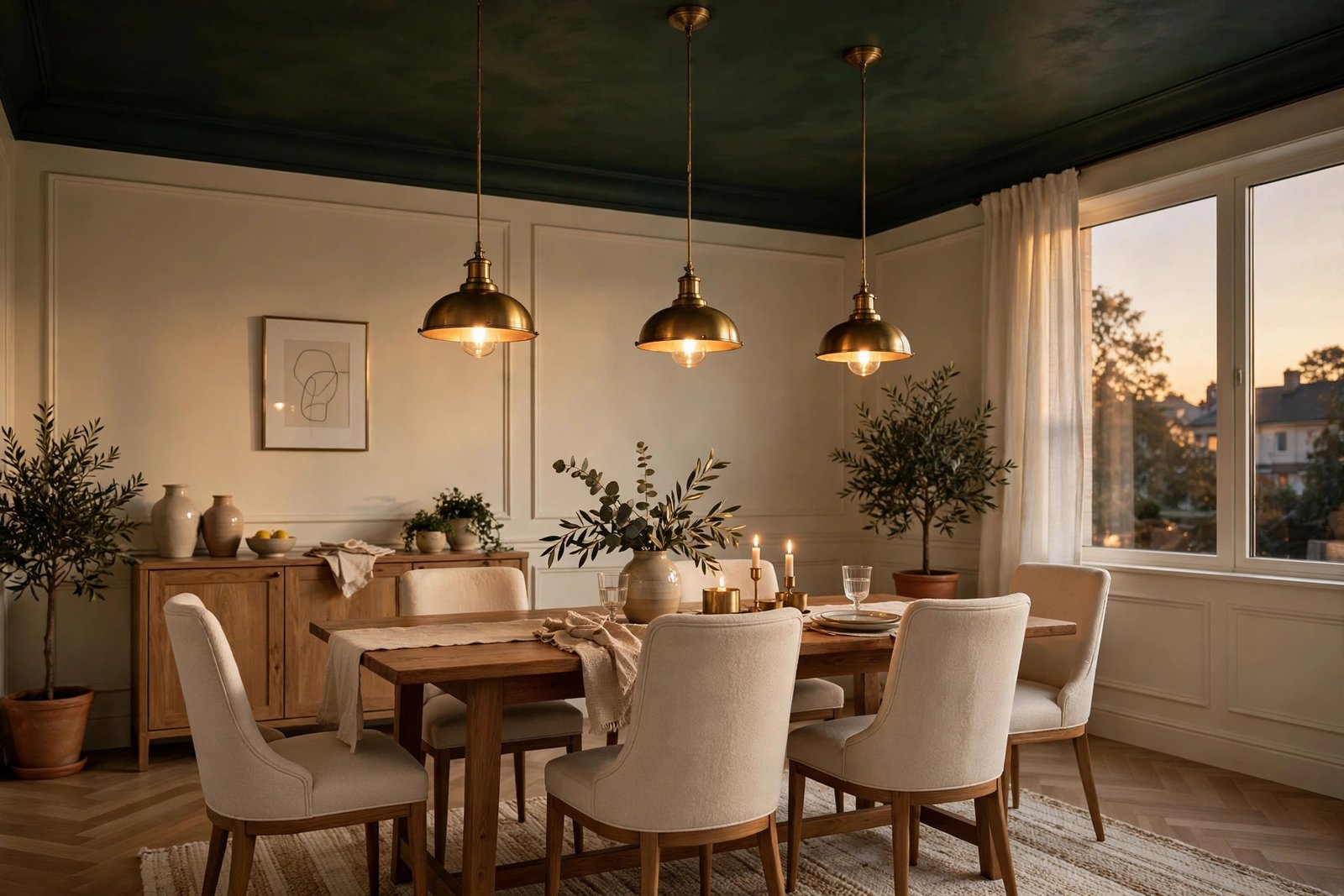
A dark green ceiling over a dining table creates the atmosphere of a favourite restaurant at home. The colour pulls the room together around the table, and brass pendants hung against it glow like jewellery. This is one of the most forgiving dark ceiling ideas for entertaining spaces, because candlelight and pendant light flatter deep green, and the colour looks richer as the evening goes on. Cream walls keep the room bright by day, while the green overhead adds the drama after dark. Add linen chairs, a wooden table and olive branches, and the room is finished.
4. Matte Black in a Small Bathroom
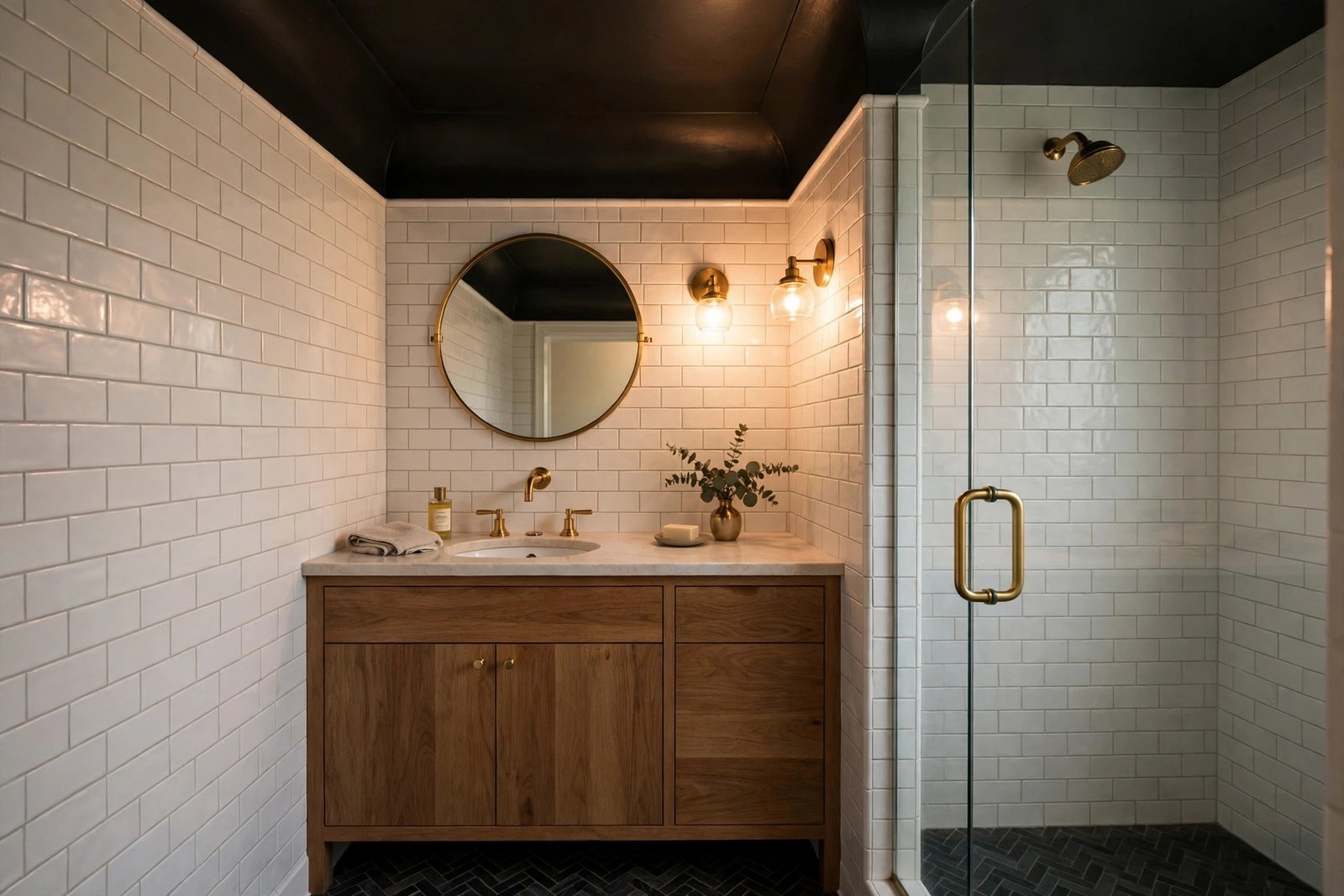
The smallest room in the house is often the best place to be brave. A matte black ceiling in a bathroom with white tiles and brass fittings feels like a boutique hotel, not a cave, because the glossy tiles bounce light around. Keep the ceiling matte, not gloss, so it absorbs light softly. Warm sconces beside the mirror are essential here; without them the space will feel dim. It is proof that dark ceiling ideas can work in rooms with no windows at all, as long as the lighting is planned first.
5. Colour-Drenched Walls and Ceiling
Colour drenching means painting the walls, ceiling, skirting and even the doors in one deep shade, and it is the most confident of all dark ceiling ideas. The room becomes a single enveloping colour, which paradoxically makes it feel larger because there are no hard edges for the eye to stop on. Deep green, inky blue and warm charcoal drench beautifully. Use the same colour in different finishes, matte on the ceiling, eggshell on the walls and satin on the woodwork, so the surfaces catch the light differently.
6. Dark Stained Timber Beams
If solid paint feels too much, dark stained timber beams are one of the gentlest dark ceiling ideas: all the drama of a dark ceiling with the warmth of natural wood. Exposed beams in walnut or smoked oak break up a pale ceiling, add rhythm and texture, and suit cottages and barn conversions alike. They also work where a fully painted ceiling would feel too heavy, because the pale plaster between the beams keeps the light. Pair them with pale walls and simple furniture, and let the beams be the only dark element.
7. A Coffered Ceiling in Deep Grey
Coffering, the grid of recessed panels you see in grand older homes, is one of the most elegant dark ceiling ideas for a formal room. Painted in deep grey or near-black, the panels catch shadows differently through the day, so the ceiling changes character from morning to evening. The moulding can be painted the same colour for a seamless look, or picked out in a slightly lighter grey to emphasise the pattern. This treatment suits rooms with ceiling heights of 2.7 metres or more, where the coffers have room to breathe.
8. Glossy Black for Drama in a Hallway
Hallways are transitional spaces, so they are ideal for bolder dark ceiling ideas: they can take more drama than rooms you sit in for hours. A glossy black ceiling reflects light from sconces and pendants, doubling the sparkle and making a narrow space feel like a gallery. Keep the walls pale and the floor light, so the gloss bounces light rather than swallowing it. High gloss earns its keep here, because nobody stares at a hallway ceiling long enough to notice the flaws gloss usually reveals. Add a runner rug and a single piece of art, and the hallway becomes a feature in its own right.
9. A Dark Ceiling in the Kitchen
Kitchens are usually the brightest room in the house, which is exactly why dark ceiling ideas work so well there: the contrast makes white cabinets and pale worktops look crisper, and the ceiling adds the warmth that an all-white kitchen often lacks. Deep green and charcoal are the most popular choices, pairing beautifully with brass taps, wooden open shelving and pendants over an island. Use a scrubbable paint, such as a modern emulsion or a kitchen-specific eggshell, because cooking steam and grease will mark a standard matte finish.
10. A Two-Tone Ceiling With a Painted Border
If committing to a fully dark ceiling feels like too big a step, a two-tone ceiling is the gentle way in. Paint the centre dark and leave a wide border of white or pale colour around the edge, following the coving or picture rail. The dark centre gives you the drama, while the pale border keeps the room feeling open at the edges. This suits period homes, where the border follows the existing coving, and it is the easiest version to paint over if you change your mind. It is one of the most practical dark ceiling ideas for first-timers, delivering most of the effect with half the commitment.
Choosing the Right Shade: Black, Charcoal, Navy and Green
The best dark ceiling ideas start with the right shade, and the differences between them matter more than most people expect. True black is the boldest and least forgiving: it shows every roller mark, so it needs a flawless surface and a flat matte finish. Charcoal is the most versatile, reading as grey in bright rooms and near-black in dim ones. Navy brings a cool, classic feel to bedrooms and studies. Deep green is the warmest of the four and the easiest to live with, pairing naturally with wood, brass and linen. Before you commit, paint a test patch at least a metre square and live with it for a few days. A shade that looks perfect at noon can turn muddy or purple under warm evening lamps, so test with the bulbs you actually use. For real-room examples, this guide to black ceilings shows 16 designs with the exact paint colours used.
Finishes and Texture: Matte, Eggshell or Gloss?
Finish matters as much as colour in dark ceiling ideas. Flat matte is the default choice for most rooms: it hides imperfections, absorbs light softly and gives the deep, velvety look that makes dark ceilings feel expensive. Eggshell is the practical choice for kitchens and bathrooms because it can be wiped clean, and it reflects just enough light to keep the room bright. High gloss is a specialist finish, best reserved for hallways and small feature areas, because it shows every flaw in the plaster. Texture is the other lever: limewash and wood panelling add depth without changing the colour, and they catch light in a way flat paint never will.
Lighting a Dark Ceiling Properly
Lighting is what makes or breaks dark ceiling ideas, and it deserves as much planning as the paint. The goal is layered light: a central pendant for general brightness, sconces or table lamps for warm pools at eye level, and, where possible, uplighting that washes the ceiling itself. Recessed downlights must be dimmable and warm, around 2700K, or they will create harsh spots on a dark surface. Avoid a single bare bulb in the middle of the room; it casts hard shadows and flattens the ceiling. Warm bulbs are essential; cool white light fights the colour and makes the room feel stark. Plan for roughly one and a half times the light you would use with a white ceiling, and put the main lights on a dimmer.
Mistakes to Avoid With Dark Ceilings
The most common mistake in dark ceiling ideas is painting the ceiling dark and changing nothing else. A dark ceiling with cool white walls, grey furniture and one ceiling light will feel like a basement. The second is choosing a shade that turns too blue or purple under your lighting; always test with your actual bulbs. The third is forgetting the ceiling’s edges: a hard line where a dark ceiling meets pale walls can look unfinished, so carry the ceiling colour a few centimetres down the wall, or use coving to make the join deliberate. Finally, do not hope dark paint will hide a stained or damaged ceiling; it hides small marks but highlights big ones, so repair and prime first.
How Much Does a Dark Ceiling Cost?
Of all the dark ceiling ideas in this guide, a painted ceiling is one of the cheapest transformations in home decor. For a standard room, expect around £25 to £50 for a tin of quality ceiling paint, plus £10 to £20 for primer and another £15 or so for rollers, brushes and masking tape. Dark colours usually need two coats, sometimes three over white, so buy a little more than the tin suggests. Hiring a decorator typically costs £150 to £300 a room in the UK, or roughly $200 to $400 in the US, depending on size and condition. Coffered ceilings, beams and panelling cost considerably more, from £500 upward, but paint alone delivers most of the effect for the price of a weekend.
Final Thoughts: Is a Dark Ceiling Right for Your Home?
These dark ceiling ideas prove that the ceiling is not a surface to ignore. A single tin of paint can turn a plain room into a space with character, warmth and intention, and it is one of the few decorating moves that is both dramatic and affordable. Start small if you are unsure: a bathroom, hallway or bedroom is a low-risk place to try the look, and you can always paint it back. But once you have lived under a dark ceiling for a week, with warm lamps glowing, you may find that flat white ceilings start to look like a missed opportunity. Choose your shade, test it properly, light it warmly, and enjoy the room you have been walking under.