

Coffee table dimensions are the difference between a living room that feels effortless and one that quietly annoys you every single day. Get them wrong and you will stub your shin on a corner that juts too far out, lean too far forward for your cup,. The good news is that getting coffee table dimensions right is not guesswork. A handful of simple rules, a tape measure and ten minutes of measuring will get you a table that fits your sofa, your room and the way you actually live. This guide covers the standard sizes, seven combinations for every sofa type, the spacing rules designers rely on, and the mistakes to avoid.
Why Coffee Table Dimensions Matter More Than Style
Most people choose a coffee table by looks first and size second, which is exactly backwards. A table can be the prettiest piece in the shop and still ruin a room if it is too tall, too long or too deep. Height decides comfort: a table that sits higher than your sofa cushions forces you to lift drinks up and over, and it blocks the view across the room. Length decides proportion: a table that is too short leaves the sofa looking stranded, while one that is too long makes the seating area feel crowded. Depth decides whether you can walk around it without turning sideways. Coffee table dimensions also decide how the room is used. Measure first and let the numbers narrow the choice; style comes second.
7 Coffee Table Dimensions for Every Sofa
The seven combinations below cover the sofas most homes actually own, from a compact two-seater in a flat to a long sectional in an open-plan living room. Each gives length, width and height in inches and centimetres. Check the spacing rules further down before you buy. Coffee table dimensions work best when all three measurements are considered together, so do not fixate on length alone.
1. The Standard Rectangle: 48 x 24 x 18 Inches
The classic coffee table measures roughly 48 inches long, 24 inches wide and 16 to 18 inches high (about 122 x 61 x 41 to 46 cm), and it suits a standard three-seater sofa of around 84 inches. If your sofa is between 78 and 90 inches long, start here. It is also the safest choice when buying online.
2. The Compact Two-Seater: 36 to 42 Inches Long
The right coffee table dimensions for a two-seater sofa, usually 60 to 72 inches long, are 36 to 42 inches in length, 18 to 22 inches deep and 16 to 18 inches high (about 91 to 107 x 46 to 56 x 41 to 46 cm). Anything longer overwhelms the sofa and eats into the walkway, while anything shorter looks lost. In a small flat, a round or oval table at the same diameter is often a better choice than a rectangle, because it removes the sharp corners from a tight traffic path. Keep the height at the lower end if the sofa seat is low.
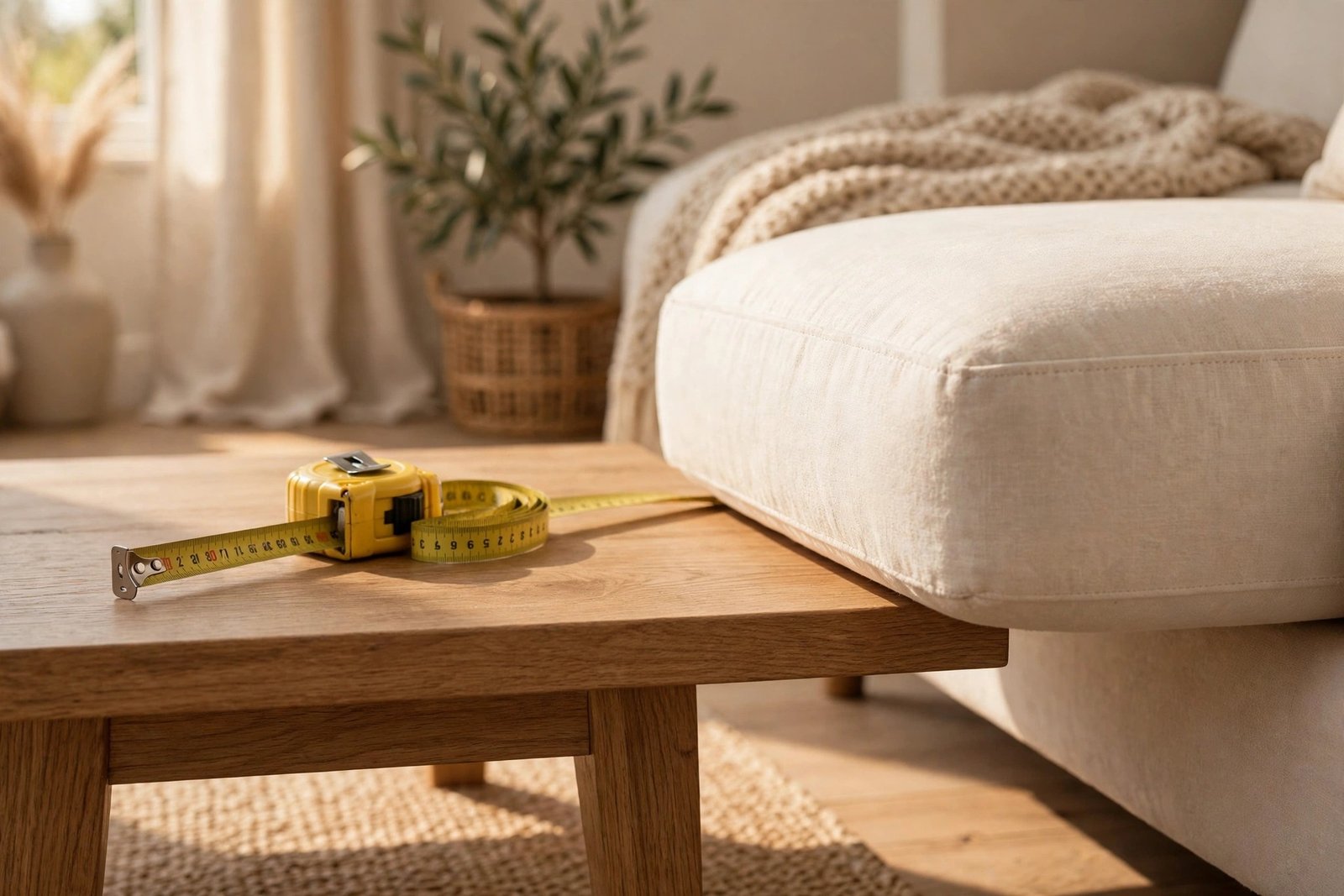
3. The Low and Long Lounge Table: 54 x 30 x 15 Inches
Low, deep sofas with a relaxed, sink-in feel pair best with a low, long table, and the coffee table dimensions that suit them are 54 inches long, 28 to 30 inches wide and 14 to 16 inches high (about 137 x 71 to 76 x 36 to 41 cm). The extra depth gives everyone on a wide sofa somewhere to put a drink without leaning, and the lower height keeps the table below the seat cushions, which is essential when the sofa itself is low. This is the combination for homes where the table doubles as a footrest and a laptop perch on lazy evenings. Choose a solid top rather than glass here, which shows every fingerprint at this height.
4. The Sectional Partner: 56 to 60 Inches Long
Sectionals are long, so their tables need to be long too. For a sectional of 100 inches or more, the coffee table dimensions to look for are 56 to 60 inches in length and 30 to 36 inches in depth, at 16 to 18 inches high (about 142 to 152 x 76 to 91 x 41 to 46 cm). Measure only the main run of the sectional, not the chaise or corner piece, and take two-thirds of that run as your target length. If the sectional wraps around two sides, a square or round table of 36 to 40 inches across often works better than a rectangle, because it serves both runs equally.
5. The Round Table: 36 to 40 Inches in Diameter
For round tables, coffee table dimensions are measured by diameter, and the sweet spot for most living rooms is 36 to 40 inches across (about 91 to 102 cm), at 16 to 18 inches high. A round table suits a two-seater or a compact three-seater, and it is the best shape for rooms where people walk past the table on several sides, because there are no corners to catch a shin on. The trade-off is surface area: a 36-inch round table holds less than a 48-inch rectangle, so it suits households that keep the tabletop fairly clear rather than using it as a display shelf.
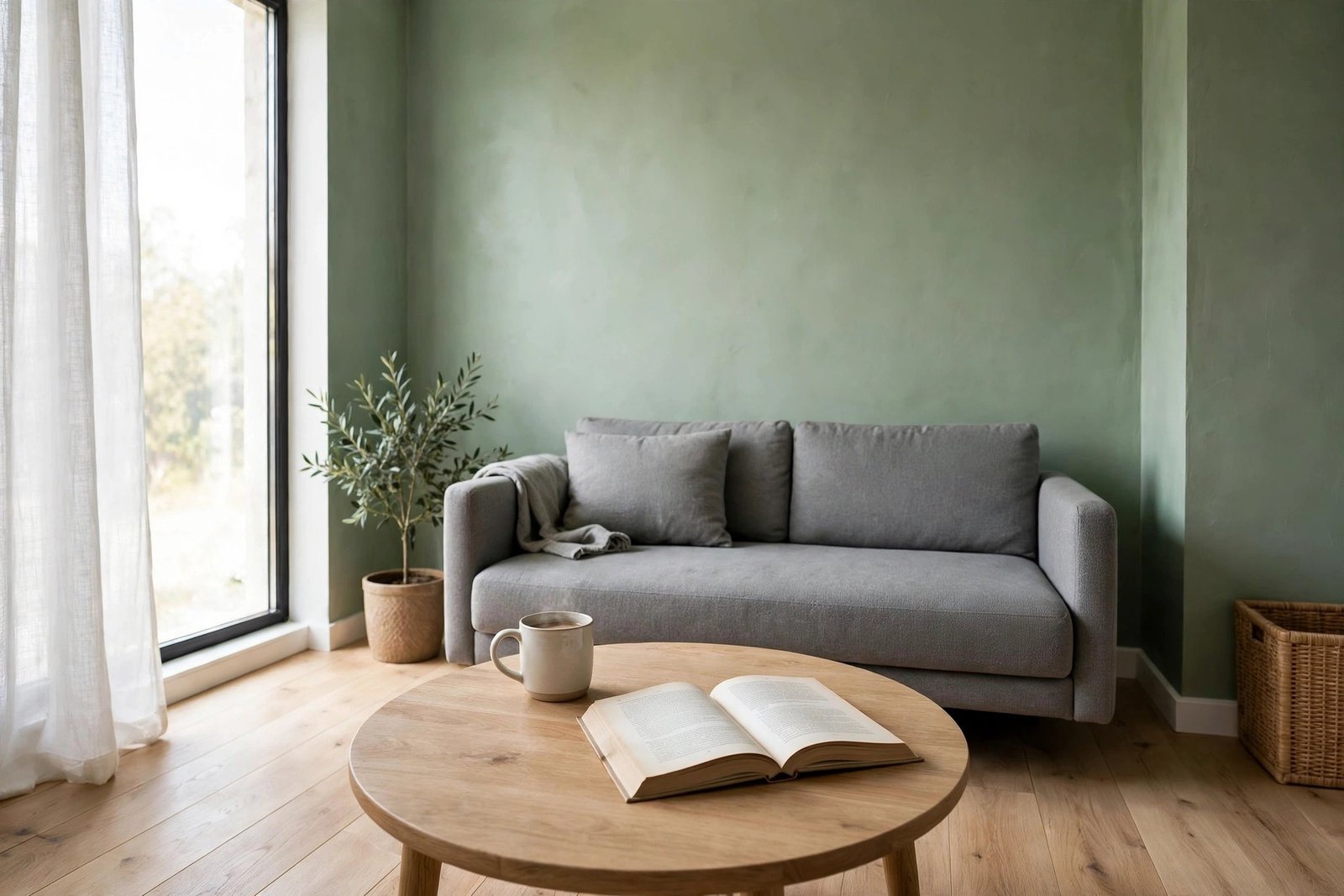
6. The Oversized Statement: 60 to 72 Inches Long
In a large living room with a sofa of 96 inches or more, oversized coffee table dimensions of 60 to 72 inches long and 30 to 36 inches deep make the seating area feel anchored rather than empty (about 152 to 183 x 76 to 91 cm, 16 to 18 inches high). They suit open-plan rooms where the sofa floats in the middle of the space, because they give the eye something substantial to land on. Before you commit to this size, check the walkways on both sides: you still need at least 30 inches of clear passage, and a very long table in a narrow room will fail that test.
7. The Small-Space Square: 30 to 36 Inches Square
Square coffee table dimensions of 30 to 36 inches on each side (about 76 to 91 cm) are the quiet heroes of small living rooms. They suit loveseats, armchair pairings and studio flats, where a rectangle would block the route to the kitchen or the door. A square table also works well in front of a sectional corner, where a rectangle would leave one side of the seating stranded. Keep the height at 16 to 18 inches and the depth in check: a square table that is too deep pushes the seating apart and breaks the conversation circle.
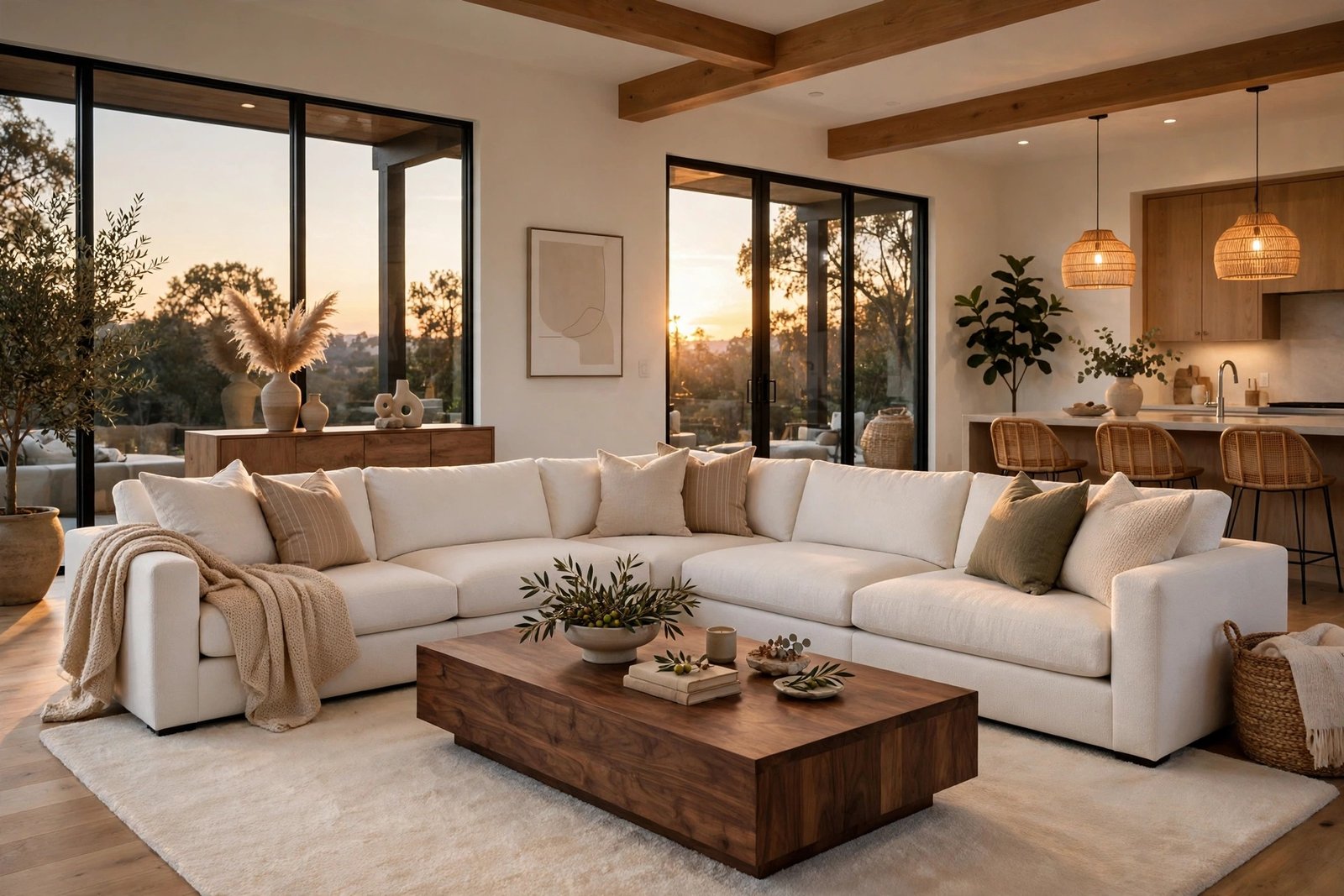
How to Measure Your Sofa and Room Before You Shop
Good coffee table dimensions start with three measurements you can take in five minutes. First, measure the sofa from the outside of one arm to the outside of the other, and multiply by two-thirds: that is your target table length. For a sectional, measure only the straight run the table will sit in front of. Second, sit on the sofa and measure from the floor to the top of the seat cushion while it is compressed under your weight, then subtract one to two inches: that is your target table height. Third, measure the depth of the space between the sofa and the next piece of furniture or wall, and subtract the 14 to 18 inches of legroom you need: what is left is the deepest table that fits. For a second opinion with more worked examples, this coffee table dimensions guide from Castlery walks through the same measurements with clear diagrams for each sofa type.
The Three Spacing Rules That Make a Room Work
Spacing is where coffee table dimensions meet real life, and three gaps matter more than any other number. The first is the gap between the sofa and the table: 14 to 18 inches (35 to 45 cm). Less than 14 inches and your knees hit the table when you sit down; more than 18 inches and you have to lean forward to reach your drink, which defeats the purpose. The second is the walkway around the table: at least 30 inches (76 cm) of clear passage between the table and any wall, television unit or other furniture. This is the number people forget most often, and it is the one that makes a room feel cramped when it is ignored. The third is the rug: the front legs of the sofa and all four legs of the table should sit on the rug, with at least 6 inches of rug showing beyond the table on each side.
Coffee Table Dimensions by Shape
Shape changes how the numbers behave, so the same length can feel very different in a rectangle, a round or an oval. Rectangular tables give the most usable surface and suit long sofas. Round tables need less clearance because there are no corners, which makes them the best choice for tight rooms and homes with small children, but they offer the least surface area. Oval tables are the compromise: they give you the length of a rectangle with the soft edges of a round table, and they suit rooms where people approach the table from the ends as well as the front. Always check depth as well as length when comparing shapes.
Styling a Table Once the Size Is Right
Once the coffee table dimensions are settled, styling is the easy part, and it works best when the table is dressed in odd numbers and varied heights. A tray anchors one end and corrals small items, a stack of two or three books adds height in the middle, and a vase or candle brings in a third level. Leave at least a third of the surface empty: a table that is covered edge to edge looks cluttered no matter how beautiful the objects are, and it leaves nowhere to put a cup down. If you want more ideas for what goes on top once the sizing is sorted, our coffee table decor guide covers trays, books, plants and seasonal styling for every table shape.
Common Sizing Mistakes to Avoid
The most common mistake is buying the table before measuring the sofa. It is tempting to trust the label that says standard size, but standard only works if your sofa is standard too, and many modern sofas are deeper, lower or longer than the ones the standard was built around. The second mistake is choosing height by eye: a table that looks fine in a showroom can sit two inches too high once it is next to your actual sofa, because showroom sofas have firmer, higher cushions. The third is forgetting the rug. A table bought for a bare floor can look wrong the moment a rug goes underneath it, because the rug raises the table by half an inch and changes the visual weight of the whole arrangement. Finally, do not assume two matching side tables can replace a coffee table. They serve a different purpose, and a living room without a central table almost always ends up with drinks balanced on the sofa arm, which is how stains happen.
How Much Should You Budget?
Coffee table dimensions have a direct effect on price, because bigger tables use more material and cost more to ship. A solid wood rectangle in the standard 48-inch size typically costs between £120 and £350 in the UK, or roughly $150 to $450 in the US, depending on the timber and the maker. Compact tables of 36 to 42 inches are often cheaper, from around £80 or $100, while oversized tables of 60 inches or more usually start at £300 or $400 and climb quickly for stone, marble or solid walnut. Whatever your budget, spend it on the right size first and the prettiest finish second.
Quick Recap: The Numbers to Remember
If you take nothing else from this guide, keep these five numbers. Table length should be about two-thirds of your sofa. Table height should sit one to two inches below the seat cushion, usually 16 to 18 inches. Leave 14 to 18 inches between the sofa and the table, and at least 30 inches of walkway around it. And always measure your own sofa before you buy, because the right coffee table dimensions are the ones that fit your room, not the ones on the label.