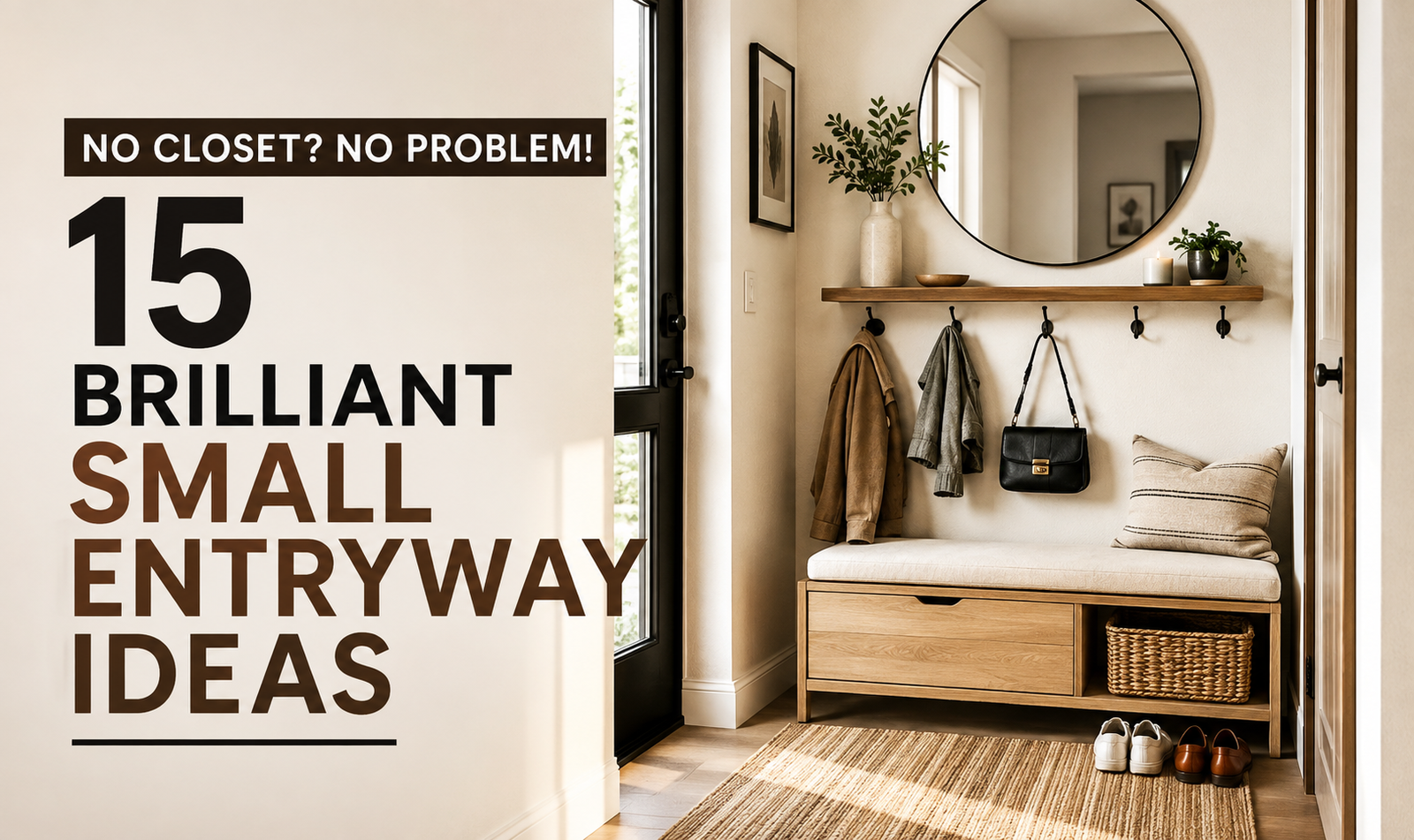
Small entryway decor with no closet can feel challenging, especially when coats, shoes, bags, keys, and everyday essentials have nowhere to go. But a missing closet doesn’t mean your entrance has to look messy or feel unwelcoming.
With the right combination of wall storage, slim furniture, baskets, hooks, mirrors, and smart styling, even the smallest entryway can become organized and beautiful. The secret is to use every available inch without making the space feel crowded.
In this guide, you’ll discover 15 practical and stylish small entryway ideas without a closet that can help you create a functional drop zone while giving your home a polished first impression.
1. Create a Wall-Mounted Drop Zone
When floor space is limited, your walls become your best storage resource.
A simple wall-mounted drop zone can include hooks for coats and bags, a narrow shelf for keys, and a small basket for items that tend to collect near the door.
This approach works particularly well in apartments, narrow hallways, and homes without a traditional foyer.
Keep the arrangement visually simple. Instead of covering the entire wall with storage, create one intentional zone where your daily essentials can land.
A wood shelf with black hooks can create a modern look, while brass hardware and a painted shelf can give the area a more traditional feel.
The result is functional without looking like a storage station.
2. Install a Row of Stylish Hooks
Hooks are one of the easiest solutions when you’re decorating a small entryway without a closet.
Install several hooks at a comfortable height for coats, handbags, hats, umbrellas, and reusable shopping bags. If several people use the space, assign each person a hook to prevent everyday clutter from spreading.
Choose hooks that complement your interior style.
Matte black works well in modern spaces, brushed brass adds warmth, and natural wood can soften a Scandinavian or Japandi-inspired entryway.
For a more polished appearance, keep only the items you use regularly on display. Store seasonal coats and less frequently used accessories somewhere else.
3. Choose a Slim Entryway Bench
A small bench can provide both seating and storage without requiring a large footprint.
Choose a design that is narrow enough to preserve a comfortable walkway. A bench with an open shelf underneath can hold everyday shoes, while baskets can conceal smaller accessories.
A storage bench is especially useful because it gives you a place to sit while putting on shoes and creates an additional landing spot for belongings.
Current hallway guidance from IKEA also highlights slim benches and storage benches as practical solutions for tighter entryways.
For a sophisticated look, choose a bench in natural wood, upholstered linen, or a simple painted finish that connects with the colours used elsewhere in your home.
4. Use a Narrow Shoe Cabinet
Shoes can quickly make a closet-free entryway look chaotic.
Instead of allowing pairs to accumulate on the floor, use a narrow shoe cabinet that takes advantage of vertical wall space.
Look for a shallow design that doesn’t project too far into the walkway. Closed storage is especially useful because it keeps footwear visually contained.
If you have a particularly narrow entrance, measure the available depth before purchasing anything. A beautiful cabinet isn’t useful if it makes the walking path uncomfortable.
A narrow shoe cabinet can also double as a surface for a small lamp, decorative bowl, framed artwork, or tray for keys.
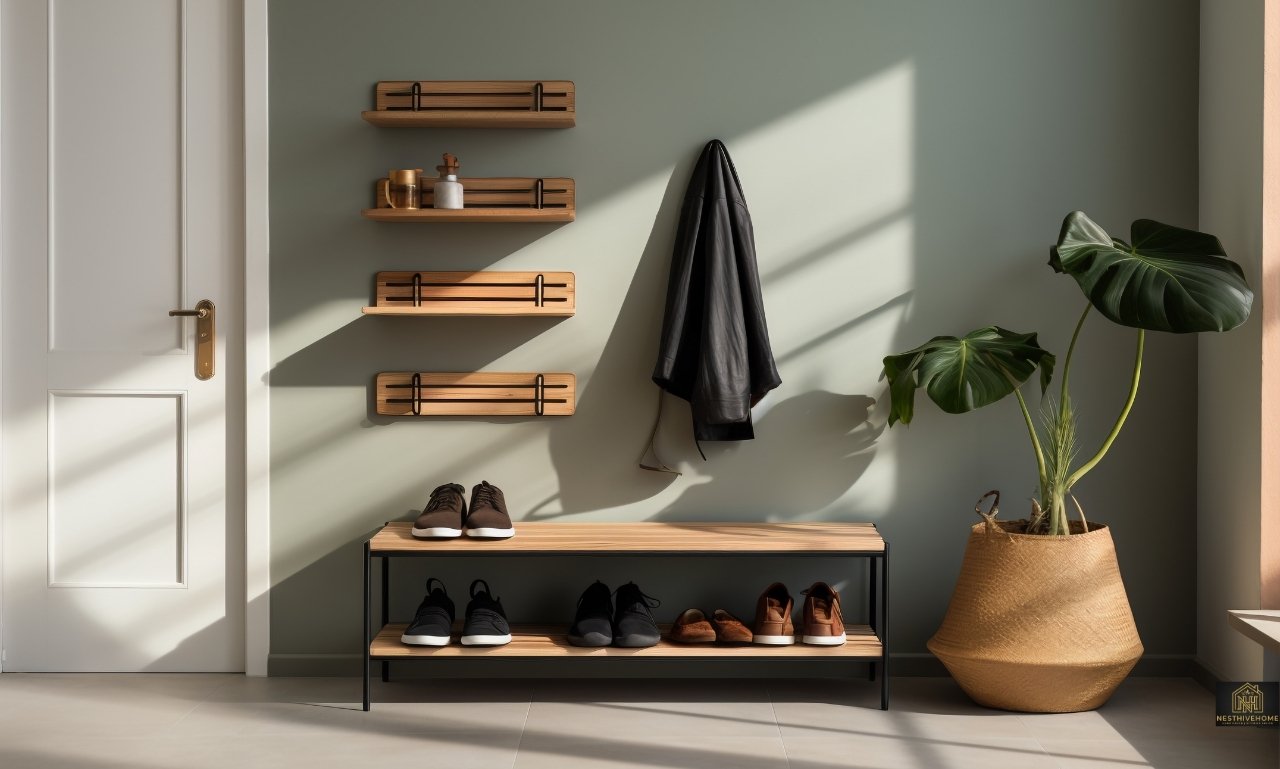
5. Add Baskets for Hidden Storage
Baskets are an easy way to introduce hidden storage without making your entryway look overly functional.
Use one basket for scarves and hats, another for reusable shopping bags, or a small basket for pet accessories.
Choose baskets that match the overall room.
Woven seagrass, rattan, cotton, and natural-fibre baskets can bring warmth to a neutral entryway. Structured fabric baskets can create a cleaner contemporary appearance.
The important rule is to give each basket a purpose.
Too many baskets can make a tiny space look crowded, so start with one or two that solve your biggest storage problems.
6. Take Storage Above the Door
The wall above a doorway is often wasted space.
If your entryway has sufficient ceiling height, a narrow shelf above the door can provide useful storage for seasonal or rarely used items.
Use attractive boxes or matching baskets so the storage looks intentional rather than improvised.
This is especially useful for items you don’t need every day, such as winter accessories, spare bags, or seasonal decorations.
IKEA’s current small-hallway examples also demonstrate how higher wall areas can be used for additional storage when floor space is limited.
Keep frequently used items at an easy-to-reach height and reserve high shelves for things you access less often.
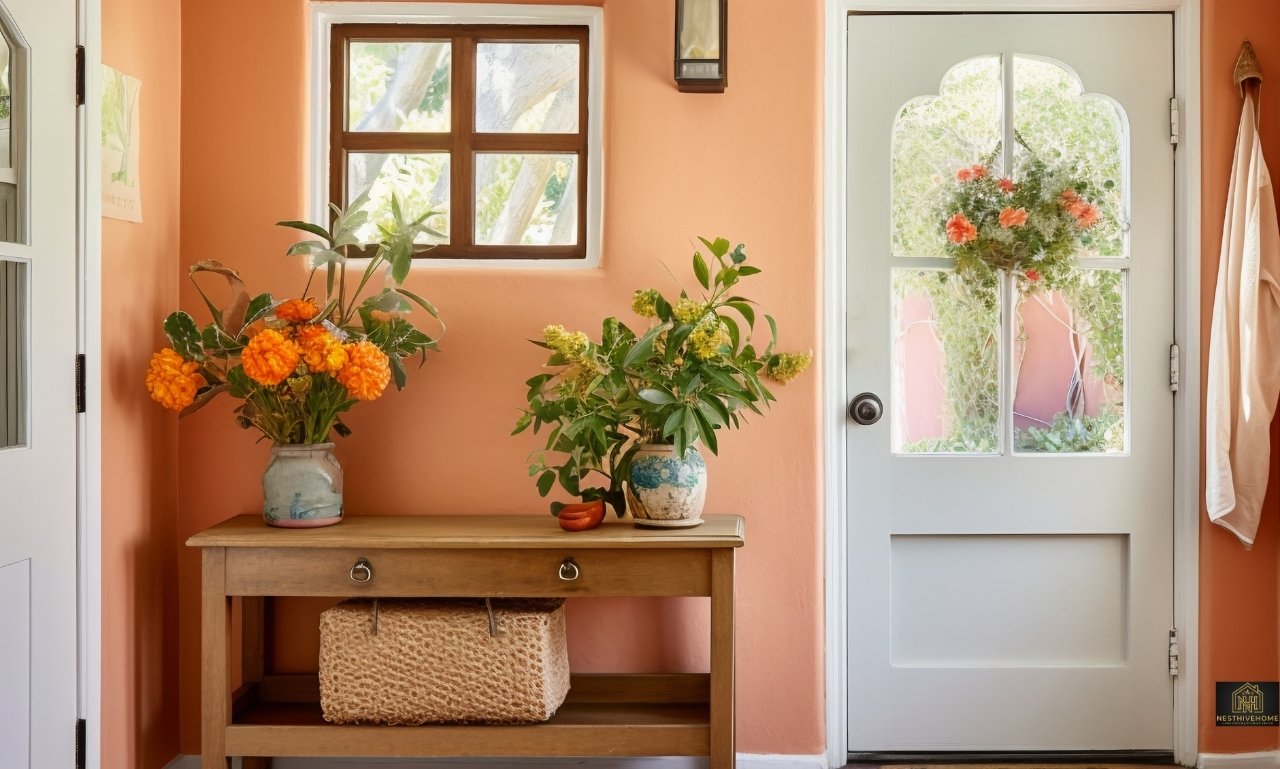
7. Make a Mirror Part of the Design
A mirror is one of the smartest decorative additions to a small entryway.
It gives you a convenient place to check your appearance before leaving and can also make a compact area feel brighter and more open.
A round mirror above a slim console or shoe cabinet creates a classic arrangement. For a contemporary look, try a large rectangular mirror with a thin frame.
You don’t need a huge mirror to make an impact. Even a modest design can become a strong focal point when paired with attractive lighting and a small shelf.
Choose a frame that connects with your existing hardware for a more cohesive appearance.
8. Use a Floating Shelf for Everyday Essentials
A floating shelf provides storage without taking up valuable floor space.
Install one near the door for small everyday items such as keys, sunglasses, wallets, or mail.
Add a small decorative tray to keep loose objects contained. You can also place a small plant, candle, or framed photograph on the shelf.
Avoid turning the shelf into a dumping ground.
The most effective entryway shelves combine practical storage with a few decorative elements. That balance keeps the area useful while maintaining a clean appearance.
9. Create a Mini Mudroom Without a Closet
You don’t need a separate room to create a mudroom-style entryway.
Use a small section of wall and combine three elements:
Hooks + bench + storage
This simple combination can create a compact drop zone for coats, shoes, bags, and everyday accessories.
If you have more wall space, add a narrow shelf above the hooks. If the area is extremely small, skip the bench and use a slim shoe cabinet underneath.
Think vertically rather than horizontally.
A small wall can often accommodate much more storage than you expect when every level has a purpose.
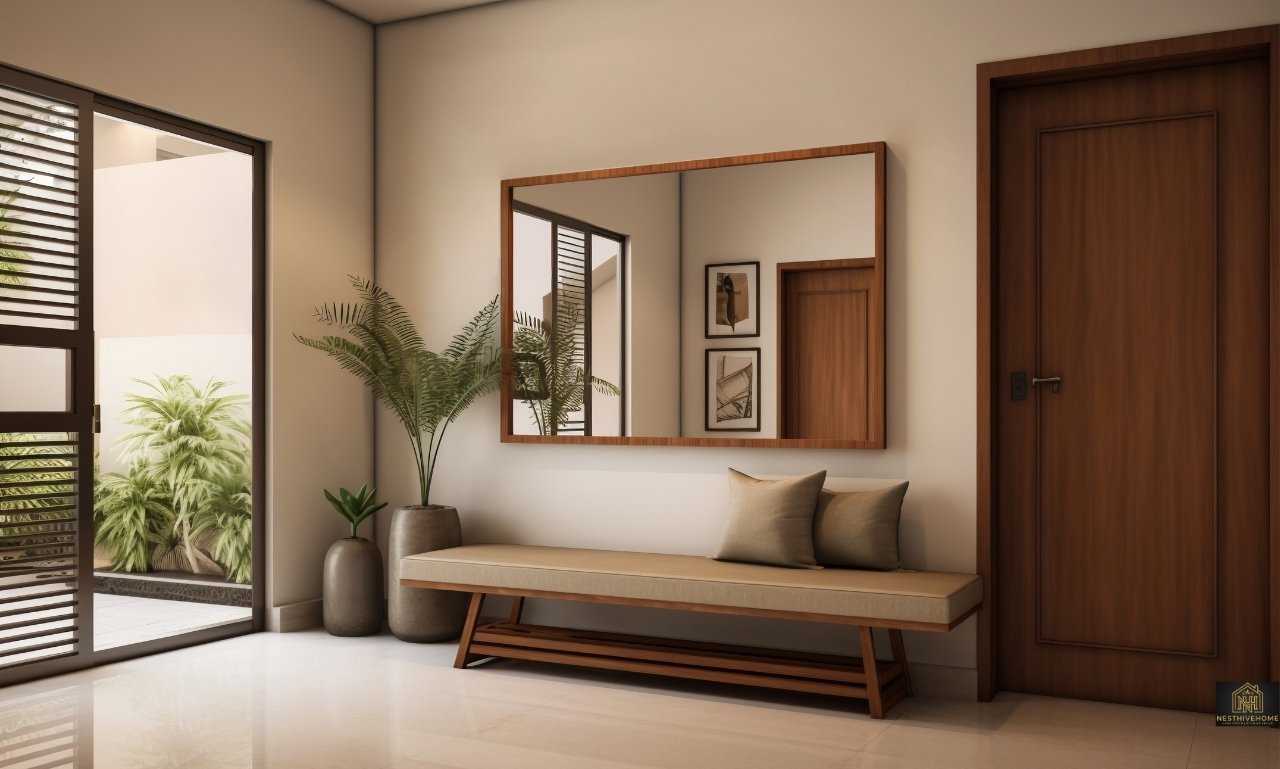
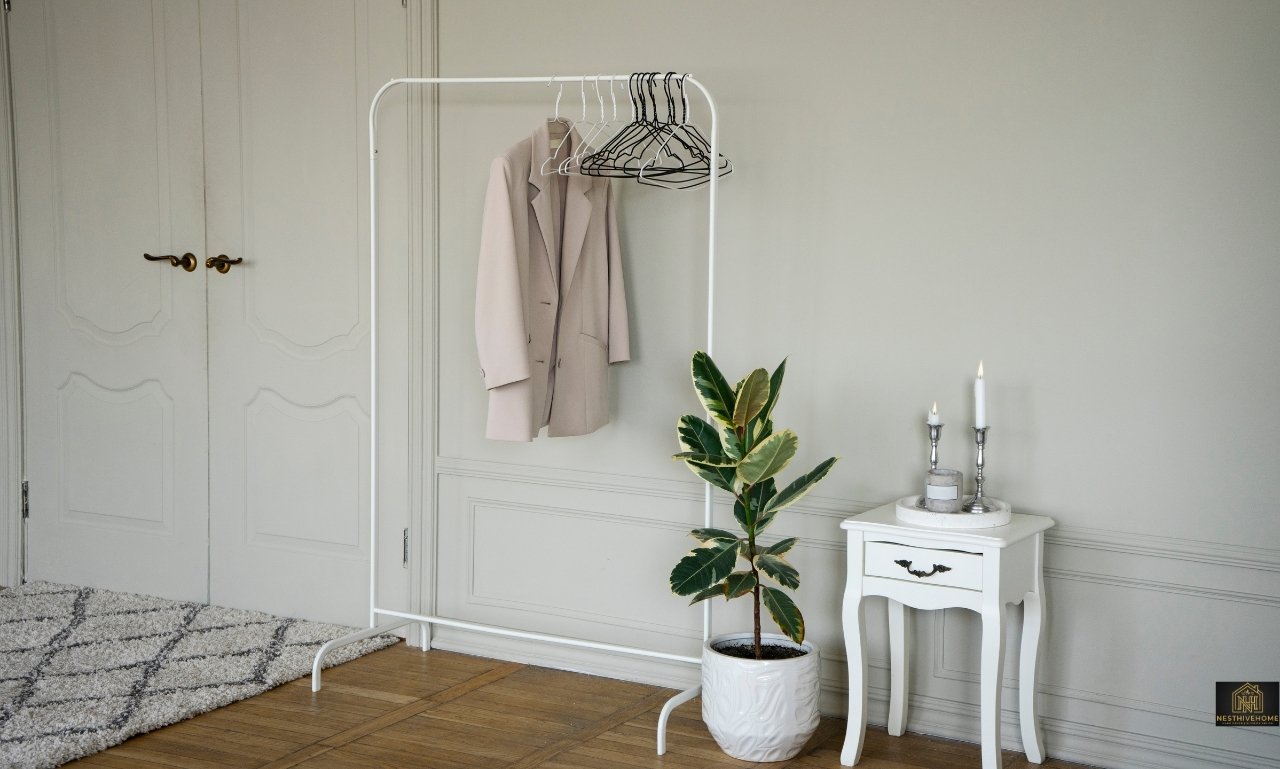
10. Try a Freestanding Coat Rack
If you can’t drill into your walls or you’re renting your home, a freestanding coat rack can be an excellent alternative.
Choose a slim design that fits neatly into an unused corner.
A simple wooden rack can complement warm interiors, while a sculptural black metal design can add a modern accent.
Don’t overload it.
A coat rack covered with jackets, bags, scarves, and hats can quickly become the most visually dominant object in a tiny entryway. Keep only current essentials there and relocate everything else.
11. Use a Storage Bench Instead of a Console
A traditional console table may look attractive, but it doesn’t always solve the biggest problem in a closet-free entryway: storage.
A storage bench can perform several jobs at once.
It can provide:
- Seating
- Shoe storage
- Hidden storage
- A decorative surface
- A visual anchor
Choose a bench with drawers, cubbies, or a lift-up seat depending on what you need to store.
For a refined look, use baskets inside open cubbies to conceal smaller objects and keep the visual appearance calm.
12. Add a Small Rug to Define the Entryway
If your home doesn’t have a clearly separated foyer, use a rug to visually establish one.
A narrow runner can make an entrance feel more intentional while adding softness and colour.
Choose a low-profile rug that doesn’t interfere with doors and is easy to clean.
For small spaces, avoid overly complicated patterns unless the rest of the entryway is very simple. A subtle geometric, striped, vintage-inspired, or textured design can add character without overwhelming the area.
A rug can also visually connect the entryway with the adjoining living space.
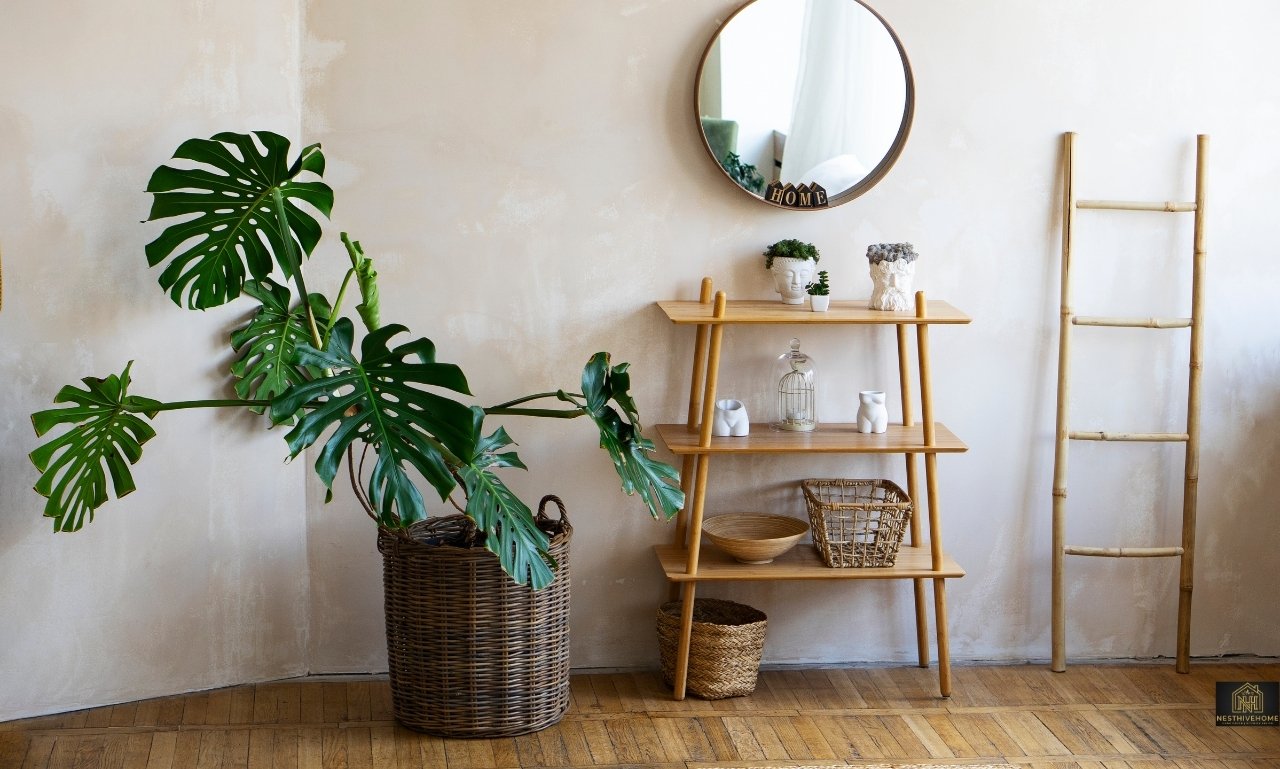
13. Use Vertical Storage to Save Floor Space
One of the most effective solutions for small entryway decor with no closet is to think vertically.
Instead of spreading storage across the floor, build upward with:
- Wall hooks
- Tall shelves
- Narrow cabinets
- Peg rails
- Hanging baskets
- Vertical coat racks
This creates storage capacity while preserving valuable walking space.
IKEA’s current hallway inspiration similarly emphasizes vertical storage as a way to make small spaces work harder.
Use the lower levels for everyday essentials and higher areas for seasonal belongings.
This simple strategy can make a small entrance feel considerably more organized.
14. Keep a Dedicated Key and Mail Station
Small objects can create surprisingly large amounts of clutter.
Keys, receipts, mail, sunglasses, chargers, and wallets often end up scattered across the nearest table.
Create a dedicated station near the door.
A narrow shelf, small wall organizer, tray, or set of hooks can give these items a permanent home.
For an elegant appearance, use one attractive tray rather than several small containers.
You can also add a small noticeboard or framed organizer if you need a place for reminders and household notes.
The goal is simple: everything that enters your home should have somewhere to land.
15. Style the Space With One Strong Focal Point
A tiny entryway doesn’t need lots of decoration.
In fact, too many decorative objects can make the space feel smaller.
Instead, choose one strong focal point.
It could be:
- An oversized mirror
- A striking piece of artwork
- A sculptural light
- A beautiful vintage bench
- A statement wallpaper
- An unusual wall hook arrangement
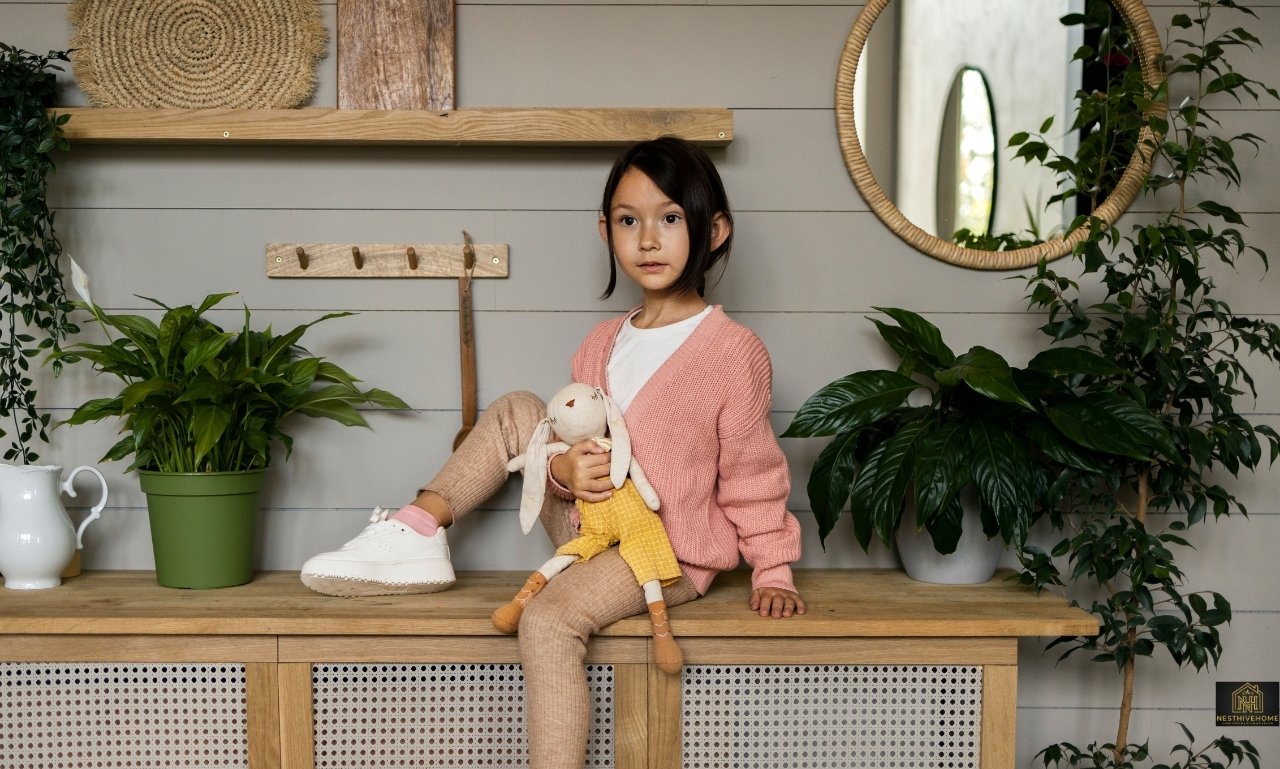
Then keep the remaining elements simple.
This creates a more sophisticated result because the eye has somewhere specific to rest.
Current IKEA hallway inspiration also demonstrates how small spaces can remain welcoming and memorable when storage and decorative elements are carefully coordinated.
How to Make a Small Entryway Feel Bigger
Once you’ve solved the storage problem, focus on visual space.
Use lighter wall colours, reflective surfaces, slim furniture, and consistent materials to prevent the entrance from feeling crowded.
A large mirror can reflect light, while wall-mounted storage keeps the floor clearer.
Another useful trick is to keep the colour palette limited. Two or three main colours can make a compact entryway feel more cohesive than a collection of unrelated shades.
You can still introduce personality through artwork, a patterned rug, brass hardware, greenery, or textured baskets.
Common Mistakes to Avoid
Choosing Furniture That Is Too Deep
A deep cabinet may provide plenty of storage, but it can make a narrow entrance difficult to walk through.
Measure first and prioritize slim furniture.
Leaving Shoes Everywhere
Even a beautifully decorated entryway will look messy if shoes cover the floor.
Give everyday footwear a dedicated rack, cabinet, bench, or basket.
Using Too Many Hooks
Hooks are useful, but an entire wall covered with bags and coats can make a small entrance feel chaotic.
Use enough hooks for everyday needs and store seasonal items elsewhere.
Ignoring Vertical Space
If you’re only using the floor, you’re leaving valuable storage potential unused.
Look upward and use walls, shelves, and the area above doors where appropriate.
Overdecorating
A small entryway doesn’t need a dozen accessories.
Choose a few useful and beautiful pieces instead.
A Simple Formula for a Closet-Free Entryway
If you’re unsure where to start, use this simple formula:
One storage piece + wall hooks + one mirror + one basket + one decorative accent
For example, pair a slim shoe cabinet with five wall hooks, a round mirror, a woven basket, and a small plant.
This gives you storage, function, personality, and visual balance without filling the room.
Final Thoughts
Creating small entryway decor with no closet is really about making limited space work harder without making it feel crowded.
Start with your biggest problem. If shoes are the issue, choose narrow shoe storage. If coats and bags create clutter, install hooks or a compact coat rack. If you lack a place for keys and mail, create a small drop zone.
Then add decorative elements such as a mirror, rug, artwork, greenery, or a beautiful basket to make the space feel finished.
The best entryway isn’t necessarily the one with the most storage. It’s the one where everything has a place and the space still feels welcoming.
With a little creativity, even a tiny entrance without a closet can become organized, practical, and genuinely beautiful.