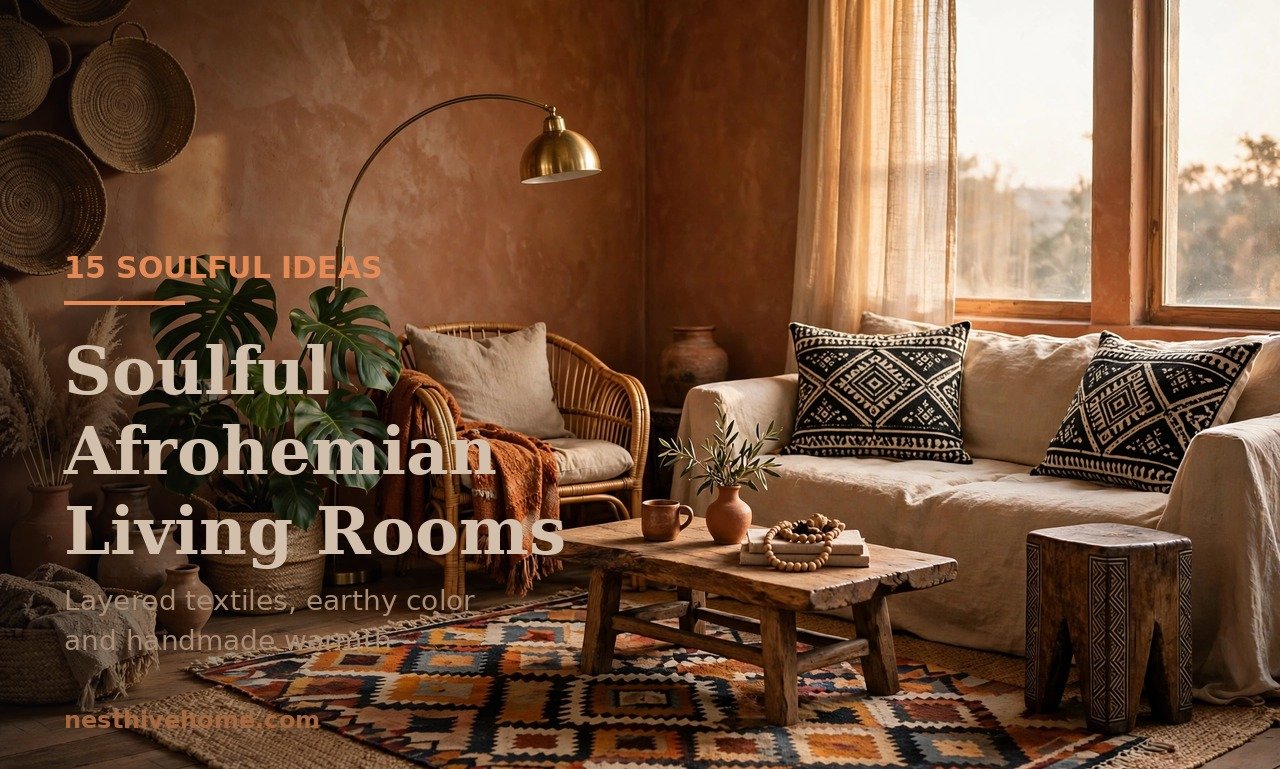
Afrohemian living room decor is one of the most soulful design movements to reach the mainstream in recent years, and it is easy to see why it has captured so many hearts. Born from a fusion of African heritage craftsmanship and free-spirited bohemian warmth, the look is rich without being heavy, layered without being cluttered, and deeply personal without feeling staged. If your living room has been whispering for more character, this guide walks you through fifteen ideas that bring the afrohemian spirit home, from statement textiles to the small, thoughtful details that make a space feel collected over a lifetime.
Unlike trends that arrive with a strict rulebook, afrohemian living room decor rewards intuition. It asks you to trust earthy color, honor handmade objects, and mix eras and cultures with respect rather than randomness. The result is a living room that feels grounded and alive, a place where every cushion, carving, and clay vessel has a story. Let us start with the foundations, then build up to the fifteen ideas you can try this weekend.
What Makes a Living Room Afrohemian?
Before we dive into the ideas, it helps to understand the three pillars that hold afrohemian living room decor together. First, there is the African craft heritage: mudcloth from Mali, kente from Ghana, kuba cloth from the Congo, hand-carved stools, woven baskets, and ceramics shaped by human hands. Second, there is the bohemian layering: relaxed silhouettes, plants everywhere, textiles piled with joyful abandon, and a general refusal to take decorating too seriously. Third, there is a modern edit: clean-lined furniture, breathing room between objects, and a curated restraint that keeps the whole thing from tipping into chaos.
When those three forces balance, the room sings. When one dominates, the look can feel like a costume, a flea market, or a showroom. The ideas below are designed to keep you in that sweet spot, with practical notes on color, scale, and budget throughout.
1. Anchor the Room with a Mudcloth Moment
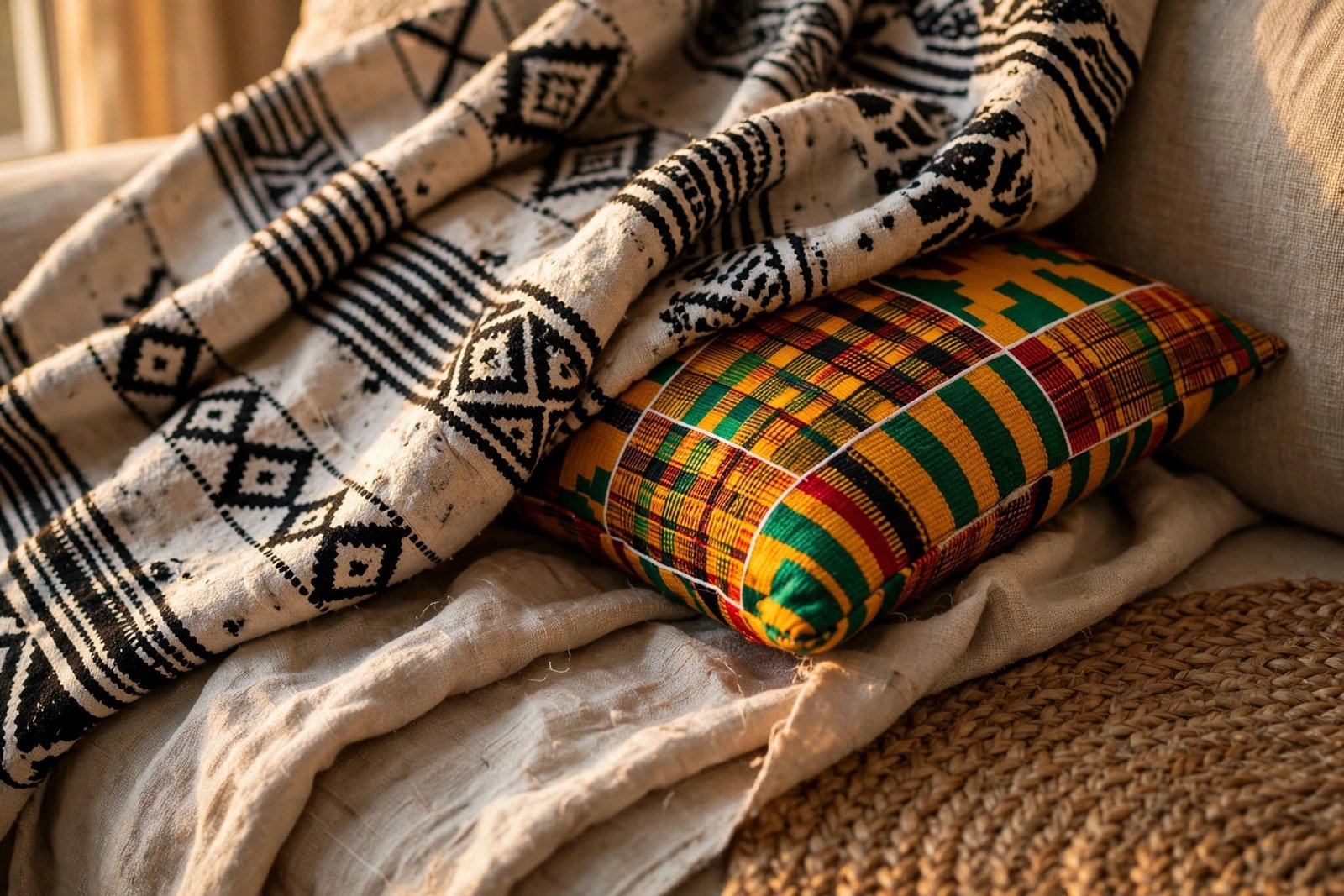
Nothing says afrohemian living room decor quite like mudcloth, the hand-painted cotton textile from Mali traditionally made with fermented mud. Drape a large mudcloth throw over the back of your sofa, or use mudcloth cushion covers in black, white, and ochre as your starting palette. Because the patterns are graphic and high-contrast, they give the whole room an instant focal point, which means you can keep the rest of your textiles quieter.
Shopping tip: look for hand-woven pieces rather than printed imitations if your budget allows. The slight irregularities in genuine mudcloth are exactly what make it beautiful, and every piece carries the mark of its maker.
2. Layer Rugs Like You Mean It
A single rug rarely does an afrohemian room justice. Start with a large natural-fiber base, think jute or sisal, then layer a smaller patterned rug on top: a vintage kilim, a Moroccan-style rug, or a flat-weave with tribal geometry. The layered look adds instant warmth underfoot and visually zones the seating area, which is especially useful in open-plan spaces.
Keep the base rug neutral and let the top layer carry the pattern. This keeps the combination from fighting, and it means you can swap the top rug seasonally without replacing the foundation.
3. Build a Basket Gallery Wall
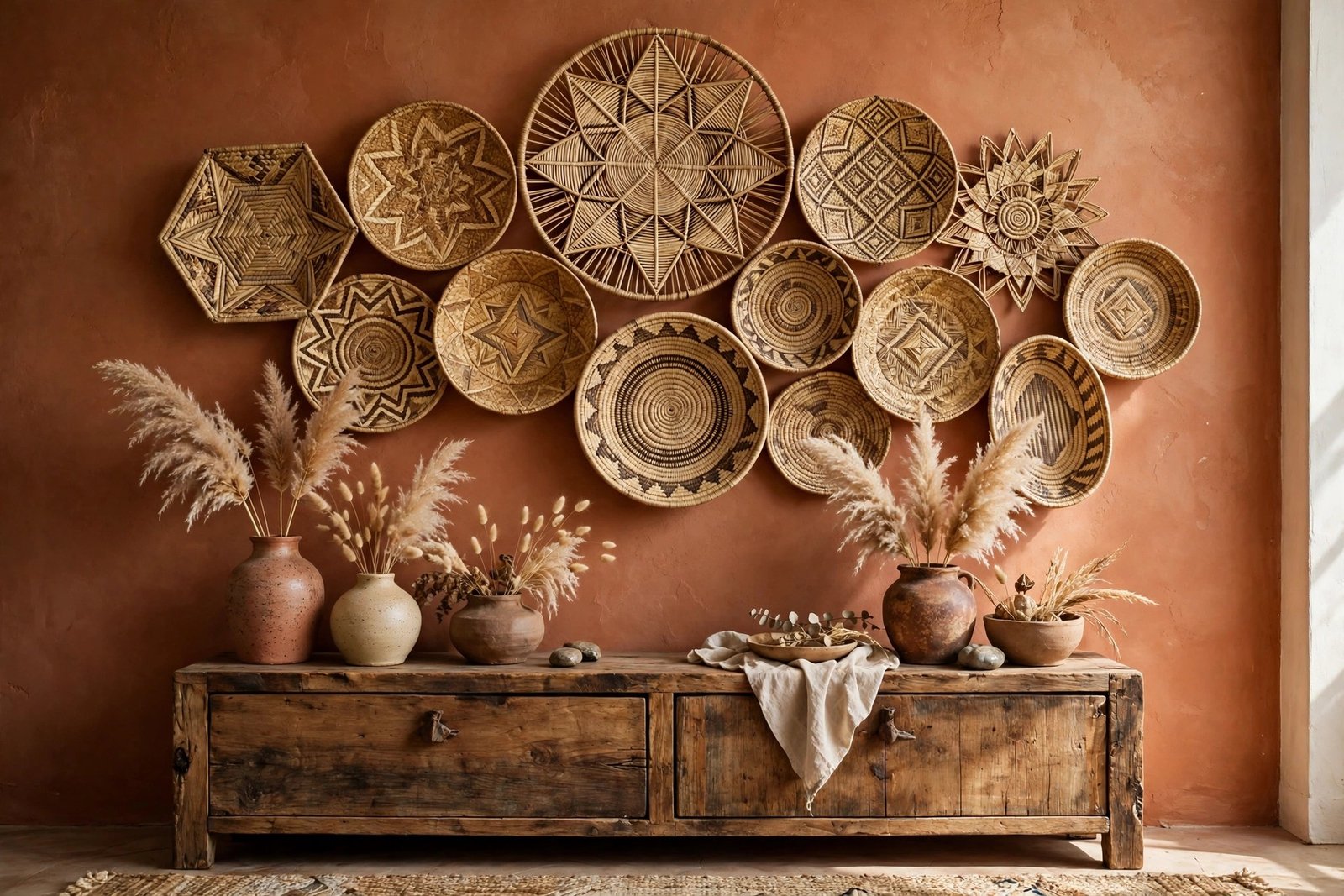
Woven wall baskets are the signature wall treatment in afrohemian living room decor, bringing sculptural texture that framed prints simply cannot. Arrange five to nine baskets in an organic cluster above the sofa or along a hallway-facing wall, mixing sizes and patterns: sunburst sweetgrass designs, black-and-natural geometric weaves, shallow raffia trays.
Hang the largest basket slightly off-center and build outward, keeping two to three inches between pieces. Command-strip style hooks or simple nails both work; the baskets are light, so renters can join in too.
4. Choose Earthy, Sun-Baked Color
The color palette of afrohemian living room decor is drawn from the landscape: terracotta, ochre, burnt sienna, deep indigo, warm tobacco, and the soft black of charred wood. You do not need to paint every wall. Try one accent wall in a warm clay tone, or keep walls warm white and let the color arrive through textiles, pottery, and art.
A reliable formula is three parts warm neutral, two parts earthy mid-tone, and one part deep saturated accent. That ratio keeps the room grounded and sunlit rather than dark and heavy.
5. Mix Carved Wood with Clean Lines
A hand-carved stool, a sculptural side table, or a pair of wooden figurines brings the human hand into the room in a way no mass-produced piece can. The trick is contrast: place carved, organic wood next to clean-lined modern furniture. A rough-hewn stool beside a tailored linen sofa, for instance, makes both pieces look better.
Source carved pieces from fair-trade makers or reputable vintage sellers when you can. Beyond the ethics, which matter, the quality of the carving is visibly different up close.
6. Let Plants Do the Talking
Lush greenery is non-negotiable in afrohemian living room decor. Large-leaf plants like monstera, fiddle-leaf fig, and bird of paradise echo the botanical richness of the style, while trailing pothos softens shelves and basket arrangements. Cluster plants in groups of three at different heights, and house them in woven baskets, terracotta pots, or handmade ceramic planters.
If your thumb is more brown than green, snake plants and ZZ plants tolerate low light and neglect with admirable grace. Even two or three well-placed plants change the entire feeling of the room.
7. Introduce Kente and Kuba Accents
Once mudcloth has set the tone in your afrohemian living room decor, deepen the story with kente cloth or kuba cloth accents. A kente throw folded over an armchair arm brings jewel-toned geometry, while a framed piece of kuba cloth, with its raffia embroidery in black and cream, reads almost like abstract art. These textiles carry deep cultural symbolism, so treat them with respect: learn what the patterns mean, buy from authentic sources, and let them be stars rather than background noise.
8. Warm It Up with Brass and Woven Light
In afrohemian living room decor, lighting makes or breaks the mood. Swap cool overheads for warmth: a rattan or woven seagrass pendant over the coffee table, a brass arc floor lamp beside the reading chair, and table lamps with linen shades on sideboards. Warm bulbs around 2700K mimic late-afternoon sun and make terracotta and wood tones glow.
Layer at least three light sources at different heights. The room should feel lit by a collection of glowing objects, not by a single ceiling fixture.
9. Style Open Shelves with Collected Objects
A floating shelf or an open bookcase is the perfect stage for the collected-over-time feeling at the heart of afrohemian living room decor. Group objects in odd numbers: a stack of art books, a small carved giraffe or mask, a handmade bowl, a trailing plant. Leave breathing room between groupings; negative space is what separates “curated” from “cluttered.”
Rotate your shelf styling with the seasons. Swapping two or three objects costs nothing and keeps the room feeling alive and intentional.
10. Add a Low, Loungy Seating Moment
Rooms styled with afrohemian living room decor invite you to sink in. Create a floor-level moment with large floor cushions, a low pouf, or a daybed piled with throws near the window. This kind of relaxed seating nods to communal gathering traditions and gives the room a casual corner that contrasts beautifully with a more formal sofa arrangement.
Choose cushions in washable covers, mudcloth or kilim patterns work brilliantly, so the corner stays practical for everyday lounging, kids, and pets.
11. Hang Textiles as Art
Some textiles are too beautiful to sit on. Hang a vintage kente strip, a length of indigo adire cloth, or an embroidered wall hanging on a simple wooden dowel or brass rod. Textile art softens acoustics, adds large-scale pattern without paint, and brings a gallery feeling to your afrohemian living room decor at a fraction of the cost of original paintings.
For a bolder move, stretch a smaller textile over a canvas frame for a crisp, tailored look that still honors the handmade.
12. Ground the Space with Leather and Hide
Rich leather, a cowhide rug, or a leather pouf adds a layer of warmth and age that synthetic materials cannot fake. In afrohemian living room decor, a cognac leather armchair against terracotta walls is a combination that never fails, and a small hide rug layered over jute adds pattern and softness under a coffee table.
Balance animal materials with plenty of plant fiber and wood so the room feels earthy rather than lodge-like. One or two leather pieces per room is plenty.
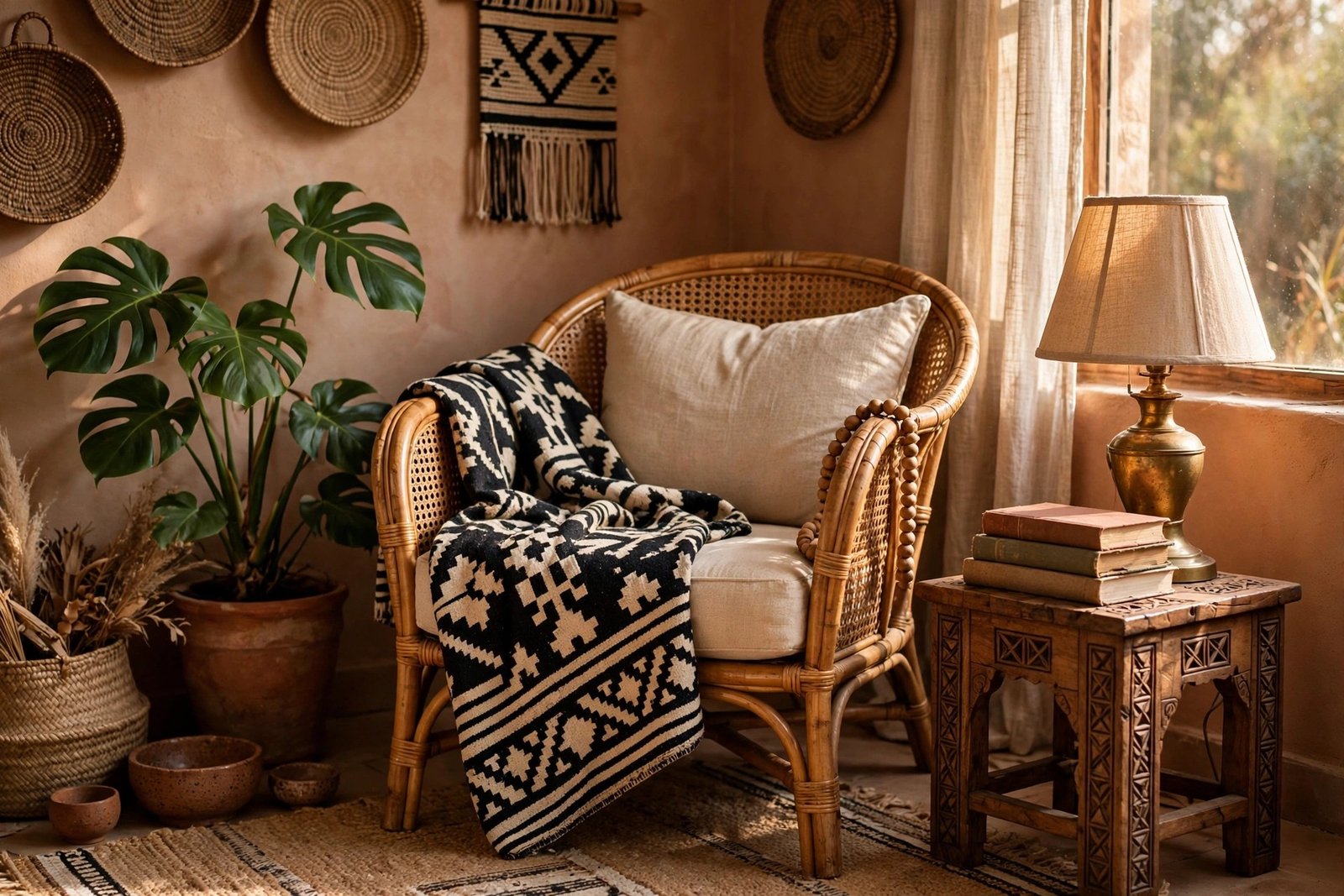
13. Create a Ritual Corner
Every room grounded in afrohemian living room decor benefits from one intentional corner: a small altar of meaningful things. It might be a side table with a candle, a framed family photograph, a stone from a favorite trip, and a tiny plant. This is the most personal idea on the list, and often the one guests remember, because it shows the room belongs to a real person with a real history.
Keep it small and deliberate. Three to five objects, dusted and arranged with care, beat a crowded surface every time.
14. Play with Pattern Scale
The secret to mixing the bold patterns of afrohemian living room decor without visual chaos is scale contrast. Pair one large-scale pattern, like a big mudcloth throw, with one medium pattern, such as a kilim cushion, and one small pattern, like a finely woven basket. When every pattern is the same size, they compete; when the scales differ, they harmonize.
Repeat one color across all three patterns, indigo or rust are natural choices, to tie the mix together.
15. Finish with Scent and Sound
The final layer of any living room is invisible. A cedar or sandalwood candle, a small bowl of dried lavender, or a handmade incense holder engages the senses that decor usually forgets. Add a woven basket holding a few vinyl records or a small speaker tucked behind a plant, and the room becomes an experience, not just a view.
Scent is powerful but personal, so keep it subtle. One signature scent for the room is enough.
Afrohemian Living Room Decor on a Budget
You do not need a designer budget to build an inviting afrohemian living room decor scheme. Thrift stores are full of woven baskets, brass candlesticks, and wooden bowls waiting for a second life. A single yard of mudcloth-style fabric can become two cushion covers. Paint is the cheapest transformation of all: one wall in warm clay instantly shifts the mood. For more bohemian-leaning inspiration that pairs beautifully with this style, see our guide to boho outdoor living room ideas, many of the textile and layering tricks translate indoors too.
Prioritize in this order: textiles first, because they deliver the most visual change per dollar; then lighting, because warm light transforms everything it touches; then one carved or handmade statement piece that gives the room its soul.
Common Mistakes to Avoid
A few missteps can flatten the look. Avoid buying a matching “tribal set” where every textile shares the identical print; real collected rooms mix sources. Avoid cool gray walls, which fight the warm palette, choose warm white or clay instead. And avoid treating cultural objects as mere decoration: a quick read about the craft traditions behind your pieces, like the heritage guide at SampleBoard’s afrohemian decor overview, deepens your appreciation and your styling choices.
Finally, resist the urge to fill every surface. Afrohemian living room decor breathes. The empty spaces between your beautiful objects are part of the design.
Bringing It All Together
Start with one hero textile, layer in wood and woven texture, warm up the light, and let the room evolve as you find pieces you love. Afrohemian living room decor is not a finish line, it is a way of collecting, and the best rooms in this style are never truly finished. They grow with you, one meaningful object at a time.