
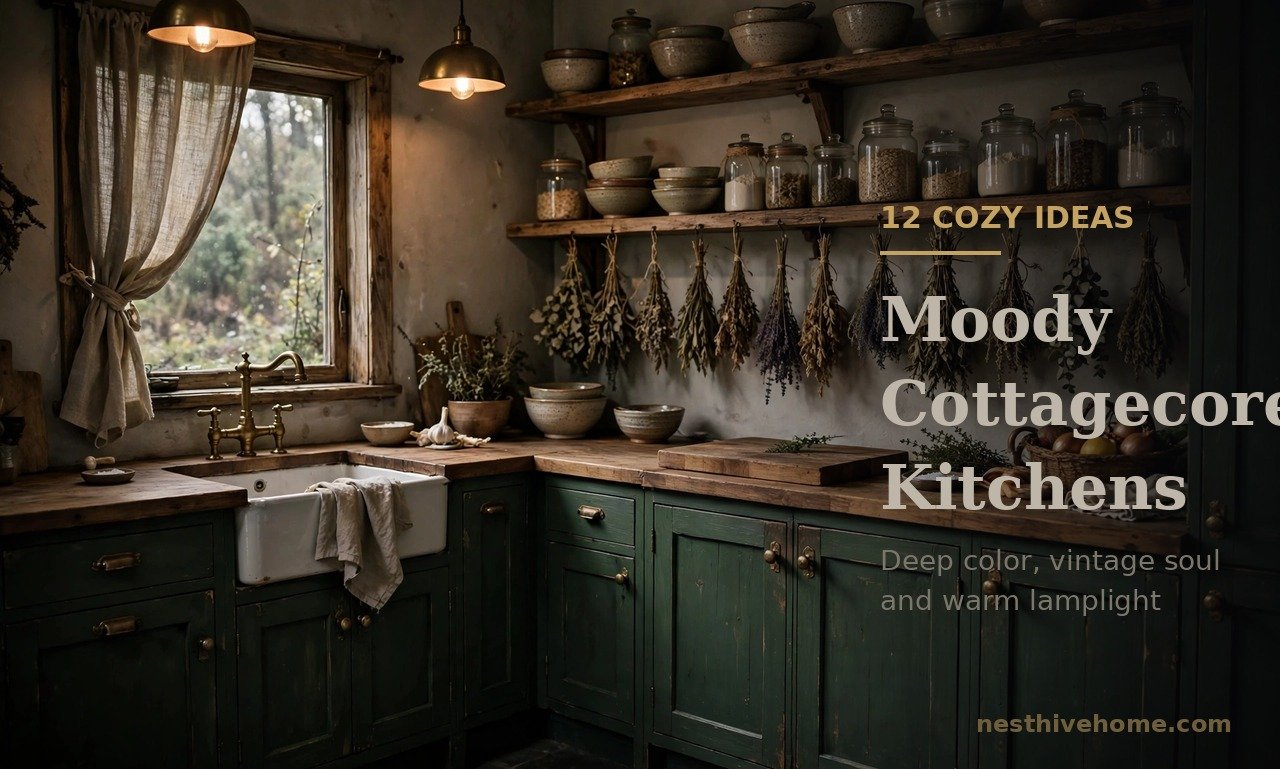
Dark cottagecore kitchen style is the moody, romantic answer to a decade of white-on-white kitchens, and it is winning hearts fast. Instead of bright subway tile and pale cabinets, picture deep forest-green cabinetry, aged brass hardware, open shelves of handmade pottery, dried herbs hanging by the window, and lamplight pooling on worn wood. This guide collects twelve ideas for building a dark cottagecore kitchen that feels like a storybook, warm, storied, and quietly dramatic, whether you are renovating or just restyling.
The look sits at the intersection of two beloved aesthetics. From cottagecore it takes the pastoral romance: natural materials, vintage finds, botanical touches, and the feeling that everything was collected slowly over time. From the dark and moody movement it takes the saturated color and low, warm light. Together they make a kitchen that feels like an embrace, especially on gray mornings and long winter evenings.
What Defines a Dark Cottagecore Kitchen?
Three elements carry the style. First, deep, earthy color: forest green, charcoal, midnight navy, espresso brown, on walls or cabinetry. Second, natural and aged materials: wood with visible grain, stone, handmade ceramics, linen, brass that has been allowed to patina. Third, collected vintage character: open shelving, botanical prints, copper pots, apothecary jars, pieces that look like they have a past. Keep those three in balance and the room reads as intentional rather than simply dark.
1. Paint the Cabinets a Deep, Earthy Green
The single most transformative move in a dark cottagecore kitchen is painting the cabinets. Forest green, deep olive, or a blackened sage instantly adds the age and intimacy the style demands. If full commitment feels scary, paint only the lower cabinets and keep uppers in warm cream, the two-tone look is classic cottagecore and keeps smaller kitchens from feeling closed in.
Choose a matte or eggshell finish rather than high gloss. Flat finishes absorb light softly and hide the small imperfections that actually suit this style.
2. Swap Hardware for Aged Brass or Iron
Cabinet hardware is jewelry for the kitchen, and in a dark cottagecore kitchen it should look like it has stories. Aged brass cup pulls, black iron knobs, or vintage-style latches change the entire feeling of painted cabinets for very little money. Most pulls unscrew in minutes, making this the best renter-friendly upgrade on this list.
Mix metals sparingly: one dominant finish with one accent. Brass taps with iron cabinet pulls, for example, feels collected rather than mismatched.
3. Open Up with Wooden Shelving
Replace a run of upper cabinets with thick wooden shelves and the kitchen breathes. Style them with stacks of handmade bowls, earthenware pitchers, glass jars of grains and dried beans, and a trailing pothos. Open shelving is the display case of the dark cottagecore kitchen, and it forces the lovely discipline of owning things worth looking at.
Keep everyday items on the lowest shelf for practicality and reserve the top shelf for beautiful, rarely used pieces. Dust the top shelf quarterly; styled shelves only work when they are clean.
4. Layer Warm, Low Lighting
Overhead fluorescents are the enemy of mood in a dark cottagecore kitchen. In a dark cottagecore kitchen, light should come from multiple warm sources: a pendant with a seeded-glass or metal shade over the island, a small lamp on the counter (yes, a table lamp in the kitchen), under-shelf strips for evening glow, and candles for the full storybook effect. Aim for 2700K bulbs everywhere.
Put the main lights on dimmers. The difference between a kitchen at full brightness and at half light is the difference between a workspace and a sanctuary.

5. Bring In the Botanicals
No cottagecore kitchen is complete without plants and dried botanicals. Hang bundles of dried lavender, rosemary, and eucalyptus from a wall-mounted rail or ceiling beam. Keep a living herb garden on the windowsill, practical and pretty. Tuck small potted ferns and trailing plants onto shelves and the tops of cabinets.
Dried botanicals need no watering and last for months, making them the lowest-maintenance styling element you will ever buy. Refresh them seasonally for pennies.
6. Choose a Farmhouse Sink and Vintage-Style Tap
An apron-front farmhouse sink in fireclay or butcher-block-surrounded stainless is the hardworking heart of the style. Pair it with a bridge tap or gooseneck faucet in aged brass for the full effect. The sink area gets more visual attention than almost anywhere else in the kitchen, so it repays the investment.
If replacing the sink is not in the cards, a brass tap and a wooden dish rack still move a standard sink firmly toward cottagecore.
7. Add a Dresser or Freestanding Pantry
Nothing says collected-over-time like freestanding furniture in a fitted kitchen. A vintage dresser repurposed as a coffee station, a tall pantry cupboard for dry goods, or a baker’s rack for cookbooks and ceramics breaks up the run of built-in cabinetry and adds the unfitted charm that defines a dark cottagecore kitchen.
Paint the piece in a contrasting deep tone, oxblood against green cabinets, for example, or leave the wood bare and waxed for warmth.
8. Display Copper, Cast Iron, and Stoneware
Cookware is decor here. Hang copper pots from a ceiling rail or wall-mounted rack, keep a stack of cast iron skillets visible on open shelving, and use handmade stoneware for everyday dishes. These materials age beautifully, developing patinas that no new stainless set can imitate, and they signal a kitchen that is actually cooked in.
Buy the best you can afford secondhand: vintage cast iron and copper are often cheaper used than new, and they are already broken in.

9. Work Botanical Prints and Vintage Art In
Bare walls are a missed opportunity. Frame vintage botanical prints, herb illustrations, or old landscape etchings in dark wood or brass frames and hang them in the gaps: beside the window, above the dresser, on the side of a tall cabinet. Thrift stores and flea markets are full of suitable art for a few dollars, and printable vintage illustrations cost almost nothing.
Group small prints in clusters of three or five rather than scattering singles. Odd-numbered groupings feel curated; singles feel accidental.
10. Lay Down a Vintage-Style Runner
A long runner in front of the sink or stove adds pattern, warmth, and comfort underfoot. Choose a vintage-style rug in deep reds, indigo, or earthy browns, flat-weave or low-pile so it is easy to clean. Washable rug options have improved enormously and are worth considering for the inevitable spills.
The runner is also a low-commitment way to test whether you like pattern in the kitchen before investing in bolder moves like patterned tile.
11. Style the Windowsill Like a Still Life
The windowsill is the dark cottagecore kitchen’s natural stage. Arrange a small still life: a potted herb, a brass candlestick, a stack of two old cookbooks, a tiny vase of dried flowers. Keep the arrangement low so it never blocks light, and change one element with the seasons to keep it feeling alive.
This five-minute styling exercise delivers a disproportionate amount of charm, especially in kitchens where bigger changes are not possible.
12. Finish with Textiles: Linen, Wool, and Grain Sack
Soft goods complete the look. Linen cafe curtains or a simple linen valance, striped grain-sack tea towels, a wool throw over a kitchen chair, a woven seat pad on the dresser bench. Natural-fiber textiles in muted, earthy tones add the final layer of softness that keeps all the dark wood and deep color from feeling severe.
Stick to one pattern family, stripes or small botanicals, across your textiles so they harmonize instead of competing.

Dark Cottagecore Kitchen Color Pairings That Work
Use this cheat sheet when choosing paint and finishes. Forest green cabinets love warm cream walls, butcher-block counters, and aged brass. Charcoal or soft black cabinets pair with warm white uppers, marble or pale stone counters, and black iron hardware. Midnight navy sings against natural oak open shelving and copper accents. Espresso brown warms up with cream plaster-look walls and stoneware in earthy glazes. In every pairing, the formula is the same: one deep tone, one warm light tone, one natural wood, one aged metal.
Small Kitchen? Renting? You Can Still Go Dark
A dark cottagecore kitchen is not reserved for big renovations. In a small kitchen, limit the deep color to lower cabinets or a single accent wall and keep everything else light and reflective. Renters can get most of the look without touching a cabinet: peel-and-stick wallpaper in a dark botanical print on one wall, swapped hardware (bag and label the originals), open shelving on brackets, layered textiles, dried botanicals, and warm lamps. For more ideas on styling the space above your storage, see our guide to decorating above kitchen cabinets, the styling principles transfer directly.
Mistakes That Kill the Mood
Three to avoid. First, going dark without adding warmth: deep cabinets with cool white walls and chrome hardware reads as modern-industrial, not cottagecore, so always pair depth with warm light, wood, and brass. Second, clutter without curation: open shelves of mismatched plastic containers are not the look, decant into glass jars and it transforms. Third, forgetting the light: a dark palette with a single cold overhead is a cave; layered warm lighting is what makes a dark cottagecore kitchen feel like an embrace. A thoughtful walkthrough of the style’s key moves, like this dark cottagecore kitchen guide, is worth a read before you pick up a paintbrush.
A One-Weekend Dark Cottagecore Kitchen Refresh
If you want the look without a renovation timeline, here is a Saturday-to-Sunday plan that delivers a convincing dark cottagecore kitchen in two days. Saturday morning: declutter every counter and shelf, then decant dry goods into glass jars. Saturday afternoon: swap the cabinet hardware for aged brass or iron pulls, and replace cool bulbs with 2700K warm ones throughout. Saturday evening: hang dried herb bundles and restyle the open shelves with your best ceramics and one trailing plant.
Sunday morning: lay the vintage-style runner, hang two or three botanical prints, and style the windowsill still life. Sunday afternoon: add the textiles, linen tea towels, a cafe curtain if the window wants one, and light every candle you own for the reveal. Total cost can stay well under a modest budget if you thrift the frames, hardware, and ceramics, and the transformation photographs beautifully because every change targets the surfaces the eye actually lands on.
Bringing It All Together
Start with the highest-impact, lowest-cost moves: hardware, lighting warmth, botanicals, and textiles. Then commit to the big one, cabinet color, when you are sure. A dark cottagecore kitchen rewards patience more than budget; the best ones look like they grew slowly, because the best ones did. Give yourself permission to build it slowly: the most convincing dark cottagecore kitchen spaces are the ones that evolved one meaningful find at a time.



One thought on “Dark Cottagecore Kitchen: 12 Moody Ideas”