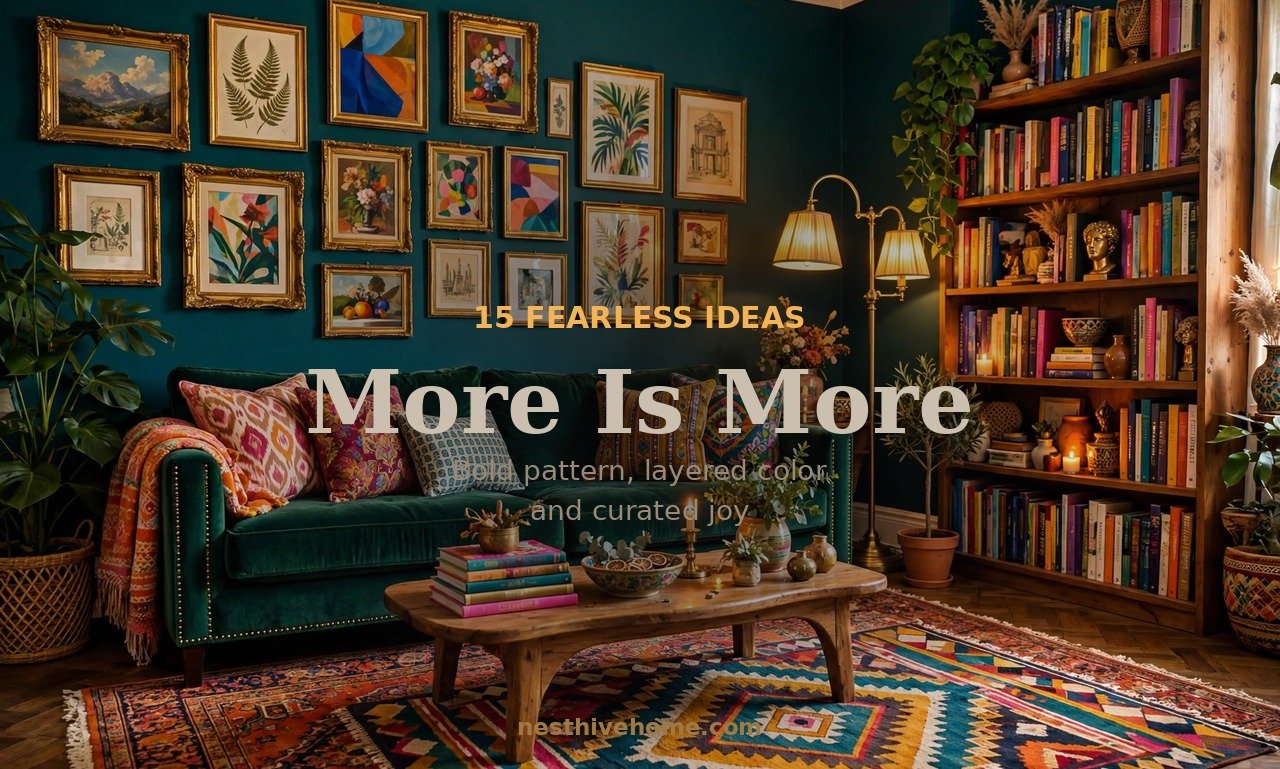
Maximalist living room decor is the joyful rebellion against the idea that a beautiful room must be an empty one. More color, more pattern, more art, more stories on the shelves, and somehow, when it is done well, it all feels intentional rather than chaotic. If your heart lifts in rooms that are layered to the edges and your eye gets bored in beige boxes, this guide is for you: fifteen ideas for building a maximalist living room that feels curated, personal, and full of life.
Maximalism is not mess. That is the first and most important thing to understand. True maximalist living room decor runs on strong organizing principles: a confident color story, repeated motifs, deliberate layering, and ruthless editing of anything that does not earn its place. The abundance is real, but so is the discipline underneath it. Think of it as controlled exuberance.
The Three Rules Beneath the Abundance
Before the ideas, the invisible structure. First, commit to a palette: three to five colors repeated everywhere, so variety reads as harmony. Second, repeat and echo: the same motif, material, or color should appear at least three times in the room, which is what turns random into rhythmic. Third, edit constantly: maximalism fails when everything stays forever; the style demands regular, honest curation. Hold these three and the fifteen ideas below will never tip into clutter.
1. Start with a Confident Wall Color
Maximalist rooms rarely start white. A saturated wall color, deep teal, rich plum, warm terracotta, gives every object in the room something to play against and instantly signals intention. If painting feels bold, try it in the smallest version first: one accent wall behind the sofa, then live with it for two weeks before deciding whether to go further.
Dark walls also make art pop and hide the visual seams between many objects, which is exactly why they suit the style.
2. Layer Rugs with Abandon (and a Plan)
Rug layering is the signature floor move in maximalist living room decor. Start with a large natural or neutral base, then layer a smaller patterned rug, a vintage Persian or a bold kilim, on top at an angle. The overlap creates zones within the seating area and introduces pattern at the largest scale in the room.
Keep the two rugs in the same color family so the layering reads as deliberate. Angled placement feels casual and collected; squared placement feels tailored.
3. Build a Salon-Style Gallery Wall
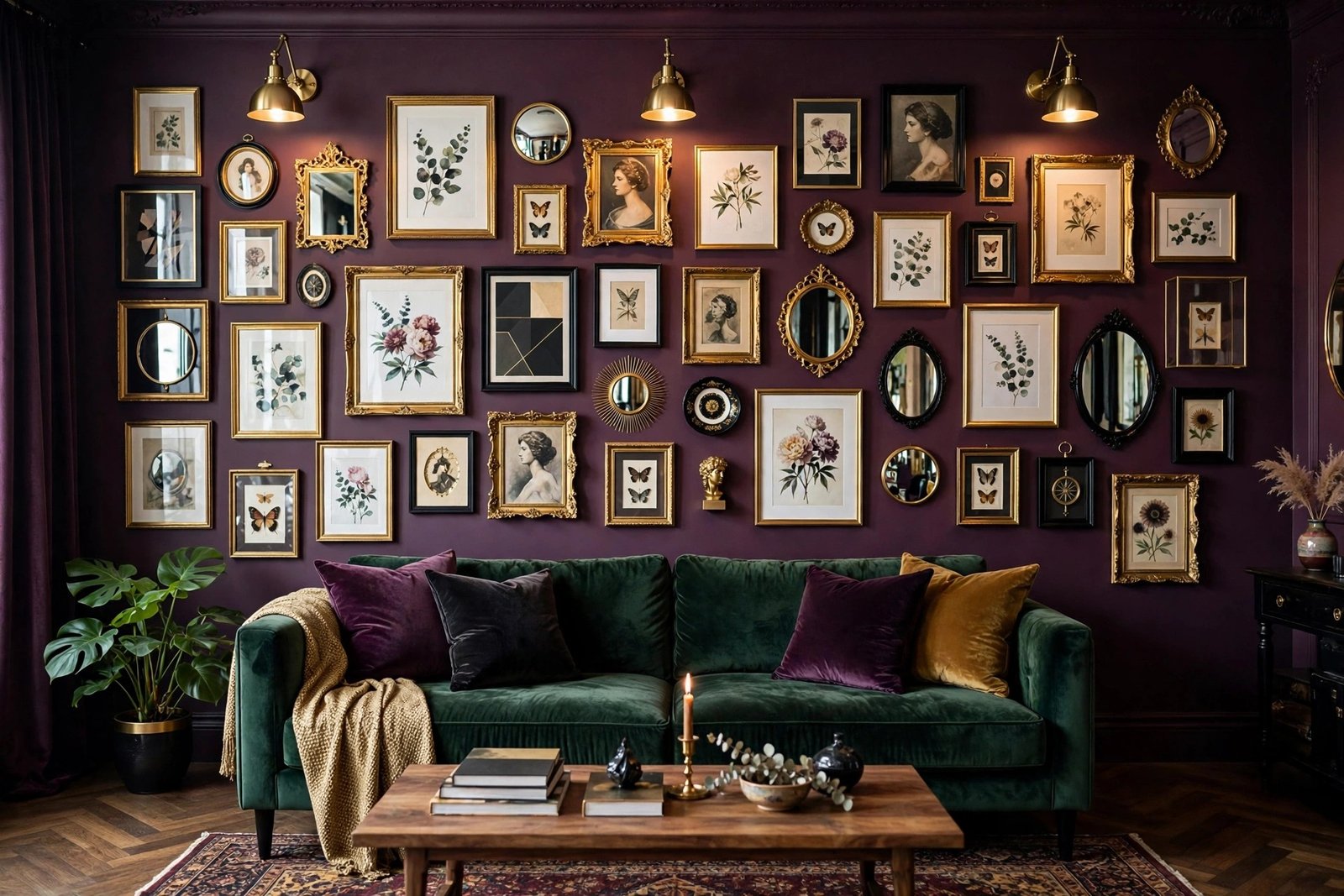
The gallery wall is where maximalist living room decor shows off. Salon style means floor-to-nearly-ceiling, frame-to-frame, mixing art, mirrors, small shelves, and objects. Unify the chaos with one rule: consistent frame spacing (two to three inches) and at least one repeated element, all black frames or all gold, for example.
Lay the arrangement on the floor first and photograph it. What looks balanced on the floor usually works on the wall, and the photo reveals imbalances your eye misses in person.
4. Mix Patterns at Different Scales
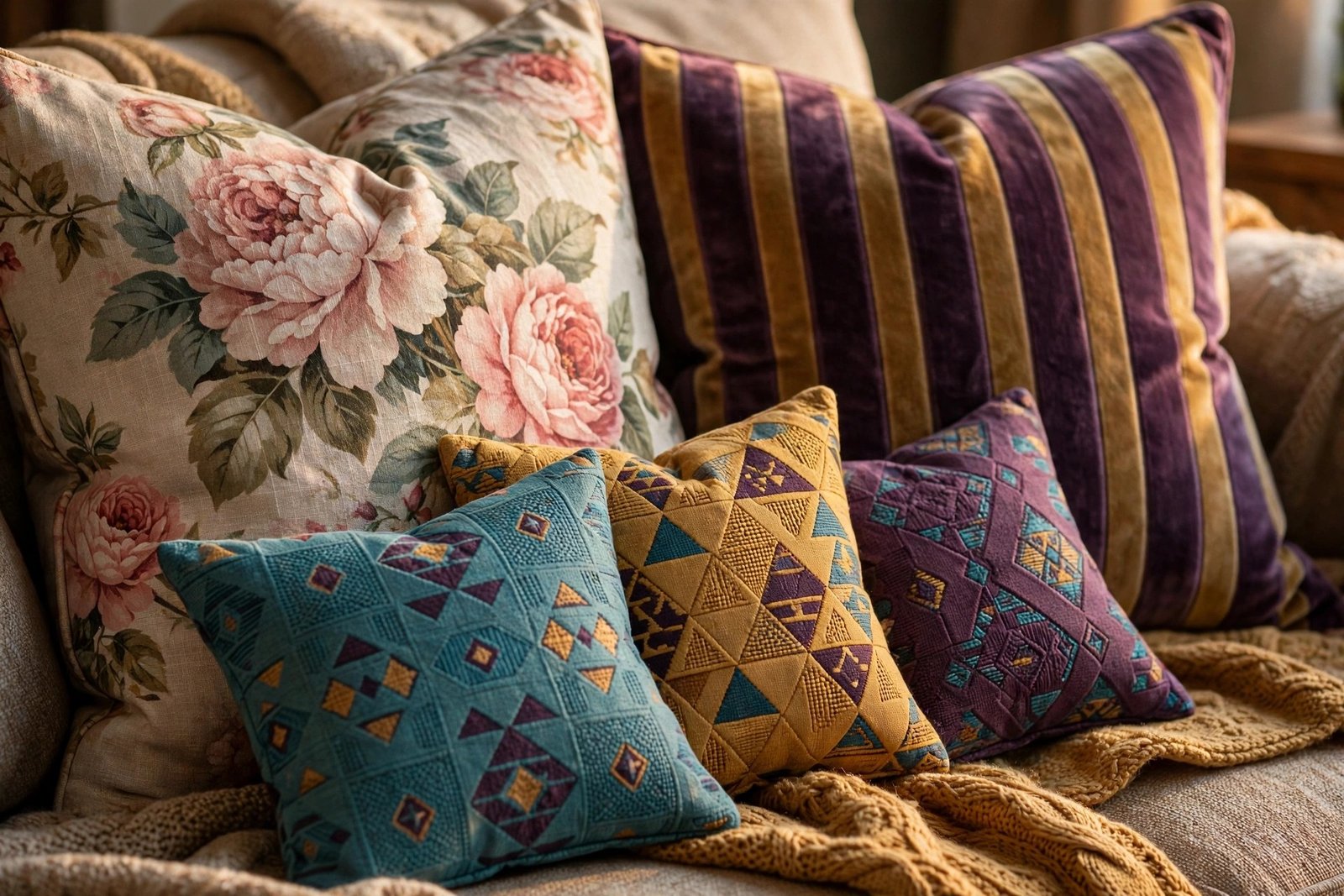
Pattern mixing is the core skill of maximalist living room decor, and the rule is simple: vary the scale. One large-scale pattern (oversized floral or big geometric), one medium (classic stripe or medium floral), one small (tiny dot or fine check), all sharing at least one color. When scales differ, patterns harmonize; when they match, they fight.
Distribute patterns around the room rather than clustering them. A patterned cushion here, a patterned throw there, a patterned lampshade across the room, the repetition is what makes it sing.
5. Curate Collections, Don’t Just Display Them
Maximalism loves a collection, ceramics, brass candlesticks, vintage cameras, blue-and-white pottery, but the difference between a collection and clutter is curation. Group like with like, vary heights, leave breathing room inside the grouping, and give the collection a defined home: one shelf, one cabinet top, one wall.
Rotate pieces seasonally. A collection that changes feels alive; one that never moves becomes wallpaper.
6. Bring In the Velvet and the Shine
Rich materials give maximalist living room decor its luxe undercurrent. Velvet upholstery in jewel tones, brass and mirrored accents, lacquered trays, a marble side table. These high-shine, high-touch surfaces catch light and add the sense of occasion that separates maximalism from mere busyness.
One metallic finish should dominate, brass is the classic, with a second as accent. Mixed metals need a clear hierarchy or they read as accidental.
7. Go Big with Art
Oversized art is maximalism’s shortcut to confidence. One huge painting or textile above the sofa anchors the entire wall and gives the eye a resting place amid the abundance. Scale the art to the furniture: it should span roughly two-thirds the width of whatever sits beneath it.
Do not be afraid of art that nearly touches the ceiling. In a maximalist room, generous scale is the point.
8. Layer Lighting Like a Stage Set
Rooms styled with maximalist living room decor need light in layers to show off their contents: a statement chandelier or pendant for drama, table and floor lamps for warmth, picture lights or small spots to highlight art and shelves. Aim for at least five light sources in a large living room, all on warm bulbs.
Light the collections, not just the room. A small picture light over the gallery wall or a spot aimed at the ceramics shelf transforms display into exhibition.
9. Add Plants as Living Pattern
Plants are pattern that breathes. In maximalist living room decor, greenery softens hard edges, fills awkward corners, and adds a layer of organic shape no textile can imitate. Go generous: a tall fiddle-leaf fig in the corner, trailing pothos on the shelves, a cluster of small pots on the coffee table.
Group plants in odd numbers and vary their heights. Even the plant styling follows the maximalist rules of repetition and rhythm.
10. Style Every Surface (Then Edit One)
Coffee tables, side tables, consoles, mantels, every horizontal surface in a room with maximalist living room decor gets styled: stacks of books, candles, small sculptures, a vase of branches. The trick is the final pass: remove one object from every surface. That single subtraction is what keeps styled from becoming stuffed.
Use trays to corral small objects. A tray turns five scattered things into one intentional composition.
11. Mix Eras Fearlessly
A mid-century sideboard under a Victorian mirror beside a contemporary sofa: in maximalist living room decor, eras mingle freely. The mix works when the palette unifies it, a 1970s lamp and an antique frame in the same brass finish feel like they were always meant to coexist.
Let each piece keep its character. The goal is conversation between eras, not a costume from any single one.
12. Create a Reading Nook Inside the Abundance
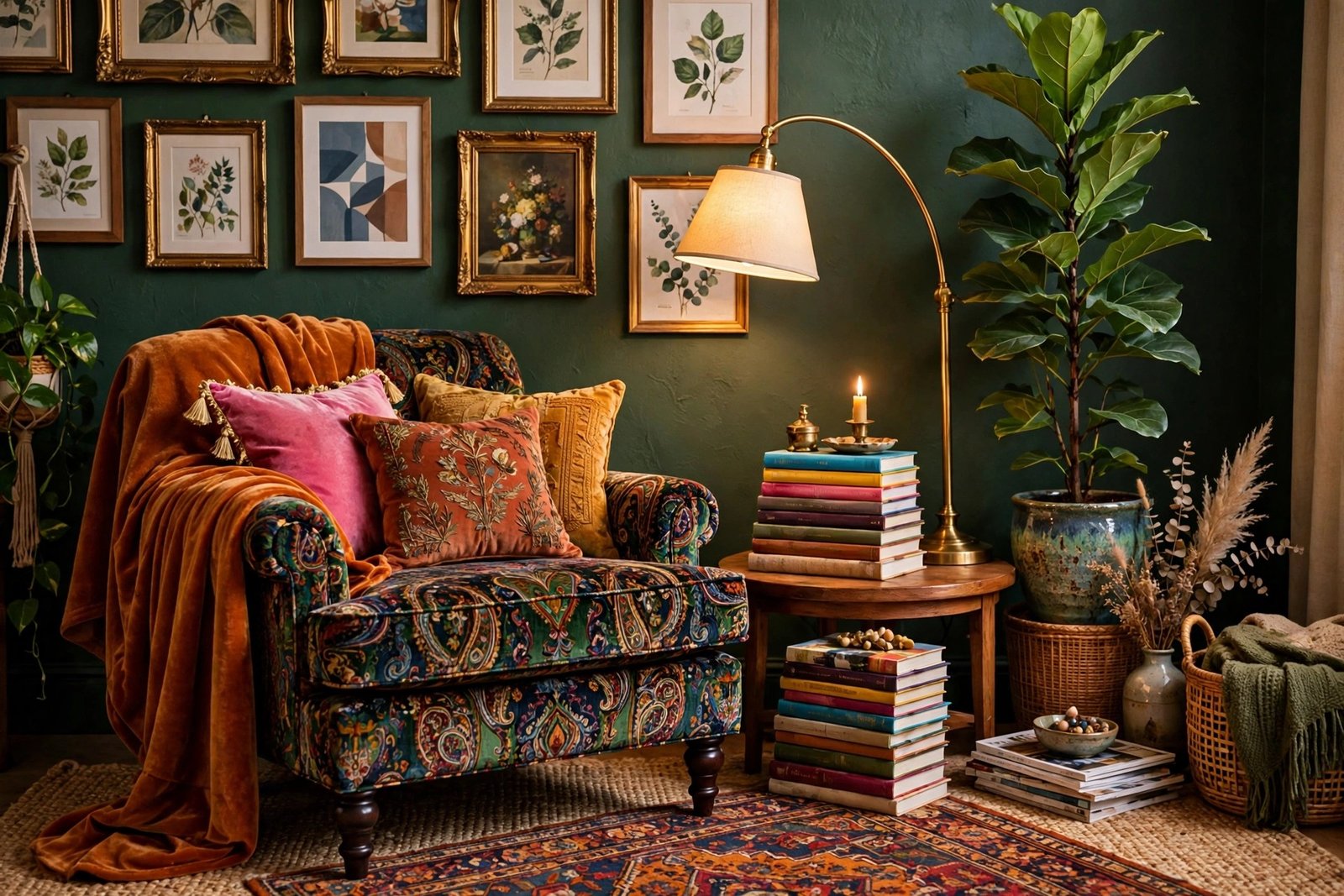
Even the most layered room needs one calm-ish corner. A comfortable armchair with good light, a small side table, a throw, tucked into a corner of a room styled with maximalist living room decor gives the eye and the body a place to rest. It also proves the room is for living, not just looking.
Keep the nook’s palette slightly quieter than the rest of the room. The contrast makes both zones work harder.
13. Use Books as Decor and Architecture
Books are maximalism’s building blocks. Stack them horizontally as pedestals for objects, line them vertically for color rhythm, pile them on the coffee table, the console, the floor beside the chair. Organize by color for visual calm or by subject for personality, either is valid, but commit to one system per shelf.
Secondhand bookstores are the maximalist’s best friend: interesting spines, low prices, instant library feeling.
14. Hang Curtains with Drama
Window treatments in a maximalist room should make an entrance: floor-to-ceiling panels in a bold pattern or rich solid, hung high and wide so windows look grander. Velvet, heavy linen, or a confident print all work; flimsy sheers alone do not.
Patterned curtains count as one of your large-scale patterns, so coordinate them with the rug and upholstery rather than introducing a whole new motif.
15. Leave One Wall (Mostly) Alone
The counterintuitive final idea: restraint somewhere. One relatively quiet wall, or one unstyled corner, gives the abundance meaning. Maximalist living room decor is about contrast as much as accumulation, and the calm spot makes the rich spots richer. It also gives the room somewhere to grow into.
Think of it as the pause in the music. Without it, even the best composition is just noise.
Maximalist Living Room Decor on a Budget
In maximalist living room decor, abundance favors the thrifty. Flea markets, estate sales, and secondhand shops are the natural habitat of maximalist finds: brass, art, ceramics, books, and vintage textiles at fractions of retail. Paint is the cheapest drama available. Gallery walls cost almost nothing if the art is thrifted and the frames are spray-painted to match. For wall-art-specific guidance that slots right into this style, our guide to oversized wall art ideas for the living room covers scale and placement in detail.
Spend on what gets touched daily: the sofa, the rug underfoot, good lighting. Save on everything that is looked at but not used, where vintage character beats new perfection.
When Maximalism Goes Wrong (and How to Fix It)
Three failure modes. Clutter without curation: if nothing has breathing room, remove twenty percent of the objects and regroup what remains. Palette sprawl: if the room feels chaotic, the palette has usually drifted past five colors; pull everything back to three. No focal point: if the eye does not know where to land, you need one hero, an oversized artwork or a bold sofa, to organize around. A practical framework for keeping abundance intentional, like this maximalist living room design guide, is worth bookmarking as you build.
Five Maximalist Color Formulas That Always Work
Choosing a palette is the highest-leverage decision in maximalist living room decor, so here are five proven formulas. The Jewel Box: deep teal walls, emerald velvet, brushed brass, and ochre accents, dramatic and timeless. Warm Eclectic: terracotta walls, rust and cream textiles, walnut wood, and black metal details, sun-baked and inviting. Moody Botanical: forest green base, blush pink softness, brass shine, and charcoal grounding, romantic without being sweet.
Global Traveler: indigo and saffron textiles, terracotta pottery, natural wood, and woven textures, collected and worldly. Modern Maximalist: a black-and-white foundation with three saturated brights, cobalt, fuchsia, tangerine, layered on top, graphic and energetic. Pick the formula that matches your light and your nerve, then repeat its colors relentlessly: on walls, in textiles, in art, and in objects. That repetition is what makes maximalist living room decor feel designed rather than accumulated.
Bringing It All Together
Start with the wall color and the rug, add the gallery wall, then layer in collections, plants, and light. Edit as you go, and trust the three rules: palette, repetition, curation. Maximalist living room decor is not about having everything; it is about loving everything you have, and letting the room show it.