Artisan tile ideas kitchen designers keep coming back to in 2026 all share one thing: a handmade feel that machine-perfect tile simply cannot copy. Slightly uneven edges, glaze that pools a little deeper in one corner than the next, tiny variations in color from tile to tile — these are the fingerprints of the maker’s hand, and they are exactly what gives artisan tile its warmth. If your kitchen feels flat or cold, the backsplash is often the fastest place to add character, and handmade-look tile does it without a full remodel.
This guide walks through 12 artisan tile ideas kitchen homeowners are actually installing, from classic zellige to hand-painted patterns and budget-friendly handmade looks. For each, you’ll get what it costs, what grout and lighting pair best, and the honest maintenance trade-offs — so you can choose with confidence.
Why Artisan Tile Ideas Kitchen Renovators Love Feel Different
Most backsplash tile is made to look identical. Artisan tile is made to look alive. When light rakes across a zellige backsplash, the uneven glaze catches it in patches, so the wall seems to shift as the day moves on. It is a small effect that makes a kitchen feel layered and collected rather than showroom-new.
Artisan tile also forgives. A handmade edge hides a slightly wavy wall better than a laser-straight porcelain edge does. And because no two artisan tile ideas kitchen stylists pick are ever perfectly matched, small repairs and future additions blend in more easily — a real advantage in a busy family kitchen. That lived-in quality is also why handmade backsplashes photograph so well: they give a kitchen the depth and texture that flat surfaces never quite manage.
Before You Buy: What “Handmade” Actually Means
Handmade tile ranges from truly hand-cut zellige made in Morocco to machine tiles finished by hand for a crafted look. Knowing which you are buying matters for price and performance, so read the label: genuine handmade tile usually carries a shade-variation rating of V3 or V4, meaning noticeable color differences between pieces. Lower variation (V1–V2) gives a calmer, more uniform wall.
Glaze variation is the feature, not a flaw
With artisan tile, the glaze is the star. On zellige-style pieces the glaze pools thicker at the edges of each tile, creating that shimmering, water-like surface. Embrace it: ask the supplier to mix tiles from several boxes before installation so no single patch looks heavier than the rest, and always order 10–15% extra — handmade sizing varies, so cuts and breakage run higher than with standard tile.
Grout color changes the whole look
Grout is half the design. A grout that matches your tile softens the artisan texture and reads calm; a contrasting grout (dark with white tile, white with dark tile) outlines every handmade edge and reads bold and graphic. For most artisan tile ideas kitchen plans, a warm-toned grout one shade deeper than the tile hides splashes best while letting the craft show.
Order samples and live with them for a week
Handmade tile changes character in different light, and no screen shows that honestly. Order full-size samples of your shortlist, tape them to the wall, and watch them at breakfast, midday, and under evening lights. Among all the artisan tile ideas kitchen shoppers compare online, the one that looks best in your actual light at 7pm is the right one — that is when your kitchen is used most, and when glaze variation either glows or goes flat.
1. Milky White Zellige, Floor to Ceiling
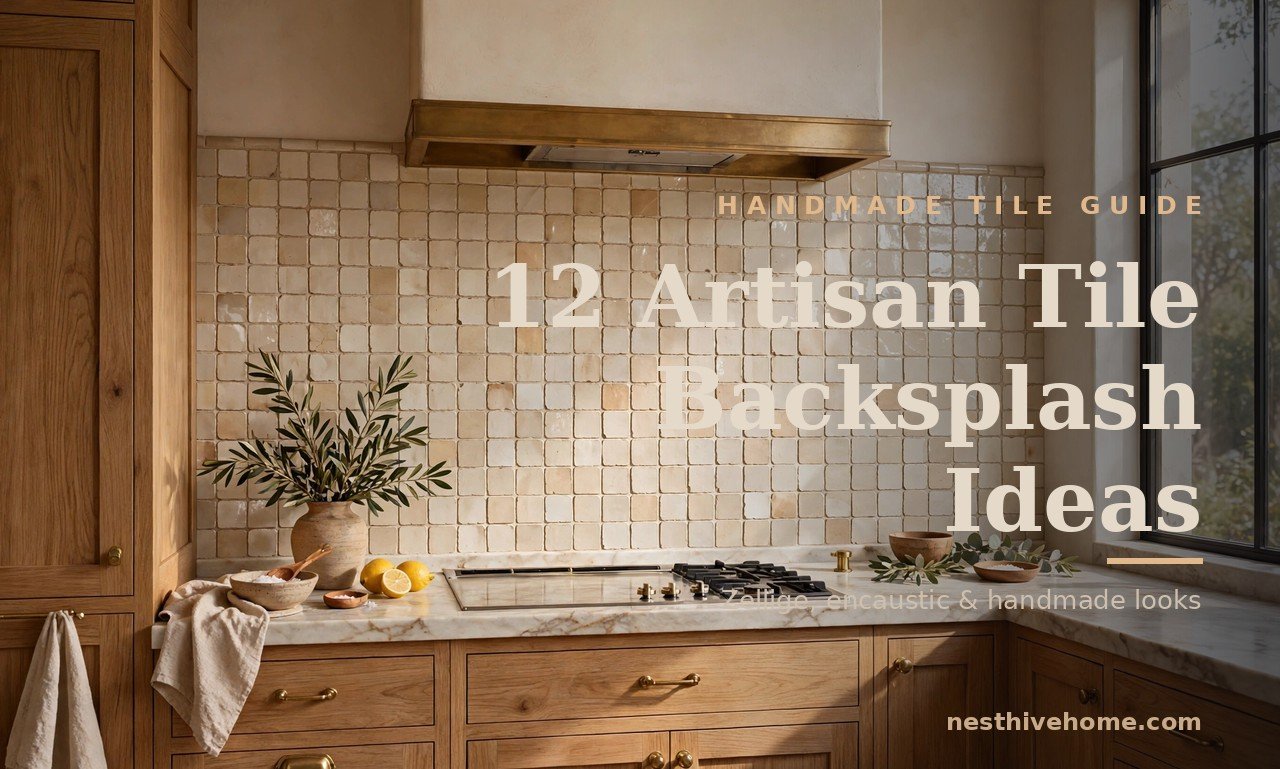
The classic for a reason. Milky white zellige behind the range, run all the way to the ceiling, bounces light around even a small kitchen and lets the handmade glaze do all the talking. Pair with unlacquered brass and white oak for the look everyone saves on Pinterest. Cost: genuine Moroccan zellige starts around $15–$25 per square foot; handmade-look ceramic starts near $4. If the budget is tight, this is the artisan tile ideas kitchen look to fake well — a good handmade-look white ceramic with a V3 shade rating reads convincingly handmade once grouted, because the white-on-white variation does the visual work.
2. Sage Green Zellige for Soft Color
Sage is the 2026 sweet spot for artisan tile ideas kitchen color: warm enough to feel cozy, green enough to feel fresh. A sage zellige backsplash sits beautifully with cream cabinets and brushed-brass taps. Keep the grout warm white to avoid a muddy edge, and choose satin hardware so the tile’s shine stays the focal point.

3. Hand-Painted Mediterranean Patterns
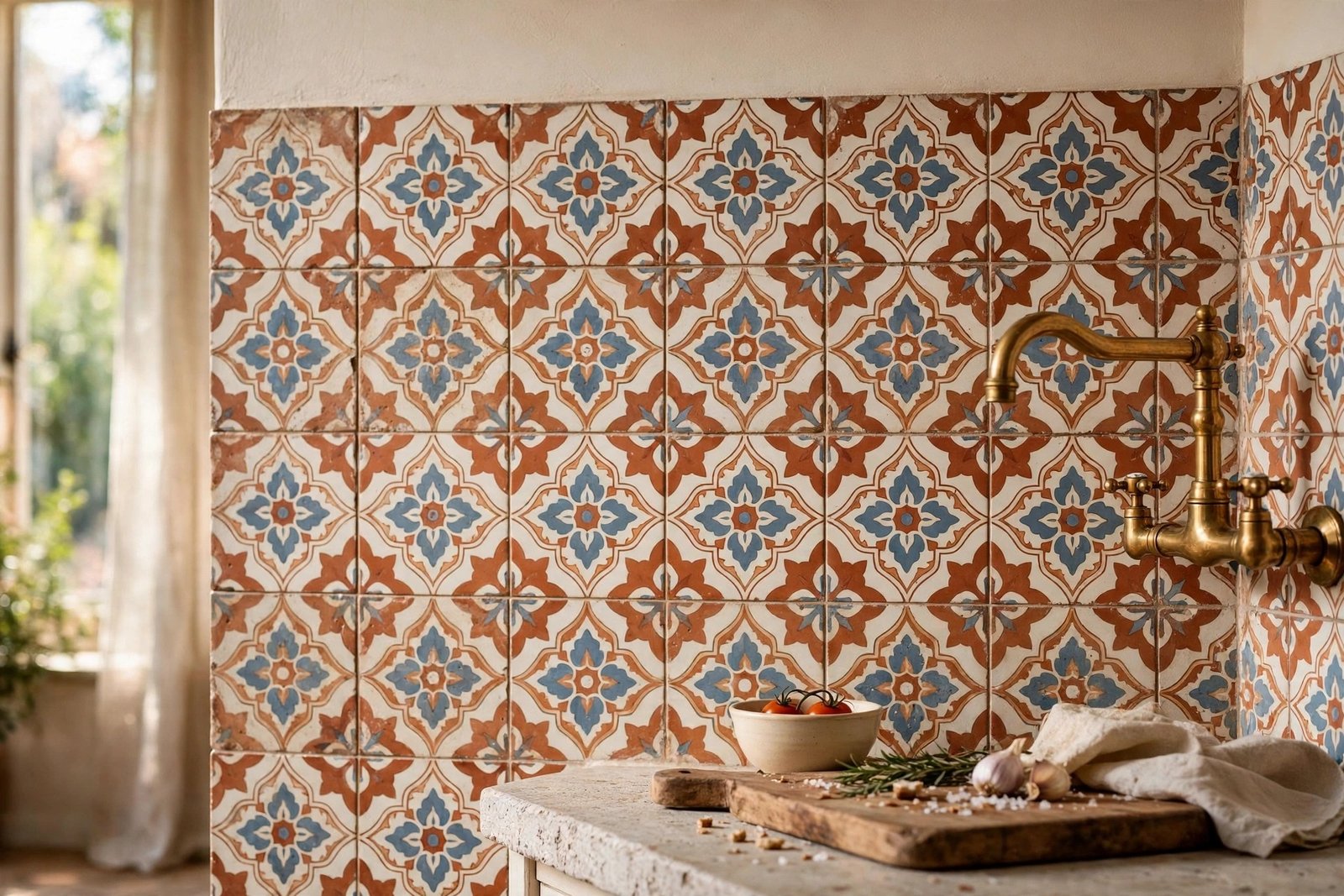
Nothing says artisan like a hand-painted pattern tile. Blue-and-white Mediterranean motifs, star-and-cross encaustic patterns, and Spanish-inspired florals bring instant personality. Use them as a full backsplash for a confident look, or as a feature panel behind the range with plain field tile elsewhere to keep the budget (and the visual noise) in check. Pro tip: true hand-painted tile varies tile to tile, so the “random” mix sheets sold by retailers can look flat next to it — if you want the authentic artisan tile ideas kitchen effect, ask for single tiles and lay them in a genuinely random rotation.
4. Terracotta-look Handmade Tile
Warm, earthy, and deeply forgiving of real-life mess, terracotta-look handmade tile suits farmhouse, Mediterranean, and cottage kitchens. The color variation hides tomato splashes and coffee spots between wipe-downs. Seal it properly if it is genuine terracotta — most handmade-look ceramic versions skip the sealing step entirely.
5. Herringbone Handmade Subway Tile
Herringbone turns the humblest subway tile into something custom. In a handmade ivory or cream glaze, the zigzag catches light on every angled edge. It takes a patient tiler (expect higher labor quotes), but the result reads bespoke for a fraction of bespoke cost. Run it horizontally above counters and vertically behind a coffee station for a subtle design twist. Ask your tiler to dry-lay the pattern first — with handmade sizing, the cuts at edges and outlets need planning so no sliver-thin pieces end up in the most visible spots.
6. Stacked Square Tile in a Modern Layout
Skip the offset brick pattern and stack square handmade tiles in a straight grid — it is the cleanest way to show off artisan tile ideas kitchen texture without any visual clutter. This layout suits modern and Japandi kitchens, especially in soft greige or pale clay tones with a hairline grout joint.

7. Cobalt Blue Hand-Glazed Tile
For drama, hand-glazed cobalt or deep indigo is hard to beat. The color shifts from near-black to electric blue as light moves across it. Keep everything else quiet: white or light oak cabinets, simple hardware, minimal open shelving. This is a statement that carries the whole kitchen, so it pairs best with a restrained palette elsewhere. Of all the artisan tile ideas kitchen color stories, cobalt demands the most commitment — sample it on a large board first, because a 4-inch chip will never show you how intense a full wall feels at night under warm bulbs.
8. Mosaic Borders and Feature Strips
You do not need artisan tile everywhere to get the artisan effect. A band of hand-painted mosaic tiles running along the top of a plain backsplash, or a framed feature strip behind the hob, delivers the handmade character for a fraction of the cost. It is also the most renter-friendly of the artisan tile ideas kitchen looks when done with a tile-effect panel.
9. Black Hand-Cut Tile with Light Grout
Black artisan tile sounds moody, but with a pale contrasting grout it becomes graphic and architectural rather than heavy. Each hand-cut edge catches light like cut stone. This pairing loves the moody, collected feel of a dark cottagecore kitchen, where warm wood and brass soften the black and keep it inviting instead of stark.
10. The Full Artisan Tile Wall
Take the tile from counter to ceiling and around corners, and the backsplash stops being an accent — it becomes the kitchen’s architecture. This works best with a quieter tile (white, sand, pale green zellige) so the scale feels enveloping rather than busy. Budget note: full-height walls use roughly twice the tile of a standard backsplash, so handmade-look ceramics earn their keep here. Many artisan tile ideas kitchen renovations use the full-wall treatment on just one wall — the range wall — and paint everywhere else, which captures the drama at half the cost.
11. Tumbled Marble with an Artisan Finish
Tumbled marble is the natural-stone cousin of handmade tile: softened edges, a matte honed surface, and gentle color variation. Laid in a simple pattern, it brings old-world character that suits traditional and transitional kitchens. Seal it at installation and reseal yearly — marble is more porous than glazed artisan tile ideas kitchen picks, but the patina it develops is part of the charm.
12. Mixing Handmade Tile with Plaster and Open Shelves
The most designer-looking of all the artisan tile ideas kitchen treatments is restraint: tile only the splash zone behind the hob and sink, and finish the rest of the wall in warm limewash plaster with open oak shelves. The handmade tile becomes jewelry rather than wallpaper, and you buy half the tile. If you want more inspiration for mixing materials, these kitchen backsplash ideas show how tile pairs with stone, wood, and plaster.
Caring for Handmade Tile: The Honest Version
Handmade and hand-glazed tile is not fragile, but it does ask for a little more attention than standard ceramic. Wipe splashes the same day — the uneven surface can hold onto grease if it sits. Use a pH-neutral cleaner; harsh acids can etch some handmade glazes. Unglazed terracotta and tumbled stone need sealing before first use and a refresh coat every year or two. The good news: the very variation that defines artisan tile ideas kitchen style also hides wear beautifully. A faint patina on handmade glaze looks intentional; the same mark on glossy machine tile looks like damage.
Grout care matters more than tile care
Most “tile problems” are actually grout problems. Sanded grout in a handmade installation sees more wear, so choose an epoxy or high-performance grout if your budget allows — it resists staining and never needs sealing. With standard grout, seal the grout lines once a year and keep a grout pen handy for touch-ups.
Final Thoughts
Artisan tile works because imperfection is the point. Pick the handmade character that matches your kitchen’s mood — calm zellige, bold pattern, earthy terracotta — and let the maker’s hand do the decorating. Start with samples taped to the wall for a full day of light before you commit, and your backsplash will reward you every time the sun moves across it. Whichever artisan tile ideas kitchen style you choose, the result is a kitchen that feels collected and personal rather than ordered from a catalog — and that is a look that never dates.