

Black bedroom design has a reputation problem. Many people assume dark walls will make a room feel small, gloomy, or hard to live with, yet some of the calmest, most hotel-like bedrooms use black as their main colour. The trick is not how much black you use, but how you balance it with light, texture, and warm materials. Done well, a dark bedroom feels cocooning rather than closed in, and it makes everything else in the room, from crisp white bedding to brass lamps, look more intentional.
This guide walks through 15 practical black bedroom ideas for getting the look right, whether you want a full dramatic transformation or just one dark accent wall. You will find paint advice, furniture guidance, lighting plans, colour pairings, and small-room solutions, plus the common mistakes that turn a stylish dark room into a cave. Every idea works for rented homes as well as owned ones, and most can be done over a single weekend.
Why a Black Bedroom Feels So Restful
Dark colours recede visually, which is why a black wall often makes a room feel deeper rather than smaller. In a bedroom, that effect is genuinely useful: the walls seem to fall away at night, screens and clutter draw less attention, and the bed becomes the clear focal point. People who struggle to switch off in pale, bright rooms often sleep better once the visual noise drops.
Black also flatters the materials we associate with comfort. Linen looks softer against it, oak looks warmer, and even a simple white pillowcase looks freshly laundered. The contrast does a lot of the decorating work for you, so you need fewer accessories to make the room feel finished. That restraint is part of the appeal: a dark bedroom rewards editing, not accumulation.
A black bedroom also adapts to more styles than people expect. In a modern black bedroom, flat matte walls, low furniture, and a single piece of oversized art create a calm, gallery-like mood. In a traditional black bedroom, panelled walls, brass details, and a buttoned headboard feel rich and timeless. The colour itself is neutral, so it is the textures and shapes around it that decide whether the room reads as minimal, glamorous, or rustic.
Black Bedroom Walls: Paint, Panelling and Wallpaper
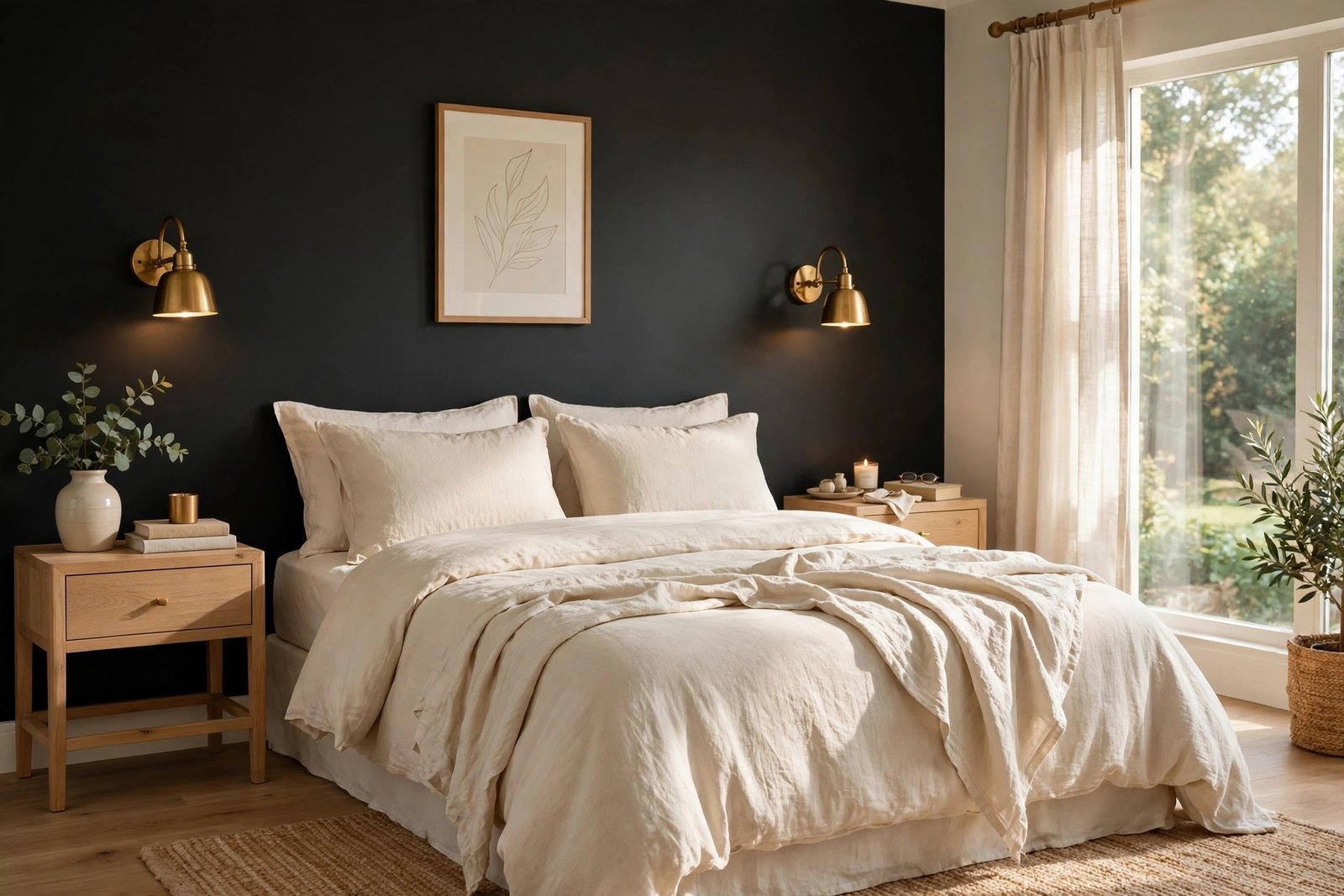
Idea 1: Paint one accent wall first. If you are nervous about going dark, start with the wall behind the bed. It gives you the drama where you see it least at night, it frames the headboard beautifully, and it is easy to repaint if you change your mind. Keep the other walls warm white or pale greige so the room still feels open during the day.
Idea 2: Choose a soft black, not a pure one. Pure, blue-based blacks can look harsh under daylight. Look for shades with warm or green undertones, such as soft charcoal, ink, or soot, and always test a large swatch on the wall. Paint looks darker once it covers a full wall, so a shade that seems grey on a colour card is often the right depth in real life. A matte or eggshell finish is more forgiving than gloss, which shows every bump.
Idea 3: Add texture with panelling or wallpaper. Flat black paint can fall flat in a room with little natural light. Wall panelling, slatted wood painted black, or a subtle patterned wallpaper adds shadows and depth that keep the wall interesting. If you rent, peel-and-stick panelling strips or removable wallpaper give you the same effect without risking your deposit. For more shade inspiration, browse real-room photos in this black bedroom ideas gallery before you commit to a paint colour.
Black Bedroom Furniture That Anchors the Room
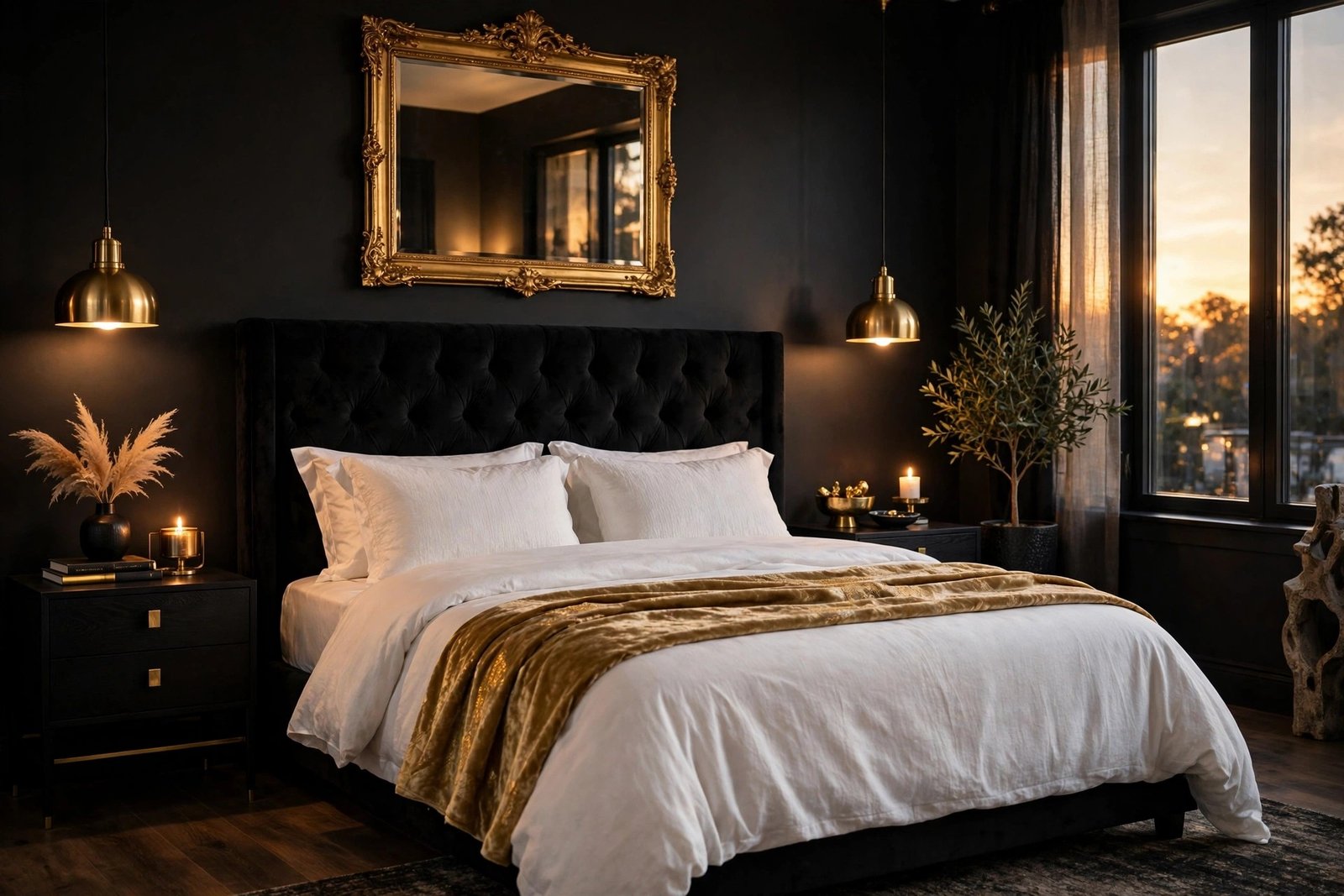
Idea 4: Let the bed do the talking. A black upholstered headboard, especially in velvet or bouclé, is the single most effective piece in a dark bedroom. It anchors the wall, adds softness, and means you do not need a busy gallery wall above it. If your bed frame is already pale wood or white, keep it and let the wall carry the dark tone instead; one strong dark element is usually enough.
Idea 5: Mix black furniture with pale wood. A room full of matching black furniture can look like a showroom and feel heavy. Pair a black bed or wardrobe with oak nightstands, a rattan chair, or a light timber dresser. The pale wood breaks up the darkness at exactly the heights your eye rests on, and it stops the room from feeling like a single block of colour.
Idea 6: Use open storage sparingly. Dark rooms show dust and clutter less than white ones, which is a blessing and a trap. Open shelves full of mismatched items still read as visual noise, so favour closed storage for the bulk of your things and leave one or two open spots for books, a plant, or a favourite object. A tidy dark room feels luxurious; a cluttered one just feels dark.
Second-hand shops are a quiet advantage when furnishing a black bedroom. A solid wood dresser or wardrobe in a dated finish can be sanded and painted in the same soft black as your walls for a fraction of the cost of new furniture, and the matching undertone makes the room look professionally planned. Just check that vintage pieces are sturdy and smell-free before you commit, since dark paint will not hide structural problems.
Bedding and Textiles That Soften the Drama
Idea 7: Layer white and cream bedding. This is the classic black bedroom pairing for a reason. Crisp white sheets, a cream duvet, and a charcoal or black throw give you a clear light-to-dark gradient that the eye reads instantly. The bed becomes the brightest object in the room, which is exactly what you want at the end of a long day. Linen and washed cotton work better than shiny satin here, because their matte texture suits the mood.
Idea 8: Pile on texture, not colour. When the palette is restrained, texture carries the room. Combine a chunky knit throw, velvet cushions, a woven rug, and smooth cotton sheets, and the bed will look inviting even in a single colour family. Aim for at least three different textures within arm’s reach of the bed. If everything is the same flat fabric, the room can feel one-dimensional.
Idea 9: Ground the room with a generous rug. Dark floors plus dark walls can make a room feel bottomless. A large rug in cream, oatmeal, or a muted pattern anchors the bed and gives your feet a soft landing on cold mornings. Ideally the rug should extend at least 45 centimetres beyond each side of the bed, and further at the foot, so it reads as a deliberate layer rather than a mat.
Lighting Ideas for a Black Bedroom
Idea 10: Layer three types of light. A single ceiling light is the fastest way to ruin a dark bedroom, because it creates harsh shadows and flat pools of light. Instead, plan three layers: soft overhead light on a dimmer for getting dressed, warm bedside lamps for reading, and one accent, such as a small picture light or a candle-style glow, for atmosphere. Warm bulbs around 2700K flatter black walls; cool daylight bulbs make them look grey and cold.
Idea 11: Put everything on dimmers. Dark walls absorb light, so you need more of it than you think, but you also want to control it. Dimmers let you flood the room while cleaning or getting ready, then drop to a low evening glow that makes the black walls feel cocooning. If your wiring does not allow dimmers, smart bulbs with adjustable brightness are an easy renter-friendly alternative. When planning a black bedroom, budget for lighting before accessories, because good light is what separates a moody retreat from a murky room.
Colour Pairings: Black and Gold, Wood and Green
Idea 12: Add brass and gold in small doses. Few combinations beat black and gold for instant glamour. Brass bedside lamps, a gold-framed mirror, or slim gold drawer pulls catch the light and stop the room from feeling flat. The key is restraint: pick two or three metallic moments and keep the rest matte. Too much shine tips the room from elegant into theatrical. If you love this glamorous direction, our guide to neo-deco interior design shows how bold geometry and metallic finishes work together in modern rooms.
Idea 13: Bring in wood tones and greenery. Natural materials are the antidote to any coldness in a dark scheme. Oak, walnut, rattan, and linen warm the palette, while plants add a living green note that black walls show off beautifully. An olive tree in a terracotta pot, trailing pothos on a shelf, or even a vase of eucalyptus on a nightstand will soften the geometry of the room. In a black bedroom, one or two plants are enough.
Small Black Bedroom Ideas That Keep It Bright
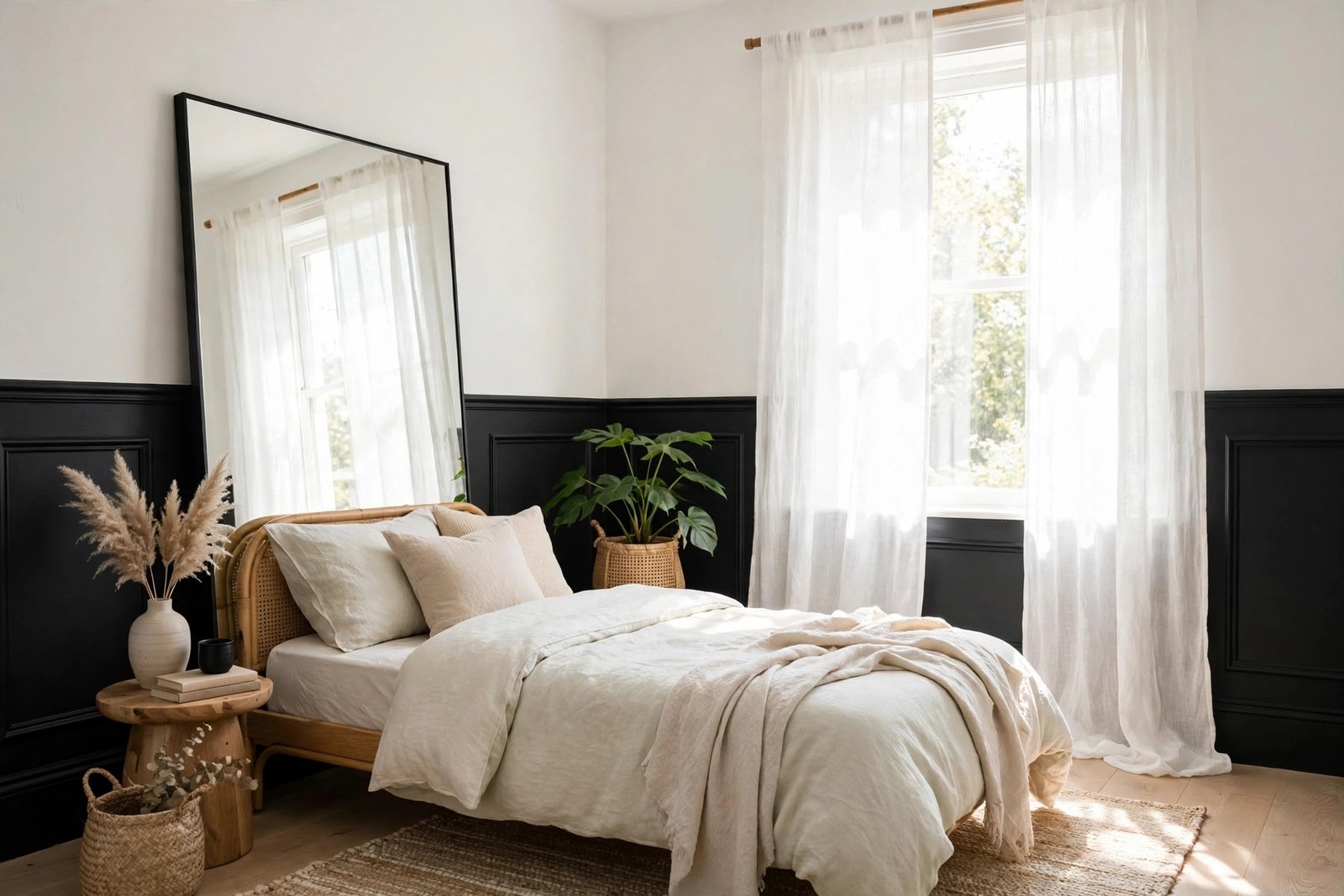
Idea 14: Use black low and white high. Small rooms suit black best when it sits below eye level. Try black panelling on the lower half of the walls with white above, a black bed frame with pale bedding, or a dark headboard wall balanced by white ceilings and sheer curtains. Mirrors are your best friend here: a large leaning mirror doubles the light and makes the dark wall feel like a backdrop rather than a boundary. Keep window treatments light and simple so daylight does as much work as possible.
Another small-room trick is to keep the floor pale. Light oak boards or a large cream rug stop a compact black bedroom from feeling bottom-heavy, and they bounce daylight back up onto the walls. If your floors are already dark, a pale rug under the bed achieves the same lift without any renovation, and it gives you a soft surface to step onto first thing in the morning.
Finishing Details and Mistakes to Avoid
Idea 15: Finish with art that breathes. Dark walls are a wonderful gallery backdrop, but they punish overcrowding. Choose one large piece with pale matting, or a short row of framed prints with generous white space, and hang it where it catches lamplight. Abstract line drawings, botanical prints, and black-and-white photography all sit comfortably on black. Leave some wall bare; the empty dark space is part of the design.
Now the mistakes. First, do not paint every surface black, including ceilings and woodwork, unless the room is large and very well lit; all-black rooms need serious lighting design to avoid feeling like a box. Second, do not mix too many black shades at once. A blue-black wall, a brown-black wardrobe, and a jet-black frame will clash subtly and look accidental, so keep your blacks in the same undertone family. Third, do not forget the ceiling: a bright white ceiling can look disconnected above dark walls, so consider a soft warm white or a very pale grey to bridge the gap. A final common slip in any black bedroom project is neglecting the door and trim; painting woodwork the same soft black as the walls, or a crisp warm white, looks far more finished than leaving tired magnolia trim against a dramatic wall.
How Much Does a Black Bedroom Makeover Cost?
A black bedroom makeover can be surprisingly affordable, because paint does most of the work. A realistic budget for a standard double bedroom in the UK or US looks like this: paint and supplies for one accent wall, roughly £60–£120 or $80–$150; a full room in the same paint, roughly £150–£300 or $200–$400; new bedding in white or cream linen-look cotton, £50–£150 or $70–$200; a pair of warm bedside lamps, £40–£120 or $50–$150; and a large rug, £80–£250 or $100–$300. A black velvet headboard is the biggest single item at £150–£400 or $200–$500, but it transforms the room more than any other purchase. Start with paint and bedding, live with the result for a week, and only then decide whether you need new furniture.
A black bedroom is not a risky gamble; it is a deliberate choice that rewards a little planning. Start with one wall and a soft shade of black, layer white bedding and warm light over it, add wood and greenery for warmth, and keep metallics to a few considered touches. Whether your style is minimal, glamorous, or somewhere in between, these 15 ideas give you a clear path from a plain pale room to a black bedroom retreat that feels calm, stylish, and unmistakably yours.