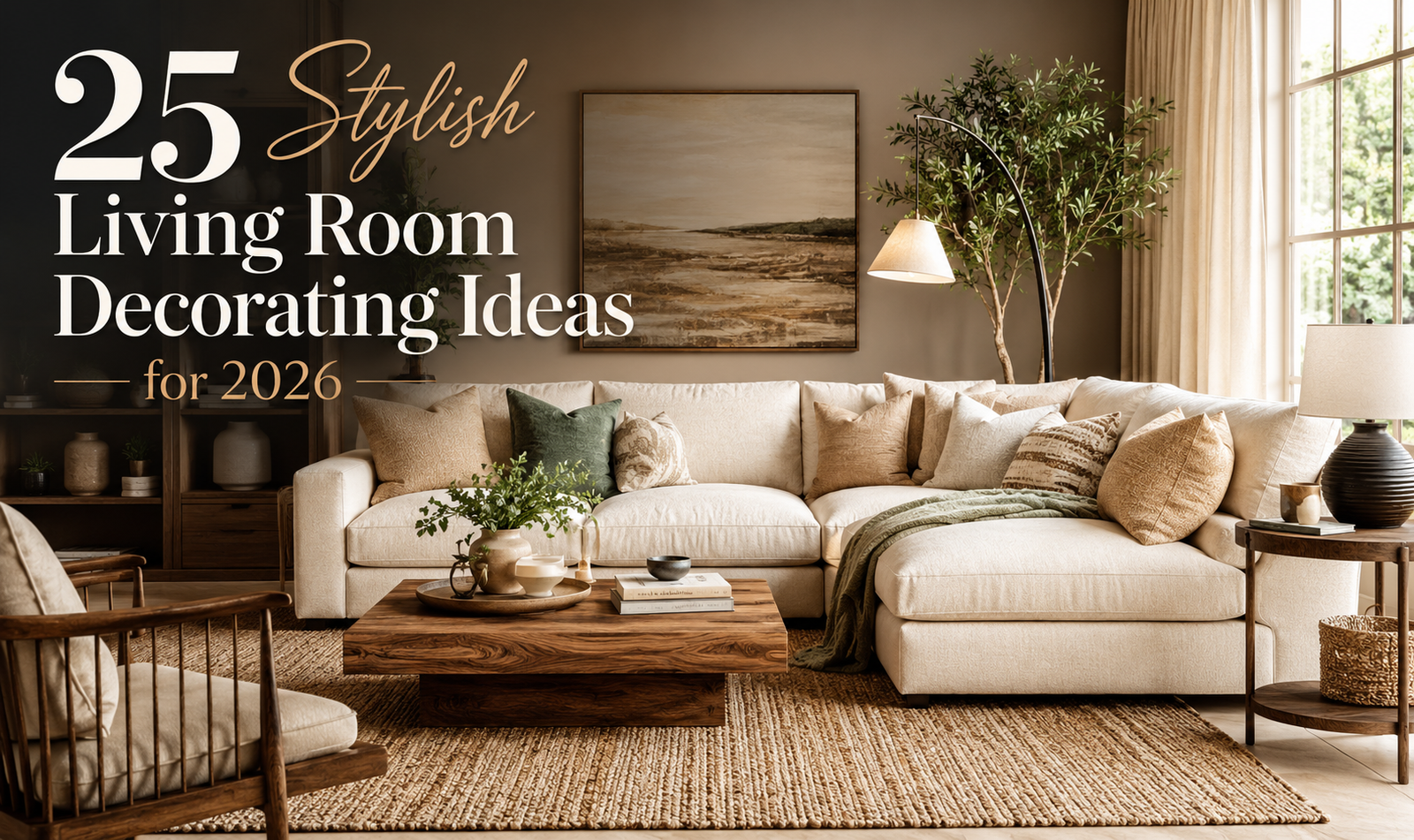
Your living room is more than a place for a sofa and television. It is where you unwind after a long day, welcome friends, enjoy family time, and create many of the everyday moments that make a house feel like home. If your space feels tired or unfinished, you do not necessarily need a major renovation. The right combination of furniture, color, lighting, texture, and personal details can make a remarkable difference.
The best living room decorating ideas for 2026 focus on comfort, warmth, and individuality. Instead of perfectly matched furniture and overly styled spaces, today’s interiors are embracing natural materials, soft colors, curved silhouettes, layered lighting, greenery, and pieces that tell a story.
Whether you have a spacious family room, a compact apartment, or a simple sitting room, these ideas can help you create a space that feels polished while still being comfortable enough for everyday life.
1. Begin With a Practical Furniture Layout
Before buying new accessories, reconsider your furniture arrangement. Even beautiful furniture can make a room feel awkward when the layout restricts movement or separates the seating area.
Start by identifying the room’s natural focal point. It could be a fireplace, television, large window, architectural feature, or statement artwork. Arrange your sofa and chairs so they relate naturally to this focal point while still encouraging conversation.
Avoid automatically pushing every piece against the walls. In a larger room, bringing the seating slightly toward the centre can create a more intimate and balanced atmosphere.
For smaller rooms, focus on proportion. A compact sofa, slim coffee table, and one comfortable accent chair can often work better than several oversized pieces.
Try different arrangements before settling on one. Sometimes simply changing the direction of a sofa or moving a chair can completely improve the way a room feels.
2. Create a Warm and Timeless Color Palette
Color has a powerful influence on the mood of your living room. For 2026, warm and natural shades are especially effective for creating an inviting atmosphere.
Consider using cream, warm white, beige, taupe, oatmeal, caramel, or soft brown as your foundation. These colors create a flexible backdrop that allows you to introduce stronger accents without overwhelming the room.
For a subtle connection with nature, add muted sage, olive green, dusty blue, terracotta, or warm clay through cushions, artwork, rugs, and accessories.
You do not always need to repaint your walls. If the existing color is neutral, changing your textiles and decorative accessories can give the room an entirely different character.
If you want more drama, paint a single accent wall in a deeper earthy shade while keeping the surrounding walls lighter.
3. Let the Sofa Define the Room
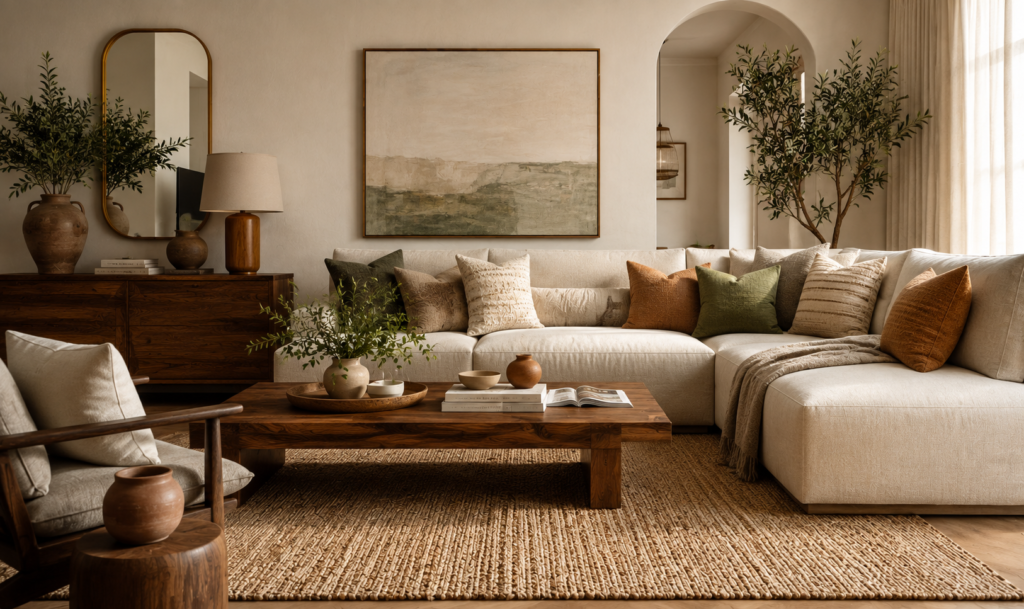
The sofa is usually the largest visual element in a living room, so it should be considered carefully.
Choose a sofa that fits both your room and your lifestyle. A generous sectional can create a comfortable family gathering space, while a streamlined sofa may be more appropriate for a small apartment.
Neutral upholstery such as cream, beige, oatmeal, or light grey provides flexibility. If you want the sofa itself to become a statement, consider rich brown, muted green, dusty blue, or another sophisticated color.
Do not overlook proportion. Leave enough room between the sofa and coffee table for comfortable movement while maintaining a connected seating arrangement.
For an easy update, layer cushions in different sizes and textures. Add a casually folded throw to make the sofa feel welcoming rather than overly formal.
4. Ground the Seating Area With an Area Rug
An area rug can visually connect your furniture while adding softness, warmth, and texture.
One common design problem is choosing a rug that is too small for the seating arrangement. Ideally, the rug should extend beneath at least the front legs of the main seating pieces, helping everything feel like part of one cohesive area.
For a relaxed interior, consider a textured wool or cotton rug in cream, beige, oatmeal, or another neutral tone.
If your furniture is understated, a subtle geometric or traditional pattern can introduce personality. If your artwork, sofa, or curtains already make a strong statement, a simpler rug may create better balance.
Choose the material according to your lifestyle. A busy household may benefit from a durable and easy-care option.
5. Layer Your Living Room Lighting
Lighting can transform the atmosphere of a room from bright and energetic during the day to warm and relaxing in the evening.
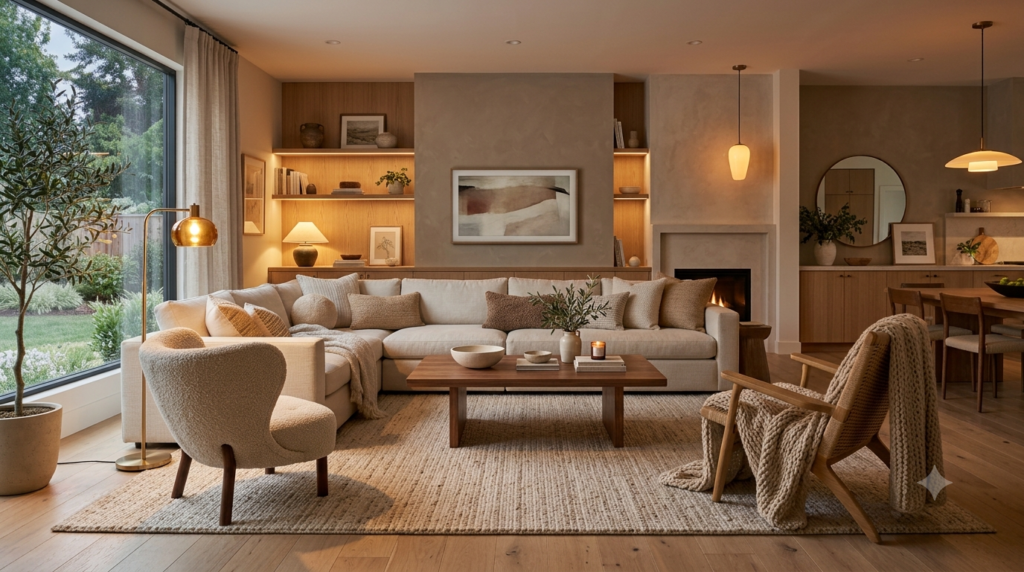
Rather than depending entirely on one ceiling fixture, combine several sources. A floor lamp can illuminate a reading chair, a table lamp can soften a console, and wall lighting can highlight artwork or shelving.
Use natural daylight to your advantage as well. Avoid blocking windows with bulky furniture whenever possible.
Warm bulbs are particularly effective for creating an inviting evening atmosphere. Dimmable fixtures give you even more control, allowing the same room to support reading, entertaining, watching television, or relaxing.
Think of lighting as part of your décor rather than simply a practical necessity.
6. Add Depth With Layered Textures
A room can feel flat when every surface has the same texture. Introducing a mixture of materials creates visual depth and makes the space feel more comfortable.
Combine linen cushions with a knitted throw, a boucle chair with a smooth wooden table, or a wool rug with a woven basket.
Natural materials such as rattan, jute, cotton, wood, stone, and ceramic work especially well with the warm interiors popular in 2026.
You do not need dozens of decorative pieces. A carefully selected combination of textures can create plenty of interest without making the room feel crowded.
Keep the colors related so that the different materials feel intentionally connected.
7. Bring Greenery Into Your Living Room
Plants can instantly add life and freshness to a living room. Their organic shapes also soften rooms filled with straight furniture and architectural lines.
A tall plant can fill an unused corner, while smaller plants can sit on shelves, side tables, or a console.
Choose varieties according to the amount of natural light available. The most attractive plant is not useful if the location does not support healthy growth.
If maintaining live plants is difficult, high-quality artificial greenery can provide a similar visual effect.
Natural ceramic, stone, rattan, and wood planters can further strengthen an organic interior.
8. Turn One Wall Into a Focal Point
A completely empty wall can make a living room feel unfinished, while decorating every wall can create visual overload. Instead, select one wall to become the main feature.
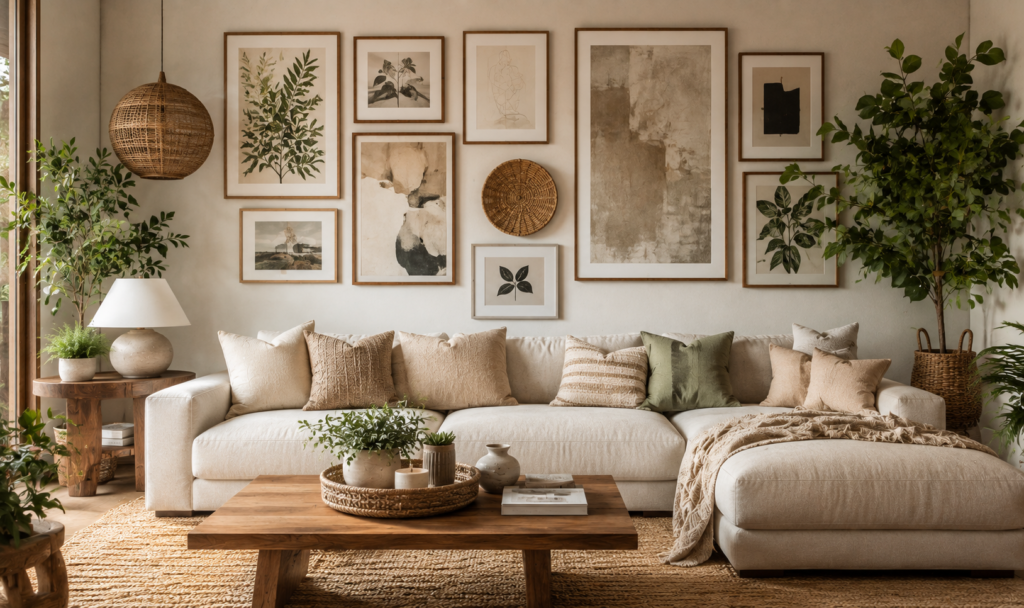
A large piece of artwork above the sofa can immediately establish a focal point. You could also create a gallery wall using photographs, illustrations, prints, and meaningful objects.
For a more practical approach, install floating shelves and style them with books, plants, framed artwork, and small decorative pieces.
Wallpaper, textured paint, wood panelling, or limewash can also create a sophisticated accent wall.
Whichever approach you choose, leave some open wall space around the feature. Negative space helps the main design element stand out.
9. Style the Coffee Table With Purpose
The coffee table is a small part of the room, but it can strongly influence the overall impression.
Instead of filling the surface with random objects, create a simple arrangement using a few pieces. A decorative tray can group smaller accessories, while books, a ceramic vase, candle, or small plant can add different heights.
Keep enough empty space for practical use. Your coffee table should still have room for drinks, a laptop, or everyday items.
Natural wood, stone, ceramics, and woven accessories work particularly well with the warm, relaxed aesthetic gaining popularity in 2026.
The finished arrangement should look attractive but still feel like a real part of your home.
10. Use Curtains to Add Softness
Curtains can make a living room feel taller, softer, and more complete.
Lightweight linen or linen-look curtains in ivory, cream, beige, or oatmeal are versatile choices for warm neutral interiors.
For a taller appearance, install the curtain rod slightly above the window frame and allow the curtains to extend close to the floor.
If the rest of your room contains patterns, keep the curtains simple. Alternatively, a subtle pattern or richer color can add personality to a neutral space.
Curtains should complement the room rather than compete with the sofa, rug, or artwork.
11. Design a Cozy Reading Corner
An unused corner can become one of the most enjoyable areas of your living room.
All you need is a comfortable accent chair, a small side table, and a floor or table lamp. Add a soft throw and a basket for books or magazines.
The chair does not need to match your sofa. In fact, introducing a different shape or material can make the overall design feel more collected.
If the corner is near a window, take advantage of natural daylight. A plant beside the chair can complete the arrangement while adding another layer of greenery.
12. Combine Wood With Natural Materials
Wood brings warmth and character to contemporary living rooms. Its natural grain can soften rooms dominated by smooth finishes and modern furniture.
Pair wooden tables or shelving with linen upholstery, woven baskets, jute rugs, ceramic accessories, and stone-inspired décor.
For example, a light oak coffee table can work beautifully with a cream sofa, woven rug, ceramic vase, and natural basket.
You do not have to replace your existing furniture. Introducing just two or three natural materials can noticeably change the atmosphere.
This combination works especially well with Scandinavian, Japandi, farmhouse, organic modern, and contemporary interiors.
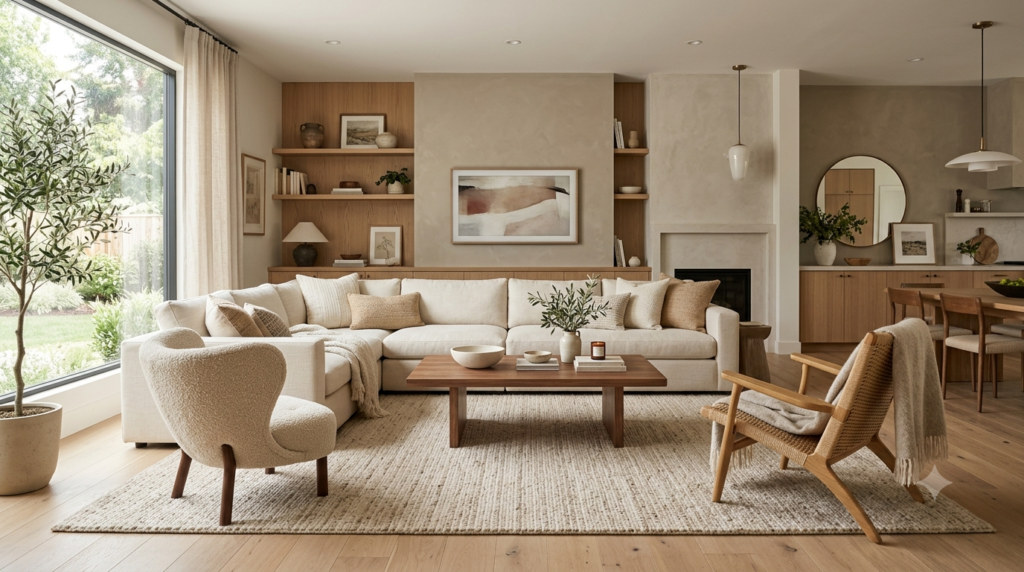
13. Create a Personal Gallery Wall
Your living room should reflect the people who actually live in your home. A gallery wall is an easy way to bring personality into the space.
Combine artwork, family photographs, travel memories, illustrations, and other meaningful pieces.
Before hanging the frames, arrange them on the floor to test different compositions. You can create a symmetrical grid for a polished appearance or use varied frame sizes for a more relaxed gallery.
Repeating one or two colors across the artwork can help everything feel connected.
In a smaller room, a vertical arrangement can draw the eye upward and create a sense of height.
14. Make a Small Living Room Feel More Spacious
Small living rooms can still feel stylish and comfortable when furniture is chosen carefully.
Look for slim-profile pieces, compact sofas, nesting tables, storage ottomans, and furniture with visible legs. These designs allow more of the floor to remain visible.
Use vertical space for storage rather than filling the room with wide cabinets. Tall shelving can provide substantial storage while maintaining a smaller footprint.
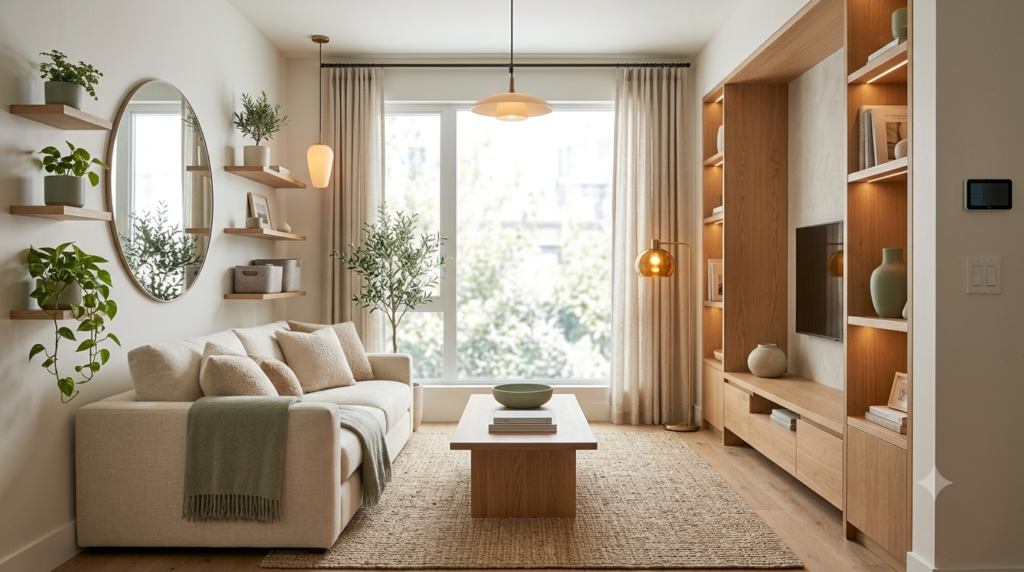
Light colors can also help the room feel more open. Mirrors positioned to reflect windows or natural light can enhance this effect.
Most importantly, avoid filling every available surface. A carefully edited room often feels much larger than one packed with furniture and accessories.
15. Use Mirrors to Brighten the Room
A strategically positioned mirror can make a living room appear brighter and more spacious.
Place a large mirror opposite or beside a window so that it reflects daylight deeper into the room.
Choose the shape according to the furniture around it. A round mirror can soften a room dominated by straight lines, while a large rectangular design can complement modern architecture.
The frame provides another opportunity to introduce texture. Natural wood works beautifully with warm interiors, while black, brass, or brushed metal can provide a more contemporary finish.
Always check what the mirror will reflect before fixing it permanently. A beautiful window, plant, or artwork creates a much more appealing reflection than a cluttered area.
16. Add Smart Storage Without Sacrificing Style
Storage is essential for keeping a living room comfortable and organized.
Use a combination of open and closed storage. Cabinets and drawers can conceal everyday clutter, while open shelves can display books, plants, artwork, and decorative objects.
Storage ottomans and benches are particularly useful because they combine function with seating.
Woven baskets can hold blankets, magazines, toys, and other items while adding texture to the room.
If floor space is limited, use wall-mounted shelving and tall cabinets to take advantage of vertical space.
Good storage should look like a natural part of the room rather than an afterthought.
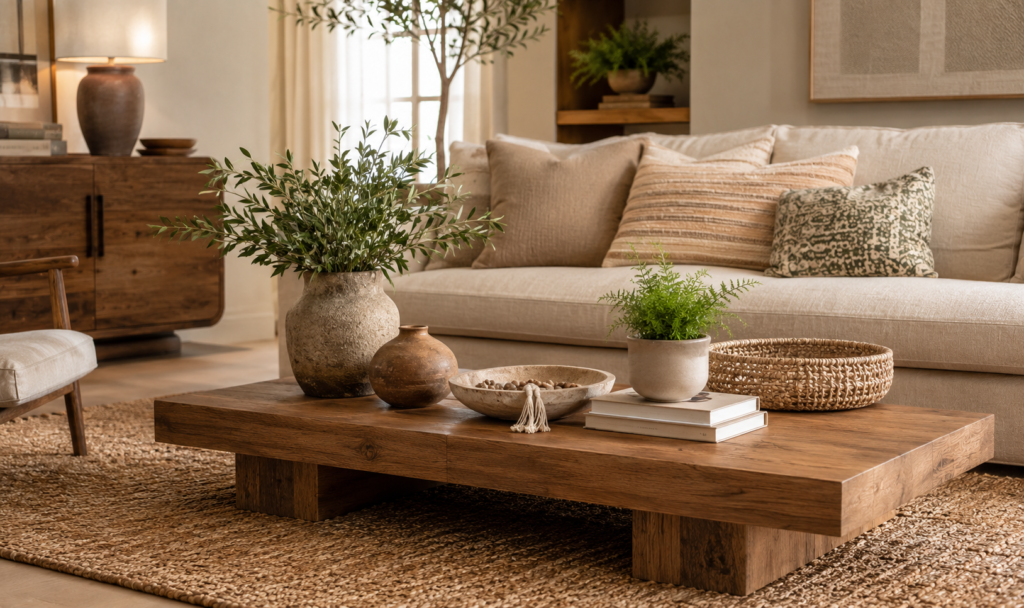
17. Add Curved Furniture and Organic Shapes
Curved furniture is an excellent way to soften the appearance of a living room. Rounded sofas, oval coffee tables, curved chairs, and arched mirrors can create a more relaxed visual flow.
These shapes work particularly well when combined with natural materials and warm neutral colors.
If your main furniture is rectangular, you do not need to replace it. Add one curved element, such as a round coffee table or arched floor lamp, to introduce contrast.
The combination of straight and curved forms creates a balanced and sophisticated interior.
18. Personalize the Room With Meaningful Accessories
The most beautiful living rooms rarely look as though everything was purchased at the same time.
Add objects that have personal meaning, such as travel finds, family photographs, favourite books, handmade ceramics, or vintage pieces.
These details give the room character and make it feel genuinely lived in.
Avoid displaying every accessory you own. Choose a smaller collection of items that you genuinely enjoy and rotate them occasionally.
This approach keeps the room fresh without constantly buying new décor.
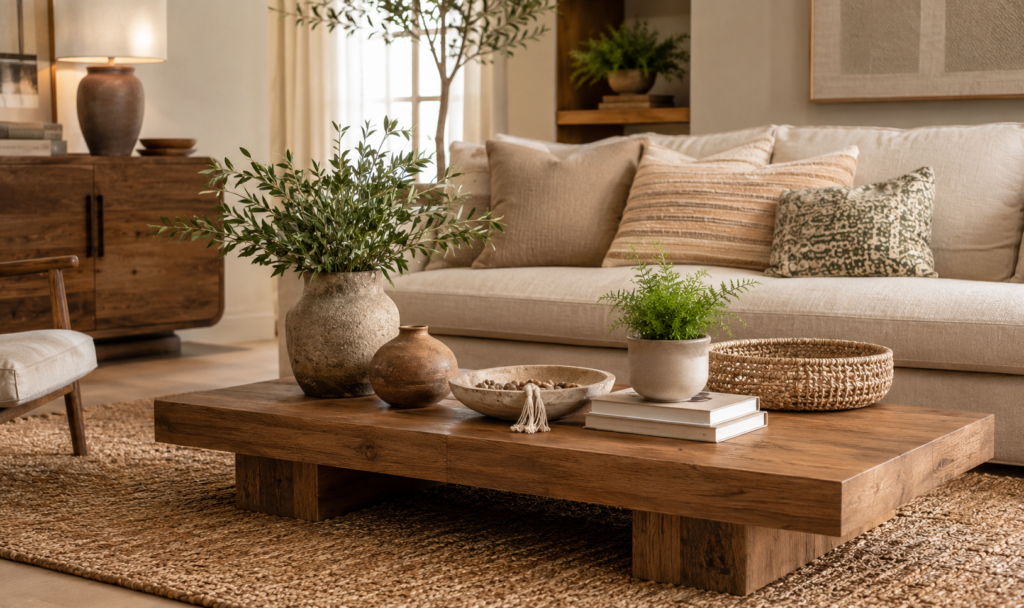
How to Combine These Living Room Decorating Ideas
You do not need to use every idea at once. The strongest interiors usually have a clear foundation and a few carefully selected details.
Start with the furniture layout and choose your main color palette. Once those decisions are established, add an appropriately sized rug and layer your lighting.
Next, introduce texture through cushions, throws, curtains, and natural materials. Add greenery and choose one main wall feature rather than decorating every surface.
Finally, bring in personal accessories and practical storage. This creates a room that feels finished without becoming overly styled.
For a small living room, prioritize scale, storage, mirrors, and vertical space. For a larger room, focus on creating distinct zones so the space feels comfortable rather than empty.
Conclusion
The best living room decorating ideas for 2026 are not about following one strict trend. They are about creating a room that feels warm, comfortable, personal, and practical.
Start by improving the furniture layout, then establish a welcoming color palette and build layers with rugs, lighting, cushions, curtains, plants, artwork, and natural materials. Introduce curved furniture, smart storage, and meaningful accessories to give the room additional character.
You do not need to completely redesign your home to achieve a beautiful result. A new rug, better lighting, a few natural textures, or a carefully styled wall can sometimes transform the entire atmosphere.
Most importantly, decorate for the way you live. A successful living room should look beautiful, but it should also be comfortable enough for everyday conversations, quiet evenings, family gatherings, and everything in between.