
How to make a room look bigger with paint is one of the most practical questions in home decor, because paint is the cheapest way to change how a space feels without moving a single wall. A small box room, a narrow hallway or a low-ceilinged bedroom can all feel noticeably more open with the right colour and finish. The secret is not simply painting everything white. It is understanding how light, colour and contrast guide the eye, and then using paint to remove the visual stops that cramp a room. In this guide, you will learn exactly how to make a room look bigger with paint, from choosing light-reflecting colours to painting ceilings, trim and accent walls.
Why Paint Changes How Big a Room Feels
Our eyes judge the size of a room by edges, shadows and contrast. Sharp colour changes, dark corners and heavy borders all register as boundaries, and the room feels smaller. Paint controls those boundaries. Light colours reflect daylight and lamplight back into the room, softening shadows and blurring the line where one wall ends and another begins. That is why two identical rooms can feel completely different: one in a flat, dark shade feels closed in, while the same room in a soft, light colour feels airy. When you learn how to make a room look bigger with paint, you are really learning how to control those visual boundaries.
Paint also affects mood: a cramped room in cold, stark white can feel clinical, while the same room in a warm off-white with a hint of cream feels welcoming and open. The goal is a colour that bounces light around without glaring. This is the first principle of how to make a room look bigger with paint: control the boundaries, not just the colour, and the rest of the tricks in this guide will work even harder for you.
How to Make a Room Look Bigger with Paint: Start with Light Colours
The single most reliable rule for how to make a room look bigger with paint is to start with light, high-reflectance colours. Soft whites, pale greys, light blues and muted sage greens reflect a large share of the light that hits them, so walls appear to recede. Paint brands measure this with a Light Reflectance Value (LRV): the higher the number, the more light the colour bounces back. For a small room, look for main-wall colours with an LRV above 70.
Warm whites are usually the safest choice. Pure brilliant white can look harsh, especially in a north-facing room with cool daylight, so choose an off-white with a warm undertone, such as a soft cream or a pale greige. In a room that already gets plenty of warm afternoon sun, a cooler white with a faint grey undertone can balance the light beautifully. Check the swatch at different times of day: a colour that looks perfect at noon can turn grey or yellow under evening lamplight.
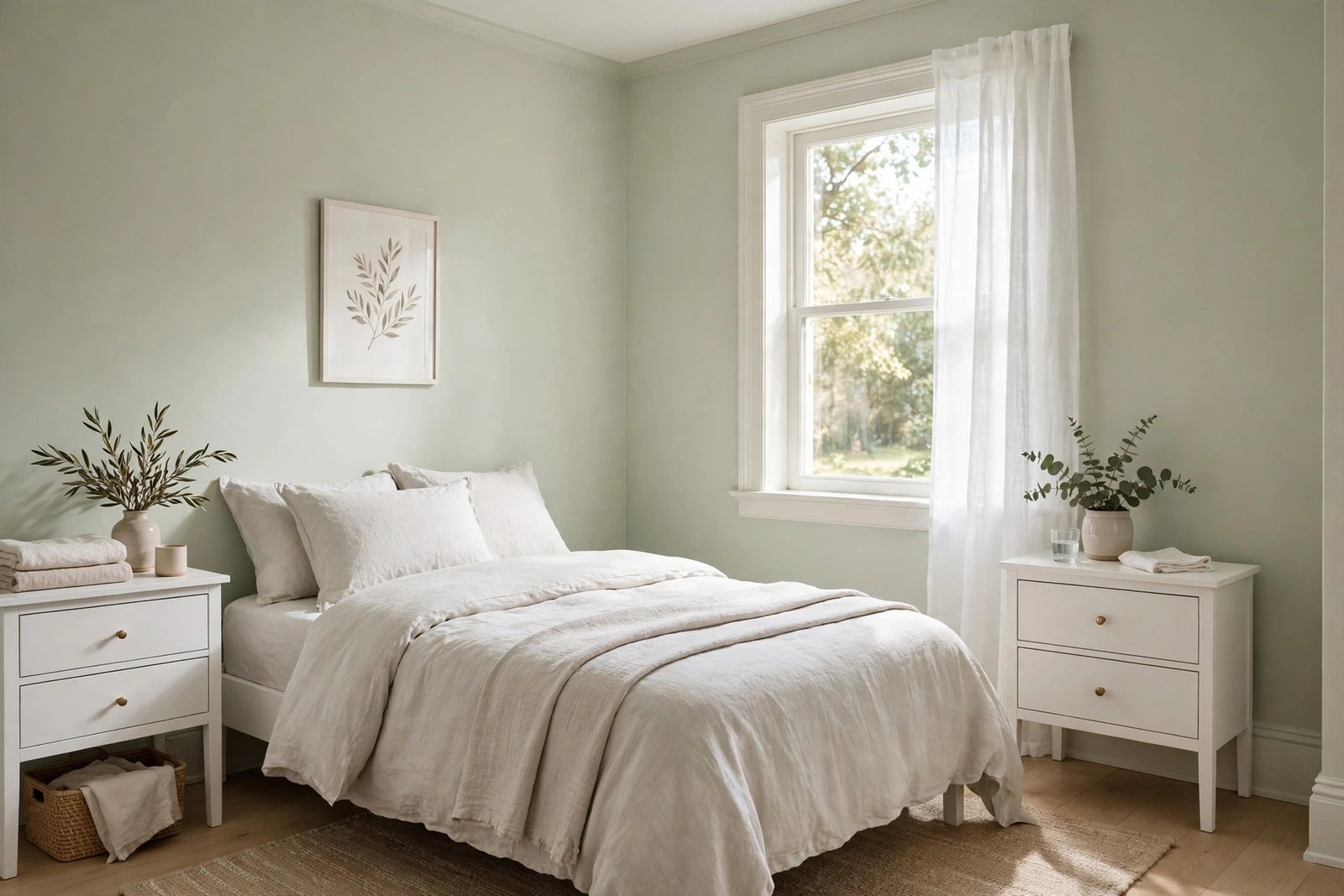
Do not be afraid of colour altogether: pale blue is one of the best shades for learning how to make a room look bigger with paint, because blue naturally recedes from the eye, making walls seem farther away than they are. A soft sage green works the same way in bedrooms, adding calm and character while still reflecting plenty of light. Keep the colour pale and slightly muted: a pastel version opens a room up, while the saturated version closes it in.
Test Before You Commit
Always paint a test patch, at least 60 centimetres square, on two walls that get different light, and live with it for two days: morning light, afternoon light and lamplight at night. Small paint chips lie: they cannot show how a colour behaves across a whole wall, and they hide undertones that only appear at scale. It is a small habit, but central to how to make a room look bigger with paint without repainting twice.
Paint the Ceiling and Trim to Lift the Room
The ceiling is the fifth wall, and in a small room it matters enormously. A bright, flat white ceiling reflects light downwards and makes the room feel taller, especially with slightly deeper walls. For low ceilings, paint the ceiling a shade lighter than the walls, or use the same colour on walls and ceiling, so no visible line cuts the room in half. That unbroken flow is one of the simplest answers to how to make a room look bigger with paint.
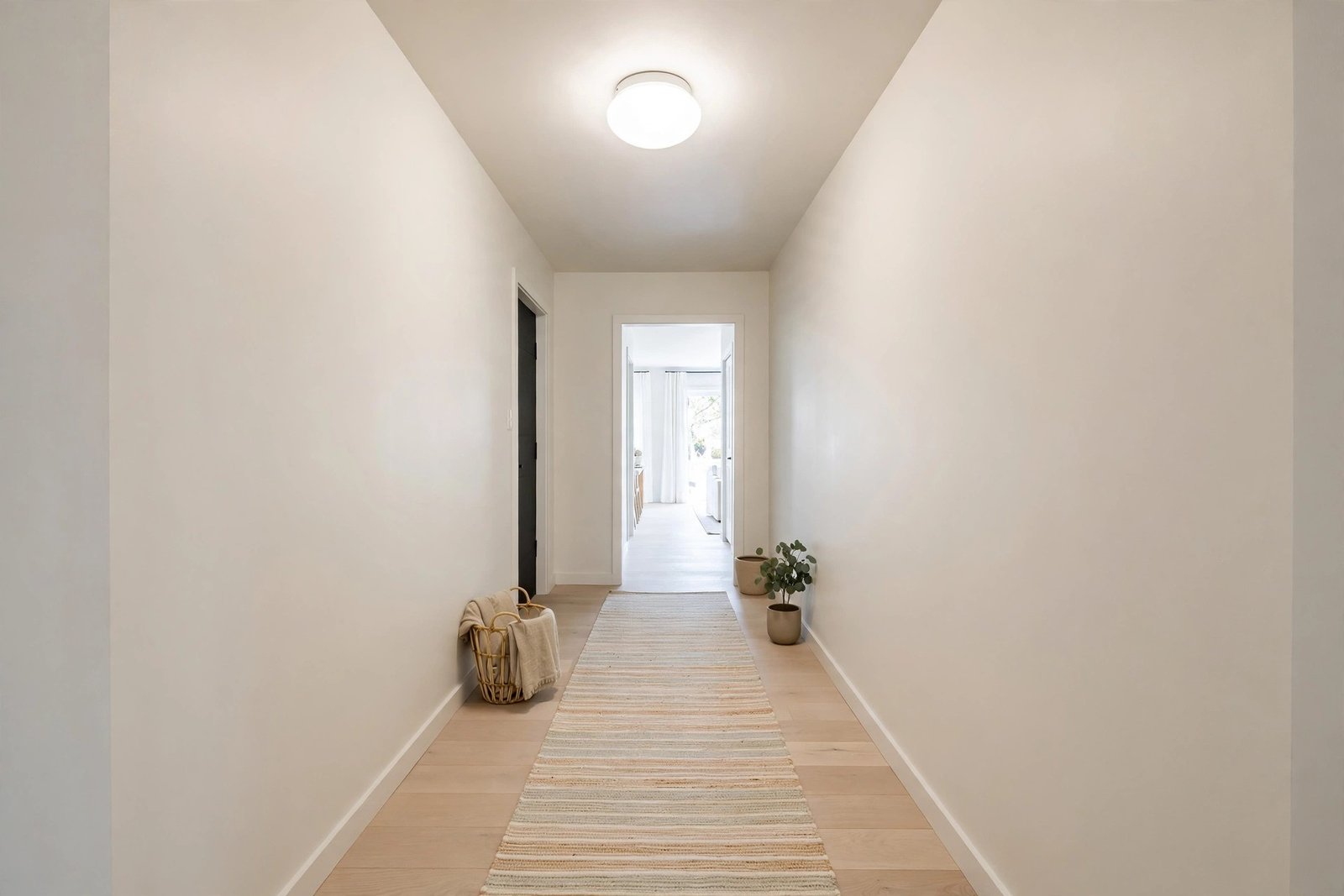
Trim is the other overlooked surface. Painting skirting boards, door frames and window frames in the same colour as the walls, or in a crisp white only slightly lighter, removes the dark outlines that chop a small room into pieces. If your trim is currently dark wood or a contrasting colour, painting it out can transform the room overnight. In a narrow hallway, white trim against pale walls keeps the eye moving forward. When you plan how to make a room look bigger with paint, always include the trim in the plan, not as an afterthought.
The Colour-Drenching Trick
Colour drenching means painting the walls, ceiling, trim and even the doors in one single colour, usually a soft, light shade. It sounds bold, but in a small room it is remarkably effective: it removes every visual break. There are no edges for the eye to catch on, so the room reads as one continuous, larger space. Colour drenching is an advanced way to approach how to make a room look bigger with paint, and it works best in pale neutrals, soft greens and light blues; save deep, dramatic drenching for rooms where you want a cosy, cocooning feel rather than a bigger one.
Accent Walls: When a Dark Colour Actually Adds Space
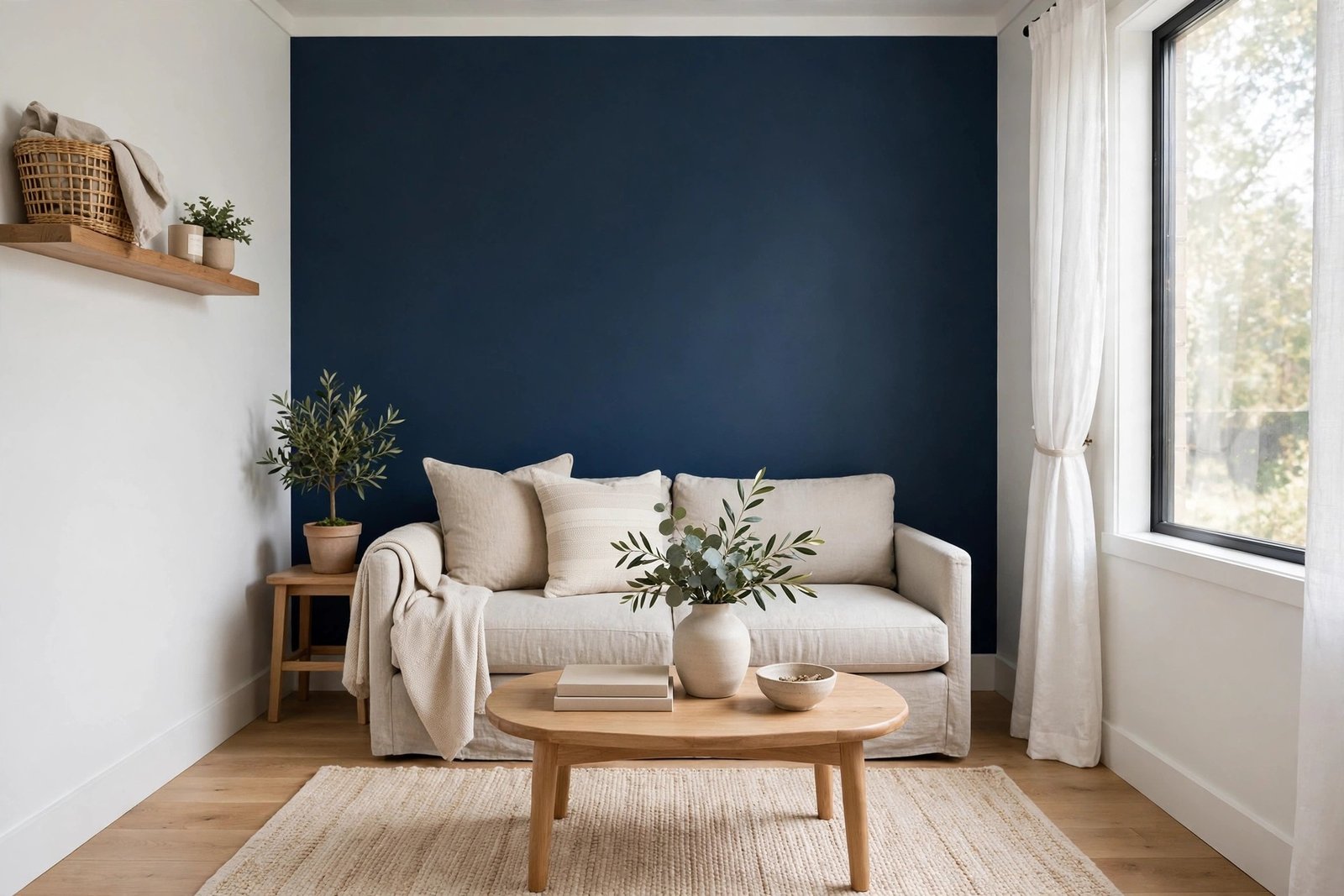
It sounds like a contradiction, but a dark accent wall can make a room feel bigger when it is used correctly. Paint only one wall, the one you want to push back, and keep the other walls light. A deep navy, forest green or charcoal wall behind a bed or sofa creates a focal point that draws the eye, and the contrast makes the lighter walls seem to fall away. This is why learning how to make a room look bigger with paint is not just about light colours: it is about contrast, used on purpose.
The rules for accent walls are simple. Choose the wall farthest from the door, or behind the main piece of furniture, so the dark colour reads as depth rather than a barrier. Keep the rest of the room light and accent-wall decor minimal, so the colour itself does the work. Avoid a wall broken up by many doors, windows or cupboards: the effect gets lost. If you love soft, textured finishes, our guide to limewash paint ideas for the living room shows how a cloudy, mineral texture can add depth to a feature wall without the heaviness of a flat dark colour.
Which Wall Should Be the Accent?
In a bedroom, the wall behind the headboard is the natural choice. In a living room, the wall behind the sofa or the fireplace wall works best. In a long, narrow room, paint the short far-end wall in a slightly deeper shade: this pulls the eye forward and makes the room feel less like a corridor. Never paint the longest wall dark in a narrow room. Choosing the right wall is half the battle when you learn how to make a room look bigger with paint.
Finishes and Sheen: The Quiet Detail That Adds Depth
Sheen is the quiet partner of colour when you work out how to make a room look bigger with paint. Flat and matt finishes hide wall imperfections and give a soft, velvety look for bedrooms and living rooms, but they absorb more light. Eggshell and satin finishes reflect a little more light, which can brighten a dark room, and they are easier to wipe clean, which makes them ideal for hallways and children’s rooms. Even a matt white ceiling helps bounce daylight deeper into the room.
Use sheen strategically rather than uniformly. A satin finish on trim and doors catches the light and outlines the architecture crisply, while matt walls keep the background calm. In a bathroom or a kitchen, a soft sheen also protects the paint and keeps small spaces looking fresh for longer. When you plan how to make a room look bigger with paint, match sheen to the room’s light, not just its style. Avoid high-gloss paint on large wall areas: it highlights every bump, and the reflections can feel busy rather than spacious.
Stripes, Colour Blocking and Other Paint Tricks
Once the base colour is right, painted patterns can stretch a room in surprising ways. Vertical stripes make walls feel taller, useful in a low-ceilinged room, while horizontal stripes make a narrow room feel wider. Keep the stripes subtle: two tones of the same colour, close in value, give the effect without shouting. Wide stripes, around 20 to 30 centimetres, look calmer and more modern than thin, busy ones.
Colour blocking works on the same principle. Painting the lower third of a wall in a slightly deeper tone and the upper two-thirds lighter can ground a room without closing it in, if the contrast stays gentle. Another clever move is a horizontal band of colour continuing around a corner into the next room: the eye follows it, and the two spaces feel connected and larger. When you practise how to make a room look bigger with paint, try these tricks on one wall first, because a little pattern goes a long way in a small space.
Painting an interior door the same colour as the wall makes it disappear, a gift in a small hallway or a room with several doors. A contrasting colour turns it into a feature, better in a larger room where you want the eye to stop. This disappearing-door trick is a favourite among decorators who teach how to make a room look bigger with paint, because in a small space, disappearing doors almost always win.
Mistakes That Make a Room Feel Smaller
The most common mistake is choosing a colour from a tiny chip without testing it, and ending up with a shade that is darker or colder than expected. The second is painting every room a different bold colour, which breaks the home’s flow and makes each room feel like a separate, smaller box. Using one light, consistent palette through connected rooms, with deeper colours saved for single accents, makes the whole home feel larger. Avoiding these mistakes matters as much as choosing the colour when you learn how to make a room look bigger with paint.
Another mistake is stopping the paint at the wrong place. Leaving a strip of old colour above a picture rail, or painting around fitted furniture instead of behind it, cuts the room visually. Similarly, a dark ceiling presses down on a small room, and heavy, contrasting trim outlines every opening like a frame. If you are serious about how to make a room look bigger with paint, paint the awkward bits too: behind radiators, inside window reveals and along the tops of door frames. The eye notices gaps even when you think it will not.
Finally, avoid painting a small room in a very dark colour on all four walls unless you genuinely want a cosy, enclosed feeling. Dark rooms can be beautiful, but they need excellent lighting, pale furniture and plenty of mirrors to avoid feeling like a cave. For most small rooms, light walls with one deliberate dark accent give you the drama without the shrinkage.
Your Weekend Plan: Painting a Small Room in a Day
Start by clearing the room, cleaning the walls, filling cracks and sanding smooth. Paint the ceiling first, then the walls from the top down, so drips land on unpainted surfaces. Finish with trim and doors, using a smaller brush for crisp lines. Two coats of good quality paint beat one thick coat, and the second coat is where the colour reaches its true depth.
Choose your colour the weekend before, and buy a tester pot first if you are unsure. Open the windows for ventilation, and use low-VOC paint if the room is a bedroom or a child’s room. Planning ahead is part of how to make a room look bigger with paint on a deadline: it stops rushed colour choices that you regret on Monday. For more expert colour ideas, see Benjamin Moore’s guide to colours that make rooms look bigger and brighter. Work in daylight where possible, and check the finished walls in the morning before deciding whether a third coat is needed.
Final Thoughts
Learning how to make a room look bigger with paint is less about following one rule and more about combining small decisions: a light, reflective base colour, a ceiling and trim that do not cut the room in half, one well-chosen accent wall, and a finish that suits the light. Paint is forgiving, affordable and easy to change. Start with one room, test your colour properly, and a small space can feel much bigger by Sunday evening.