Interior design styles are the visual languages we use to shape our homes. Each one carries its own mix of colours, materials, shapes and moods, and each one tells a different story about the people who live there. Walk into a bright, pared-back flat and you feel calm at once; step into a warm farmhouse kitchen and you feel welcomed. That difference is not an accident. It is the result of a style, chosen deliberately or drifted into over time, and it affects how a room works just as much as how it looks.
If you have ever stood in a furniture shop feeling overwhelmed, or scrolled through endless living room photos wondering why some spaces feel right and others feel flat, this guide will help. We explain the most popular interior design styles in plain language, what defines each one, and how to pick the look that fits your home, your budget and your daily life.
What Interior Design Styles Actually Mean
A style is not a shopping list. It is a set of shared choices: a colour palette, a way of treating light, a preference for certain materials, and a feeling the room should give you. Two rooms can both be called modern, yet look quite different, because the people living in them made different choices within the same broad language. That is normal, and it is good news. It means you are not locked into a rigid formula.
Most interior design styles grew out of a particular time, place or way of living. Scandinavian design came from long northern winters and a need for light, warmth and simplicity. Industrial style grew from old factories turned into homes, where brick, steel and open space were already there. Farmhouse style reflects rural life, where practical, hard-wearing pieces mattered more than formality. Understanding where a style comes from helps you use it well, because you can borrow its best ideas instead of copying a showroom exactly.
12 Popular Interior Design Styles Explained
Below are twelve of the most loved looks in homes across the USA and UK today. Each one is described by its colours, materials, furniture shapes and the feeling it creates, so you can compare them side by side and spot the one that speaks to you.
1. Modern Style
Of all the interior design styles, modern is the cleanest and most disciplined. Think low, straight-lined sofas, smooth surfaces, glass, steel and polished wood, and a palette built on white, black, grey and one or two restrained accent colours. Ornament is kept to a minimum, and every piece earns its place. The result feels calm and spacious, which is why it suits open-plan flats and busy family homes alike. The key is restraint: leave breathing room around furniture, and let a single piece of art or a beautiful lamp do the talking.
2. Contemporary Style
Contemporary is often confused with modern, but it is really a moving target: it describes what is current right now. Today’s contemporary rooms mix soft curves with clean lines, warm neutrals with bold artwork, and natural textures like bouclé, rattan and travertine. It is a great choice if you like a fresh look but do not want your home to feel like a museum of one era.
3. Scandinavian Style
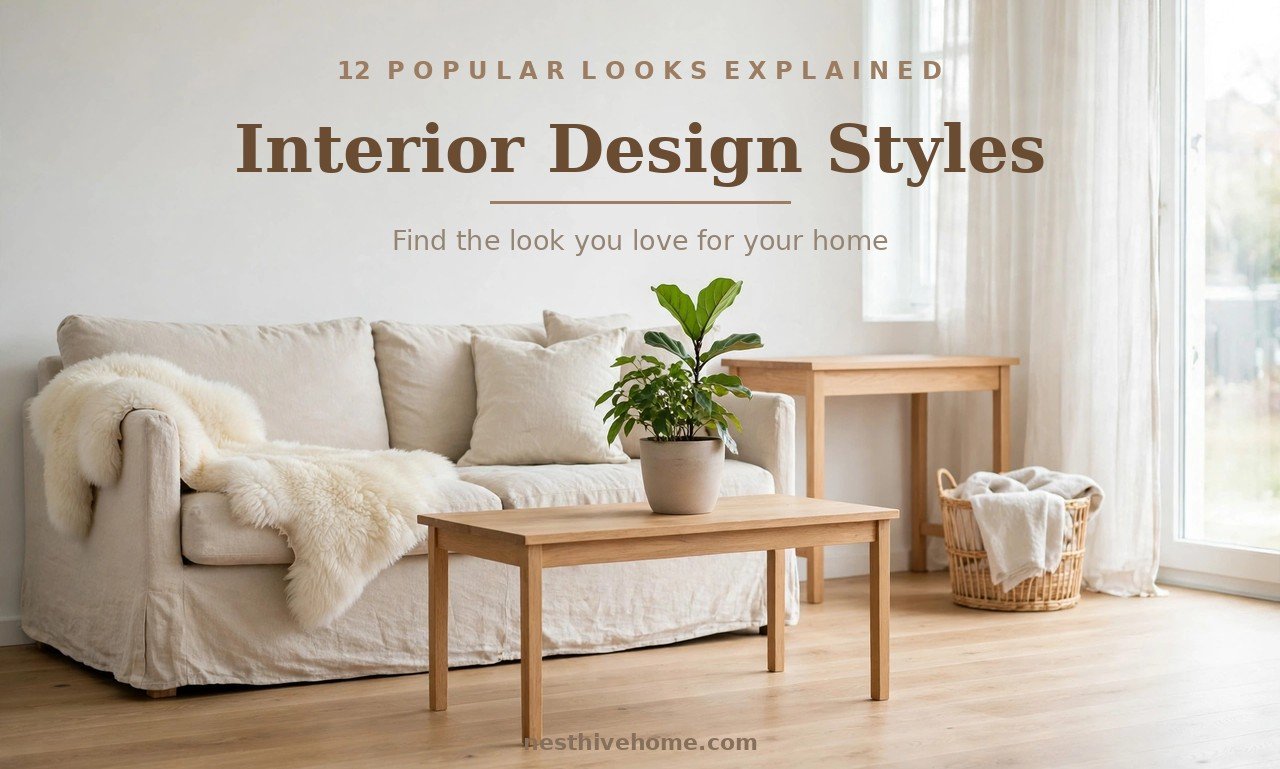
Scandinavian rooms are bright, airy and quietly warm, and this is one of the interior design styles that works best in small homes. White walls bounce daylight around, pale oak floors keep things light, and soft textiles like wool throws and linen cushions add comfort. Furniture is simple and functional, with gently tapered legs and no unnecessary bulk. Greenery plays a big role, because plants bring life into rooms that spend much of the year indoors. The overall feeling is calm and welcoming, never cold, and light colours and simple shapes make rooms feel larger.

4. Mid-Century Modern Style
Mid-century modern comes from the 1950s and 1960s, and it remains one of the most collected looks today. Expect tapered wooden legs, organic curved shapes, bold but warm colours like mustard, teal and burnt orange, and statement pieces such as a lounge chair in moulded plywood or a sunburst mirror. The style pairs well with both vintage finds and new reproductions, so you can build the look gradually. A good rule is to let one or two genuine mid-century pieces anchor the room, then keep the rest simple so the stars can shine.
5. Industrial Style
Industrial style celebrates raw, unfinished materials: exposed brick, concrete, blackened steel, reclaimed wood and visible ductwork. Furniture tends to be sturdy and functional, from metal-framed shelving to leather sofas that age well. Lighting is a signature feature, with Edison bulbs, cage pendants and factory-style lamps adding warmth to the harder surfaces. You do not need a converted warehouse to use it. A brick-effect wall, a metal coffee table and warm lighting can bring an industrial edge into an ordinary flat.
6. Bohemian Style
Bohemian, or boho, style is relaxed, layered and deeply personal. It mixes patterns, textures and colours freely: a patterned rug over wooden floors, rattan chairs beside a velvet sofa, plants on every surface, and travel finds displayed rather than hidden away. There are no strict rules, which is exactly the point. The room should look collected over time, not bought in one afternoon. The trick to keeping it beautiful rather than chaotic is a consistent warm colour base, so the layers feel rich instead of random.

7. Farmhouse Style
Modern farmhouse is among the friendliest interior design styles for family life. Shiplap walls, apron-front sinks, wooden beams, and a mix of white, cream and soft sage create a room that feels honest and comfortable. Furniture is sturdy and unfussy, and natural materials like cotton, linen and worn wood dominate. In the UK, a similar feeling comes from the country cottage look, with floral fabrics and painted wooden furniture. Both versions share the same heart: a home that invites you to sit down, stay a while and relax.
8. Traditional Style
Traditional style draws on classic European design: symmetrical layouts, rich wood tones, detailed mouldings, patterned fabrics and elegant furniture with curved legs and carved details. Colours tend to be deep and warm, from burgundy and navy to forest green, balanced with cream and gold. This is the style for people who love antiques, heirlooms and a sense of history.
9. Transitional Style
Transitional style is the bridge between traditional and contemporary, and it is one of the most practical interior design styles for a real home. It keeps the comfort and warmth of traditional design but strips away the fuss: simpler lines, a neutral palette, fewer patterns, and furniture that is comfortable rather than formal. If you like classic pieces but your partner prefers clean modern lines, transitional is the compromise that makes both happy. It also adapts well, because a neutral base lets you change cushions, art and accessories as your taste evolves.
10. Minimalist Style
Minimalist rooms are defined by what is left out. Surfaces are clear, storage is hidden, and each object is chosen with care. The palette is usually monochrome or very soft, and the focus falls on light, proportion and the quality of a few beautiful materials. Minimalism is often misunderstood as cold or empty, but done well it feels peaceful and luxurious, because nothing distracts from the space itself.
11. Coastal Style
Coastal style brings the feeling of the seaside indoors, without turning your home into a themed gift shop. Light blues, sandy neutrals and crisp whites dominate, with natural textures like jute, driftwood and linen adding depth. Furniture is relaxed and comfortable, often slipcovered for easy washing, and windows are kept as open as possible to let in light and air.
12. Japandi Style
Japandi blends Japanese minimalism with Scandinavian warmth, and it has quickly become one of the most admired interior design styles for calm homes. Expect low furniture, natural wood, muted earthy tones, handmade ceramics and plenty of empty space. The Japanese influence brings discipline and a love of imperfection, while the Scandinavian side adds softness and comfort.

How to Choose Between Interior Design Styles
With so many interior design styles to choose from, deciding can feel harder than decorating itself. Start with your life, not with a magazine. How do you actually use the room? A family with young children and a dog needs washable fabrics and sturdy surfaces, which points toward farmhouse, transitional or a relaxed contemporary look. A couple who love entertaining might lean toward modern or traditional, where the layout can be more formal and dramatic. Your daily habits are the best filter, because a beautiful room you cannot live in will not stay beautiful for long.
Your home’s architecture matters too, since certain interior design styles suit certain buildings naturally. A Victorian terrace with high ceilings, cornicing and bay windows will carry traditional or transitional style well, while a new-build flat with open-plan space and large windows suits modern, Scandinavian or minimalist looks. That does not mean you must obey the architecture, but working with it usually gives a more settled result than fighting it.
Mixing Interior Design Styles Without Making a Mess
Most real homes do not follow a single one of the interior design styles, and they are better for it. The secret to mixing well is to pick one dominant style, usually around seventy percent of the room, and let a second style provide accents. A modern living room with a farmhouse wooden coffee table and a vintage rug feels warm and personal. A traditional room with contemporary art and a simple modern lamp feels fresh rather than dated. The dominant style sets the tone, and the accents add character.
One warning: mixing more than two strong interior design styles in a single room usually ends in visual noise. If you love industrial, boho and coastal equally, give each one its own room, or let one rule the living room and another the bedroom. Restraint is what separates a collected, layered home from a jumble sale, and it is the single most useful skill in decorating.
Budget-Friendly Ways to Try New Interior Design Styles
Trying out new interior design styles does not require replacing everything. Paint is the cheapest transformation available: a single accent wall or a full repaint in a style-appropriate colour can shift the whole mood for the price of a few tins. In the UK, expect to spend roughly £100 to £200 on paint and supplies for an average room; in the USA, a similar job runs about $150 to $300 if you do it yourself. Next, swap soft furnishings. Cushions, throws, curtains and a rug can carry a new palette and texture without touching the furniture.
Lighting is the second most powerful lever. Replace a harsh ceiling light with layered lighting, a floor lamp, table lamps and warm bulbs, and the same furniture will look entirely different in the evening. Thrift shops, charity shops, online marketplaces and end-of-line sales are excellent for finding solid wooden furniture and vintage pieces that suit farmhouse, mid-century and traditional looks.
Common Mistakes to Avoid
The most common mistake is buying a matching furniture set straight from a showroom. It looks tidy on the shop floor, but at home it often feels flat and impersonal, like a hotel room. Mix at least a few pieces from different sources, and your room will instantly feel more lived-in.
Finally, do not chase every trend, whatever interior design styles you love most. A room built entirely on this season’s fashionable items will date quickly and cost a fortune to refresh. Invest in good-quality basics in your chosen style, and let trends live in the cheap, changeable layers: cushions, throws, vases and art prints. When the trend passes, you swap a cushion, not a sofa. For more inspiration on a related classic look, see our guide to Neo Deco interior design, which shows how a historic style can feel fresh in a modern home. If you want a broader reference, the editors at Architectural Digest explain the most popular interior design styles with beautiful room examples.
Start With One Room
You do not need to redesign your whole house to enjoy a style you love. Pick the room you spend the most time in, often the living room or bedroom, and give it your full attention. Define the style, choose a palette of three or four colours, and make a short list of the changes that will have the biggest impact: paint, lighting, the largest furniture piece, and textiles.
Once that first room works, the rest of the house becomes easier. You will know which colours you enjoy living with, which materials suit your household, and how much change you actually need to feel happy. A home is not a showroom, and it does not need to be finished all at once. The best rooms grow slowly, shaped by the people who live in them, and that is true whatever interior design styles you choose. Start small, trust your eye, and enjoy the process of making your home unmistakably yours.