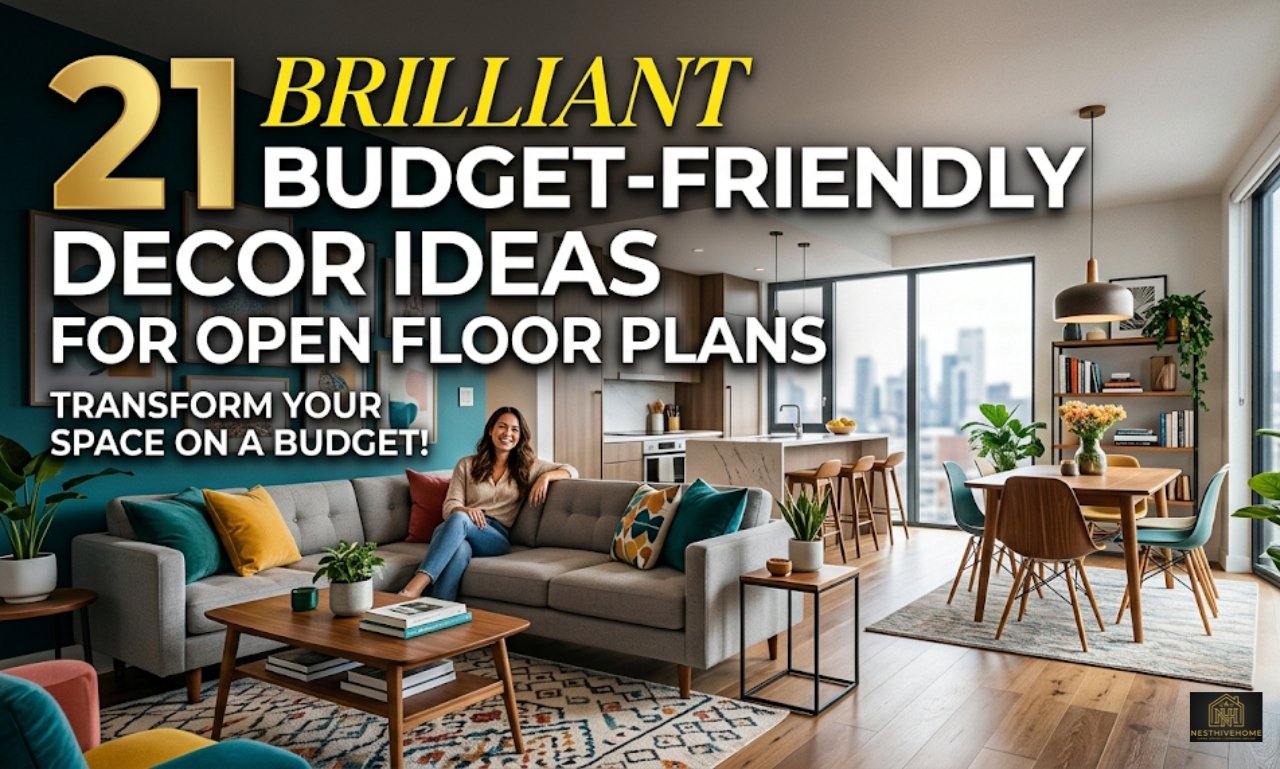
Open floor plans are a paradox: all that glorious space, and somehow it’s harder to decorate than a boxy little room. Without walls, furniture drifts, colors clash across zones, and big empty stretches just look unfinished. Here’s the good news — fixing it rarely means buying more stuff. These budget-friendly decor ideas for open floor plans are about zoning tricks, color discipline, and lighting: the cheap, high-impact moves that turn one big room into a home that actually feels designed. Proof that style doesn’t need a big budget: these budget home decor ideas under $50.
Define Zones With Affordable Rugs
Open-plan rooms have no walls, so rugs become your invisible boundaries — the single easiest zoning trick there is. Think of it as a simple formula: a large rug anchors the living room, a smaller one defines the dining area, and a runner marks the kitchen or transition zone.
They don’t need to match perfectly; they just need to coordinate. Stick to one palette — cream, beige, taupe, muted green, warm brown — and even affordable rugs will look deliberate. One large rug under the sofa alone can make the whole living area feel instantly more intentional.
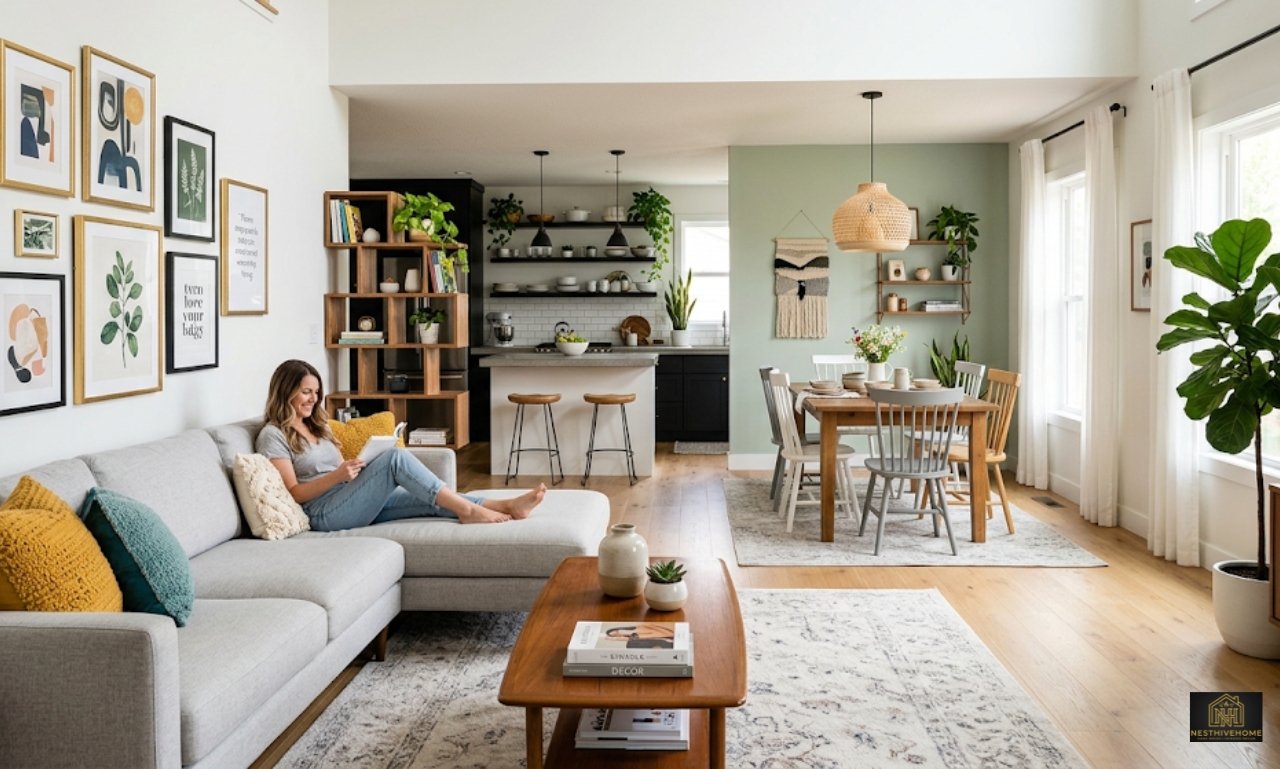
Use Furniture to Create Invisible Walls
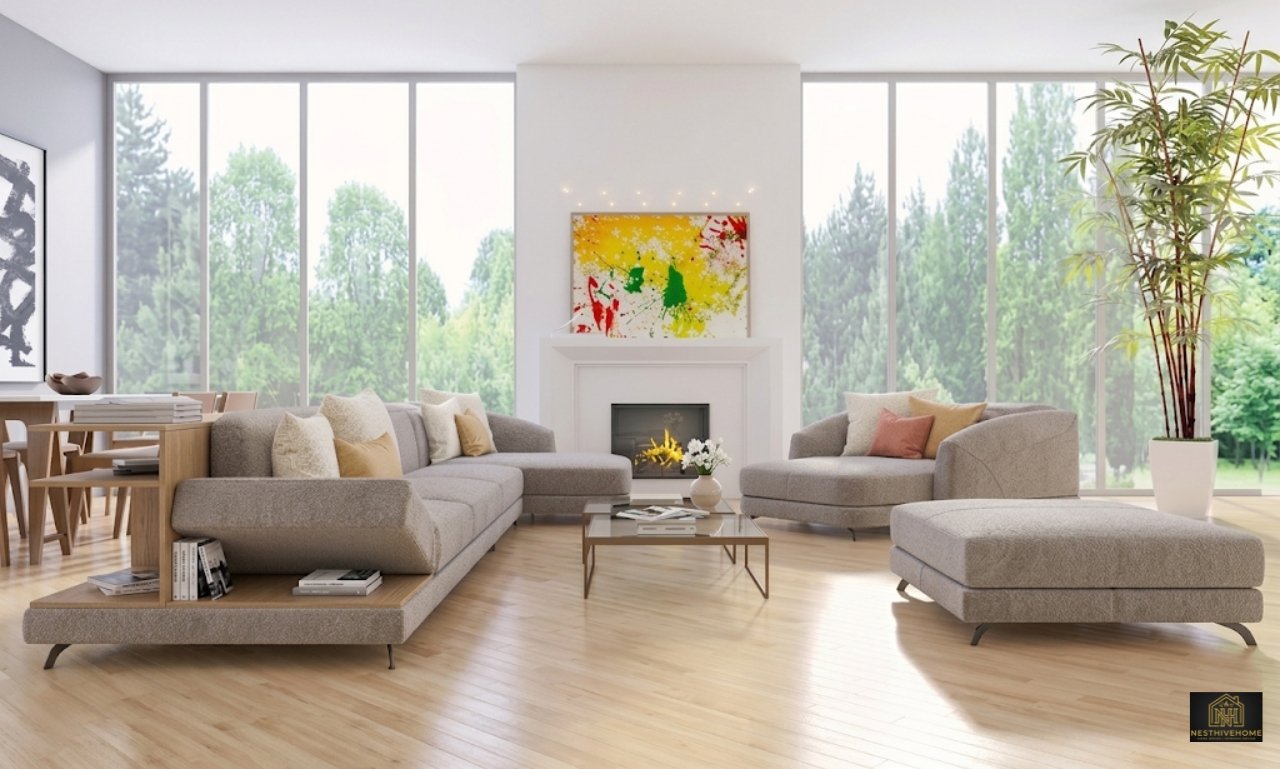
No walls? No problem. Let furniture do the dividing: the back of the sofa marks where the living room ends, the dining table stakes out its own zone, and a bookcase can split living from entry without blocking light. Think of each piece as a functional boundary — it keeps the plan open and airy while giving every area a clear purpose.
Try a Budget-Friendly Sofa Layout
Before spending a cent, rearrange what you own. Pull the sofa off the wall and float it facing the room’s focal point — sofa, coffee table, accent chairs in a loose conversation grouping. It defines the living zone instantly. If the mix looks mismatched, unify it with affordable pillows and throws in your palette. Honestly, a new layout often transforms a room more than new furniture ever could.
Repeat One Color Throughout the Space
Open plans live or die on continuity. Pick two or three colors — say cream, walnut, and muted sage — and thread them through every zone: cream textiles in the living area, walnut furniture tones, sage in artwork and greenery, then echo the same trio in the dining and kitchen corners. It’s the cheapest sophistication trick in decorating: repetition makes inexpensive pieces look like a plan instead of an accident.
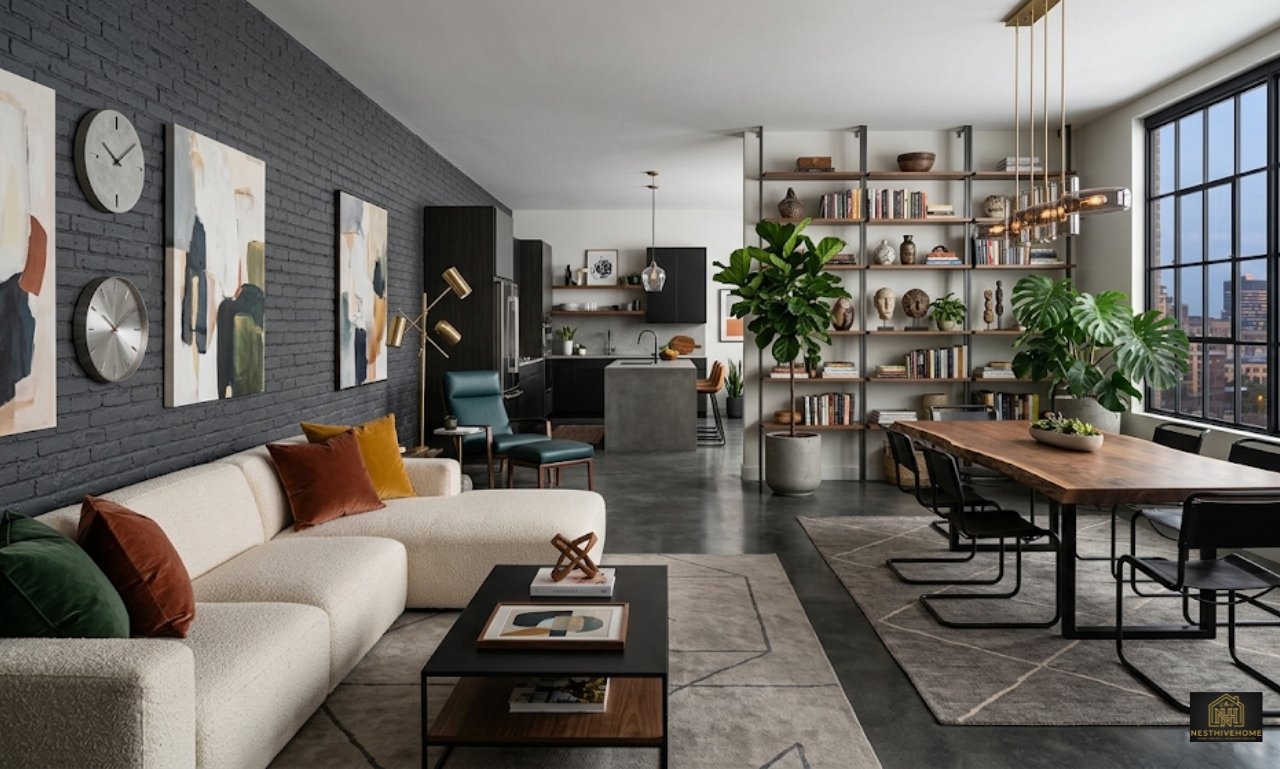
Create an Affordable Dining Zone
Your dining area doesn’t need a designer set — a simple wooden table styled well beats an expensive one styled badly. Layer it with an affordable linen-look runner, a ceramic centerpiece, secondhand chairs (mismatched is charming; paint them one color for cohesion), and one warm pendant light overhead. That’s a dining zone, not just a table in a big room.
Use Curtains to Add Softness
Curtains are the unsung heroes of open plans: they add height, softness, and finish in one move. Hang them high — near the ceiling — and let them fall to the floor in simple solids like ivory, cream, or warm white. Skip fussy patterns; in a big connected space, calm curtains keep things serene. It’s a budget move that reads surprisingly luxurious.
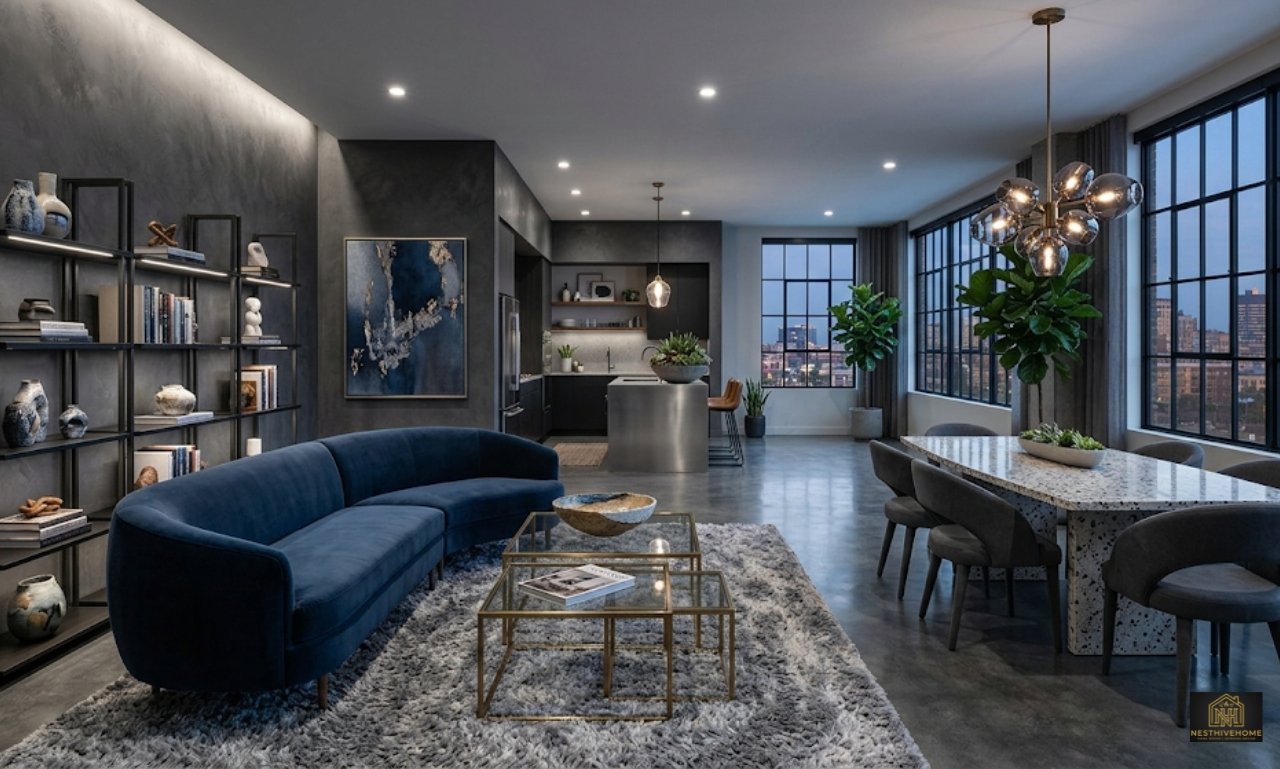
Make It Feel Luxurious With Lighting
Lighting is what makes cheap furniture look expensive. Ditch the single overhead fixture and layer instead: a floor lamp by the sofa, table lamps on consoles, pendants over the dining table, maybe under-cabinet strips in the kitchen. Warm bulbs tie it all together, especially in the evening. One sculptural floor lamp can even double as your statement piece — light and art.
Shop Your Home First
The best budget move costs literally nothing: shop your own home. That bedroom lamp might be perfect beside the sofa. The hallway basket becomes living-room storage. Art from the spare room could transform the dining wall. Walk room to room with fresh eyes before buying anything — you’ll be amazed what you already own. This is the most overlooked trick on the entire list.
Use One Large Statement Piece
Here’s the counterintuitive rule for big rooms: fewer, bigger pieces beat lots of small ones. A dozen tiny accessories scattered across an open plan just look like clutter. One oversized artwork, a large mirror, a sculptural floor lamp, or a big architectural plant creates a focal point with real presence — and one great piece often costs less than twelve forgettable ones.
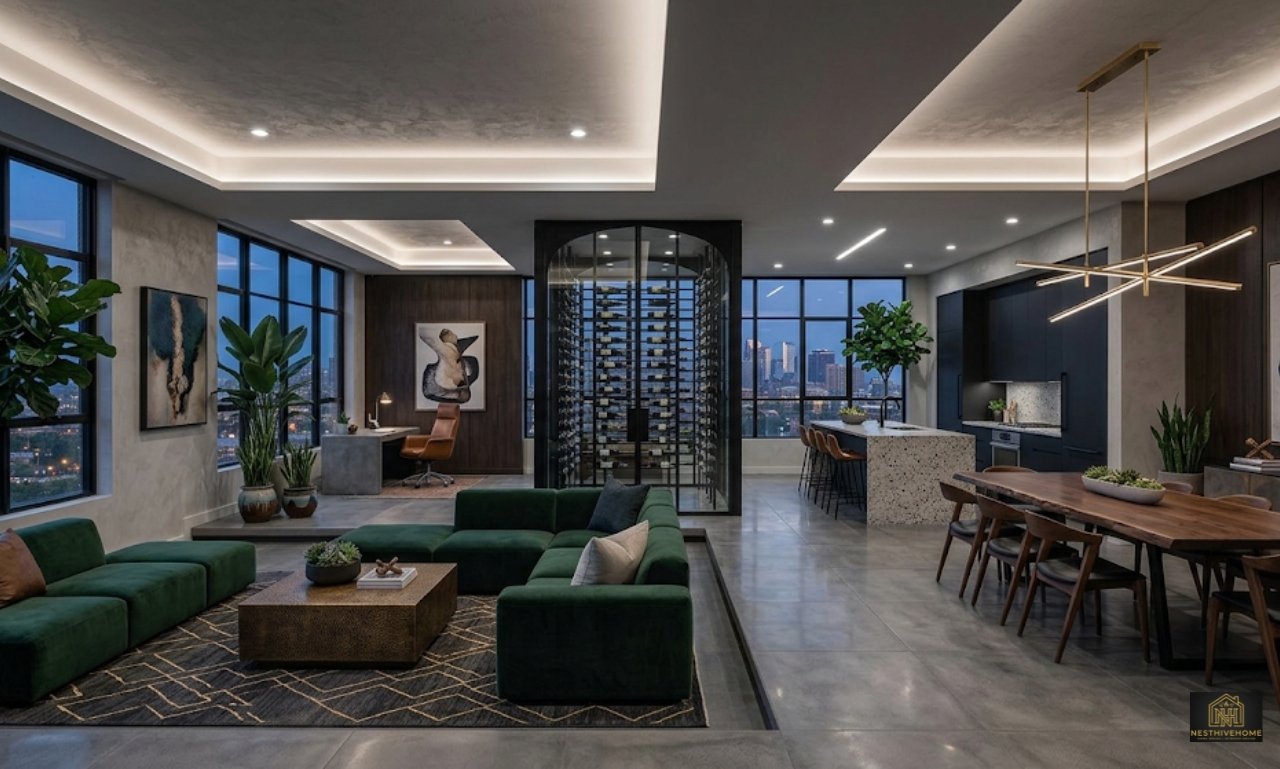
Add Affordable Greenery
Nothing makes an open plan feel alive — and expensive — like plants. You don’t need a jungle: one large architectural plant in the living area plus a few smaller ones near the kitchen or dining zone does the job. Olive trees, snake plants, rubber plants, monstera, palms — pick for your light conditions, not just your taste. Green is the one ‘color’ that works with every palette.
Style Open Shelving Carefully
Open shelves can beautifully connect zones — or become visual chaos. The formula: books plus ceramics plus greenery plus one piece of art plus empty space. That last ingredient is the secret; breathing room is what makes shelves look curated instead of crammed. Repeat similar colors and materials across shelves and resist displaying everything you own. Edited always looks more expensive.
Use a Console Behind the Sofa
A floating sofa has a back that faces the rest of the room — don’t leave it naked. A slim console behind it creates a polished transition and another styling surface: a small lamp, books, a vase, some greenery. It also subtly separates the living zone from whatever’s behind it. Thrift a narrow table and upgrade the hardware; nobody will know it wasn’t always there.
Mix Expensive-Looking and Affordable Pieces
Your whole room doesn’t need to look expensive — just a few strategic moments. Pair your affordable basics with one or two ‘hero’ elements: large artwork, beautiful lighting, textured pillows, natural wood, elegant ceramics, an oversized mirror. The eye registers those highlights and assumes the rest matches. It’s designer thinking on a real-world budget.
Create a Cozy Reading Corner
That awkward unused corner? It’s a reading nook waiting to happen — and it creates yet another ‘zone’ for free. A comfortable chair (secondhand is fine), a small side table, a floor lamp, a throw, a plant. Five pieces, one new destination in your home. Corners like this are what make open plans feel layered and livable instead of just… big.
Use Paint Strategically
You don’t need to paint the whole open plan — in fact, please don’t. One strategic move beats a full repaint: a warm color behind the dining area, a subtle accent wall that anchors the living zone. Keep the overall palette connected so zones feel related, not random. Renters: artwork, textiles, and furniture in zone-specific-but-coordinated colors achieve the same effect with zero paint.
Add Texture Instead of More Furniture
When an open plan feels empty, the instinct is to buy more furniture. Try texture first — it’s cheaper and often more effective. Woven baskets, linen curtains, a textured rug, boucle pillows, wool throws, natural wood, ceramics: layered textures add depth and warmth without adding a single bulky piece. A room rich in texture never feels empty, even with minimal furniture.
Use Mirrors to Expand the Space
Mirrors earn their keep twice in open plans: they bounce light deep into the room and visually expand zones. Place a large one behind a console, near the dining area, or opposite a window — anywhere it can multiply light and views. An oversized mirror becomes a focal point in its own right while making everything around it feel more spacious. Two jobs, one piece.
Create a Consistent Material Palette
Colors get the attention, but materials are the real cohesion engine. Choose three or four and repeat them everywhere: natural oak plus linen plus ceramic plus brushed brass, for example. Same materials across living, dining, and kitchen areas stitch the whole plan together. It’s why designer rooms feel unified even with mixed furniture — the materials are doing the quiet work.
Decorate Vertically
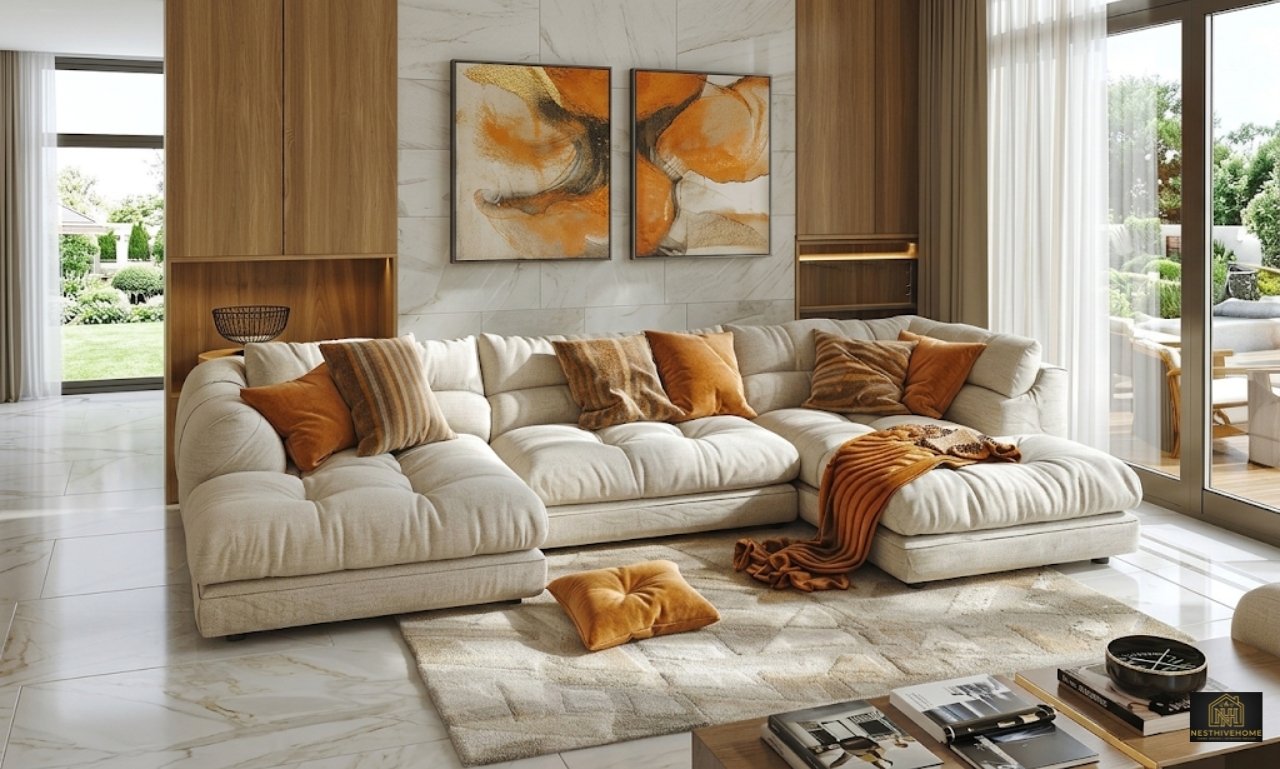
Big empty rooms feel flat because everything sits at the same height. Fix it by going up: tall plants, floor-to-ceiling curtains, oversized art, a tall bookshelf, a large mirror, vertical lighting. Drawing the eye upward gives the room dimension and energy. In open plans especially, vertical elements act as landmarks that help each zone feel distinct.
Keep the Open Space Clutter-Free
The most powerful budget move here is free: remove things. Open plans reveal clutter from every angle — there’s nowhere to hide. Corral the everyday mess (toys, cables, remotes, paperwork) into baskets and closed cabinets, and keep surfaces intentionally edited. A clean open plan automatically reads as sophisticated; a cluttered one reads as chaotic no matter what you spent.
Finish With Small Personal Details
Once the layout works, make it yours. Travel photos, favorite books, handmade ceramics, family art, vintage finds, meaningful souvenirs — the objects with stories are what stop a budget room looking generic. The goal was never a showroom; it’s a space that feels beautiful and lived in. Personality is the one thing money can’t buy — and it’s free.
Final Thoughts
The best budget-friendly decor ideas for open floor plans aren’t about buying the cheapest furniture — they’re about making smarter decisions. Zone with rugs, rearrange before you shop, repeat colors and materials across every area, layer your lighting, add greenery, and choose a few strong pieces over many small ones.
An open floor plan doesn’t have to feel like one enormous room. Give every area a purpose, keep the palette connected, and edit ruthlessly. Do that, and even a modest budget produces a home that feels organized, comfortable, and — dare we say — a little bit luxurious.