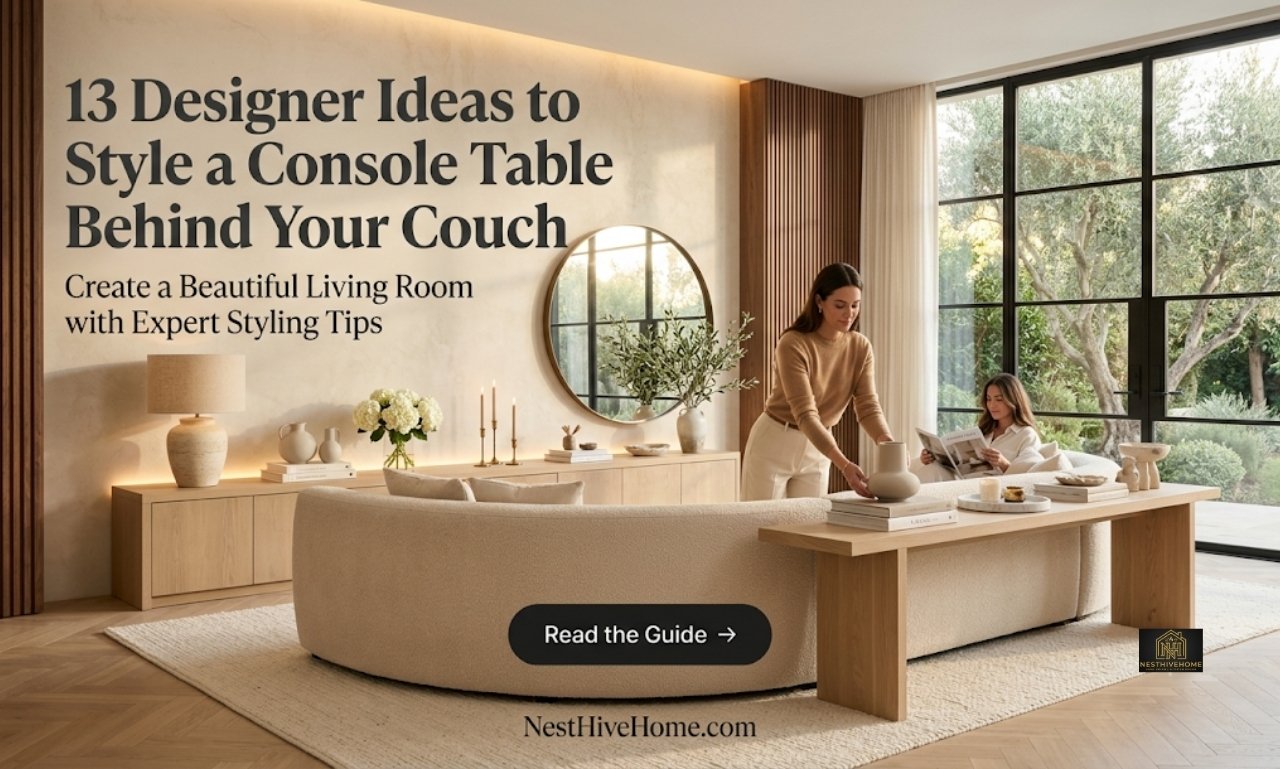
That awkward gap behind your sofa? It’s not dead space — it’s an opportunity wearing a disguise. A console table there turns a floating couch into an intentional, finished arrangement, and it gives you a whole new surface to style. The difference between ‘random stuff behind the sofa’ and ‘wow, who decorated this’ comes down to a few designer principles: scale, layering, light, and restraint. Here’s exactly how to style a console table behind a couch like you hired someone.
Choose the Right Console Table Size
Everything starts with scale, and this is where most people go wrong. The table should sit slightly lower than the sofa back — you want to see over it, not peer around it — and slim enough that nobody’s squeezing past. In a small room, a narrow profile is non-negotiable; in a big open space, you can go wider with drawers or shelving. Material sets the tone: light oak for Scandinavian warmth, black metal and glass for modern edge, walnut for timeless elegance, marble for instant luxury. Get the size and material right and the styling practically does itself.
Create Visual Balance with Decorative Layers
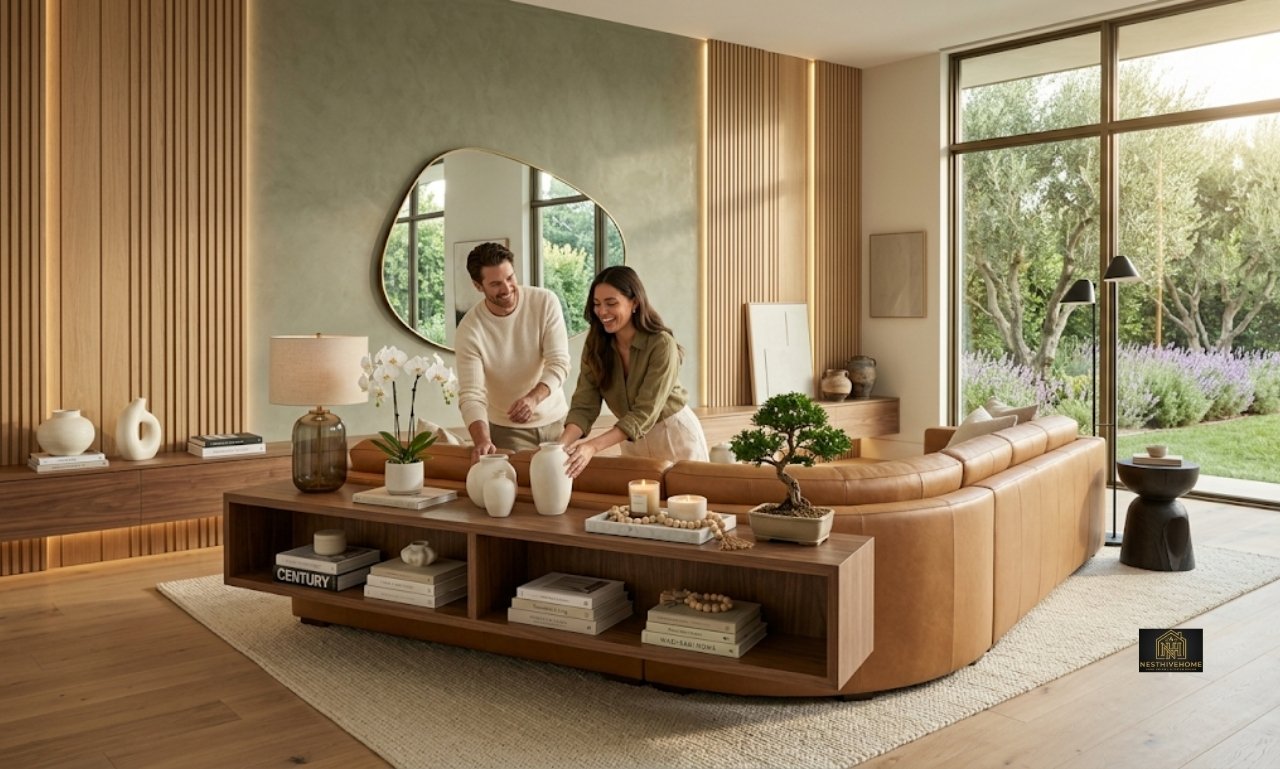
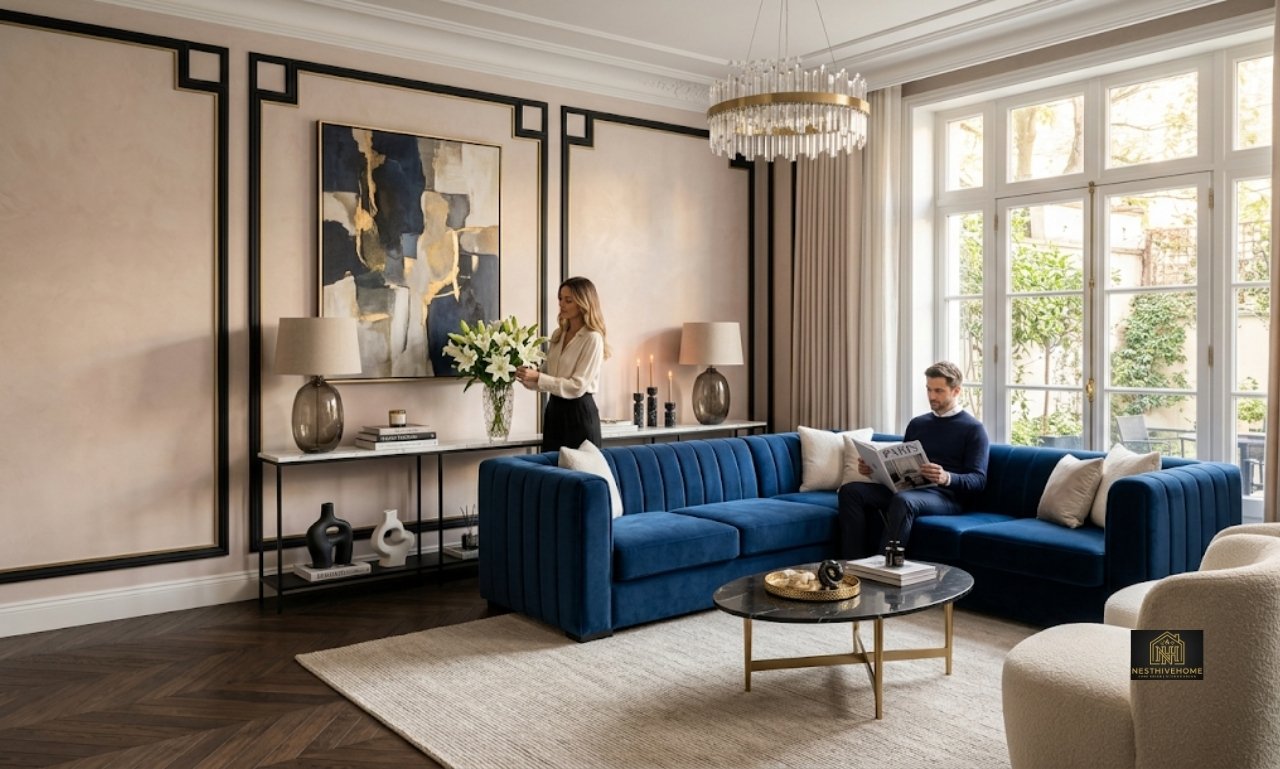
The designer’s open secret is layering — and it’s simpler than it sounds. Instead of lining objects up like soldiers, build in layers: something tall at the back (a lamp, a large vase), medium pieces in the middle (framed art, a stack of books), small accents in front (a candle, a sculptural object). Vary heights, shapes, and textures. The result looks collected and effortless rather than arranged, which is precisely the point. For more on arranging the seating itself, these sectional sofa decorating ideas pair well with console styling.
Add a Statement Table Lamp
If you do one thing, do this: add a lamp. Nothing transforms a console table faster than warm light at sofa-back height. It creates evening atmosphere, adds essential height to your arrangement, and makes the whole living room feel finished after dark. Warm white bulbs only — cool white belongs in offices, not living rooms. On a long table, matching lamps at both ends give gorgeous symmetry; in a modern space, one oversized sculptural lamp makes the statement solo.
Decorate with Artwork or a Large Mirror
Don’t stop at the tabletop — the wall above is half the composition. A large framed piece anchors the whole arrangement and adds personality: abstract art, black-and-white photography, botanical prints, whatever genuinely speaks to you. In smaller rooms, a big mirror works even harder, bouncing light around and visually doubling the space. Hang it low enough to feel connected to the table, not floating in space above it. Table and wall should read as one unit.
Style with Books and Decorative Objects
Coffee table books are the stylist’s cheat code: stack two or three horizontally, top with a candle or small sculpture, and you’ve got instant designer credibility. Mix your materials — wood, glass, stone, metal — but keep the color palette tight so it reads as curated, not chaotic. And here’s the counterintuitive part: empty space is a styling tool. Breathing room between objects is what separates ‘styled’ from ‘cluttered.’
Bring Life to the Space with Indoor Plants
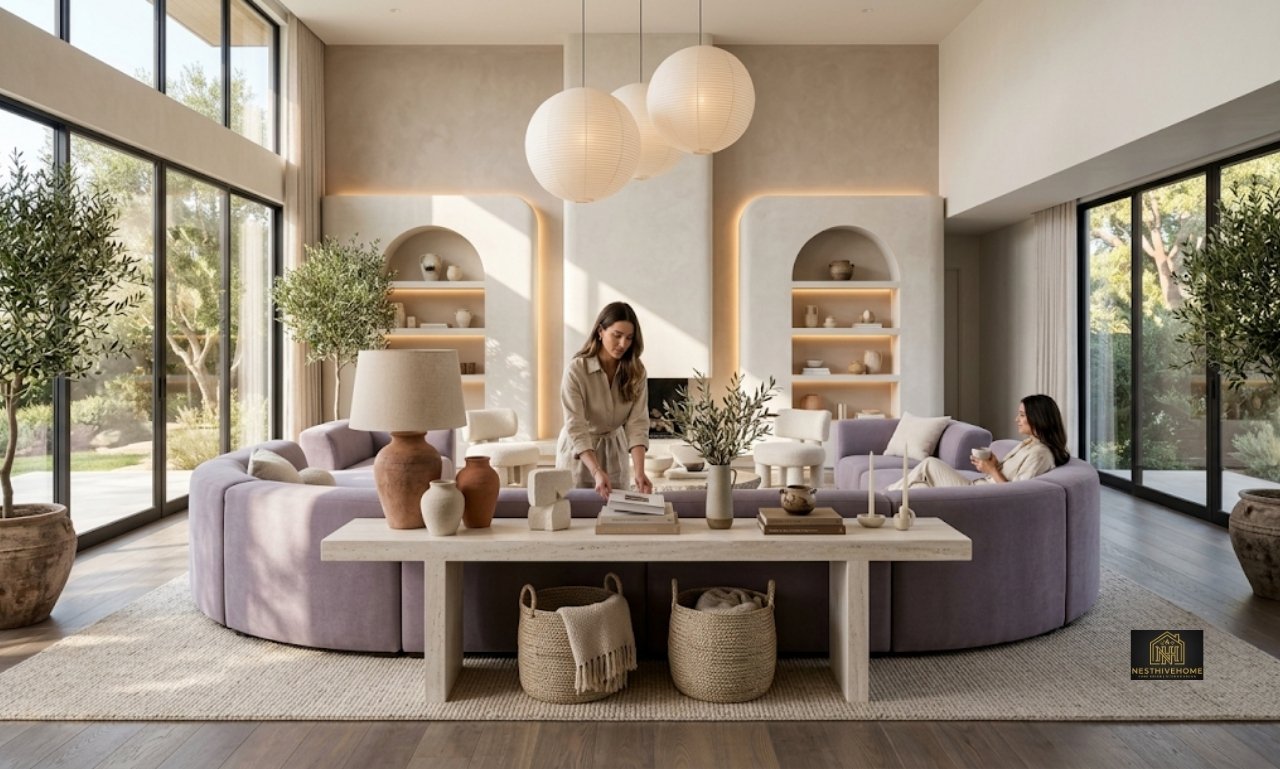
Every console table needs something alive. Greenery softens all those hard furniture lines and adds color and texture that no object can fake. Go for one larger plant beside the table — an olive tree or fiddle leaf fig if you’re ambitious — plus a smaller pothos or snake plant on the surface for layering. No green thumb? Good faux plants have come a long way; just keep them dusted. A table without something living on it always looks slightly unfinished.
Use Decorative Trays to Organize Accessories
Trays are how designers make clutter look intentional. Instead of candles, vases, and trinkets scattered across the surface, corral them on a beautiful tray — marble, wood, rattan, brushed metal, whatever suits your style. It instantly reads as ‘styled vignette’ rather than ‘stuff on a table,’ and it makes seasonal updates effortless: swap the tray’s contents, not the whole table. The formula that never fails: a candle, a small vase, something sculptural, and one book.
Add Functional Storage with Stylish Baskets
If your console has a lower shelf, don’t waste it on dust — baskets turn it into beautiful hidden storage. Woven seagrass or rattan baskets swallow throw blankets, magazines, board games, and the kids’ toys while adding warmth and texture. The trick is consistency: matching or coordinating baskets look intentional; a random assortment looks like a lost-and-found. Storage that looks this good stops being storage and starts being decor.
Create Different Heights for Visual Interest
Flat arrangements are boring arrangements. The eye wants to travel — up a tall lamp, across a medium vase of flowers, down to a low stack of books, over to a small candle. That rhythm of tall, medium, and low is what makes a styled surface feel dynamic instead of static. Aim for balance without symmetry: things should feel evenly weighted, not mirror-imaged. Perfect symmetry looks staged; thoughtful asymmetry looks designed.
Refresh Your Console Table with Seasonal Decor
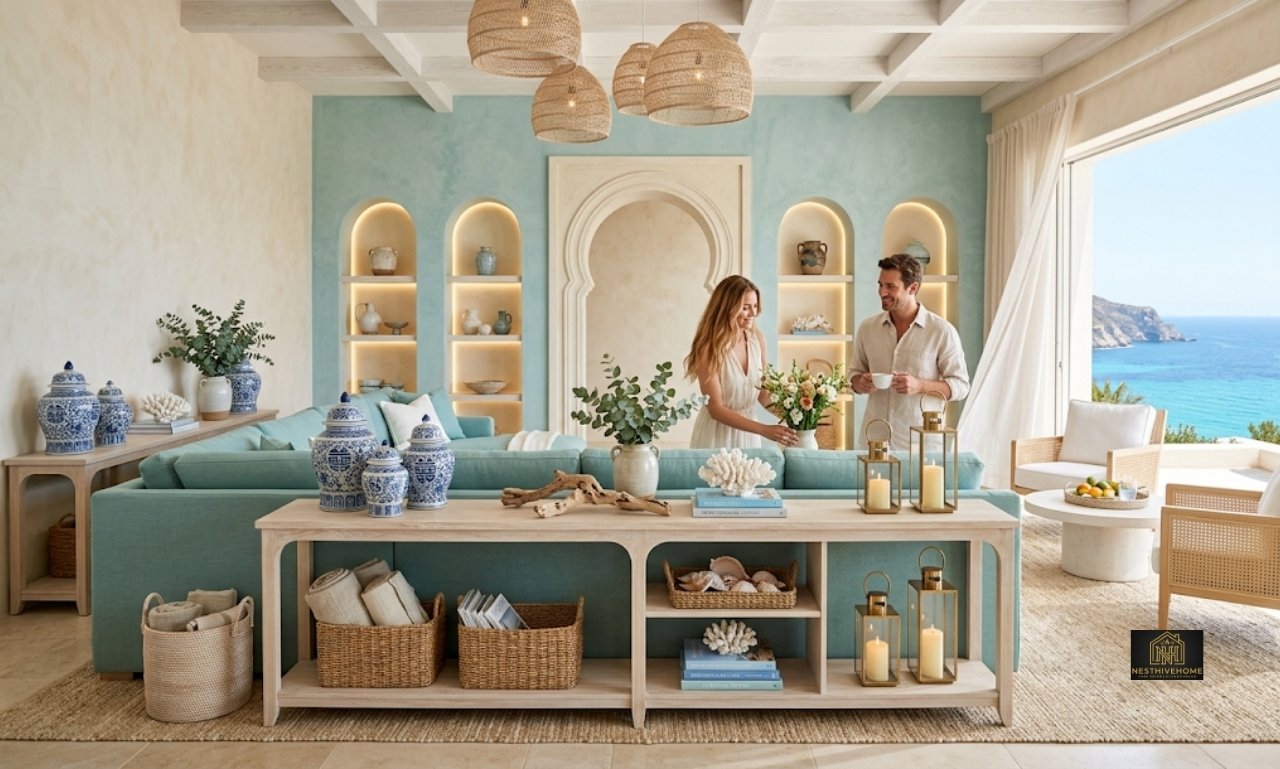
The best part of a well-styled console? It’s a rotating gallery. You don’t need to redecorate — just swap a few accents and the whole room feels new. Spring: fresh tulips, white ceramics, pastel touches. Summer: coastal textures, blue glass, light linens. Autumn: amber candles, dried grasses, warm woods. Winter: evergreen branches, lanterns, metallic glints. Keep the big pieces constant and let the small ones tell the season’s story.
Add Personal Touches Without Overcrowding
The difference between a showroom and a home is you. A framed family photo, a souvenir from a trip that actually meant something, a handmade piece, a beloved book — these are what make guests feel the house is lived in, not staged. But edit ruthlessly: three meaningful objects beat twelve forgettable ones. Every personal piece should earn its spot. If it doesn’t make you smile when you see it, it doesn’t belong on the table.
Keep the Area Behind the Couch Functional
A console table isn’t just pretty — in an open-plan room, it’s practically architecture. It defines the seating zone, creates a subtle room divider without blocking light or flow, and adds genuinely useful surface: a charging spot with hidden cable management, a home for remotes in a beautiful box, a landing pad for drinks during gatherings, even an impromptu workspace. The best design always serves real life, not just the camera.
Mix Different Materials for a Designer Finish
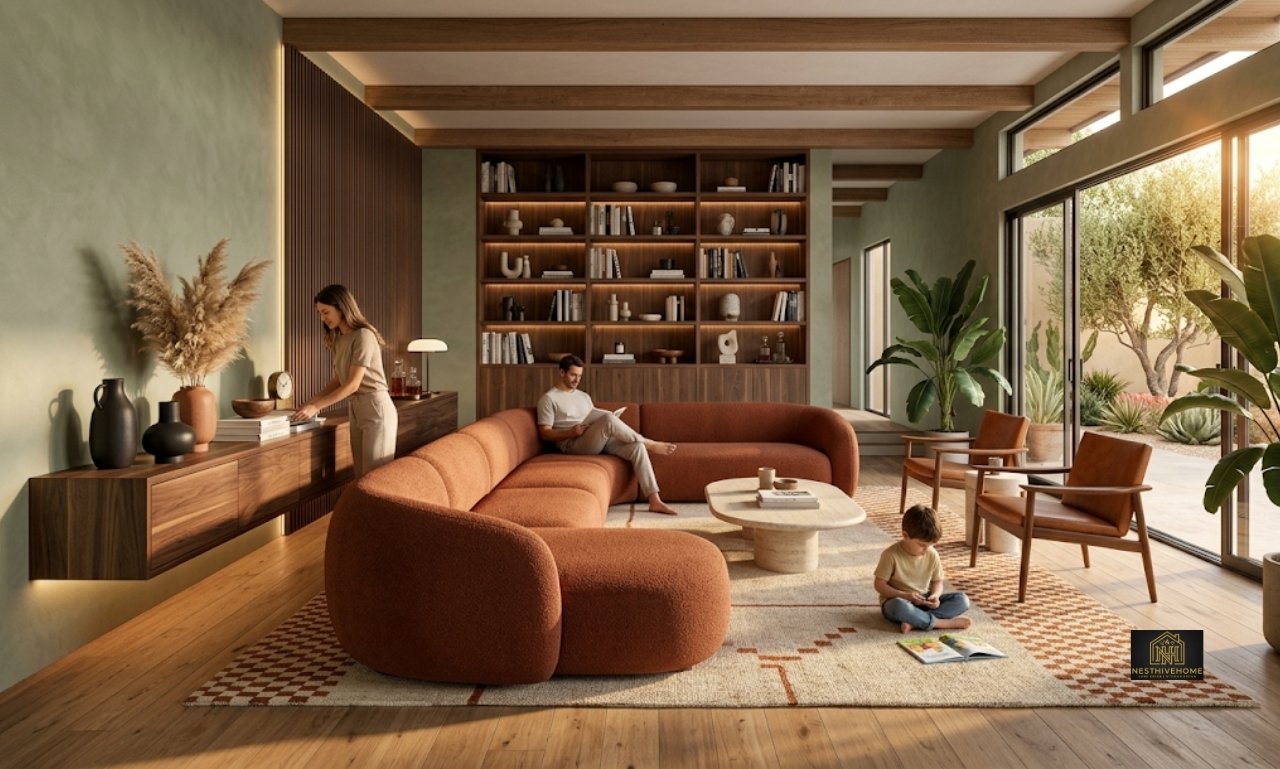
Here’s what separates ‘nice’ from ‘designer’: material contrast. Wood alone is fine; wood plus marble plus glass plus brass plus linen plus greenery is rich. The interplay of textures — rough against smooth, matte against shine, warm against cool — creates depth that a single material can’t. Picture it: oak table, marble tray, glass vase, linen shade, brass candle holders, ceramic sculpture. That’s not a table, that’s a composition.
Conclusion
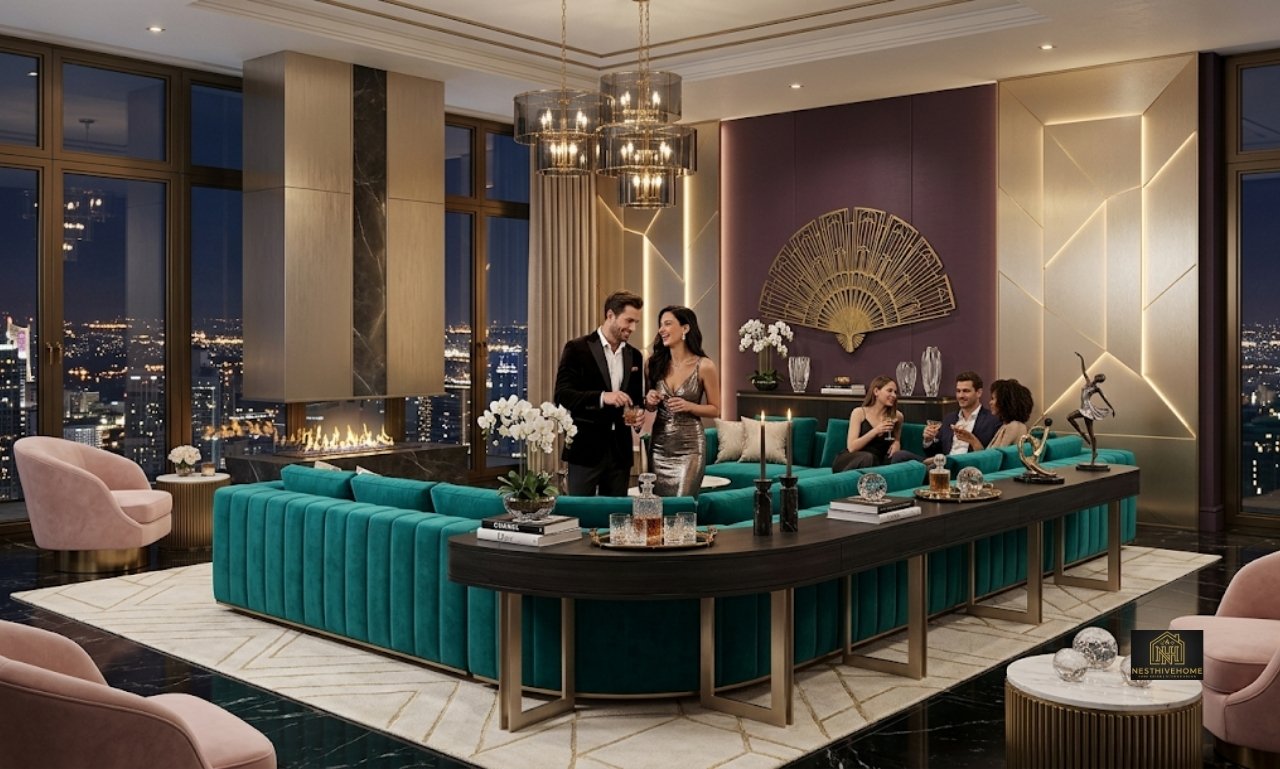
Learning how to style a console table behind a couch is one of the highest-impact, lowest-cost upgrades in home decorating. Right size, thoughtful layers, warm light, living greenery, honest materials, and a few things that are actually yours — that’s the whole formula. Start this weekend: clear the surface, add a lamp, and build from there. That forgotten strip behind your sofa is about to become your favorite part of the room.