

japandi bedroom decor blends Japanese minimalism with Scandinavian warmth to create a bedroom that feels calm the moment you walk in. It is not about owning less for the sake of it, nor is it about a cold, empty room. It is about choosing fewer, better pieces in natural materials, keeping the palette soft, and letting light and texture do the work that clutter used to do. Done well, the result is a space that helps you switch off at night and wake up without visual noise.
The style takes its name from Japan and Scandinavia, two design cultures that share a love of craftsmanship, natural materials, and uncluttered rooms. From Japan comes the low furniture, the respect for empty space, and the wabi-sabi idea that a handmade object is more beautiful for its small imperfections. From Scandinavia comes hygge, the warmth of wool throws, candlelight, and pale wood that keeps a simple room from feeling stark. Together they define japandi bedroom decor: a bedroom that is restful without being boring, and simple without feeling unfinished.
This guide walks through 15 practical ideas, from the bed itself to lighting, storage, and the small finishing touches. Each one works on its own, so you can start with a single change, but together they build a complete look. Prices range from free rearrangements to a few considered purchases, and most ideas suit rented homes as well as owned ones.
What Makes Japandi Bedroom Decor Different
Many calm-looking bedrooms fail because they copy the palette but miss the principles. A Japandi room is built on three rules. First, every object earns its place: if it has no function and brings no real pleasure, it lives somewhere else. Second, materials matter more than patterns: oak, linen, wool, rattan, and stone carry the room, while bold prints and shiny finishes stay out. Third, the room is layered with texture rather than colour, so a cream linen duvet, a chunky wool throw, and a woven rug can share one quiet palette and still feel rich.
Scale matters too. Furniture sits low and close to the floor, which makes ceilings feel higher and the room feel grounded. Lines stay clean and horizontal. Nothing shouts. When you stand in the doorway, your eye should travel across the room without snagging on anything loud, and the bed should be the clear, calm centre of it all.
15 Japandi Bedroom Decor Ideas
1. Start With a Low Platform Bed
The single most defining piece in japandi bedroom decor is a low platform bed in solid wood. Look for a simple frame in light oak or walnut that sits roughly 20 to 30 centimetres off the floor, with no footboard and no tall, tufted headboard competing for attention. The low line instantly makes the room feel grounded and spacious, and it echoes the Japanese tradition of sleeping close to the floor. If a new frame is not in the budget, removing a bulky headboard and lowering an existing frame gets you most of the way there.
2. Keep the Palette Warm and Muted
Paint and bedding set the mood before anything else. Warm whites, oatmeal, stone, soft clay, and pale greige are the backbone of japandi bedroom decor, with deeper accents limited to walnut brown, muted sage, or charcoal. Avoid stark brilliant white, which reads cold, and avoid strong saturated colour on large surfaces. If your walls are already a cool white, warming them with cream linen curtains and oak furniture is often enough to shift the whole feeling of the room.
3. Layer Linen Bedding, Not Matching Sets
Crisp matching bedding sets look hotel-polished, which is the opposite of this style. Instead, layer washed linen or organic cotton in slightly different tones: an oatmeal duvet, a stone-coloured flat sheet folded back, and two sleeping pillows in natural linen. Add one wool or waffle-knit throw across the foot of the bed. The gentle wrinkles of linen are part of the appeal, and the mix of textures keeps a neutral bed from looking flat. For more ideas on making a bed feel inviting rather than staged, see this guide on how to create a cozy bedroom.
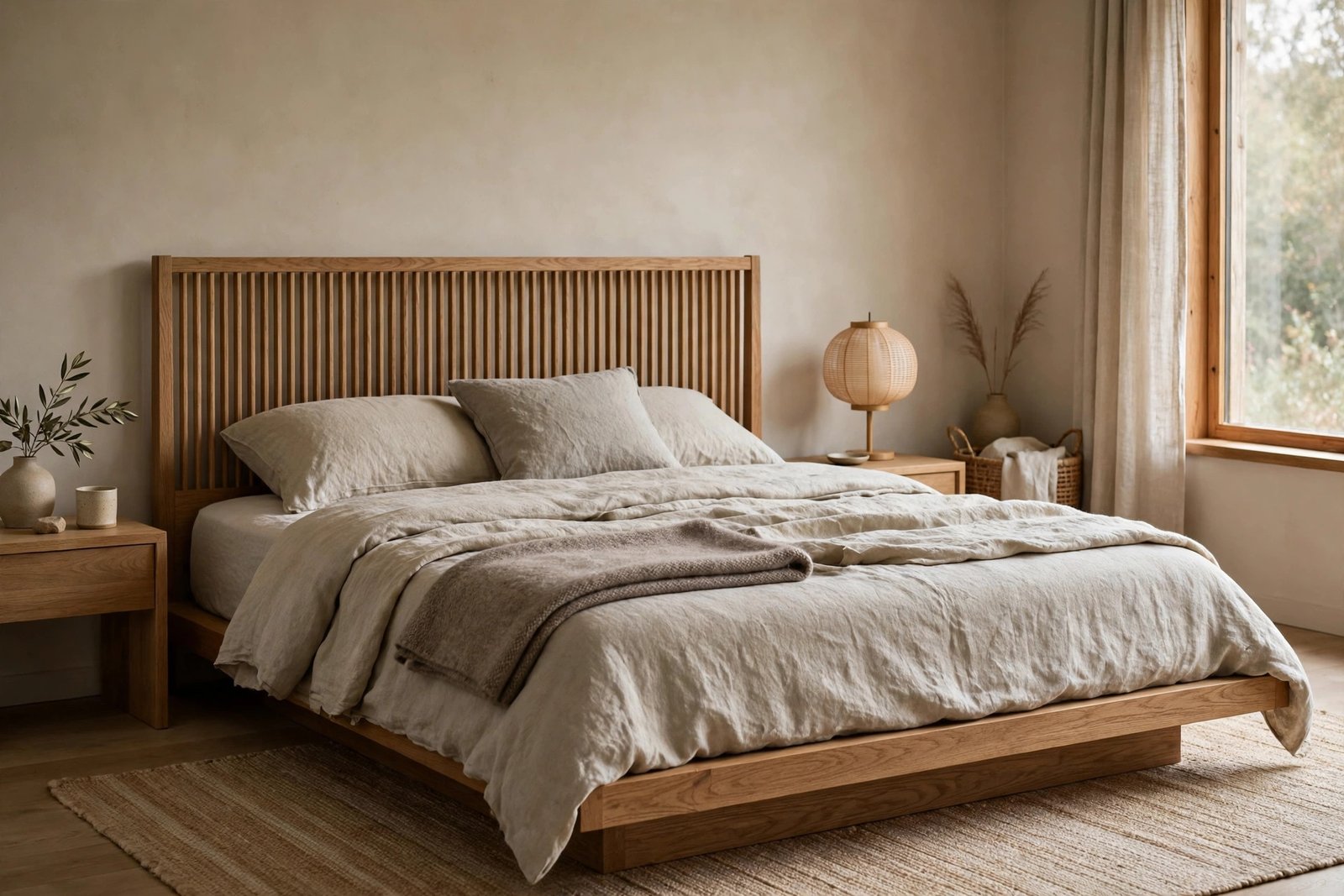
4. Add a Wooden Slat Accent Wall
A slat wall behind the bed adds warmth and rhythm without pattern or colour. Vertical oak battens, spaced a few centimetres apart, catch light and shadow through the day and give the bed a natural focal point. Ready-made acoustic slat panels make this a weekend project, and they can be fixed to a single wall in a rental with removable fixings. Keep the wood tone close to your bed frame so the wall reads as one calm surface, a hallmark of japandi bedroom decor, rather than a feature shouting for attention.
5. Choose One Beautiful Wood Tone and Repeat It
Mixing too many wood finishes is the fastest way to make a calm room look busy. Pick one dominant tone, usually light oak, and repeat it in the bed frame, nightstands, and a bench or stool. A darker walnut can appear once or twice as an accent, for example in a picture frame or a tray, but in japandi bedroom decor the eye should register one wood family, not a timber yard. Matching the tones loosely is fine; exact matching matters less than keeping the overall warmth consistent.
6. Let in Soft, Filtered Daylight
Harsh direct sun and heavy blackout curtains both fight the mood japandi bedroom decor aims for. Sheer linen curtains in white or oatmeal soften daylight into a gentle glow while keeping privacy, and they move slightly in a breeze, which adds life to a still room. If you need darkness for sleep, hang a simple roller blind behind the sheer layer and raise it during the day. Keep window sills clear except for one plant or a small ceramic piece so the light itself becomes part of the decor.
7. Layer Warm Lighting Instead of One Bright Ceiling Light
Nothing ruins a calm bedroom faster than a single glaring overhead light. In japandi bedroom decor, replace it with layers: a paper lantern pendant or a fabric-shaded pendant for general glow, a small warm lamp on each nightstand for reading, and perhaps a dimmable wall sconce. Aim for warm white bulbs around 2700K and put the main lights on a dimmer if you can. In the evening, the room should feel lit by candlelight levels of warmth, even when the source is electric. A good overview of the style, including lighting and layout ideas, can be found in this guide to Japandi bedroom ideas.
8. Keep Nightstands Simple and Half Empty
A nightstand in japandi bedroom decor holds a lamp, a book, and perhaps a small dish for a watch, and not much else. Choose a simple wooden design with a drawer or a closed cupboard so chargers, medicines, and clutter disappear behind a clean front. If your nightstand has an open shelf, use a single basket or box to corral the odds and ends. The test is simple: you should be able to dust the surface in under a minute.
9. Bring in Plants, But Only a Few
Greenery softens all the straight lines and pale tones, but a jungle contradicts the minimalism of japandi bedroom decor. One or two well-chosen plants are enough: a small olive tree, a snake plant, or a trailing pothos in a terracotta or stone pot. Place one by the window and one on a dresser or stool, and keep the pots in natural materials rather than glossy coloured ceramic. If real plants are not practical, a single high-quality dried stem in a handmade vase gives the same organic note with no maintenance.
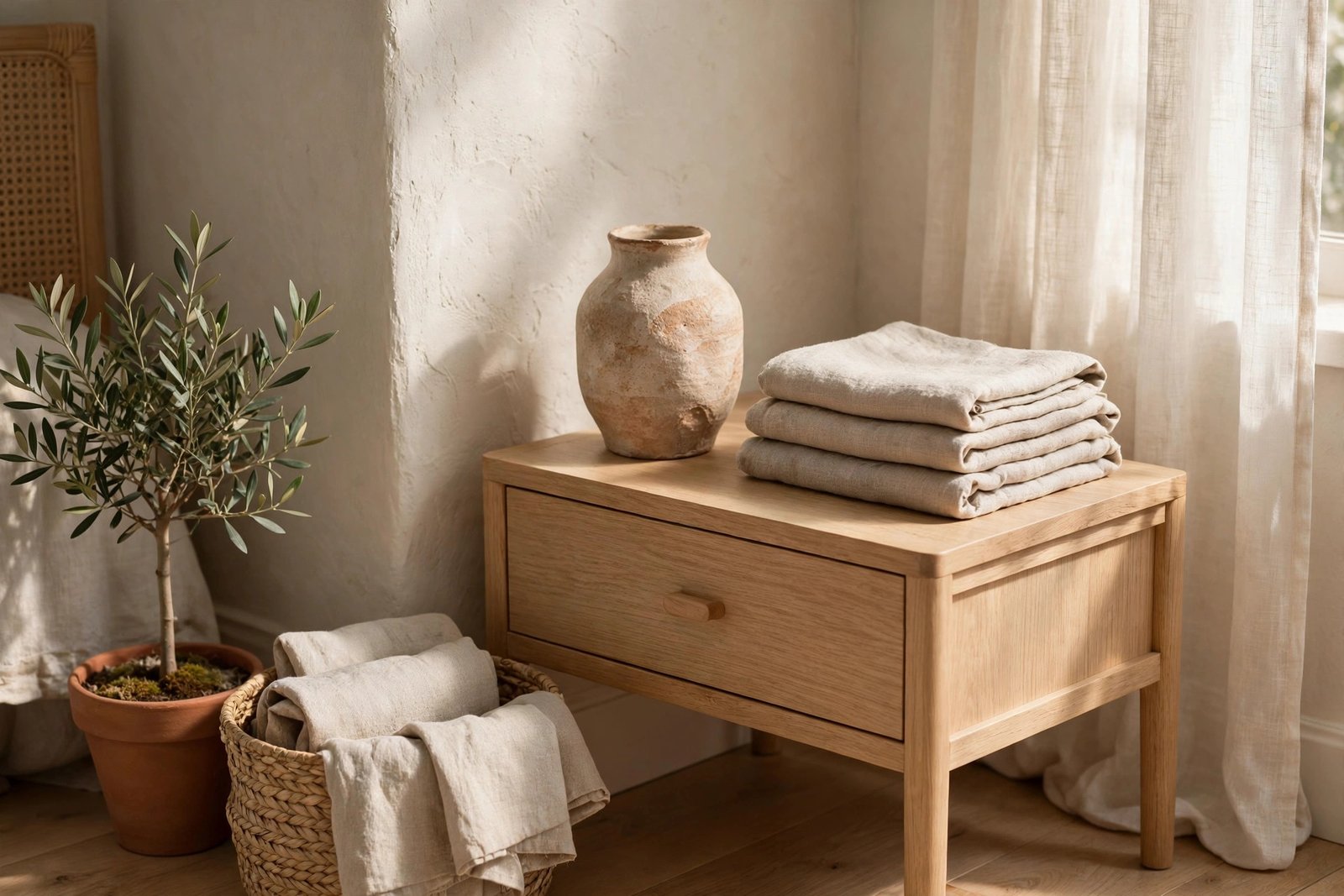
10. Use Handmade Ceramics as the Only Ornaments
Instead of rows of decorative objects, let one or two handmade pieces carry the room: a stoneware vase, a small sculptural bowl, or a set of uneven ceramic cups on a tray. The slight irregularities of handmade pottery are exactly what wabi-sabi celebrates, and they add character that mass-produced ornaments cannot. Display them with space around them, as japandi bedroom decor always gives objects room to breathe. A vase crowded between five other objects reads as clutter; the same vase alone on a dresser reads as a deliberate choice.
11. Hide Storage Behind Clean Fronts
Visible clutter is the enemy of calm, so storage needs to be closed and quiet. Handleless wardrobes, rattan-fronted chests, and lidded baskets in natural fibres all hide the everyday mess without adding visual noise, which is essential in japandi bedroom decor. Inside, the system can be as practical as you like: drawer dividers, under-bed boxes, and labelled baskets. The rule applies to the laundry chair too. Give stray clothes a proper home, a lidded hamper or a single hook rail, and the room keeps its calm even on a busy morning.
12. Ground the Room With a Natural Fibre Rug
In japandi bedroom decor, a large rug in jute, sisal, or flat-weave wool anchors the bed and warms bare floors. Size it so it extends at least 60 centimetres beyond each side of the bed, giving your feet a soft landing, and keep the colour close to the floor tone or one shade darker. Avoid high-pile shaggy rugs and bold patterns, which pull the eye down and break the quiet palette. In a small room, one generous rug beats two small ones, which chop the floor into pieces.
13. Add One Soft, Plush Texture
Pure minimalism can feel cold, and this is where Scandinavian warmth earns its place. In japandi bedroom decor, one plush element, a sheepskin draped over a bench, a boucle cushion, or a thick wool rug, keeps the room cosy without breaking the palette. Keep it to one or two pieces. If every surface is soft and fluffy, the calm structure underneath disappears; one deliberate contrast is what makes the room feel both serene and inviting.
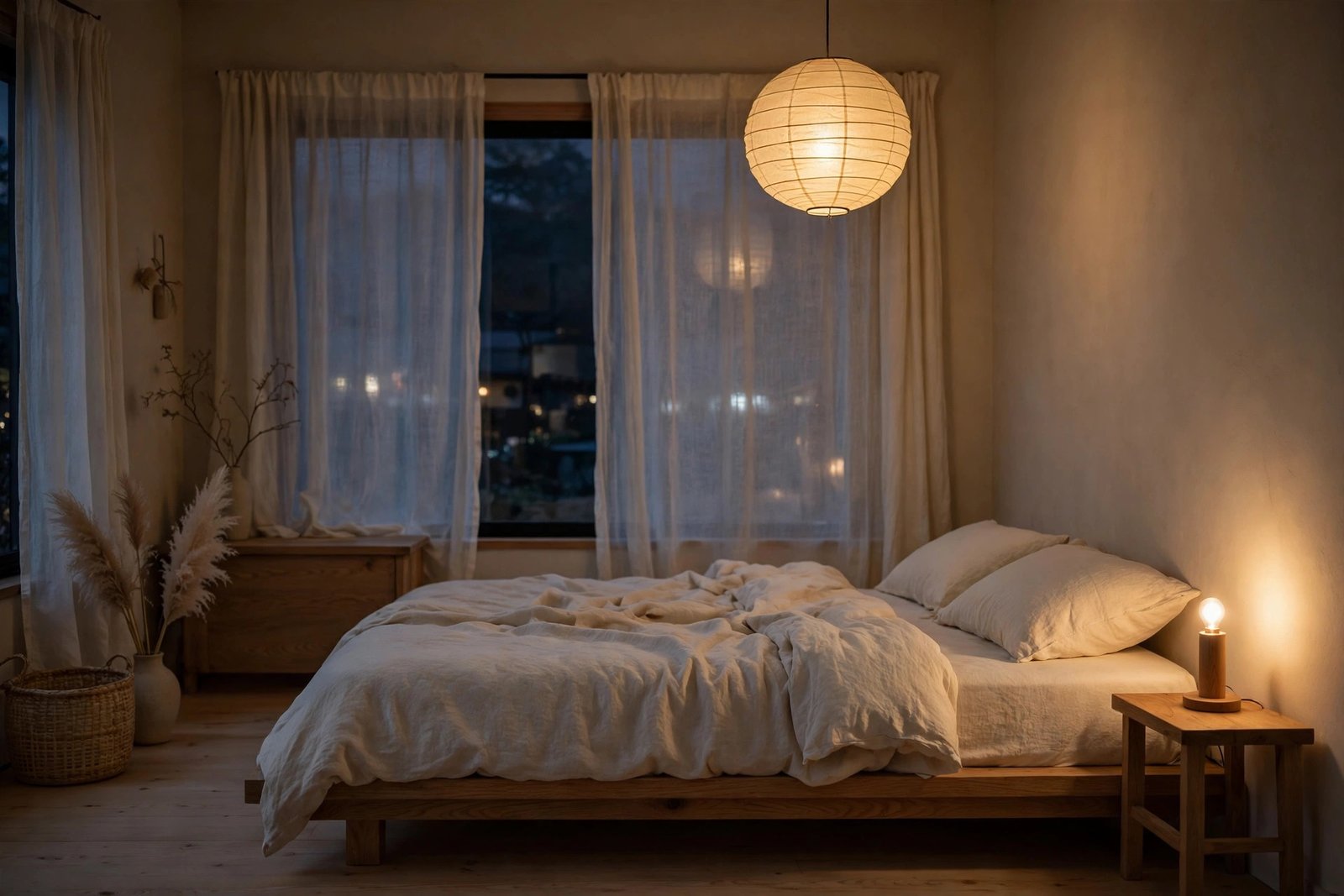
14. Hang Minimal Art With Plenty of Breathing Room
Wall art in japandi bedroom decor is quiet and abstract: a single line drawing, a muted landscape print, or a piece of woven textile art. Hang one larger piece rather than a gallery wall, and leave generous empty wall around it. Frames should be simple wood or thin black metal, and the artwork should sit at eye level, not high near the ceiling. If you love a busy gallery wall, keep it in another room; here, empty wall is not wasted space, it is part of the design.
15. Leave Some Surfaces Completely Empty
The final idea costs nothing and changes everything. Choose one surface, the top of a dresser, a windowsill, or a bench, and leave it entirely clear. Empty space lets the eye rest and makes the pieces you did choose look intentional rather than accumulated. Revisit the room once a month and remove anything that crept back without a purpose. Calm is not a one-time decorating job; it is a habit of editing, and this monthly reset keeps your japandi bedroom decor feeling as serene as the day you finished it.
Mistakes That Break the Calm
A few common missteps undo good japandi bedroom decor quickly. Matching furniture sets in glossy finishes look showroom-stiff rather than handcrafted. Too many small ornaments, even beautiful ones, recreate the clutter the style is meant to remove. Cool LED lighting at 4000K or above turns warm wood grey and linen bluish, so check bulb temperatures when you buy. And a bold feature wall in a strong colour fights the whole palette; if you want drama, get it from the grain of real wood or the texture of limewash, not from paint colour.
Bringing It All Together
You do not need to apply all 15 ideas at once. Start with the bed and the bedding, since they dominate the room, then fix the lighting, which changes how everything looks after dark. After that, edit ruthlessly: remove one thing from every surface, hide what remains behind closed storage, and add a single plant and a single handmade piece. That sequence alone turns most bedrooms into convincing japandi bedroom decor in a weekend, and the remaining ideas can follow one at a time as budget and time allow.
The real test of japandi bedroom decor is not how it photographs but how it feels at 11pm, when the lights are low and the room is quiet. If your shoulders drop when you walk in, the style is working. Keep the palette warm, the materials natural, the surfaces mostly clear, and let the room stay a little bit empty. That emptiness is not something missing; it is the whole point.