Venetian plaster wall ideas bring a kind of quiet luxury that paint alone cannot touch. That soft, marble-like sheen, the subtle movement of tone across the surface, the way light slides over it differently at every hour, it all reads as old-world craftsmanship, even in a brand-new build. These venetian plaster wall ideas work in grand living rooms and modest bedrooms alike, because the finish itself does the decorating: one plastered wall can carry an entire room’s sense of design.
In this guide, you will find 12 ideas covering finishes, colors, room placements, DIY techniques, and styling, plus honest advice on cost, care, and the mistakes that ruin a good plaster job. Whether you hire a specialist or try the trowel yourself, these venetian plaster wall ideas will help you get that coveted polished depth without guesswork.
What Is Venetian Plaster, Really?
Venetian plaster is a wall finish made from slaked lime putty mixed with marble dust, sometimes with natural pigments added for color. It dates back to ancient Rome and was perfected in Renaissance Venice, where builders used it as a lightweight alternative to solid marble. Unlike paint, which sits on the surface, venetian plaster bonds with the wall and is burnished, polished with the flat of a steel trowel, to create depth and a soft sheen. The result looks like honed stone but feels warm and seamless, with no grout lines or seams.
Modern versions include both traditional lime-based plasters and synthetic acrylic alternatives. Traditional lime plaster is breathable, naturally resistant to mold, and develops a beautiful patina, but it demands skill and patience. Acrylic-based products are more forgiving for DIYers and still deliver convincing depth. Whichever route you take, the venetian plaster wall ideas below apply, because the design principles of finish, color, and placement stay the same.
Venetian Plaster Wall Ideas: Choosing Your Finish
The finish you choose sets the mood of the whole room. These two classic options cover most of what homeowners want from venetian plaster wall ideas, from high polish to soft matte.
1. Classic Polished Marmorino
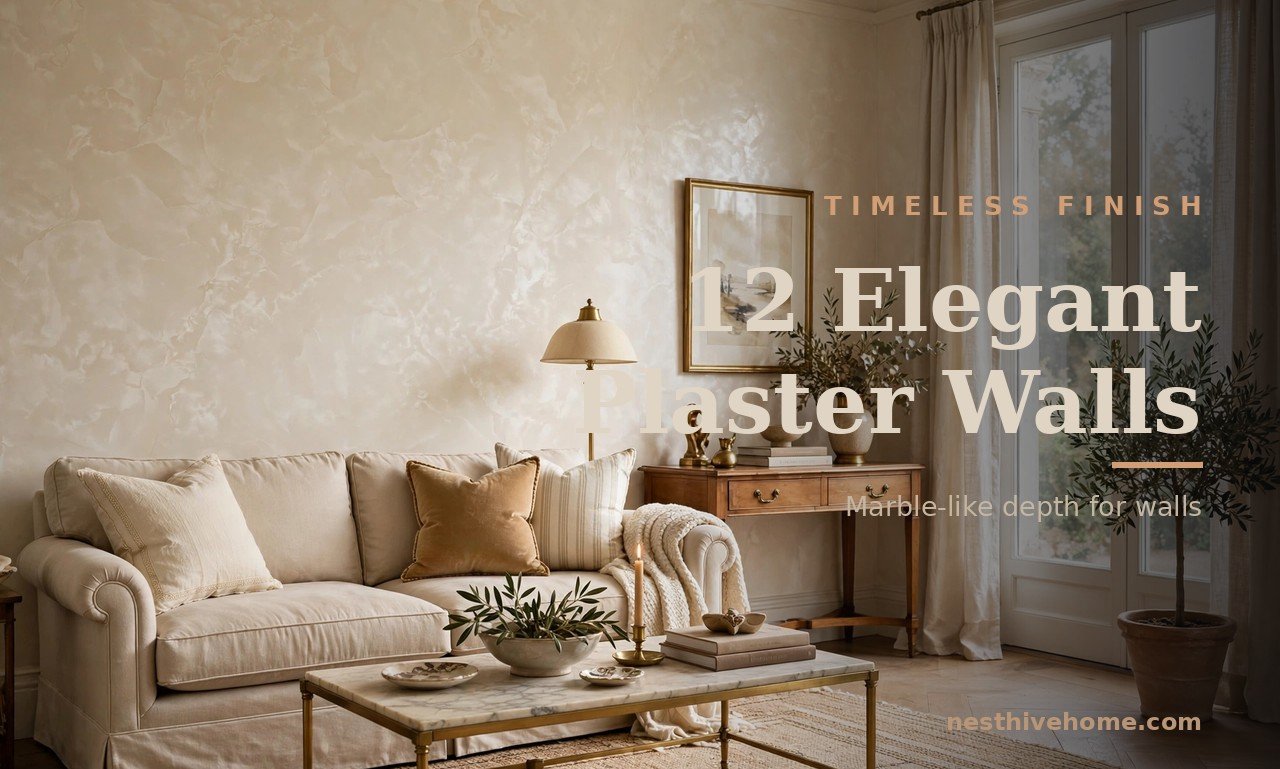
Marmorino is the showpiece finish: multiple thin coats, burnished to a soft marble-like gloss. It reflects light gently, making it magnificent in living rooms and dining rooms where you want a sense of occasion. The polish level is in your hands, or your plasterer’s: a light burnish gives a satin glow, while firm, steady trowel work produces a near-mirror shine. Among venetian plaster wall ideas, marmorino is the one that most convincingly mimics cut stone, and it pairs beautifully with brass, marble, and dark wood.
2. Matte Grassello for Softness
If high shine feels too formal, grassello offers the same lime-and-marble composition with a softer, more velvety finish. It is the quieter cousin in the family of venetian plaster wall ideas, perfect for bedrooms, studies, and anywhere you want texture without reflectivity. Grassello shows trowel movement as gentle clouding rather than sharp contrast, which makes it more forgiving for first-time DIYers. In pale tones it reads almost like the finest limewash, but with a smoother, more refined hand.
Where Venetian Plaster Shines Brightest
Placement is everything. Plaster rewards walls that catch light and deserve attention; it is wasted in dark corners nobody looks at.
3. The Living Room Focal Wall
The wall behind the sofa or fireplace is the natural home for venetian plaster. A polished ivory or warm stone finish here anchors the seating arrangement and gives the room an architectural quality that flat paint cannot. Keep furniture silhouettes clean and let the wall be the texture: a linen sofa, a marble coffee table, and one restrained piece of art are all the styling you need. This is the most-requested of all venetian plaster wall ideas, and for good reason, it photographs beautifully and never feels trendy.
4. The Bedroom Retreat
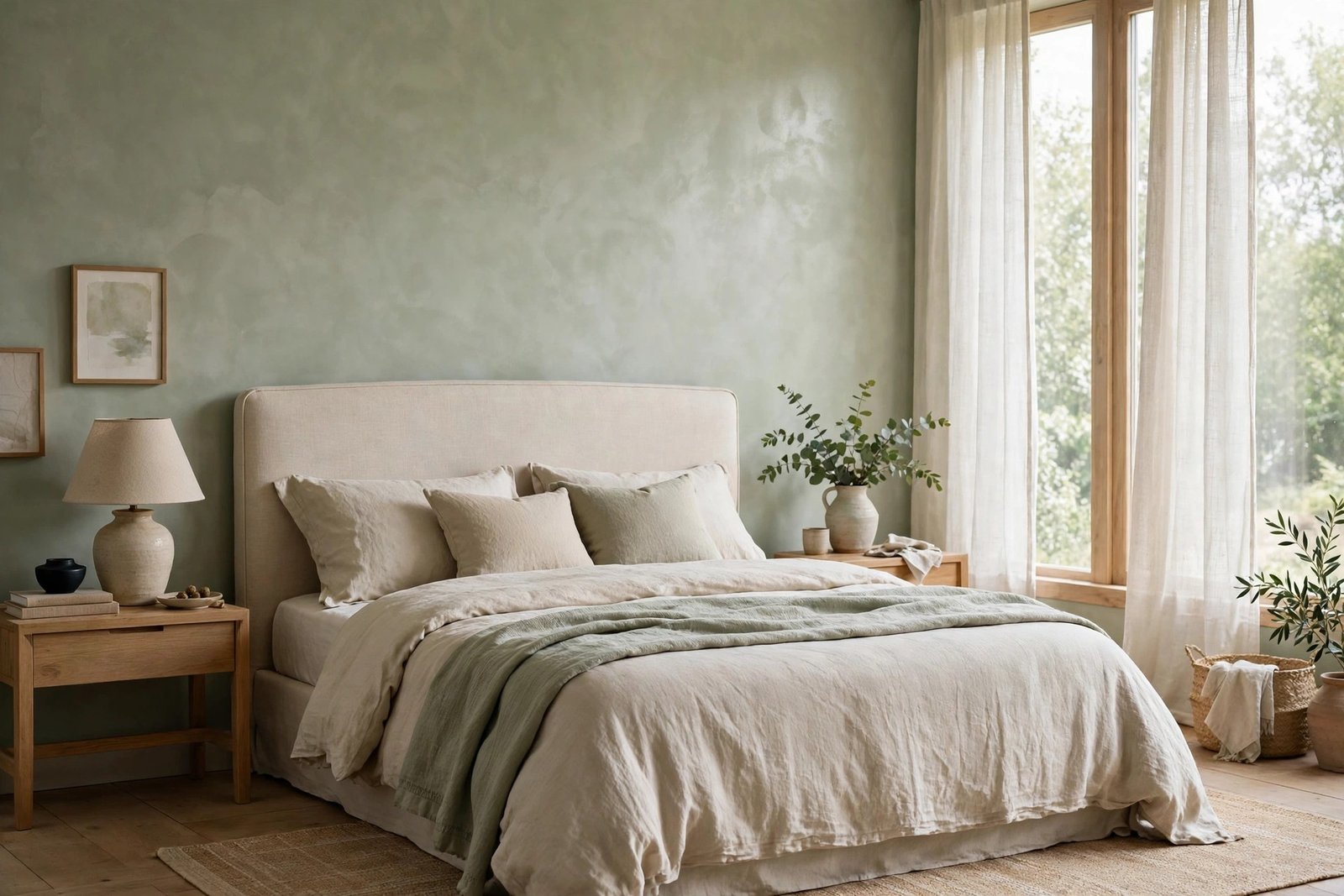
A venetian plaster wall behind the bed turns the bedroom into a sanctuary. Choose a soft sage, warm greige, or pale blush in a matte or satin finish, and the wall will glow gently in morning light without competing with restful bedding. Because the finish has no pattern, it will not fight with textiles, which makes it ideal for layered beds with throws and cushions. Among calming venetian plaster wall ideas, the plastered bedroom wall is the one designers specify most for clients who want serenity with substance.
5. Hallways and Entryways
Do not overlook transitional spaces. A narrow hallway or entryway in venetian plaster feels instantly more considered, and the finish’s light-play makes tight passages feel less tunnel-like. This is also a practical choice: burnished plaster with a wax topcoat stands up to scuffs far better than flat paint. If your hallway needs a full rethink, pair the plaster with our long narrow hallway ideas on a budget for lighting, mirrors, and runners that complete the transformation. One plastered hallway wall, lit with a simple picture light or wall washer, can be the most elegant square footage in the house.
Color Directions That Always Work
Venetian plaster takes color beautifully, but the finish mutes and deepens every tone. Sample large swatches and live with them through a full day of light.
6. Warm Ivory and Stone
The timeless default: warm ivory, travertine beige, and soft stone tones that glow in daylight and turn honeyed under lamps. These colors show off the plaster’s movement most delicately and suit every style from Mediterranean to modern classic. Warm neutrals are also the safest of the venetian plaster wall ideas for resale, they read as an upgrade rather than a personal statement. If you can only plaster one wall in your life, make it this color.
7. Moody Charcoal and Deep Green
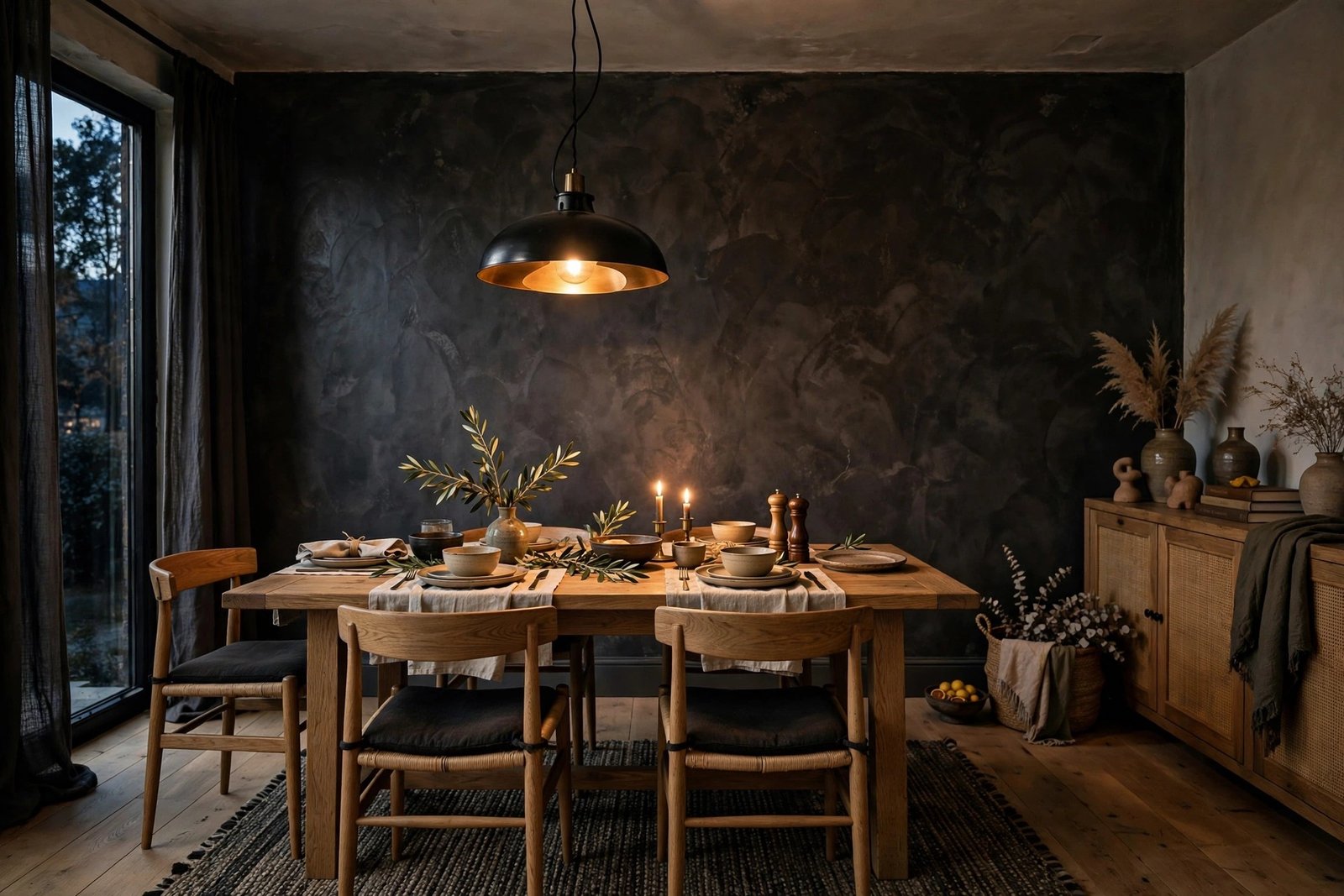
For drama, take venetian plaster dark. Charcoal, espresso, and deep forest green burnished to a soft sheen create walls with incredible depth, the kind that make brass sconces and candlelight look like a film set. Dark plaster works best as a single feature wall in a dining room, study, or bedroom, balanced by lighter tones elsewhere. The mottling that beginners fear actually becomes an asset here: in dark colors, the tonal variation reads as luxurious movement rather than mistakes.
The DIY Route: Tools and Technique
Venetian plaster is absolutely DIY-able with the right product and some practice. Acrylic-based plasters are the friendliest starting point. Before touching your wall, practice on a large board until your trowel work feels natural.
8. Gather the Right Tools
You will need a flexible steel trowel with rounded corners (sand sharp corners smooth to avoid edge marks), a hawk or tray, the plaster itself, mineral primer, and fine sandpaper. Optional but recommended: a clear topcoat or paste wax for washability, especially in dining rooms. Good tools are non-negotiable for venetian plaster wall ideas executed at home; a cheap trowel leaves lines that no amount of burnishing will hide. Budget for quality here and the finish will repay you.
9. The Three-Coat Method
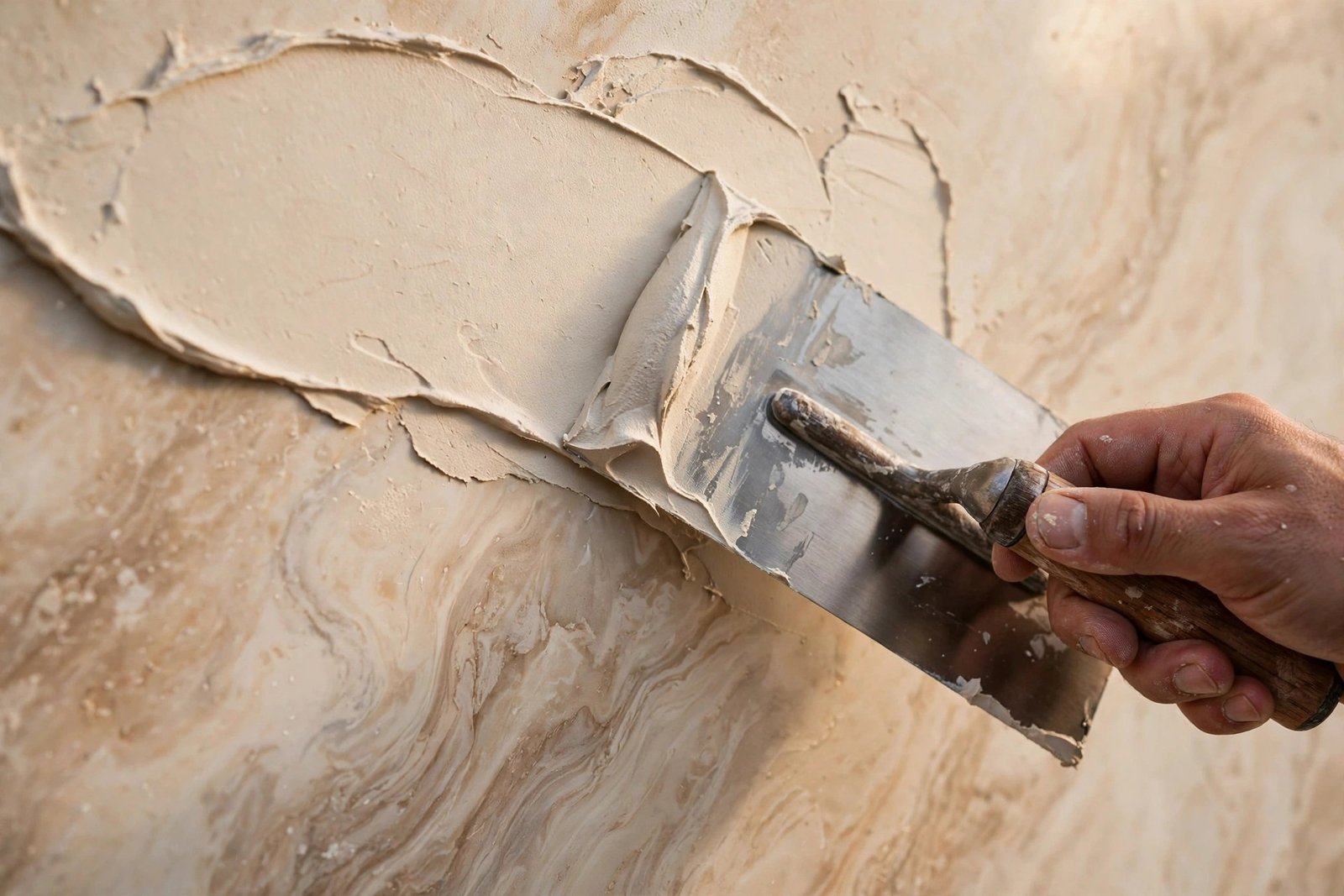
Most DIY venetian plaster wall ideas follow the same rhythm: a thin base coat applied with the trowel nearly flat, left to dry fully; a second coat worked in overlapping X or skip-trowel motions so the base shows through in places; and a final thin effect coat that builds the density and pattern. Work in three-by-three-foot sections, keep your trowel clean, and wipe it often to prevent dried bits from scoring the surface. Thin coats dry predictably and resist cracking; thick coats are the number one beginner error.
10. Burnishing for Sheen
Once the final coat is dry to the touch, polish the surface with a clean trowel held almost flat, using light, even pressure for satin or firmer strokes for gloss. This burnishing step is what separates venetian plaster from textured paint: it compresses the surface and brings up the marble-like glow. Practice the stroke on your sample board first, because inconsistent pressure shows. If you want the full professional sequence in detail, this step-by-step venetian plaster technique guide walks through mixing, base coats, effect coats, and burnishing with timing for each stage.
Styling Around Plaster Walls
Plastered walls are the star; everything else should be the supporting cast. The goal is harmony, not competition.
11. Pair With Natural Stone and Brass
Materials that share plaster’s mineral character, travertine, marble, aged brass, raw oak, linen, make the wall feel inevitable rather than applied. A travertine coffee table or a pair of brass sconces against venetian plaster looks like it was always meant to be there. This is why so many venetian plaster wall ideas lean Mediterranean or modern classic: the material palette is doing half the design work. Avoid glossy acrylics and high-shine chrome, which can make the soft plaster look dull by comparison.
12. Keep Art Simple and Generous
One large, quiet piece of art against plaster beats a busy gallery every time. Abstract landscapes, soft figurative work, or a single oversized photograph let the wall’s texture show around the frame. Choose simple frames, thin black metal or natural oak, and hang with generous breathing room. The plaster is already providing all the visual interest the wall needs; the art is there to give the eye a resting point, not to start a second conversation.
Care, Sealing, and Longevity
Traditional lime plaster is remarkably durable, it has survived centuries on Venetian palazzos, but a little care keeps it beautiful. In living areas, a coat of natural wax or a clear mineral sealer adds washability without dulling the sheen; apply it after the plaster has fully cured. For daily care, dust with a soft cloth and clean marks with a barely damp sponge, never harsh chemicals. Small chips can be patched with leftover plaster and re-burnished, and unlike paint, a well-aged plaster wall gains character instead of just looking tired. These venetian plaster wall ideas are a long game, and the finish rewards patience.
Mistakes to Avoid
Skipping primer is the fastest way to failure; plaster needs the right mineral base to bond, especially over previously painted drywall. Applying coats too thick causes cracking and endless drying time, thin is always right. Burnishing too early, while the plaster is still damp, tears the surface instead of polishing it. Choosing a dark color for every wall in a dim room turns drama into gloom; keep dark plaster to one feature wall. And hiring on price alone is risky with a craft finish, ask any plasterer for photos of cured work in real homes, not just sample boards. Get these right and your venetian plaster wall ideas will look like they cost three times what you paid.
Bringing It All Together
The magic of venetian plaster wall ideas is that they deliver what every homeowner wants and almost nothing else can: walls with depth, light, and history, in a finish that outlasts trends. Start with the finish and color that suit your light, place it where it will be seen and touched, style it with honest natural materials, and give the technique the practice it deserves. Whether you trowel it yourself over a weekend or commission a craftsperson for a single perfect wall, venetian plaster repays the effort every single day, in every kind of light.