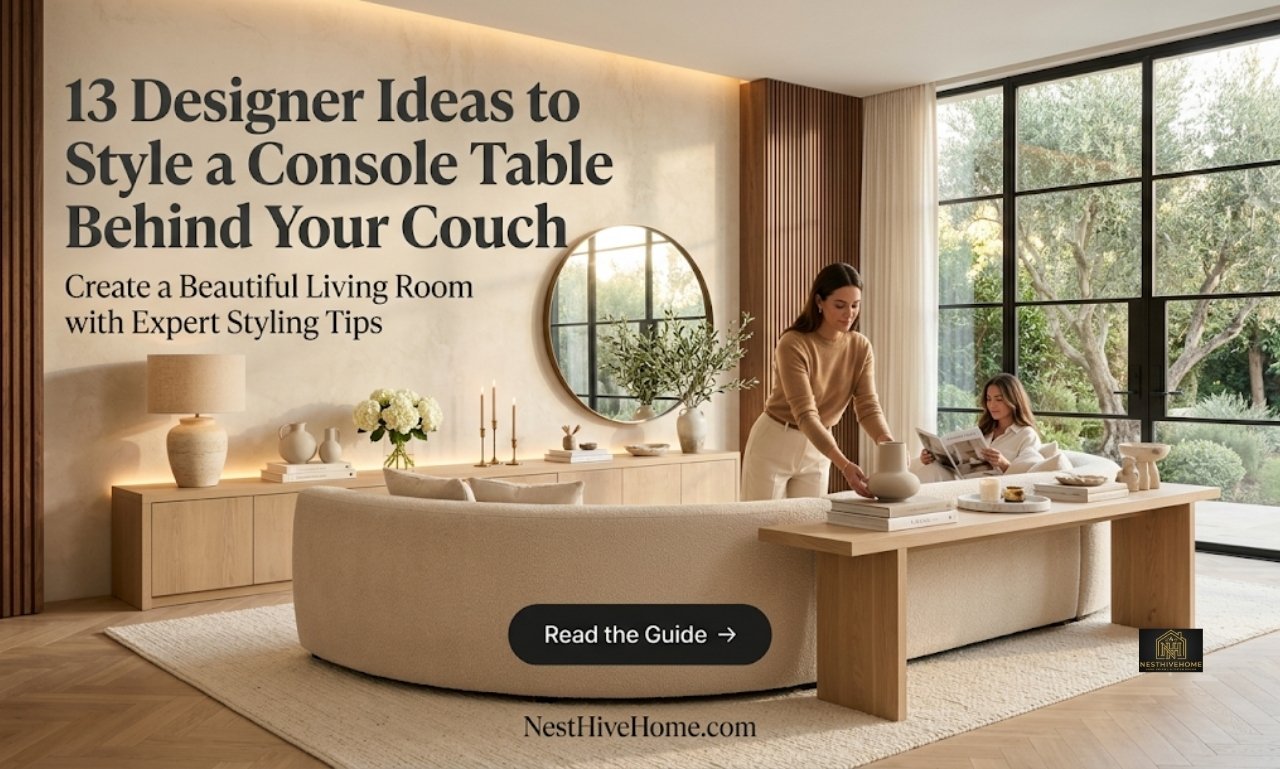
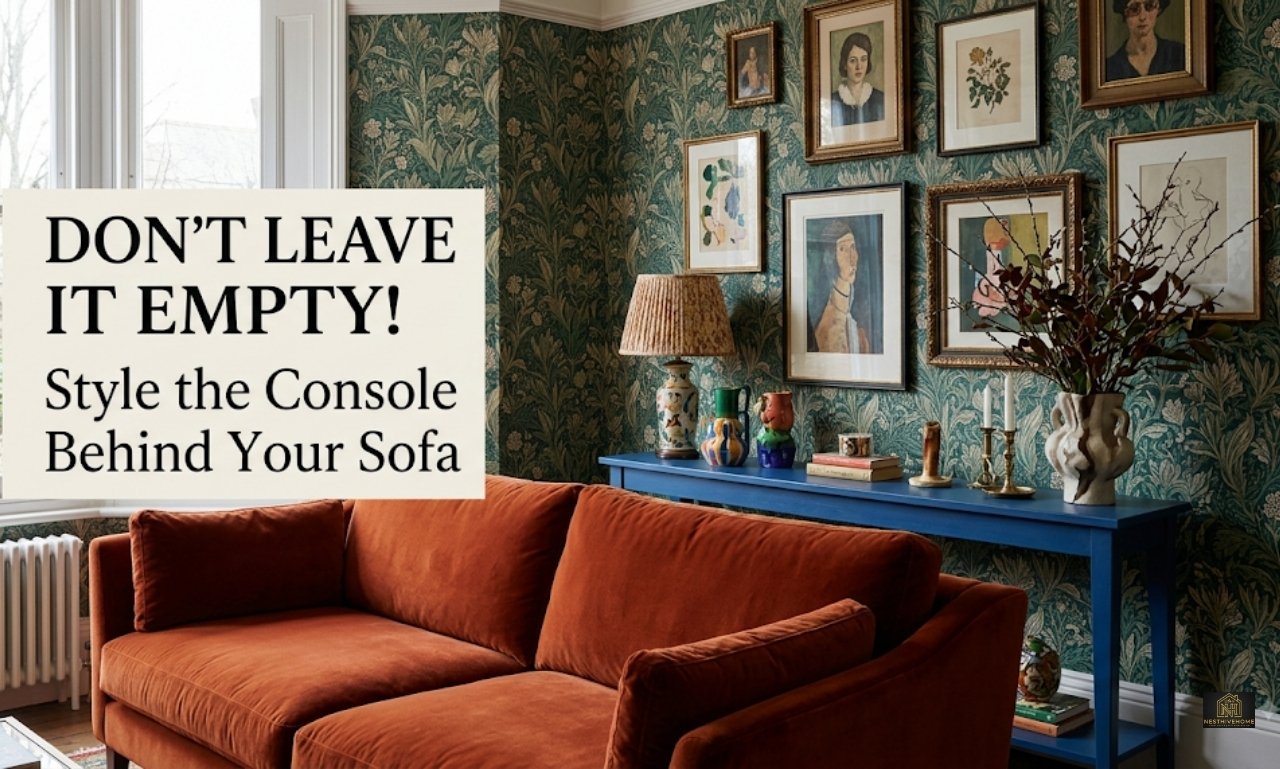
A console table behind a couch can turn an awkward empty strip into one of the most useful and attractive parts of your living room. It can add warm lighting, practical storage, visual balance, and a finished designer feel without making the room feel crowded.
But there is a catch: a beautifully styled console is about proportion and restraint, not filling every inch with decoration.
If you’ve been wondering how to style a console table behind a sofa, the best approach is to start with the furniture itself, then build the arrangement around height, texture, function, and visual balance.
Whether your home is modern, traditional, farmhouse, contemporary, or relaxed and eclectic, these ideas can help you create a console arrangement that looks intentional rather than cluttered.
Why Put a Console Table Behind a Couch?
A floating sofa can sometimes look unfinished from behind. A slim console table gives that exposed area purpose while helping connect the seating zone to the rest of the room.
It can also:
- Define a living area in an open-plan home
- Add a convenient surface for lamps and decor
- Provide storage for blankets, books, and everyday items
- Create a visual boundary without blocking the room
- Add warmth and personality behind the sofa
- Give you another place to introduce texture and colour
This is especially useful when your sofa sits away from the wall. Instead of leaving the back of the sofa exposed, the console creates a deliberate transition between the seating area and the rest of the room. Interior designers commonly use this arrangement to anchor floating furniture and create subtle separation in open spaces.
1. Choose the Right Console Table First
Before thinking about vases, books, lamps, or artwork, get the proportions right.
A console that is too deep can make the walkway feel cramped, while one that is too short may look disconnected from the sofa.
For a behind-the-sofa position, a slim profile is usually the safest choice. Current decorating guidance commonly places narrow sofa tables around 10–16 inches deep, depending on the room and available circulation space.
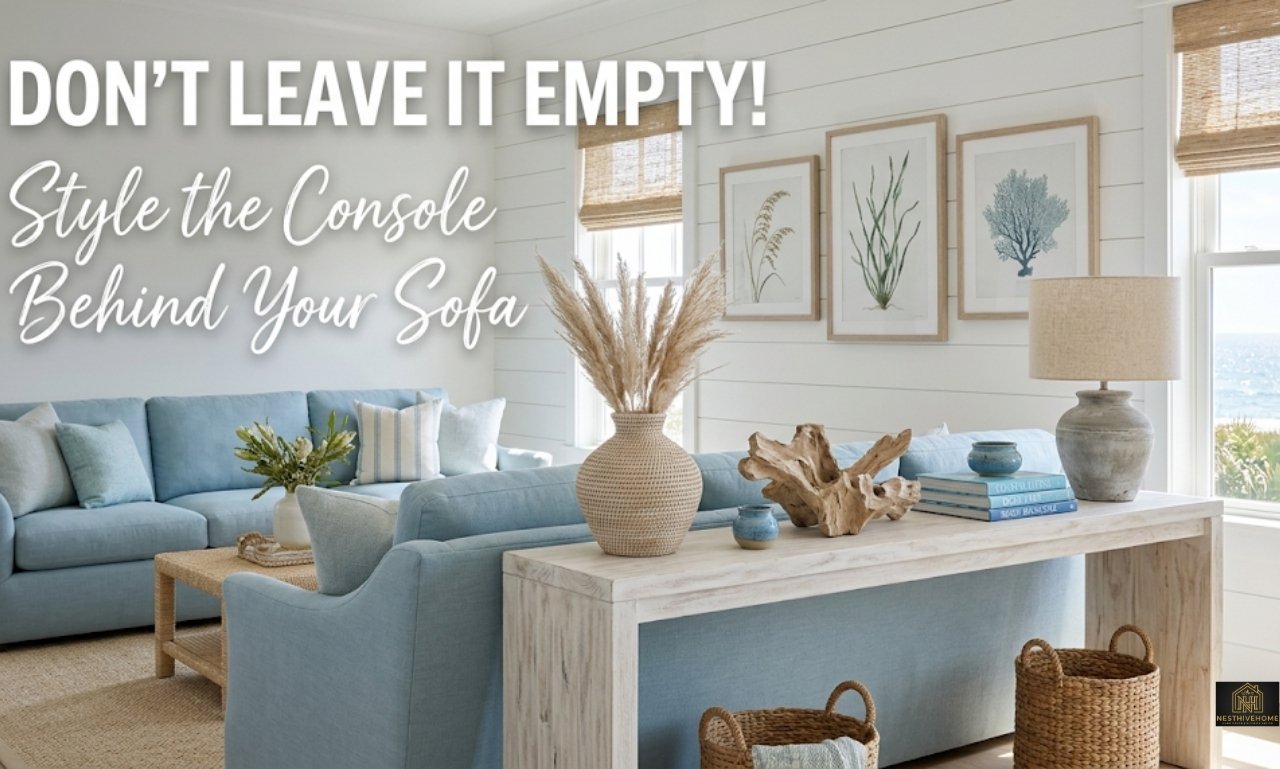
The length should also relate to the sofa. A console that comes reasonably close to the sofa’s width generally looks more intentional than a very short table floating behind a long sectional.
For the height, aim for a table that sits around the height of the sofa back or slightly below it. Exact measurements depend on the furniture, but the important thing is that the console does not awkwardly tower over the sofa or disappear behind it.
2. Start With One Strong Visual Anchor
One of the easiest ways to style a console table is to choose one dominant element before adding smaller accessories.
That anchor might be:
- A sculptural lamp
- A large vase
- A striking piece of artwork
- A statement mirror
- A dramatic arrangement of branches
Starting with one substantial piece prevents the common mistake of placing lots of tiny decorations across the surface.
Think of the anchor as the main character. Everything else should support it rather than compete with it.
3. Add a Table Lamp for Warmth and Height
A table lamp is one of the most useful pieces you can add to a console behind a couch.
It introduces height during the day and creates a softer layer of lighting in the evening. A lamp can also make the seating area feel more intimate than relying entirely on overhead lighting.
Try placing one lamp toward one end of the console and balancing it with lower objects on the opposite side.
For a symmetrical look, two matching lamps can work beautifully. For a more relaxed contemporary arrangement, use one sculptural lamp with a vase, books, or bowl on the other side.
Behind a sofa, remember that the arrangement should remain visually comfortable from the other side of the room. Avoid tall objects that completely obstruct sightlines.
4. Use the Rule of Three
When a console looks messy, the problem is often not the individual objects but the way they are grouped.
The rule of three is a simple starting point.
Try combining:
Tall + medium + low
For example:
Lamp + vase + books
Or:
Large ceramic vessel + small sculpture + decorative tray
Odd-numbered groupings can feel more collected and less rigid, while differences in height create a stronger silhouette.
The trick is to create relationships between objects instead of scattering decorations randomly across the tabletop. This grouping approach is also recommended by professional designers when styling console surfaces.
5. Layer Different Heights
A console arrangement becomes much more interesting when the eye can move between tall, medium, and low pieces.
For example, place a lamp at one end, a medium-height vase closer to the centre, and a low tray or stack of books nearby.
You can also introduce height with:
- Branches
- Candlesticks
- Sculptural objects
- Tall ceramic vessels
- Small table lamps
Avoid making every object the same height. A completely flat arrangement can make even beautiful accessories look uninspiring.
6. Use a Mirror—But Only When It Makes Sense
A large mirror can make a living room feel brighter and more spacious, particularly when it reflects natural light.
A round mirror works well with furniture that has straight lines, while a rectangular or arched mirror can complement more traditional architecture.
However, there is an important consideration when the sofa floats in the room: you may not have a wall immediately behind the console. In that case, a large mirror or artwork may not be practical.
Instead, focus on the three-dimensional styling of the console itself.
This distinction is important because decorating a console against a wall is different from styling one directly behind a floating sofa.
7. Create a Beautiful Artwork Moment
If your console sits against a wall, artwork can establish a clear focal point.
Try one oversized abstract painting for a contemporary room, a landscape for a traditional interior, or a collection of smaller frames for an eclectic home.
Keep the colours connected to the existing room.
For example, if your sofa is deep green, artwork containing muted olive, cream, brown, or soft terracotta can help create continuity without making everything match.
The goal is not to decorate the wall separately from the console. Treat the wall and tabletop as one composition.
8. Bring in Natural Texture
A little greenery can instantly soften a console arrangement.
You might use:
- A small potted plant
- Fresh branches
- Dried stems
- Olive branches
- Eucalyptus
- A tall plant beside the console
If the table is already visually busy, place the greenery beside the furniture instead of adding another object to the tabletop.
Natural materials such as ceramic, stone, linen, rattan, and wood can also add texture without introducing more colour.
This is particularly effective in neutral living rooms where too much white or grey can otherwise make the space feel flat.
9. Try a Symmetrical Arrangement
Symmetry is an easy way to create a polished, traditional look.
Place matching lamps at both ends of the console and use a low arrangement in the centre.
For example:
Lamp → books + bowl → Lamp
This works especially well in traditional, transitional, and formal living rooms.
Symmetry can also be practical. Two lamps provide balanced illumination and make a long console feel intentionally anchored.
If your room is more casual, however, an asymmetrical arrangement may feel more natural.
10. Go Asymmetrical for a Relaxed Designer Look
For a contemporary room, try placing the visual weight on opposite sides.
For example:
Tall lamp + small book stack → open space → low bowl + vase
The objects do not need to mirror each other.
What matters is visual balance.
A large lamp on one side can be balanced by a taller plant, vase, or sculptural object on the other. The shapes can be different while their visual weight remains similar.
This creates the effortless look often associated with professionally styled interiors.
11. Make It Functional With a Tray
A decorative tray can make your console both attractive and useful.
Use it to collect everyday items such as:
- Remote controls
- Coasters
- Keys
- Small electronics
- Candles
- Reading glasses
This is particularly useful when the console is close to an entryway or frequently used seating area.
Instead of allowing small objects to spread across the entire surface, the tray gives them a defined home.
Function should be part of the styling—not something hidden behind it.
12. Add Storage Beneath the Console
Don’t forget the space underneath.
If your console has an open lower shelf, use one or two baskets for throws, cushions, magazines, or other living-room essentials.
You can also use decorative boxes if the table has enough clearance.
The key is moderation. Filling every inch underneath can make the console feel heavy.
One substantial basket can often look more intentional than several small containers.
13. Style a Console Behind a Sectional Sofa
A sectional creates a larger visual footprint, so the console needs to feel substantial enough to balance it.
A longer table can visually follow the length of the sectional and help define the seating area.
In an open-plan room, this arrangement can also create a subtle boundary between the living room and dining or kitchen area without closing off the space.
For a large sectional, try a longer arrangement such as:
Lamp → books + vase → low sculpture → lamp
Keep the décor low enough that the console does not become a visual barrier.
14. Create a Cosy Evening Look
A console behind the sofa is an excellent opportunity to introduce layered lighting.
Use a warm table lamp rather than relying exclusively on ceiling lights.
You can combine it with:
- Floor lamps
- Wall sconces
- Accent lighting
- Candles
- Subtle decorative lights
Warm lighting can make wood, linen, velvet, and other natural textures look richer in the evening.
The result is a living room that feels comfortable rather than overly bright and clinical.
15. Mix Materials Instead of Matching Everything
One of the easiest ways to make a console arrangement look expensive is to combine contrasting materials.
Try:
Wood + ceramic + glass
Or:
Stone + brass + linen
Or:
Walnut + black metal + woven texture
You do not need every accessory to match the console.
In fact, using slightly different materials can create more depth and personality.
The room should feel coordinated, not like everything came from the same furniture collection.
16. Leave Deliberate Empty Space
One of the biggest styling mistakes is trying to fill every available inch.
Empty space is not wasted space.
It gives the eye somewhere to rest and allows your most beautiful pieces to stand out.
If the console looks crowded, remove one object and reassess it from across the room.
A simpler arrangement often feels more luxurious because each piece has room to breathe.
17. Add One Personal Piece
Finally, give the console some personality.
A living room should not look like a furniture showroom.
Add something meaningful:
- A favourite book
- Family photograph
- Travel souvenir
- Handmade ceramic
- Vintage find
- Small piece of collected art
These details make the room feel lived-in and authentic.
The best styling combines designer principles with things that actually mean something to you.
Smart Console Table Styling Formulas to Try
If you want an easy starting point, use one of these formulas.
The Classic Formula
Two lamps + books + low decorative object
Best for traditional and transitional rooms.
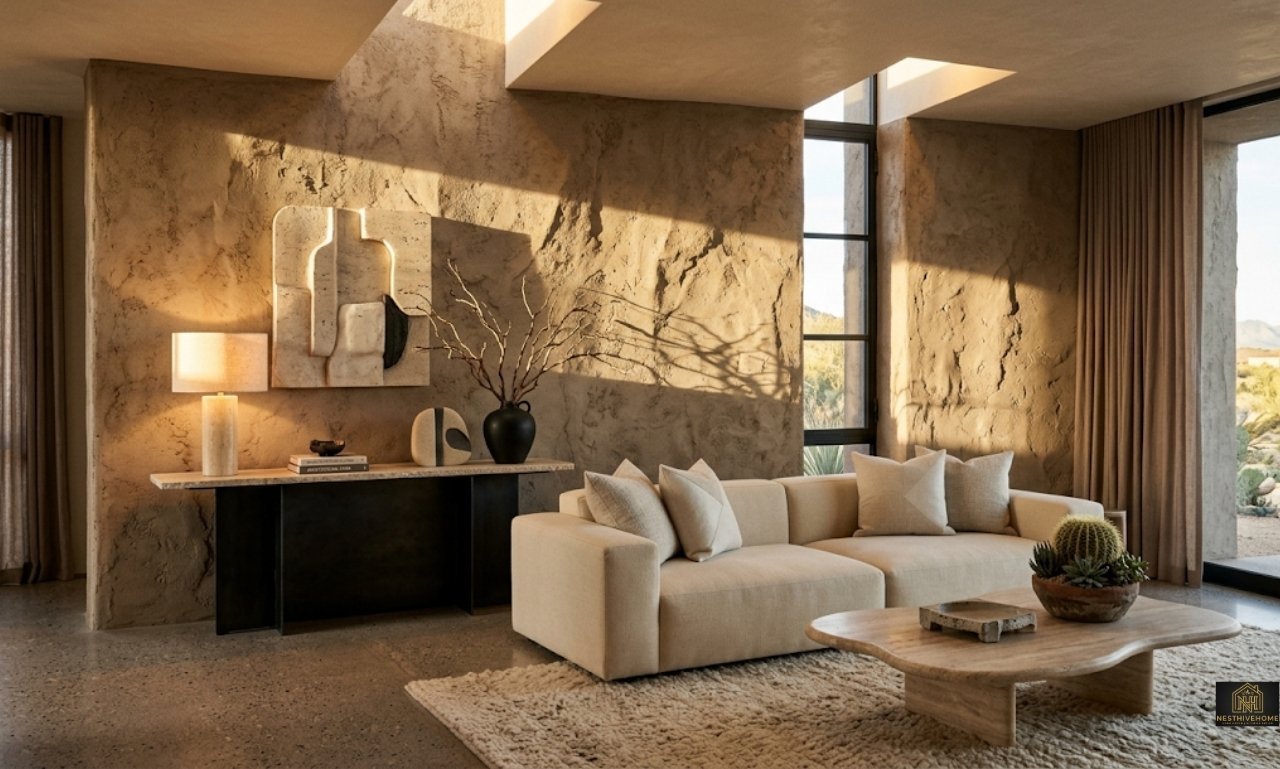
The Modern Formula
One sculptural lamp + large vase + art books
Best for contemporary interiors.
The Organic Formula
Ceramic vessel + greenery + wooden bowl + woven basket
Best for warm, natural spaces.
The Minimal Formula
One statement lamp + one low object
Best for small living rooms and minimalist interiors.
The Functional Formula
Lamp + decorative tray + books + storage basket
Best for busy family living rooms.
Common Mistakes to Avoid
Even beautiful accessories can look wrong when the proportions are off.
Choosing a Console That Is Too Deep
A deep table can eat into your walking space. Measure the area behind the sofa before buying.
Making the Table Too Tall
The console should work visually with the sofa rather than tower over it. Compare the table height with the sofa back before committing.
Blocking the Walkway
A beautiful arrangement is not successful if people have to squeeze past it.
Overloading the Surface
More decoration does not automatically mean better styling.
Ignoring the Back of the Sofa
If the sofa floats in the room, remember that the console can be viewed from multiple directions. Keep the overall arrangement attractive from the front and back.
Mixing Too Many Styles
A vintage lamp, industrial sculpture, coastal accessories, and farmhouse baskets may all look beautiful individually—but together they can feel disconnected.
Choose a clear design direction first.
How to Make a Console Behind a Couch Look Expensive
You don’t need an expensive console or designer accessories.
Instead, concentrate on scale, texture, lighting, and restraint.
Choose fewer but better-looking pieces. Mix materials. Introduce one strong focal point. Keep the tabletop visually balanced and allow some empty space.
A simple walnut console with a beautiful ceramic lamp, oversized artwork, a stack of books, and one sculptural object can look far more sophisticated than a table covered with twenty small decorations.
Good design is often about editing rather than adding.
Final Thoughts
Learning to style a console table behind a couch is less about following a strict decorating formula and more about understanding balance.
Start with the right proportions, then introduce one strong anchor, varied heights, warm lighting, natural texture, and a few meaningful accessories. Add storage where it genuinely helps, but don’t let functionality turn the console into a dumping ground.
Whether you call it a couch or sofa, the same principle applies: the space behind it should feel intentional.
You don’t need to fill every inch. Give your favourite pieces room to breathe, keep the walkway comfortable, and let the console complement the rest of your living room.
The result can be simple, practical, and beautifully finished—without ever feeling cluttered.