
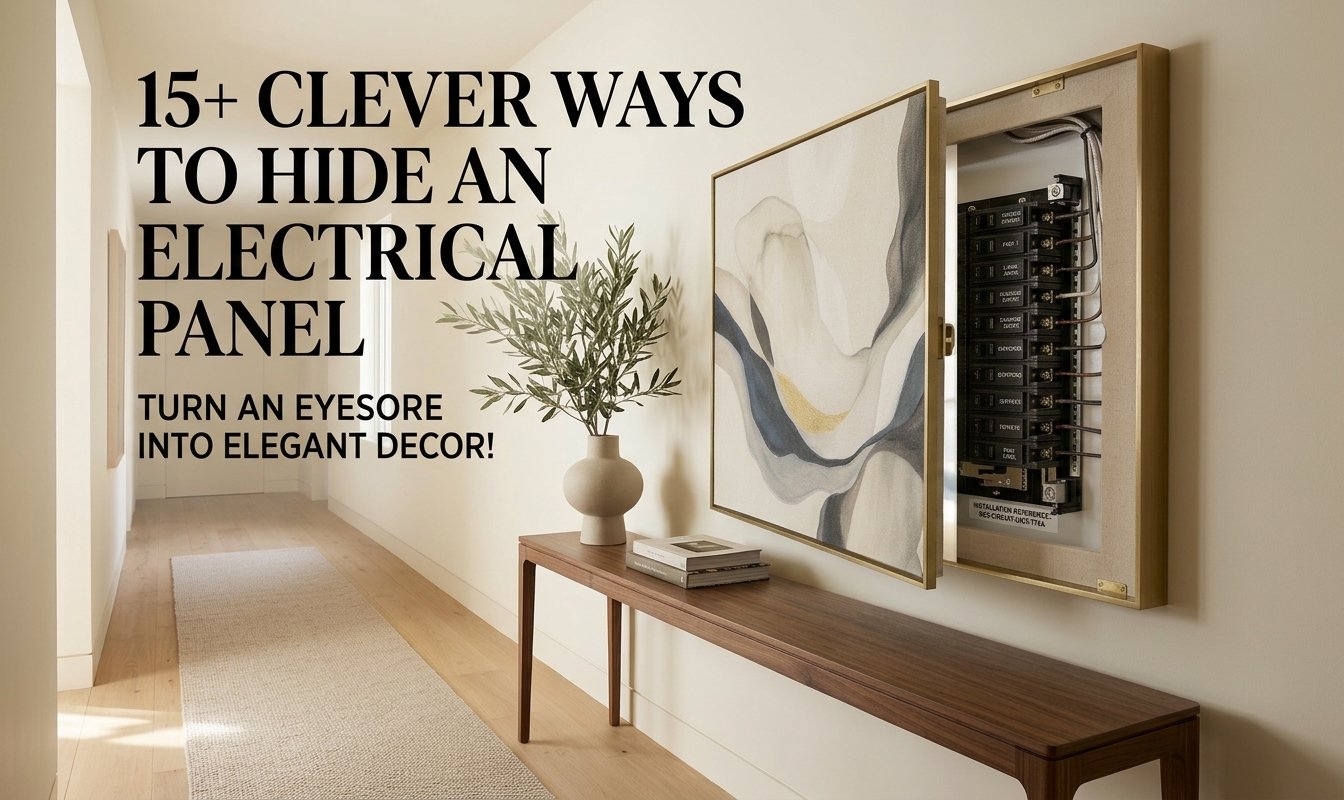
An electrical panel is essential, but that doesn’t mean it has to become the first thing you notice when walking through your hallway. With thoughtful design, you can hide electrical panel areas behind attractive decor while keeping the panel accessible when it needs to be checked or serviced.
The trick is to disguise the panel without permanently blocking it.
A framed artwork, shallow cabinet, decorative mirror, or carefully planned gallery wall can turn an awkward electrical box into a subtle part of the hallway design. Before covering anything, however, check local requirements and make sure the panel door can open fully and the required working area remains accessible. OSHA guidance emphasizes that electrical equipment needs sufficient access and working space for safe operation and maintenance.
If you’re dealing with an unsightly panel in an entryway, these ideas can help you create a hallway that feels intentional, polished, and beautifully decorated.
How to Hide an Electrical Panel Safely
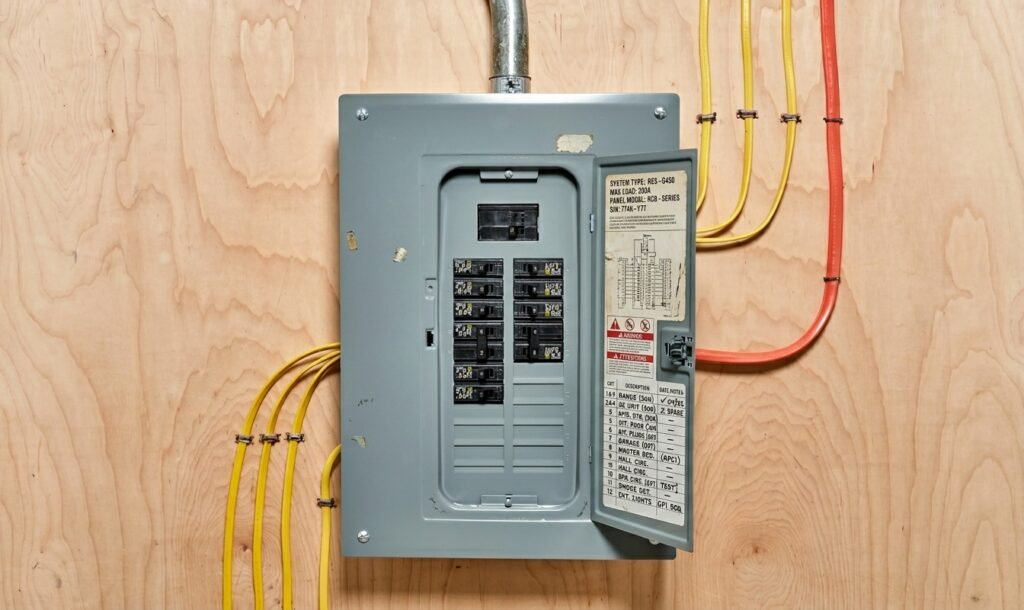
Before choosing a decorative solution, find out exactly how your electrical panel opens and how much clear space is needed around it.
Don’t permanently seal, screw shut, or build a fixed structure over a panel that needs regular access.
The exact requirements depend on the equipment, installation, and local electrical rules. As a general safety principle, the area in front of electrical equipment needs to remain clear for operation and maintenance. OSHA’s standards for electrical equipment require working space to be maintained and prohibit using that required space for storage.
This means your decorative solution should ideally be:
- Easy to open or remove
- Lightweight enough to handle safely
- Large enough to conceal the panel
- Properly supported
- Designed around the panel’s opening direction
- Compatible with the wall and surrounding trim
If electrical modifications are required, have the work assessed by a qualified electrician.
1. Hide an Electrical Panel Behind Framed Artwork
One of the simplest solutions is to use a large framed artwork piece.
Choose artwork slightly larger than the panel and mount it in a way that allows the artwork to move or be removed when access is required.
A neutral abstract print works beautifully in a modern hallway, while botanical artwork can create a softer appearance.
The key is making the artwork look like an intentional piece of hallway decor rather than an obvious cover.
2. Use a Decorative Mirror
A mirror can be an especially smart solution for a narrow hallway.
It disguises the electrical panel while also reflecting light and making the hallway feel brighter and more spacious.
Choose a lightweight framed mirror and make sure the mounting method doesn’t interfere with access to the panel.
For a sophisticated look, try:
- Arched mirrors
- Thin black frames
- Natural wood frames
- Antique-inspired finishes
- Soft brass frames
A mirror works particularly well near an entryway where you naturally want a last-minute reflection before leaving home.
3. Create a Hinged Art Cover
A hinged artwork panel can provide a more intentional solution when the electrical panel occupies a prominent position.
The artwork can function as a decorative door while still allowing the electrical equipment behind it to remain accessible.
Use a simple frame that matches your hallway’s existing trim.
Keep the mechanism discreet, but don’t make the cover difficult to open.
The goal is convenience and camouflage—not creating another obstacle.
4. Try a Shallow Decorative Cabinet
A shallow cabinet can visually integrate an electrical panel into a hallway wall.
Choose a cabinet style that matches the home’s architecture.
For example, a slim white cabinet can disappear against a white wall, while a natural oak finish can become part of a warm Scandinavian hallway.
However, the cabinet must not interfere with required working space or access to the electrical equipment.
Never use the area required for electrical servicing as general storage.
5. Turn It Into a Gallery Wall
Instead of trying to hide one panel with one object, make it part of a larger gallery wall.
Arrange several framed prints around the panel.
Use different frame sizes while keeping the overall composition balanced.
The electrical panel then becomes one small element within a larger visual arrangement.
This works particularly well when the panel is positioned at eye level.
6. Use a Large Textile Wall Hanging
A lightweight textile wall hanging can soften a plain hallway and visually disguise an electrical panel.
Choose woven cotton, linen, or another suitable decorative material.
Keep the installation simple enough that the panel can still be accessed quickly.
A neutral textile works well in Japandi, Scandinavian, bohemian, and organic-modern interiors.
7. Create a Decorative Shutter Cover
A pair of decorative shutters can create an attractive architectural feature.
Paint them the same colour as the wall for a subtle built-in appearance, or choose natural wood for warmth.
The shutters should be designed so they can open fully and don’t restrict access to the electrical equipment.
This approach can be especially attractive in farmhouse or traditional homes.
8. Match the Cover to the Wall
Sometimes the best way to disguise an electrical panel is to make it visually disappear.
Paint the surrounding wall and any appropriate decorative cover in the same colour.
Soft white, warm beige, muted taupe, and pale greige can help reduce visual contrast.
This is a particularly useful approach when you prefer minimalist interiors.
Instead of creating another focal point, you are simply reducing the panel’s visual presence.
9. Use a Slim Decorative Door
A custom-looking slim door can make an electrical panel feel like part of the hallway architecture.
Choose a finish that matches nearby doors or cabinetry.
For example, a white shaker-style panel can coordinate with traditional trim, while a flat wood finish can suit a contemporary home.
The door should remain functional and accessible rather than becoming a permanent architectural obstruction.
10. Add a Large Statement Print
If your hallway is long and narrow, a statement print can become the main focal point.
Choose an oversized piece with a simple composition.
Abstract landscapes, architectural sketches, botanical illustrations, and neutral photography are all excellent options.
Place the artwork so it naturally covers the visual area around the panel without preventing access.
This gives the hallway a designer appearance without requiring complicated construction.
11. Use a Magnetic Art Solution
A removable magnetic artwork system can be useful when you need frequent access.
Instead of permanently fixing a decorative piece to the wall, use a suitable removable system designed for the weight of the artwork.
This can make the cover easier to move when necessary.
Always check the weight limits and installation instructions of the specific mounting system.
12. Create a Mini Entryway Feature
If the panel is near your home’s entrance, turn the entire area into a coordinated entryway feature.
Add elements such as:
- A mirror
- A small console
- Decorative artwork
- A runner
- A basket
- A plant
The panel becomes much less noticeable because the eye is drawn to the entire composition.
Just keep furniture and accessories outside the required electrical working area.
13. Use a Natural Wood Cover
Natural wood can make an awkward hallway wall feel warmer and more intentional.
Choose oak, walnut, ash, or another finish that coordinates with existing flooring or furniture.
A simple slatted design can work beautifully in modern and Japandi homes.
Keep the design visually light rather than building a bulky cabinet around the panel.
14. Create a Minimalist Camouflage
If you prefer a clean interior, don’t overcomplicate the solution.
A simple flat decorative panel painted to match the wall can be enough.
The less contrast there is between the panel cover and the wall, the less noticeable the electrical equipment becomes.
This approach is ideal for minimalist, contemporary, and Scandinavian hallways.
15. Use a Decorative Grid or Slatted Design
A decorative slatted feature can turn an awkward wall section into an architectural detail.
Vertical slats can also make a hallway appear taller.
However, don’t create a fixed structure that prevents the electrical panel from opening or blocks required working space.
The decorative element should be designed around the equipment rather than trapping it behind the wall feature.
16. Make the Panel Part of the Decor
You don’t always have to completely hide an electrical panel.
Sometimes the smarter approach is to make it visually blend into the surrounding design.
Use coordinated colours, matching frames, similar finishes, and repeated shapes around it.
When the entire hallway has a cohesive design language, the panel becomes much less noticeable.
Best Ways to Hide an Electrical Panel by Style
Modern Hallway
Choose:
- Minimalist artwork
- Black-framed mirrors
- Flat-panel covers
- Neutral colours
- Simple geometric designs
Avoid excessive decoration.
Scandinavian Hallway
Use pale wood, soft white, light grey, simple artwork, and natural textures.
A light oak frame can make the panel blend naturally with the rest of the hallway.
Japandi Hallway
Keep everything calm and restrained.
Try natural wood, textured artwork, neutral colours, and simple organic shapes.
The goal is to disguise the panel without introducing visual clutter.
Traditional Hallway
A framed mirror, decorative molding, classic artwork, or shutter-style cover can work beautifully.
Match the finish to existing doors, trim, and architectural details.
Bohemian Hallway
Use woven wall art, natural textures, layered artwork, and warm earthy tones.
Just make sure the decorative elements remain easy to remove when panel access is required.
How to Choose the Right Electrical Panel Cover
The best solution depends on the location and size of the panel.
Before buying or making anything, measure:
- Panel width
- Panel height
- Door swing
- Wall space
- Distance to nearby furniture
- Available clearance
Also check whether the panel door needs to open 90 degrees or whether local requirements specify additional access.
OSHA’s rules for covered electrical equipment require the working space to remain clear and allow equipment doors or hinged panels to open appropriately.
For a hallway, this is particularly important because narrow passageways can easily become crowded.
Mistakes to Avoid When You Hide an Electrical Panel
Blocking the Panel With Furniture
A console, bench, cabinet, or coat rack should never make the panel difficult to reach.
The electrical working area needs to remain accessible.
Permanently Sealing the Panel
Never cover an electrical panel in a way that prevents necessary inspection, operation, or maintenance.
A beautiful wall is not worth creating a safety problem.
Using Heavy Artwork
A very heavy mirror or artwork may be difficult to remove during an emergency.
Choose an appropriate mounting system and consider how easily the piece can be moved.
Ignoring the Door Swing
Always check which direction the panel door opens.
A decorative cover that looks perfect when closed may become impractical if it prevents the panel door from opening fully.
Turning the Area Into Storage
Don’t use the space around the electrical panel for baskets, shoes, boxes, or furniture.
Required electrical working space should remain clear rather than becoming extra hallway storage.
Simple Formula for a Better-Looking Hallway
If you’re unsure which solution to choose, start with this simple formula:
Electrical panel + removable artwork + matching frame + clean wall + open access
For a narrow hallway, replace the artwork with a mirror.
For a minimalist home, match the cover to the wall.
For a traditional home, try a framed architectural feature or shutter-style cover.
For a warm modern home, natural wood can make the area feel intentional.
The best solution is usually the one that attracts attention to the hallway design rather than the electrical equipment.
Final Thoughts
Learning how to hide electrical panel areas doesn’t require sacrificing safety or style.
A hallway electrical panel can be disguised with framed artwork, mirrors, decorative doors, gallery walls, wood finishes, textiles, or carefully planned architectural details.
The most important rule is simple: hide the appearance, not the access.
Before installing anything, check your local requirements, the panel manufacturer’s guidance, and the rules that apply to your property. Keep the required working space clear and make sure the panel can be opened and serviced when necessary. OSHA specifically requires sufficient access and working space around electrical equipment and says that this space should not be used for storage.
With the right approach, an electrical panel can become almost invisible while the hallway feels polished, welcoming, and thoughtfully designed.
A functional electrical panel doesn’t have to look like a design problem.