
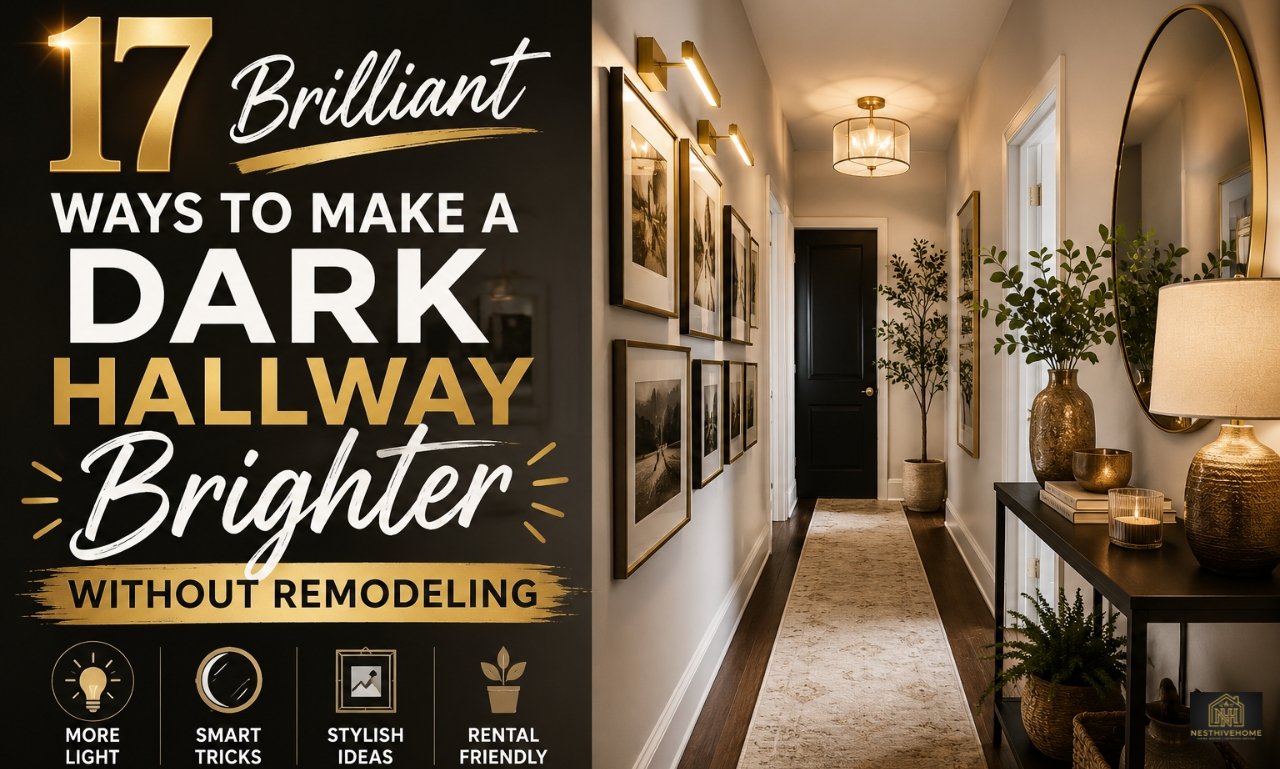
How to make a dark hallway brighter without remodeling is easier than you might think. You do not need new windows, expensive construction, or a complete renovation to make a gloomy hallway feel brighter, wider, and more welcoming.
Dark hallways often feel uninviting because of limited natural light, narrow layouts, dark flooring, heavy furniture, or inadequate lighting. Fortunately, thoughtful decorating can dramatically change how light moves through the space.
From oversized mirrors and layered lighting to light-colored runners, reflective accents, and strategically placed artwork, these simple ideas can transform a shadowy hallway without changing its structure.
1. Use an Oversized Mirror to Reflect Light
One of the most effective answers to how to make a dark hallway brighter without remodeling is adding a strategically positioned mirror.
A mirror cannot produce light, but it can reflect existing daylight and artificial light throughout the hallway. This can make a narrow corridor feel more open and visually spacious.
Instead of covering the wall with several small mirrors, consider one large statement piece.
Good options include:
- Arched mirrors
- Round mirrors
- Full-length mirrors
- Frameless mirrors
- Organic-shaped mirrors
Place the mirror near a doorway, window, lamp, or other light source whenever possible.
A large mirror can also become the hallway’s main decorative feature while making the space feel less enclosed.
2. Layer Your Hallway Lighting
A single ceiling fixture may not be enough to illuminate a long or narrow hallway.
Layered lighting is a much more effective approach because it distributes brightness across different areas instead of concentrating it in one location.
Consider combining:
- Ceiling lights
- Wall sconces
- Picture lights
- LED accent lighting
- Table lamps
- Motion-sensor lighting
The goal is to minimize dark corners and harsh shadows.
For an upscale look, combine ambient lighting with accent lighting. This creates depth and gives the hallway a warmer, more intentional appearance.
3. Choose Warm-White Light Bulbs
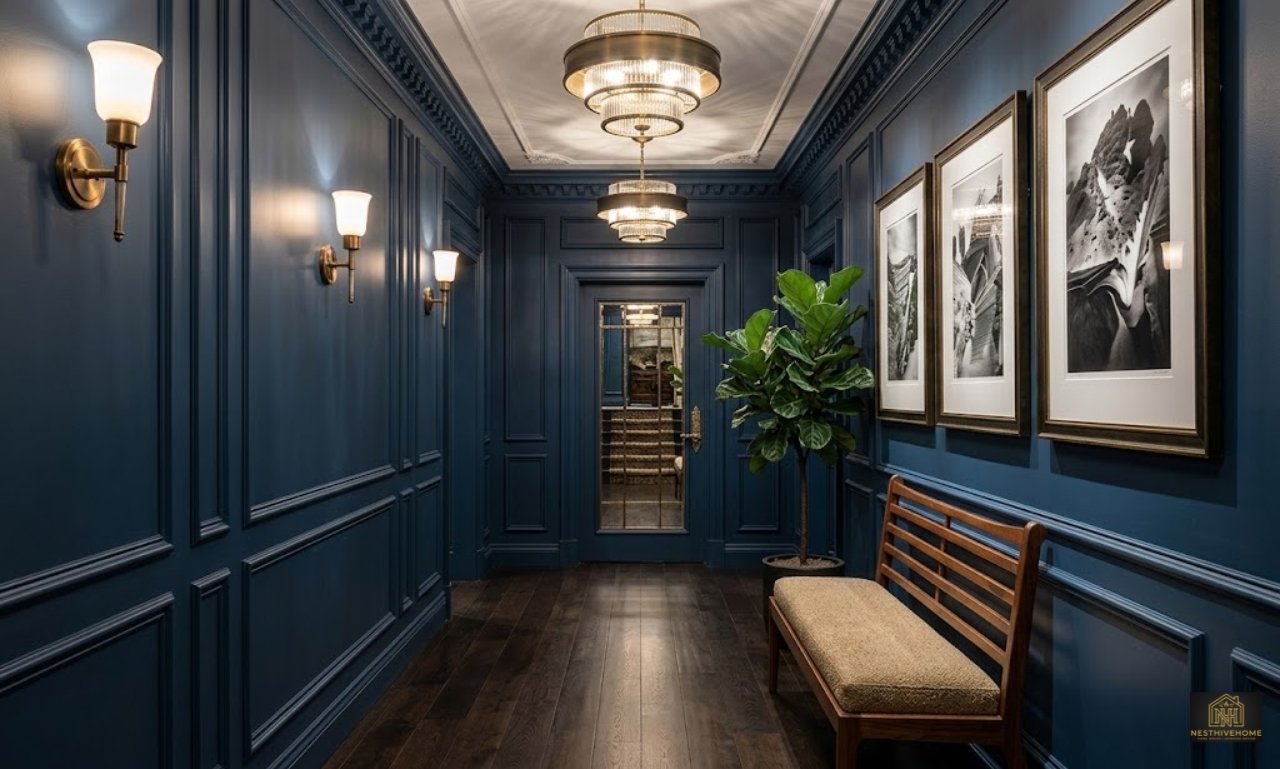
The color temperature of your bulbs can significantly affect how your hallway looks.
Extremely cool lighting may make certain spaces feel stark or sterile, while very warm yellow lighting can make beige, taupe, and gray surfaces appear darker.
A balanced warm-to-neutral white is often a comfortable choice for residential hallways.
Always consider your wall color, flooring, furniture, and existing fixtures before choosing a bulb.
For reliable information about LED lighting and color characteristics, refer to the U.S. Department of Energy’s lighting guidance.
4. Brighten Dark Walls Without Painting
You do not necessarily have to repaint a dark hallway.
If painting is not an option, introduce lighter decorative elements that create contrast against the existing wall color.
Try adding:
- Large light-colored artwork
- Cream-colored frames
- Oversized mirrors
- Pale decorative objects
- Light textile pieces
- Reflective accessories
A dark wall can actually make lighter décor stand out beautifully.
Rather than fighting the existing color, use contrast to create a sophisticated and intentional design.
This is an especially useful approach if you are renting or simply want to refresh the hallway without a major project.
5. Add Glass Décor for a More Open Look
Glass is particularly useful in narrow hallways because it provides visual openness.
Unlike bulky solid furniture, transparent surfaces allow your eyes to move through the space.
Consider adding:
- Glass vases
- Glass picture frames
- Clear lamps
- Acrylic accessories
- Transparent decorative objects
A small glass console paired with a mirror can create an elegant arrangement without making the hallway feel crowded.
This is one of the simplest ways to make a dark hallway appear lighter while maintaining a sophisticated aesthetic.
6. Choose a Light-Colored Runner
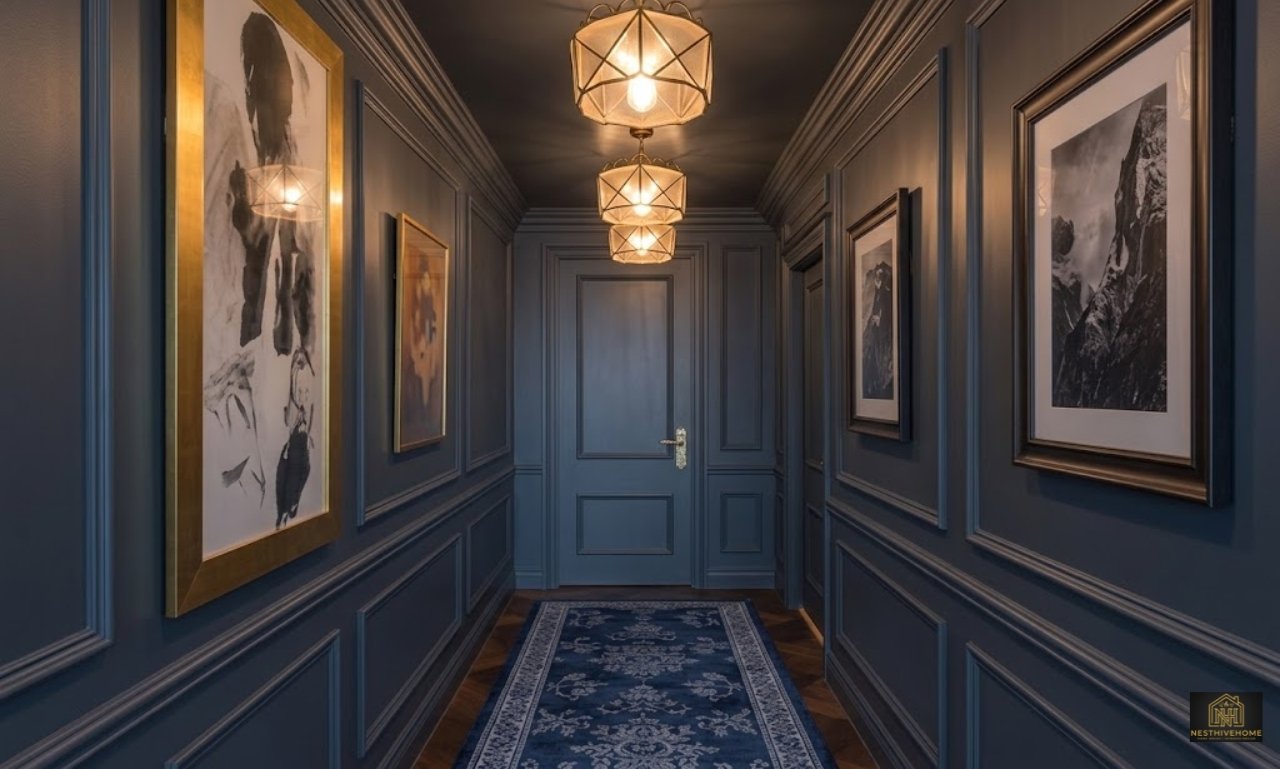
The floor occupies a large portion of a hallway, so its color can strongly influence the overall appearance.
If your existing flooring is dark, introduce a lighter runner to create contrast and visually lift the space.
Consider shades such as:
- Cream
- Ivory
- Beige
- Soft gray
- Light taupe
Subtle geometric or linear patterns can add personality without overwhelming a narrow corridor.
A runner also makes the hallway feel warmer and more finished.
For a particularly narrow hallway, choose a design with a simple pattern and enough visual breathing room.
7. Keep the Ceiling Visually Light
The ceiling can have a surprisingly strong effect on how enclosed a hallway feels.
Keep the ceiling visually clean and avoid oversized fixtures that dominate the narrow space.
Compact flush-mount or low-profile fixtures can distribute light without making the ceiling feel crowded.
If your hallway includes architectural details such as beams or molding, use lighting to highlight them rather than allowing them to visually overwhelm the space.
A clean ceiling paired with effective lighting can make the hallway feel taller and more open.
8. Introduce Metallic Accents
Metallic surfaces can reflect light while adding a subtle sense of luxury.
You do not need large metallic furniture pieces. A few carefully selected accents can be enough.
Try:
- Brass mirror frames
- Chrome lighting fixtures
- Gold picture frames
- Metallic trays
- Silver decorative objects
Warm brass works particularly well with cream, beige, taupe, and natural wood.
For a contemporary look, black metal can be combined with reflective surfaces to create contrast without making the hallway appear heavy.
9. Add a Slim Console
Furniture can quickly make a hallway feel smaller if it is too deep.
Instead, choose a narrow console that provides useful surface space without restricting the walkway.
A slim console can hold:
- A small lamp
- Decorative vase
- Mirror
- Catch-all tray
- Small plant
- A few books
Light wood and neutral finishes are excellent choices when the hallway already contains several dark elements.
Before purchasing furniture, measure the available walking space carefully. A hallway should remain comfortable and easy to navigate.
10. Choose Reflective Artwork
Artwork does more than decorate an empty wall. The right artwork can introduce lighter tones and create visual brightness.
Look for pieces featuring:
- White
- Cream
- Soft beige
- Pale blue
- Muted green
- Warm metallic accents
Abstract artwork with a light background can create a beautiful focal point while making darker walls feel less dominant.
For a sophisticated gallery effect, repeat similar frame finishes throughout the hallway.
The result feels cohesive rather than cluttered.
11. Place a Large Mirror at the End of the Hallway
If the end of your hallway has a blank wall, turn it into a focal point.
A large mirror positioned at the end can create the illusion of greater depth and reflect light back through the corridor.
Consider an:
- Oversized round mirror
- Tall arched mirror
- Large rectangular mirror
- Decorative antique-style mirror
This technique works especially well in narrow hallways because the reflection creates another visual layer.
If the mirror can reflect a brighter room, doorway, or light fixture, the effect can be even more noticeable.
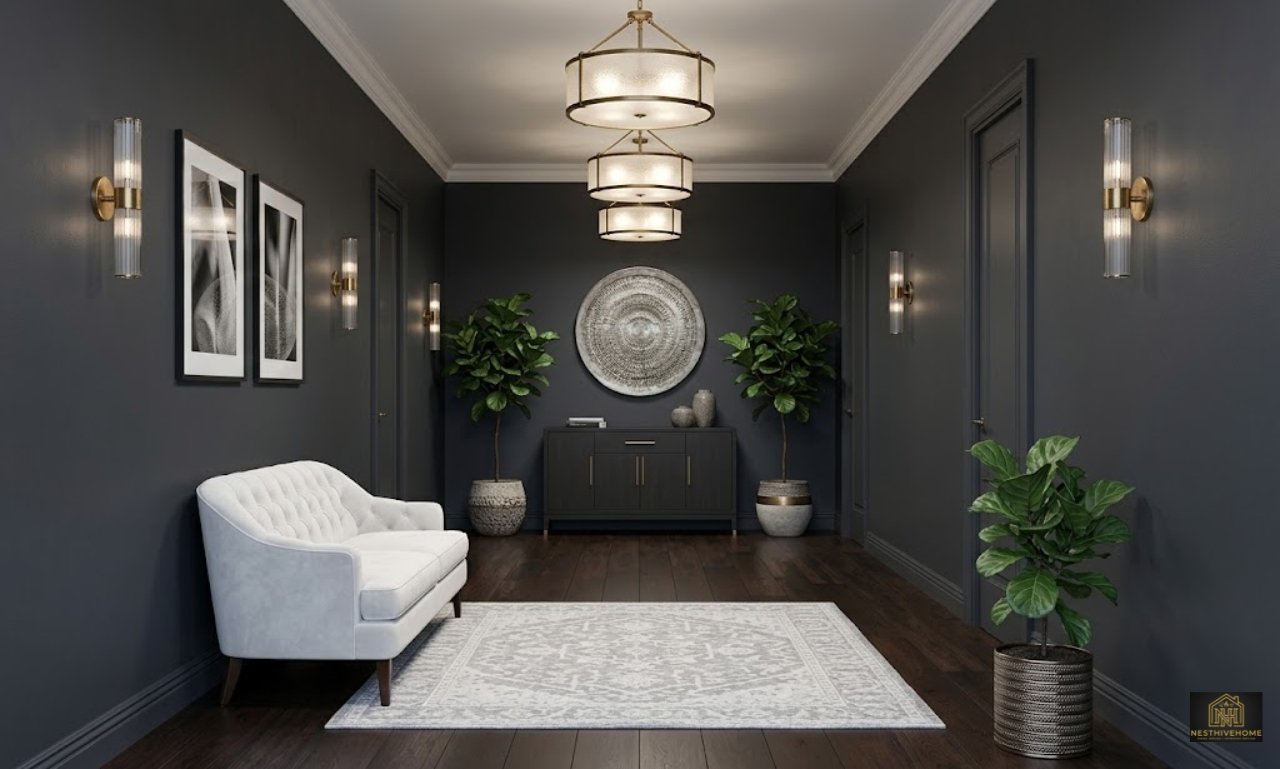
12. Use Light-Colored Accessories
Small decorative details can have a surprisingly large effect when they are repeated throughout the hallway.
Use lighter accessories against darker surfaces to create contrast.
For example:
Dark wall + cream vase + brass lamp + light artwork
Or:
Taupe wall + ivory runner + natural wood console + oversized mirror
You do not have to make everything white.
A combination of cream, beige, natural wood, soft gray, and muted metallics can create a brighter atmosphere while keeping the hallway warm and inviting.
13. Keep Window Areas Unblocked
If your hallway receives even a small amount of daylight from a nearby window or adjoining room, make the most of it.
Avoid placing oversized furniture, tall plants, or heavy curtains where they can block the flow of natural light.
Lightweight window treatments can help preserve brightness.
Also look at nearby doorways.
If your hallway connects to a bright living room, kitchen, or entry area, avoid visually blocking that opening.
Think of neighboring rooms as part of the hallway’s natural lighting system.
14. Try Glass or Acrylic Furniture
Extremely narrow hallways benefit from furniture that visually disappears.
Glass and acrylic furniture can provide functionality while allowing the eye to move through the space.
A transparent console is particularly useful when you need a surface for a lamp or decorative objects but do not want a heavy-looking piece of furniture.
Pair it with:
- A large mirror
- Light runner
- Brass lamp
- Small plant
- Minimal accessories
The result can feel surprisingly elegant and spacious.
15. Add Strategic Greenery
Plants do not technically create more light, but they can make a dark hallway feel fresher and more inviting.
Choose greenery with naturally bright leaves if the space receives enough indirect light.
If the hallway has very little natural light, a realistic artificial plant can provide a similar decorative effect without requiring difficult maintenance.
Avoid filling every corner with plants.
Instead, place one tall plant near the end of the hallway or beside a console.
A single carefully positioned plant can introduce height, texture, and life without making a narrow space feel crowded.
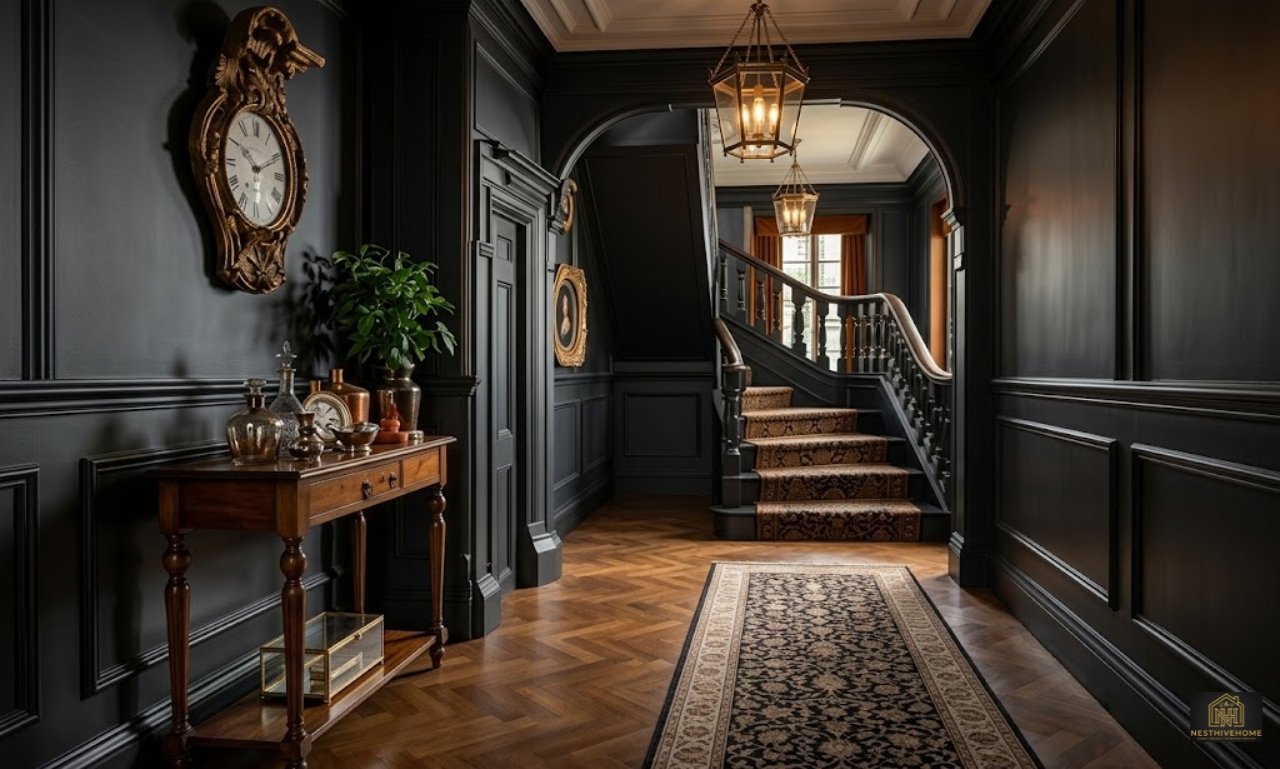
16. Reduce Visual Clutter
Sometimes the reason a hallway feels dark has less to do with lighting and more to do with visual clutter.
Too many decorative objects can make a narrow space feel smaller and heavier.
Look critically at:
- Excessive picture frames
- Bulky furniture
- Baskets
- Dark accessories
- Heavy textiles
- Oversized decorations
Remove anything that does not serve a clear purpose.
Instead of filling every wall and surface, choose a few larger, intentional pieces.
A simplified hallway often feels brighter because there is more visual breathing room.
17. Create a Bright, Layered Entry Moment
One of the smartest approaches to how to make a dark hallway brighter without remodeling is creating a strong focal point near the entrance.
Imagine walking into the hallway and immediately seeing:
Large mirror + slim console + warm lamp + light artwork + greenery
This combination creates a welcoming visual destination.
Place brighter decorative elements toward the darkest section of the hallway whenever possible.
The eye naturally follows the lighter focal point, helping the entire corridor feel more intentional.
This approach is especially effective when you combine several ideas rather than relying on just one decorating trick.
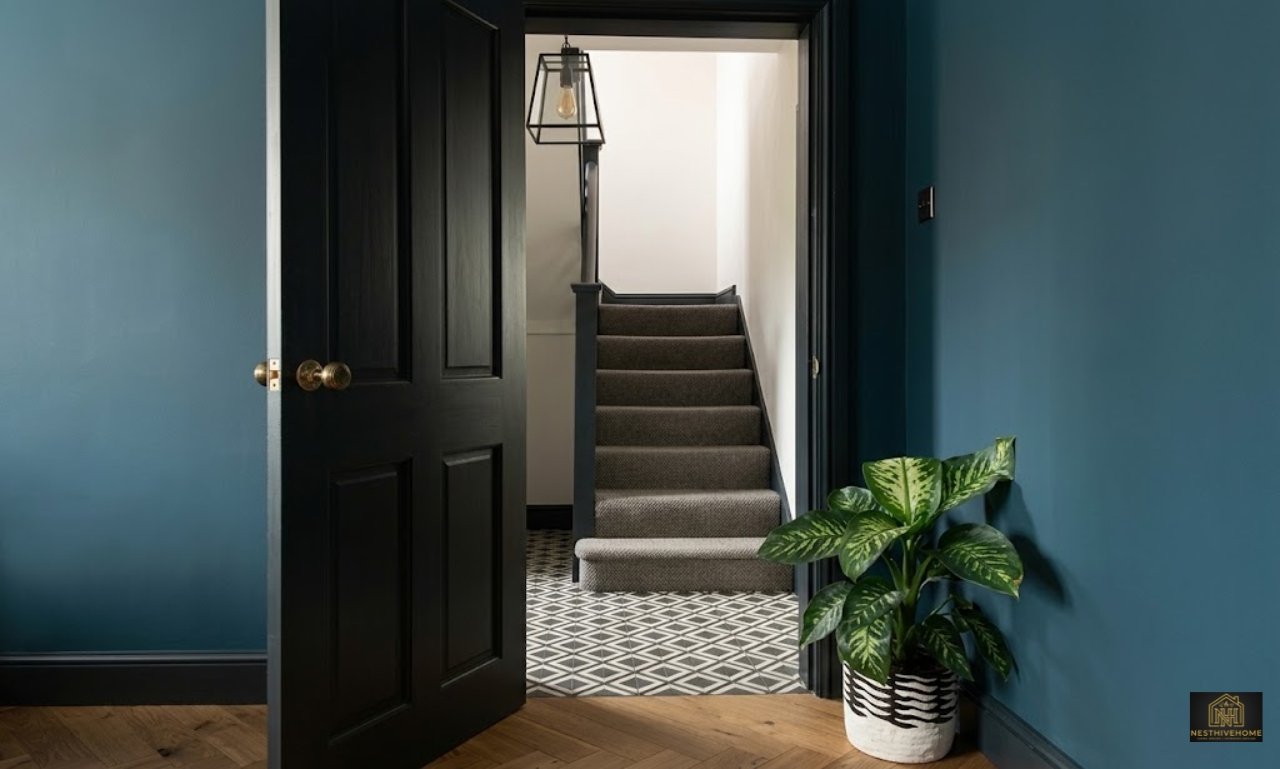
Final Thoughts
Learning how to make a dark hallway brighter without remodeling is primarily about managing light, reflection, contrast, scale, and visual clutter.
You do not need new windows, expensive construction, or a complete renovation.
Start with an oversized mirror and improve the lighting. Then introduce a light-colored runner, reflective metals, glass accents, and lighter artwork.
Keep furniture slim and avoid blocking natural light from nearby rooms.
Most importantly, think about how each element interacts with the others.
A hallway that once felt narrow and gloomy can become one of the most stylish transitional spaces in your home.
With a few thoughtful decorating changes, you can make your hallway feel brighter, wider, warmer, and more luxurious—without remodeling at all.