
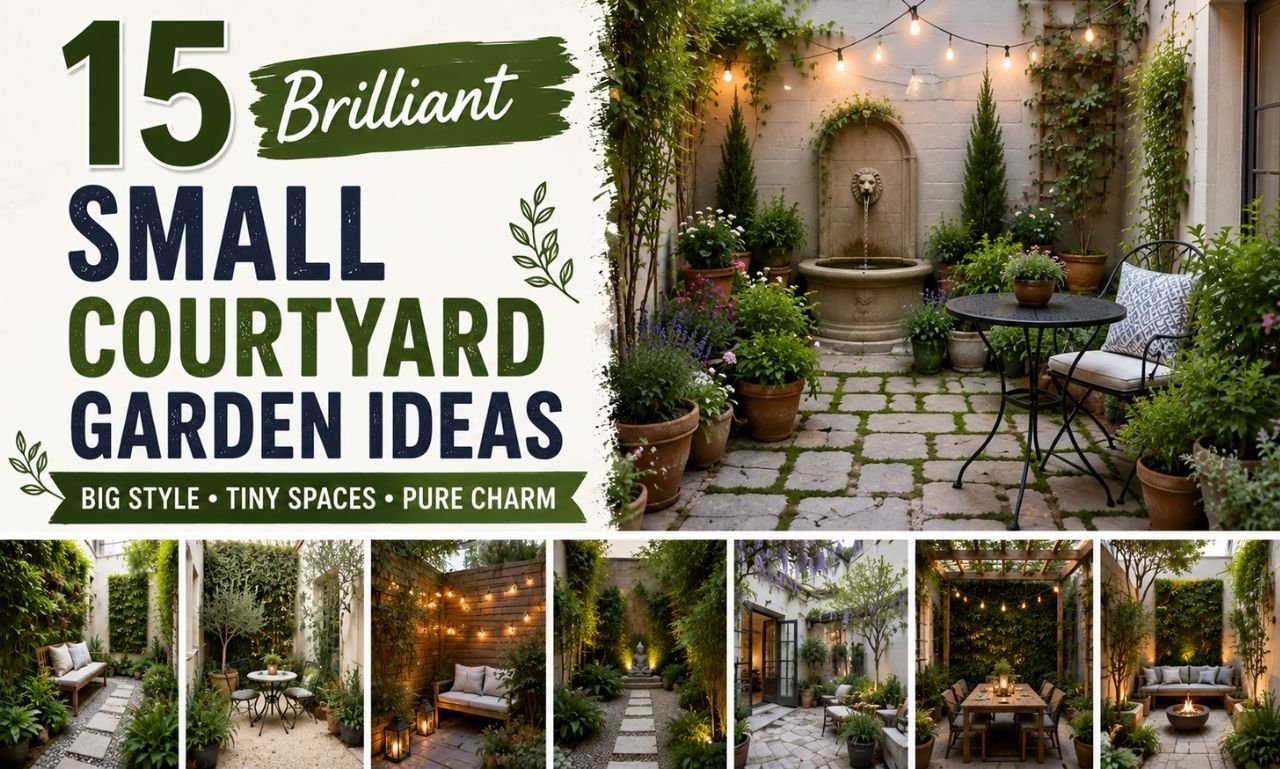
A small courtyard is not a consolation prize — it’s an opportunity. Compact outdoor spaces force the kind of intentional design that sprawling gardens never need: every plant earns its place, every corner has a job, and the result feels curated rather than accidental. These small courtyard garden ideas prove that limited square footage can deliver serious atmosphere, from vertical jungles to candle-lit bistro corners. Small space, big garden energy.
1. Grow Up the Walls
In a courtyard, the walls are your extra garden beds. Trellises, wall planters, and narrow vertical gardens turn bare brick into living green — adding height, softness, and privacy without stealing a single inch of floor. Climbing plants do the heavy lifting here; just match them to your sunlight and give them something sturdy to climb. Mix leaf shapes and heights and the wall becomes a tapestry. Ground space stays gloriously open.
2. Keep Seating Compact
You don’t need a full patio set — you need the right seat. A slim bench, a pair of folding chairs, or a compact bistro set tucked into one corner gives you a destination without blocking the pathways. Built-in bench seating is the power move: storage underneath, clean lines on top. Add weatherproof cushions for comfort and color, and keep everything proportional. The courtyard should feel open first, furnished second.

3. Master the Art of Pots
Containers are a small garden’s best friend: flexible, forgiving, and endlessly rearrangeable. The trick is grouping — clusters of pots at different heights make a stronger statement than lonely singles scattered around. Mix tall planters, small pots, and something trailing for layers. Choose containers that echo your home’s exterior so the courtyard feels like a natural extension of the house, not an afterthought.
4. Add a Slim Water Feature
Water changes everything. The sound alone — that gentle trickle — can make a tiny courtyard feel like a retreat. You don’t need a pond: a slim wall fountain or a small recirculating bowl delivers the calm without eating floor space. Tuck it where it becomes a focal point but doesn’t block movement, surround it with greenery or stones, and let it do its quiet magic. Small water, big atmosphere.
5. Lay Natural Stone
Stone gives a courtyard instant permanence and character. Pavers, gravel, stepping stones — pick one material family and stick with it so the small space reads as cohesive, not fragmented. Light-colored stone bounces light around and makes the area feel brighter and bigger. Against lush planting, stone creates that timeless hardscape-versus-green balance that never goes out of style.
6. Build In the Planters
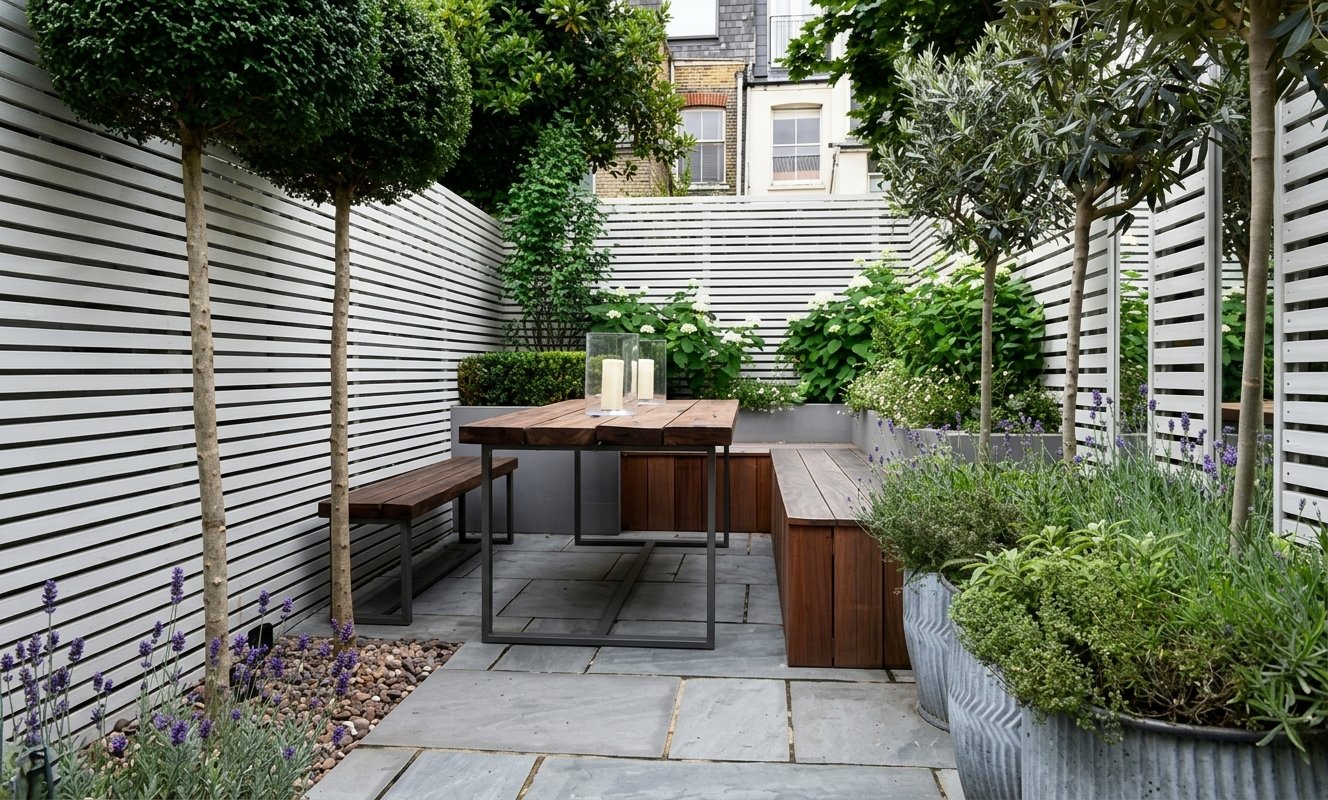
Built-in planters along walls or under windows are the neat freak’s answer to courtyard gardening: crisp edges, organized planting, zero pots migrating across the patio. Narrow raised beds handle herbs, flowers, or small shrubs beautifully, and they make it easy to group plants by height or color. Use durable materials that match the house. The result looks designed — because it is.
7. Let Climbers Do the Work
If vertical gardening had a shortcut, it’s climbing plants. Jasmine for fragrance, clematis for flowers, ivy for year-round green — trained up a trellis or wires, they turn fences and walls into living curtains. The privacy bonus is real: a green wall blocks overlooking windows far more beautifully than any fence. Just prune regularly; an untamed climber goes from lush to jungle fast.
8. Create a Bistro Corner
Every courtyard deserves one perfect sitting spot. A small round table, two lightweight chairs, a wall or greenery behind you for enclosure — that’s a Parisian café in about nine square feet. Add an outdoor rug or a lantern and it becomes the spot for morning coffee and evening wine alike. Small, intentional, and disproportionately delightful.
9. Layer Your Plant Heights
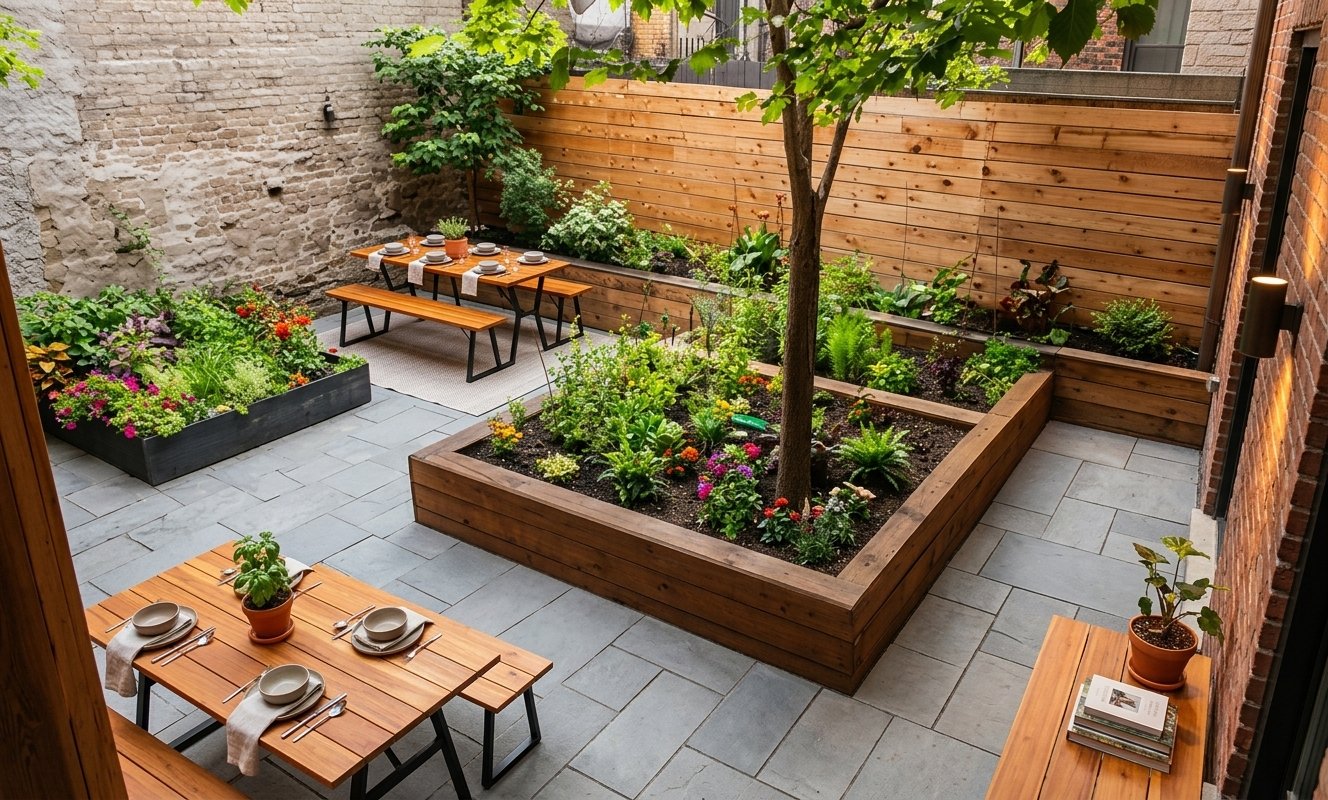
Flat planting looks flat — shocking, I know. The fix is layering: tall plants at the back, medium in the middle, low growers along edges and paths. This creates depth that makes the whole courtyard feel richer and more abundant than its footprint suggests. Lean on foliage texture, not just flowers, for year-round interest. A well-layered small garden always looks bigger than it is.
10. Screen for Privacy
Overlooked courtyard? Don’t suffer — screen. Slatted wood panels, tall planters, trellises with climbers: all add privacy without walling you in. The key is permeability: leave gaps for light and air so the space stays bright. A screen softened with greenery feels like a garden boundary, not a fortress wall. Privacy plus plants equals the outdoor room you actually want to sit in.
11. Light It After Dark
A courtyard that disappears at sunset is a wasted courtyard. A few well-placed lights — string lights overhead, a lantern on the table, uplights washing the planting — transform it into an evening destination. Keep it warm and low-key; harsh bright fixtures kill the mood instantly. Lit greenery at night looks almost magical, and suddenly your small garden works two shifts.
12. Embrace Minimalism
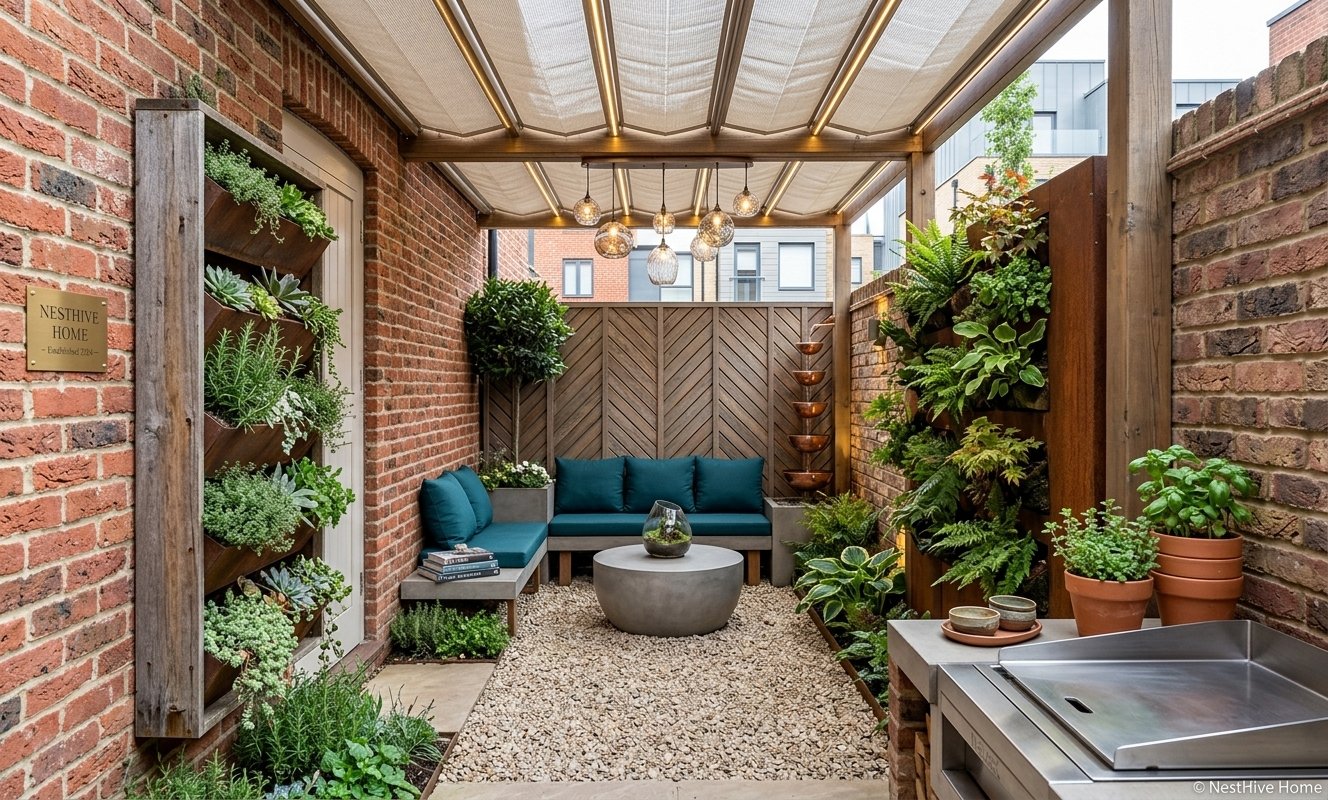
Small spaces punish clutter, so edit ruthlessly. Fewer materials, fewer furniture pieces, fewer accessories — and a simple color palette tying it all together. Let one or two standout plants or features be the stars. Clean lines make the space feel intentional and calm, and as a bonus, minimalist courtyards are dramatically easier to maintain. Restraint is a design choice, not a limitation.
13. Grow a Herb Corner
Beauty you can eat: a narrow raised bed or tiered containers of rosemary, thyme, basil, and mint along one wall. Fragrant, useful, and genuinely pretty — plus there’s something deeply satisfying about snipping dinner from your own courtyard. Label the plants for charm. It’s a garden with a purpose beyond looking good, and it takes almost no space.
14. Go Mediterranean
Terracotta pots, gravel, lavender, rosemary, olive-toned greenery, sun-warmed stone — the Mediterranean look was basically invented for small courtyards. It’s relaxed, drought-tolerant, fragrant, and it makes any compact space feel like a holiday. Weathered materials and a simple warm palette do all the work. Close your eyes and you’re in Provence; open them and you’re still home. Win-win.
15. Carve Out a Reading Nook
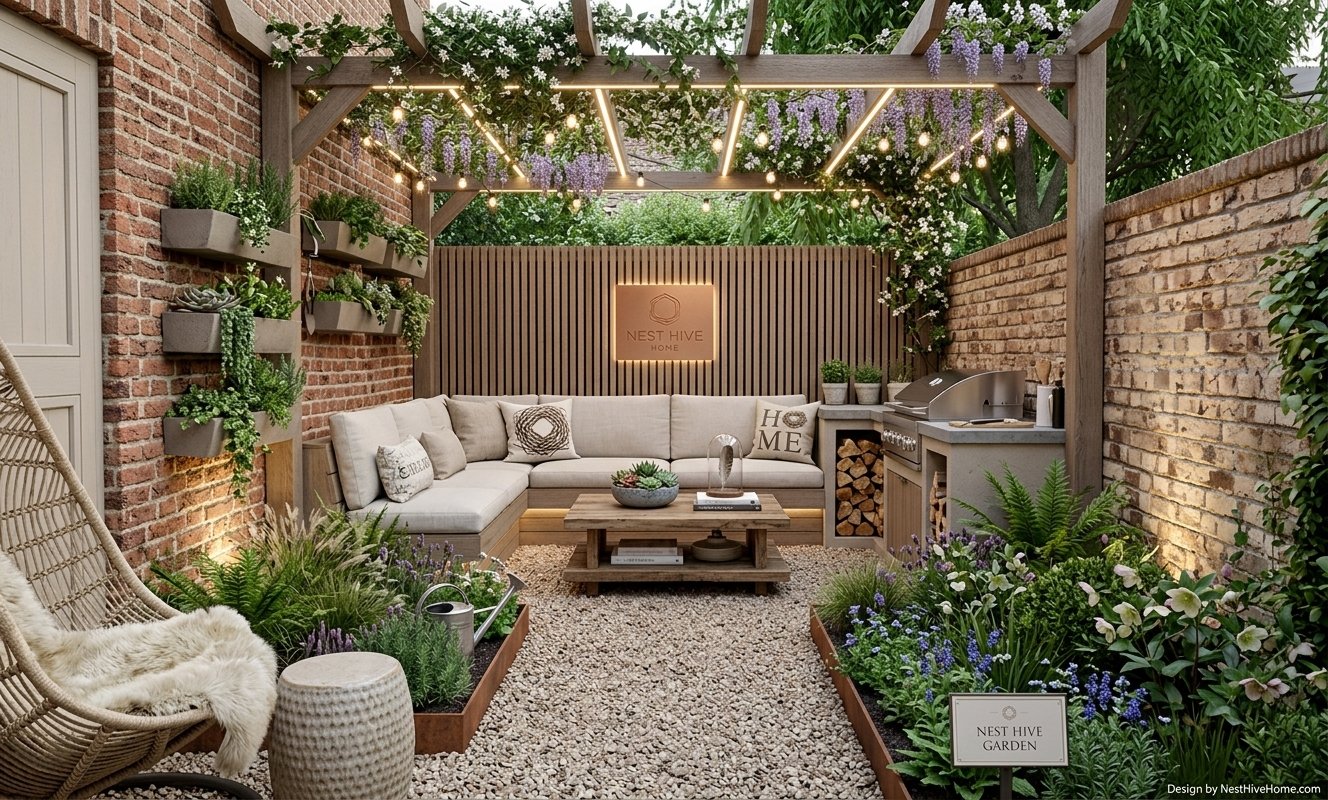
Dedicate one corner to doing absolutely nothing, beautifully. A comfortable chair or built-in bench under a pergola or climbing plant, a small side table for the book and the drink, soft cushions, a lantern for evenings. Keep the surrounding planting simple so the seat stays the star. Every garden needs a place to sit and stare at the garden — this is yours.
16. Zone Every Inch
The master principle: give every part of the courtyard a job. Corners for seating, walls for plants, edges for narrow planters, vertical surfaces for decoration — and keep the center clear for movement. Nothing should be there ‘just because.’ When every inch has a purpose, even the tiniest courtyard feels generous. Small space, zero waste.
Final Thoughts
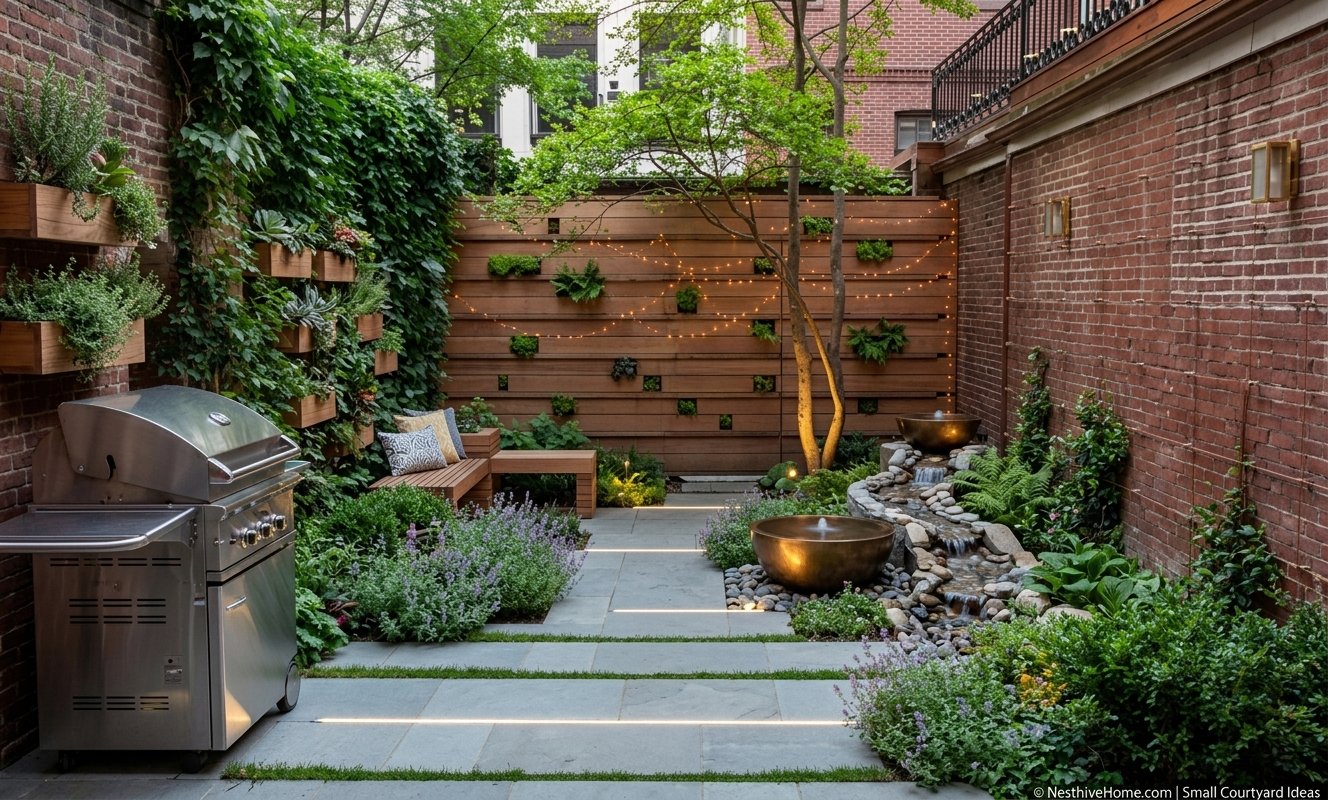
These small courtyard garden ideas all point to the same truth: constraint breeds creativity. Start with what matters most to you — the seating, the planting, the privacy — and build outward from there. Vertical where you can, layered always, clutter never. Your small courtyard isn’t a limitation. It’s a garden waiting to be brilliant.