
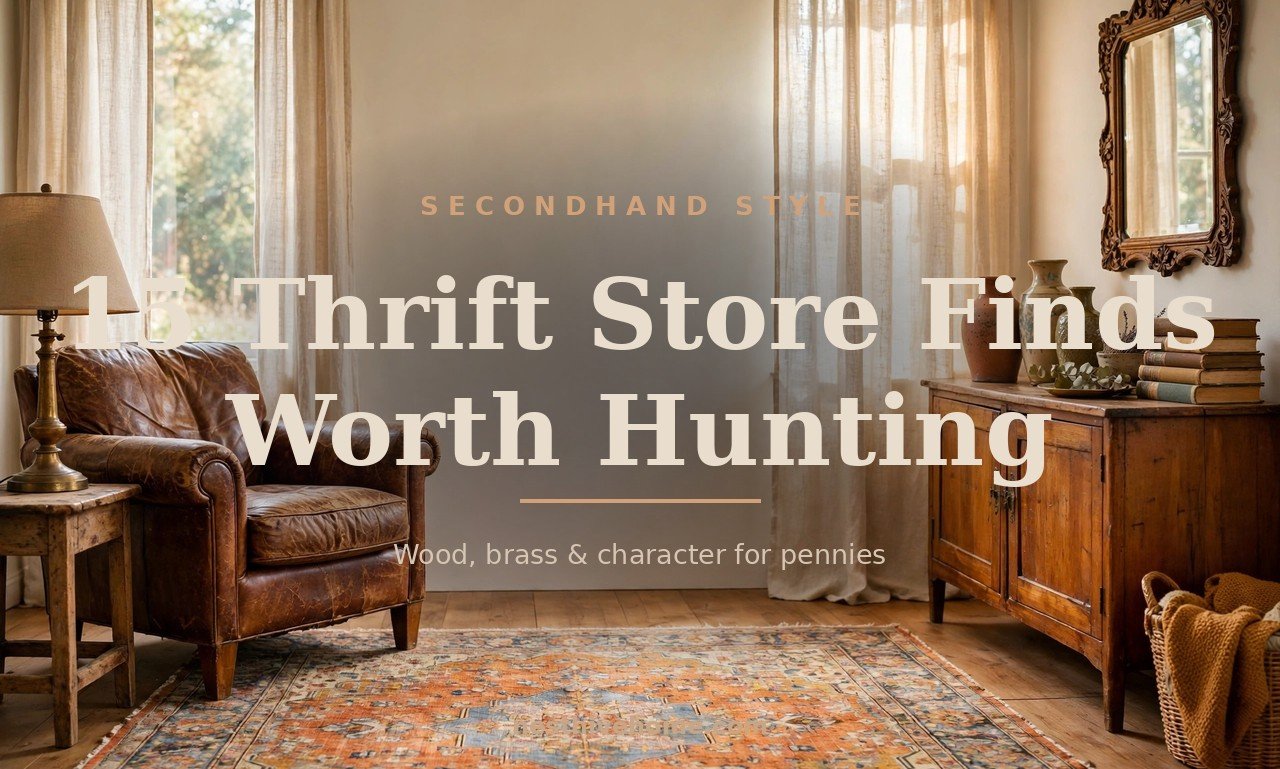
thrift store home decor finds can transform an ordinary room into a layered, character-rich space for a fraction of retail prices. A solid oak sideboard for the price of a pizza, a brass lamp with decades of patina, or a hand-knotted rug at a tenth of its original cost — these are the pieces that give a home its soul. Unlike mass-produced decor, thrifted pieces carry texture, history, and craftsmanship that simply cannot be ordered from a warehouse in two days.
The trick is knowing what is worth your money and what is a dusty money pit. Not everything on the thrift store shelf deserves a place in your home, and not every bargain is actually cheap once you factor in repairs. This guide walks you through the 15 thrift store home decor finds that consistently prove their worth, how to inspect each one like a pro, and how to style them together so your home looks curated rather than cluttered.
Why Thrift Store Home Decor Finds Beat New Decor
There are three reasons experienced decorators keep returning to thrift stores. First, materials: furniture built before the 1990s was often made from solid hardwood, real brass, and natural fabrics, while much of today’s flat-pack furniture relies on particleboard and plastic veneer. Second, uniqueness: a thrifted piece is rarely identical to your neighbour’s, which is exactly what keeps a room from looking like a showroom page. Third, value: quality secondhand pieces hold or even increase in value, while new budget decor depreciates the moment it arrives.
There is also a sustainability angle. Every vintage dresser you rescue is one less piece of furniture heading to landfill and one less item that needs manufacturing, shipping, and packaging. Decorating with thrift store home decor finds is one of the most satisfying ways to make your home more eco-friendly without sacrificing style.
How to Spot Quality Thrift Store Home Decor Finds
Before you fall in love with anything, run a quick inspection. Open and close every drawer — real dovetail joints and drawers that glide on wooden runners signal solid craftsmanship. Wiggle the piece firmly; quality furniture should not rock or groan. Check wood grain on the sides and back: if the “wood” is a thin printed veneer over chipboard, the piece will not survive a refinish. For a deeper look at building a whole room from secondhand pieces, this guide on decorating from thrift stores covers room-by-room strategies that pair well with the checklist below.
Learn to tell solid brass from brass-plated plastic with a magnet — real brass is non-magnetic. Check lamps for intact wiring and original sockets; rewiring a vintage lamp costs little and is worth it for a great base. Smell upholstered pieces before committing: musty odours can sometimes be aired out, but pet smells and smoke rarely leave. Finally, always measure doorways, hallways, and your car before buying large furniture. The best bargain in the world is worthless if it will not fit through your front door.
15 Thrift Store Home Decor Finds Worth Hunting
These are the categories that deliver the most style per pound or dollar, listed in no particular order. Each one includes what to look for and what to pay.
1. Solid Wood Dressers and Sideboards
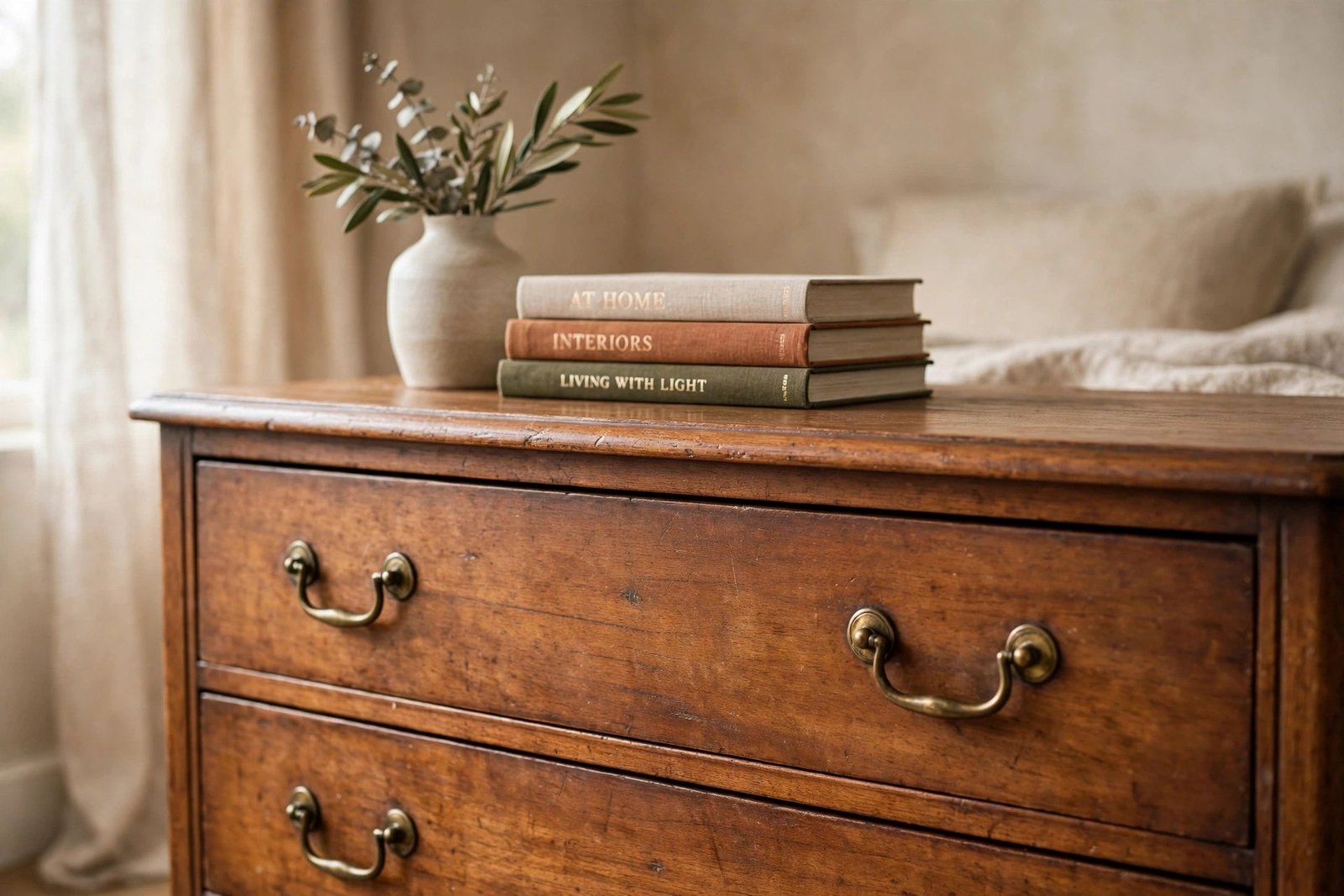
A hardwood dresser is arguably the single best of all thrift store home decor finds. Look for oak, maple, walnut, or mahogany with dovetail drawers and a frame that feels heavy and rigid. Mid-century pieces with tapered legs are especially desirable. Expect to pay £30–£80 or $40–$100 for something that would cost ten times more new. A fresh coat of paint or a sand-and-oil finish can turn a scuffed dresser into a centrepiece.
2. Brass Table Lamps
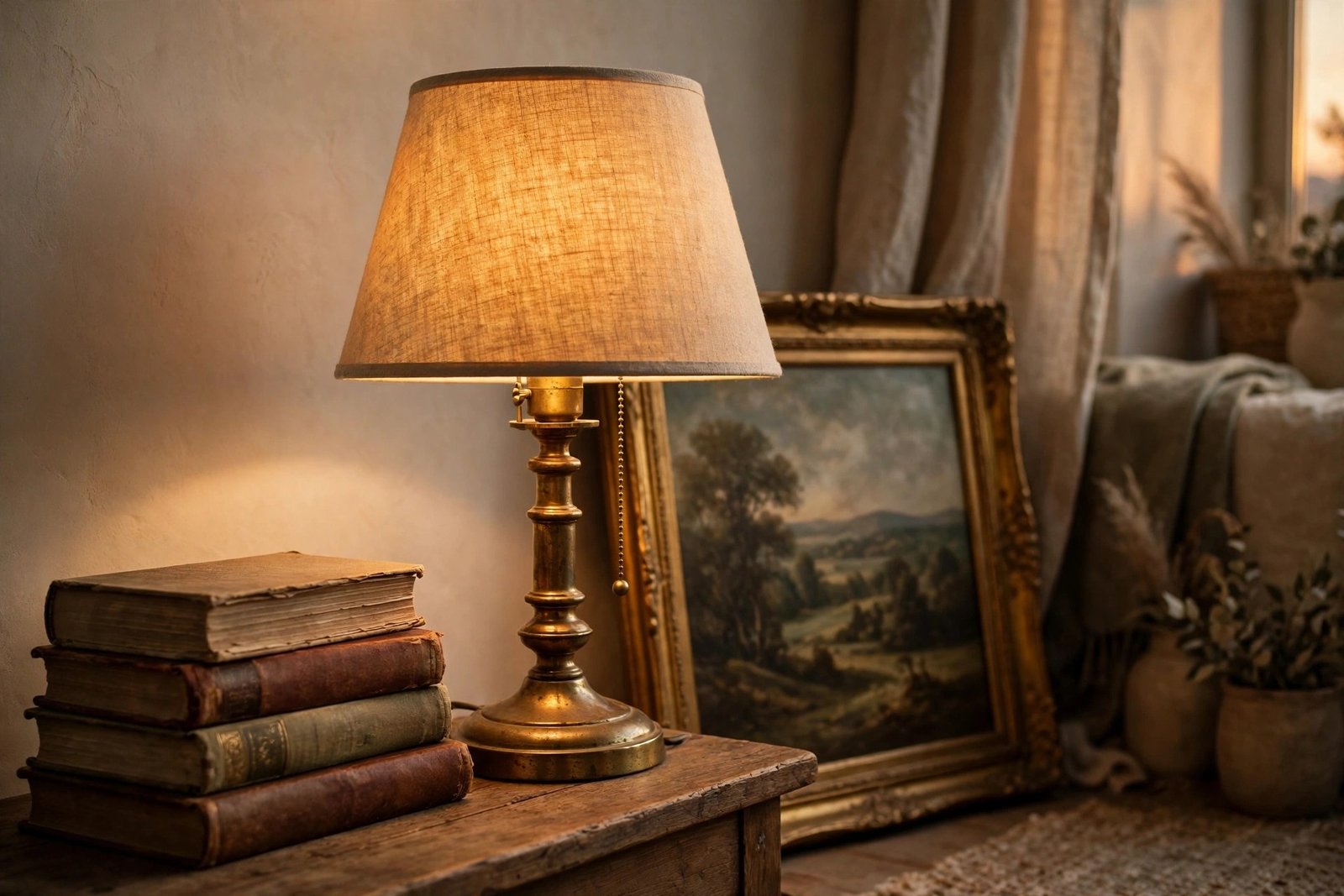
Heavy, solid brass lamps from the 1960s through the 1980s turn up constantly and are among the most reliable thrift store home decor finds for beginners. The patina that builds up over decades cannot be faked convincingly, and a new fabric shade (usually £10–£20) makes an old lamp look designer-made. Test the switch, check the cord for cracks, and budget for rewiring if needed — even with the extra cost, you will still be well under retail.
3. Ornate Mirrors
Large mirrors are expensive new, which makes them prime thrift store home decor finds. Look for solid wood or metal frames, interesting shapes, and glass with minimal foxing (those dark spots on old mirror silvering). A little foxing adds character; heavy black patches mean the glass needs replacing. Hang a large mirror opposite a window to double the light in a dark room — the effect is dramatic for the price of a takeaway dinner.
4. Ceramic Vases and Stoneware
Hand-thrown pottery, studio ceramics, and classic stoneware brands are thrift store staples. Turn each piece over and look for maker’s marks, signatures, or country-of-origin stamps. Weight is a good sign: quality ceramics feel substantial. Small chips on the base are acceptable for decorative pieces; cracks that run through the body are not. Group odd-numbered clusters of vases on shelves or mantels for an instantly styled look.
5. Leather Armchairs
Full-grain leather improves with age, so a slightly worn leather armchair is often a better buy than a new one. Press the leather firmly — real leather wrinkles naturally and springs back, while bonded leather feels plasticky and peels. Check the frame by lifting one front corner: a solid chair should stay rigid. Minor scuffs buff out with leather conditioner, and a well-made vintage chair is one of those premium thrift store home decor finds that can outlast three cheap new ones.
6. Vintage Art and Picture Frames
Original paintings, prints, and especially solid frames are sleeper hits among thrift store home decor finds. The art itself is a matter of taste, but a quality gilt or hardwood frame is always worth the few pounds it costs — custom framing for a similar piece could run ten times more. Look for original oils in charity shops, and do not be afraid to buy a frame purely for the frame. Swap in your own print or photo and nobody will guess its origin.
7. Hand-Knotted Rugs
A genuine wool rug is one of the highest-value thrift store home decor finds you can make. Flip a corner and check the back: hand-knotted rugs show the pattern clearly on the reverse, while machine-made rugs have a uniform backing. Wool feels springy underfoot and does not shed excessively. Even a rug with worn spots has charm, and professional cleaning can revive a dull one for less than you would expect.
8. Solid Dining Chairs
Single dining chairs are everywhere, but a matching set of four or six solid chairs is gold. Sit on each one and rock gently to test the joints, then look underneath for corner blocks and screws rather than staples. Mismatched chairs can be unified with the same paint colour or reupholstered seats in one fabric — a classic trick for a farmhouse or eclectic dining room that looks intentional rather than accidental.
9. Wooden Coffee Tables
Coffee tables take a beating, which is why solid wood versions are such smart thrift store home decor finds. A chunky oak or teak table can be sanded and refinished in a weekend, and the thick timber forgives years of wear. Look for interesting legs or carved details that new flat-pack tables lack. If the top is too damaged, a piece of cut glass or a runner can hide sins while you decide on a full refinish.
10. Linen Curtains
Natural linen curtains cost a small fortune new, yet they appear regularly in thrift stores, often barely used. Hold the fabric to the light to check for thinning or sun damage, and measure the drop carefully — curtains can be hemmed shorter but rarely lengthened. Wash linen gently and embrace the relaxed wrinkles; that lived-in texture is exactly what makes linen desirable. Two matching panels can transform a bedroom for the price of a coffee.
11. Woven Baskets
Baskets are the unsung heroes of thrift store home decor finds. Sturdy seagrass, rattan, or wicker baskets work as planters, blanket storage, toy bins, or wall decor. Check that the weave is tight and the handles are firmly attached. A large lidded basket next to a sofa corrals clutter beautifully, and a cluster of flat baskets hung on a wall makes surprisingly striking art for almost nothing.
12. Books and Bookends
Vintage hardbacks with cloth bindings, leather-bound sets, and heavy brass or stone bookends add instant gravitas to shelves. Shop by colour or subject to build a cohesive library look — even books you never read contribute texture and depth. Bookends in brass, marble, or cast iron are particularly good finds; they are heavy, durable, and turn a plain shelf into a styled vignette.
13. Candle Holders and Lanterns
Brass candlesticks, hurricane lanterns, and chunky pillar holders are cheap, plentiful, and endlessly useful — small thrift store home decor finds that punch far above their price. Group them in threes on a dining table or mantel for instant atmosphere. Tapered brass candlesticks especially photograph beautifully and suit almost any decor style. Check that bases sit flat and glass is uncracked; tarnish polishes off in minutes with a basic metal cleaner.
14. Bar Carts
Vintage bar carts with brass rails and glass shelves are among the most stylish thrift store home decor finds, and they remain far cheaper secondhand than new. Check that the wheels roll smoothly and the frame is stable. Beyond drinks, a bar cart works as a mobile plant stand, a coffee station, or a bathroom storage trolley — versatility that justifies the purchase even if you rarely entertain.
15. Wall Sconces and Pendant Shades
Lighting is where thrift stores quietly excel. Vintage sconces, rattan pendant shades, and industrial-style pendants cost a fraction of their retail equivalents. Always inspect wiring and plan for an electrician if you are unsure — safety first with anything that connects to mains power. A pair of matching sconces flanking a bed or fireplace adds a layer of polish that reads far more expensive than it was.
How to Style Your Thrift Store Home Decor Finds Together
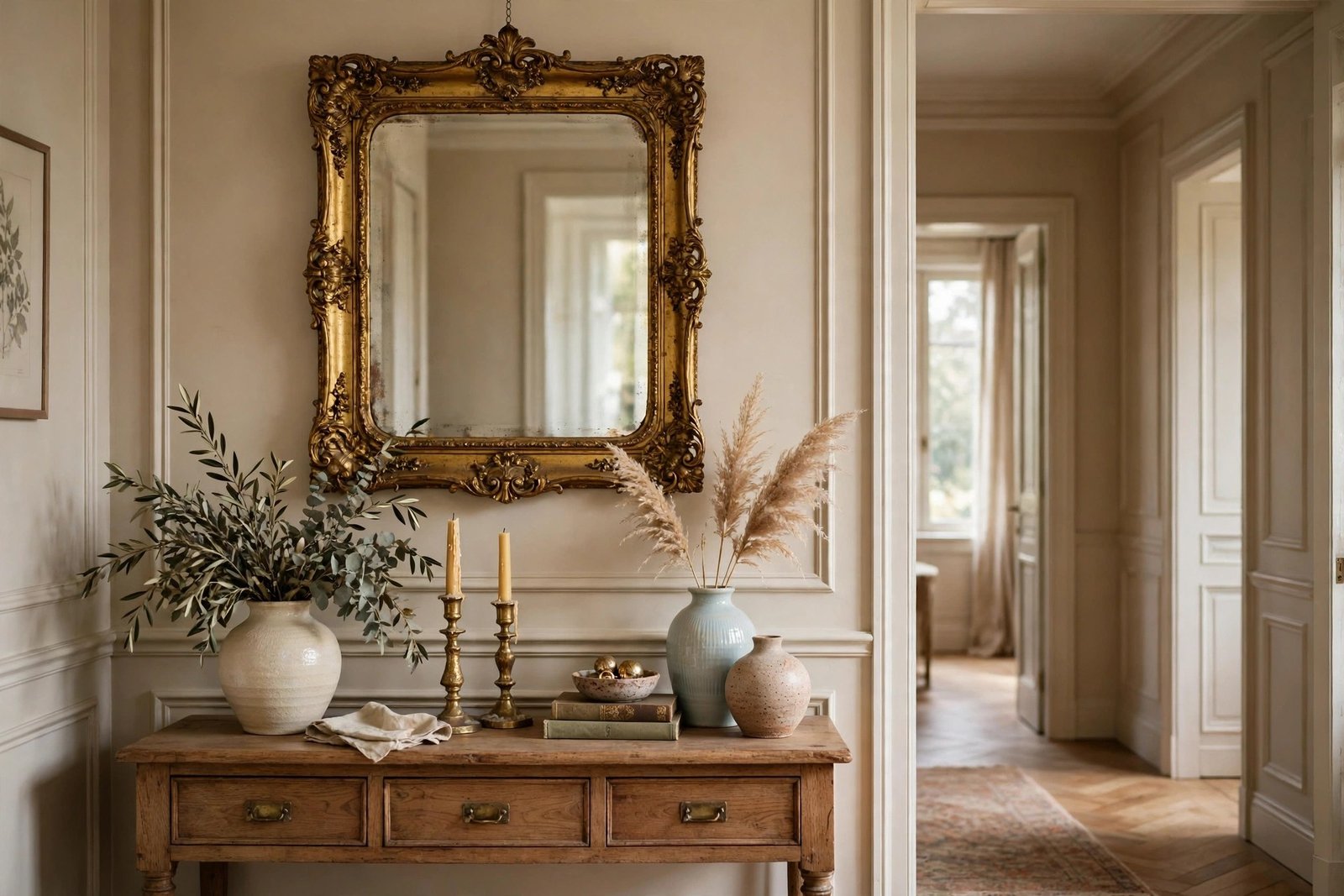
The difference between a curated thrifted home and a jumble sale is editing. Start with a restrained colour palette — two or three neutrals plus one accent — and let your thrift store home decor finds sit comfortably within it. Mix eras deliberately: a mid-century sideboard beside a Victorian mirror works when the finishes echo each other. Leave breathing room around statement pieces; a crowded shelf makes even beautiful objects look like clutter.
If you love the layered, more-is-more look, take cues from maximalist living room decor — bold pattern, rich colour, and confident mixing can make a collection of thrifted pieces look like a designer’s portfolio rather than a pile of bargains. The key is repetition: repeat a colour, a material, or a shape at least three times around the room and the eye reads it as intentional.
Cleaning and Restoring Thrifted Pieces
Most thrifted finds need nothing more than a thorough clean. Wash ceramics and glass in warm soapy water, wipe wood with a damp cloth followed by a dry one, and let upholstered pieces air outside on a dry day. For wood, a light sanding and a coat of hardwax oil revives most finishes; chalk paint forgives almost any surface imperfection if you prefer colour. Always test cleaning products on a hidden spot first, and remember that gentle is better — you can always do a second pass, but you cannot undo a harsh chemical burn.
Set a restoration budget before you buy. A £15 dresser that needs £40 of paint, handles, and sandpaper is still a bargain; a £40 chair that needs £120 of reupholstery may not be. Knowing your limits keeps thrifting fun instead of stressful, and keeps your home filling up with finished projects rather than works in progress.
With a sharp eye and a little patience, thrift store home decor finds can furnish entire rooms with more character and quality than a big-box store ever could. Start with one or two pieces from the list above, learn what quality feels like in your hands, and enjoy the hunt — the best find is always the one you were not expecting.