

Black accent wall ideas have become one of the most popular ways to add instant character to a home, and it is easy to see why. A single black accent wall can turn a plain room into a space with depth, drama and a clear focal point, without the commitment or cost of redecorating the whole room. Done well, a black accent wall feels sophisticated rather than gloomy, and it works in almost every style, from modern farmhouse to sleek contemporary interiors. The trick is not the paint itself but the choices around it: which wall you pick, which shade of black you use, how much light the room gets, and what you place against it. Get those decisions right and the result looks intentional and expensive. Get them wrong and the room can feel smaller, darker and harder to live in. This guide walks through everything you need to know, from choosing the right wall and finish to styling each room, so you can create a bold feature wall that still feels warm and welcoming.
Why a Black Accent Wall Works So Well
A black accent wall works because dark colours recede visually. When one wall is painted black and the others stay light, the dark wall appears to sit further back, which can actually make a room feel deeper rather than smaller. The contrast draws the eye, so the wall becomes a natural backdrop for a sofa, a bed, a fireplace or a piece of art. That is why designers love black accent walls in rooms that need a focal point but do not need more furniture or clutter.
Black is also unusually versatile. It pairs with warm wood, brass, rattan, cream linen, sage green and almost every metal finish, so you rarely need to replace existing furniture to make it work. A black accent wall can ground a pale, airy room, add polish to a neutral scheme, or give a new-build room the character it lacks.
There is one important condition, though. A black accent wall needs light and balance. Rooms with at least one decent window, light flooring or pale furniture handle dark walls best. In a very small, windowless room, a black accent wall can still work, but you will need mirrors, lamps and light textiles to keep the space feeling open.
Choosing the Right Wall
Start by standing in the doorway and noticing where your eye lands first. That wall is usually your best candidate, because an accent wall should highlight the room’s natural focal point rather than fight it. In a living room, that is often the wall behind the sofa or the fireplace wall. In a bedroom, it is almost always the wall behind the bed. In a dining room, it is the wall you face while eating, and in a home office, the wall behind your desk, which also looks great on video calls.
Avoid walls broken up by lots of doors, windows or fitted wardrobes, because the black paint will be chopped into fragments and lose its impact. A long, mostly uninterrupted wall gives the cleanest result. If you are unsure between two walls, paint large test swatches on both and live with them for a few days, checking them in morning, evening and lamplight before you commit.
Black Accent Wall Paint: Shades and Finishes
Not all blacks are the same, and the undertone you choose changes the whole mood of the room. A soft black with warm brown undertones, such as a charcoal espresso, feels cosy and works beautifully with oak floors and cream furnishings. A true neutral black looks crisp and graphic, which suits modern and minimalist rooms. A blue-black, with cool slate undertones, feels elegant in north-facing rooms but can look cold if the room already lacks warmth, so pair it with brass and warm wood to keep it inviting.
Finish matters just as much as colour. Matte and eggshell finishes are the most forgiving on a dark wall because they hide small wall imperfections and give a soft, velvety look. Satin adds a gentle sheen that is easier to wipe clean, which is useful in hallways, dining rooms and children’s rooms, but it also highlights bumps and roller marks, so wall preparation matters more. High-gloss black looks dramatic on panelled walls and doors, but it shows every flaw, so reserve it for smooth, well-prepared surfaces or woodwork rather than large plaster walls.
If you are new to dark paint, buy sample pots first and test at least two shades. Paint a large test square and look at it at different times of day. Colours that look identical in the shop can look very different once they are on your wall next to your flooring and furniture. For more inspiration on finishes and materials, see this guide to black accent wall ideas and finishes before you buy your paint.
Black Accent Wall Ideas by Room
Once you have chosen your shade, the fun part begins: tailoring the look to each room. The same black paint can feel completely different depending on the furniture, textiles and lighting around it, so treat each room as its own small project rather than repeating one formula everywhere.
Living Room: Drama Without Darkness
In the living room, pair your feature wall with a light sofa in cream, oatmeal or pale grey, and add warmth with a wooden coffee table, woven baskets and at least one large plant. The greenery is not just decoration: green leaves pop beautifully against black and stop the scheme from feeling flat. Keep curtains light and hang a mirror or a large piece of art on the dark wall to break up the expanse of colour. A brass or black floor lamp beside the sofa adds a pool of warm light in the evening, which is when a dark wall looks its most atmospheric.
Bedroom: Cosy and Cocooning
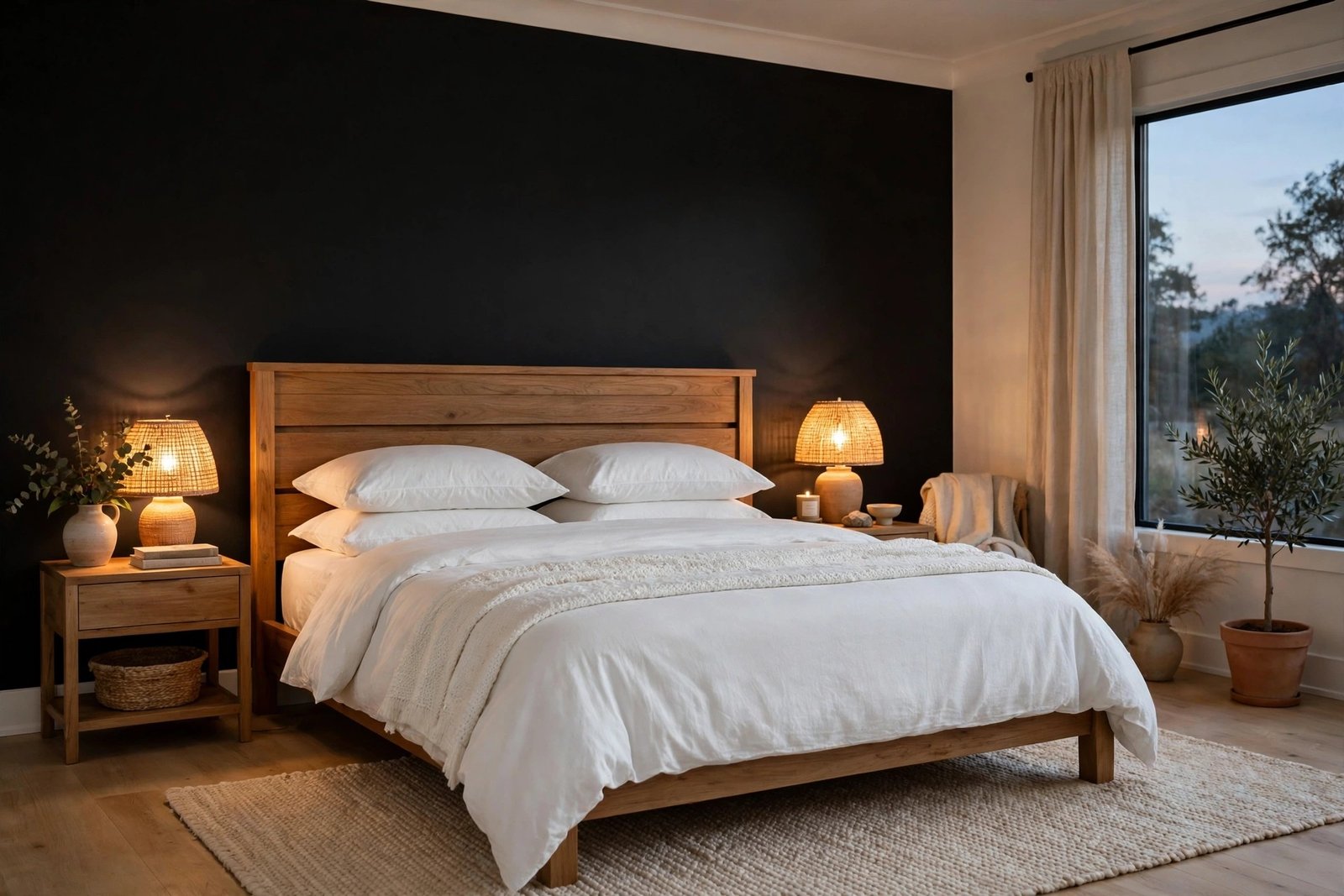
A bedroom is the easiest room to get right with a dark wall, because beds naturally come with soft layers. Crisp white or cream bedding against a black wall creates a hotel-style contrast that feels both luxurious and restful, while warm bedside lamps keep the mood cosy rather than stark. Add texture with a chunky knit throw, linen cushions and a wooden headboard or bedside tables, and the room will feel like a cocoon. If you are planning a full dark bedroom scheme, our guide to a black bedroom shows how to balance dark walls with the rest of the room.
Home Office: Focused and Photogenic
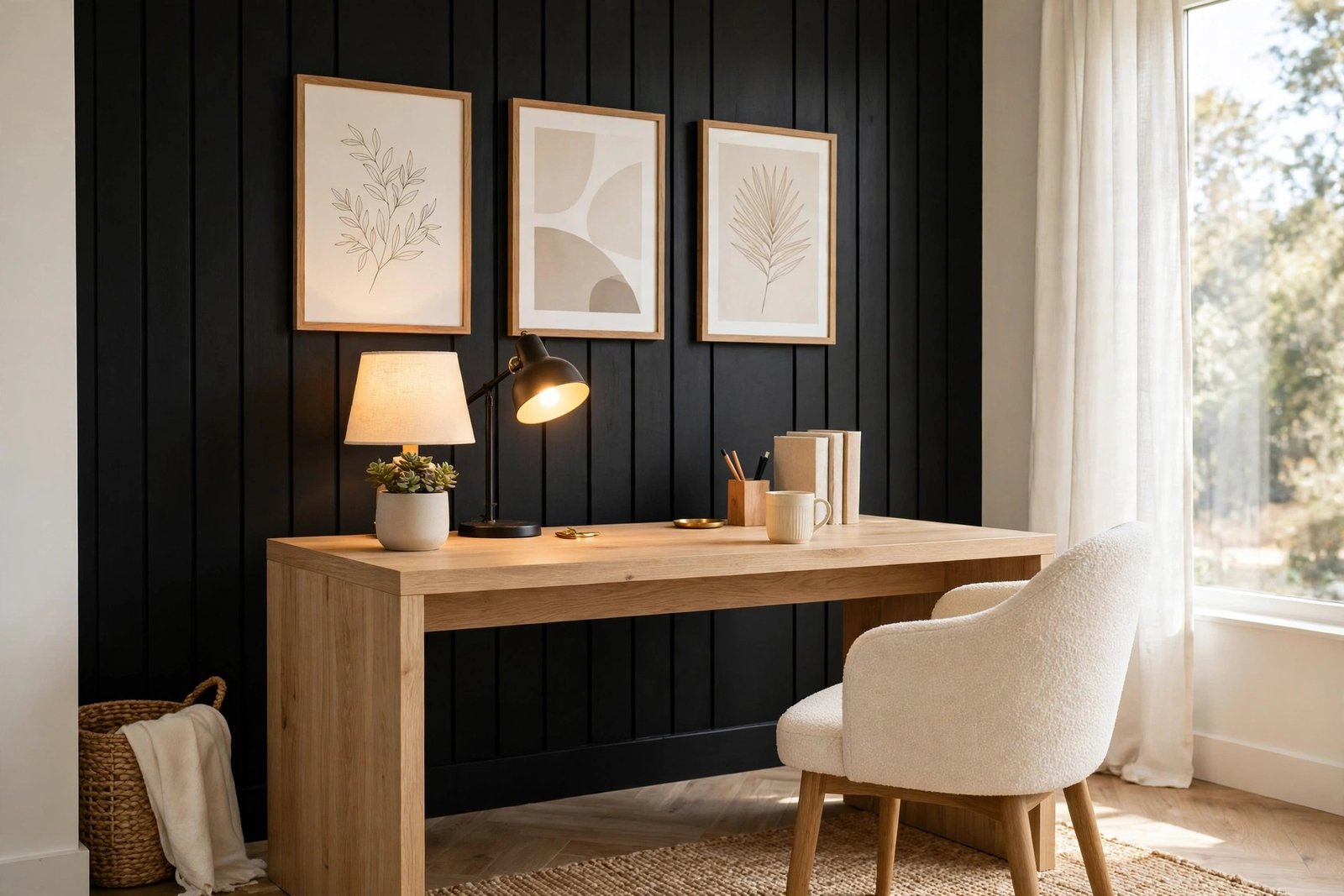
A black accent wall behind a desk makes a home office feel intentional and looks excellent on video calls, because your face stands out against the dark background instead of blending into a pale wall. Keep the desk in light oak or white so it does not vanish into the wall, and add one or two framed prints and a small plant for personality. Good task lighting is essential here: a warm desk lamp and, if possible, daylight from a side window will keep the space comfortable for long working days.
Dining Room: Evening Elegance
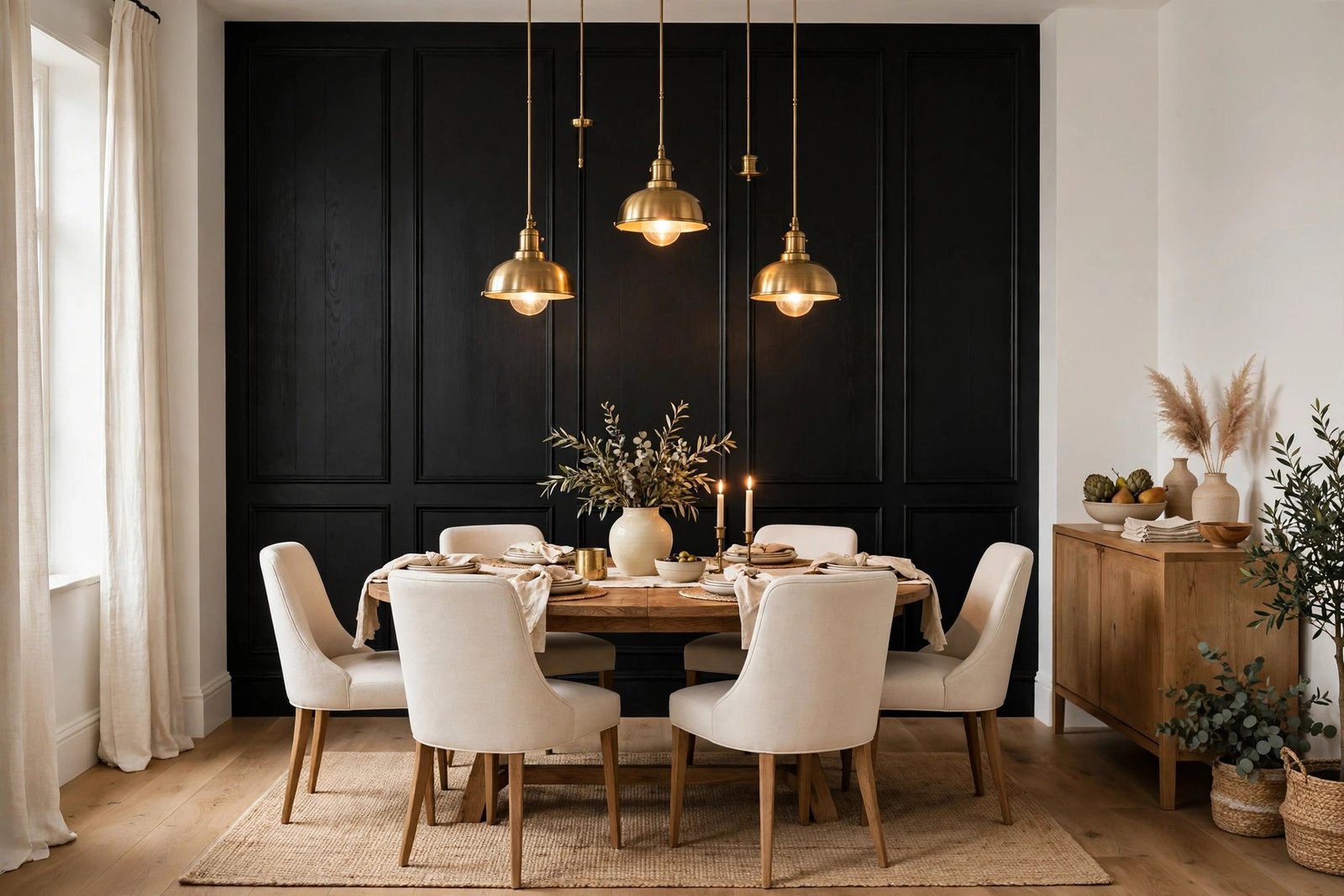
Dining rooms are made for a black accent wall, because they are mostly used in the evening when candlelight and pendant lights make black paint glow. A panelled or board-and-batten wall in black adds architectural interest even before you hang anything on it, and it pairs beautifully with a wooden table, cream chairs and brass pendant lights. Keep the table styling simple: a low centrepiece, linen napkins and warm metallic cutlery will shine against the dark backdrop without competing with it.
Small Spaces, Hallways and Bathrooms
Do not rule out a dark wall in a small space. In a narrow hallway, painting the far end wall black can make the hallway feel longer and more purposeful, especially with a console table and a mirror. In a small bathroom, a black accent wall behind the mirror or vanity adds boutique-hotel drama, provided the rest of the room stays pale and the lighting is bright. The rule in compact rooms is simple: one black accent wall, light everything else, and at least two light sources so the room never feels like a cave.
Styling a Black Accent Wall
Styling is where a black accent wall goes from good to great, and the principles are straightforward. First, repeat the black in small doses around the room: black frames, a black vase, dark cushions or black lamp bases will tie the scheme together. Second, layer textures against the wall rather than flat, shiny objects. Velvet, linen, wool, rattan and raw wood all catch the light differently and stop a dark surface from looking one-dimensional.
Third, think about art and mirrors. Large-scale art with light or colourful elements stands out dramatically on a black accent wall, while a gallery wall of smaller frames can look busy unless the frames share a consistent colour. A large mirror is one of the best companions for a dark wall: it reflects light, doubles the sense of space and adds a decorative focal point in one move. Hang it at eye level and centred on the wall, not pushed into a corner where it loses its effect.
Fourth, get the lighting right. A black accent wall absorbs light, so a room that relied on one ceiling light will suddenly feel dim. Add layers instead: a floor lamp, table lamps, wall sconces or picture lights aimed at the wall itself. Wall washing, where a light is aimed directly at the dark surface, is particularly effective because it reveals the texture of the paint or panelling and makes the wall a feature even after dark.
Common Mistakes to Avoid
The most common mistake is painting the wrong wall, usually one that is already the darkest or most cluttered wall in the room. A black accent wall needs to earn its place as a focal point, so choose the wall you actually want people to look at. Another frequent error is pairing a black accent wall with too much other black furniture, which makes the room feel heavy and flat. Let the wall be the star and keep most furniture light or mid-toned.
Skipping preparation is another costly shortcut. Dark paint shows roller marks, drips and uneven coverage more than pale paint does, so fill holes, sand rough patches and use a good primer, especially if you are painting over a light colour. Two full coats are almost always necessary, and careful cutting in around ceilings and skirting boards makes the difference between a professional finish and a rushed DIY job. Finally, do not forget the ceiling and woodwork: crisp white ceilings and skirting boards frame a dark wall beautifully and stop the room from feeling enclosed.
Budget and DIY Tips
A single black accent wall is one of the cheapest room transformations you can make. For a standard wall, one or two litres of quality paint, a roller, brushes, painter’s tape and dust sheets usually cost far less than new furniture or wallpaper, and the whole job can be done in a weekend. If you want extra impact without extra cost, add simple picture-frame moulding or vertical battens before painting: inexpensive timber strips, painted the same black as the wall, create a panelled look that reads as far more expensive than it is.
If painting feels like too much commitment, there are reversible options. Peel-and-stick black wallpaper or removable wall panels can give you the look while you test whether you love living with it. Renters should check their tenancy agreement first, but a single wall is easier to repaint at the end of a tenancy than a whole room.
How to Paint Your Accent Wall in a Weekend
Start on Saturday morning by clearing the wall, removing switch plates, and cleaning the surface with a damp cloth. Fill any holes, let the filler dry, sand it smooth, and tape the edges where the wall meets the ceiling, skirting boards and neighbouring walls. Apply primer if you are covering a strong colour or bare plaster, then let it dry fully.
On Saturday afternoon, cut in around the edges with a brush, then roll the main area in a W pattern, keeping a wet edge so you do not get lap marks. Let the first coat dry for the time stated on the tin, usually two to four hours, then apply a second coat the same way. Remove the tape while the second coat is still slightly tacky for the cleanest line. By Sunday, you can hang art, reposition furniture and enjoy a room that feels completely new.
Final Thoughts
A black accent wall is a bold choice, but it is also a forgiving one: it costs little, takes a weekend, and can be repainted if you change your mind. The rooms that succeed with it all share the same ingredients: a well-chosen wall, a shade of black that suits the light, light and textured furnishings for balance, and layered lighting that keeps the space warm after dark. Start with one wall, style it with pieces you already own, and live with it for a few weeks before deciding whether to go further.


One thought on “Black Accent Wall Ideas for a Bold, Beautiful Home”