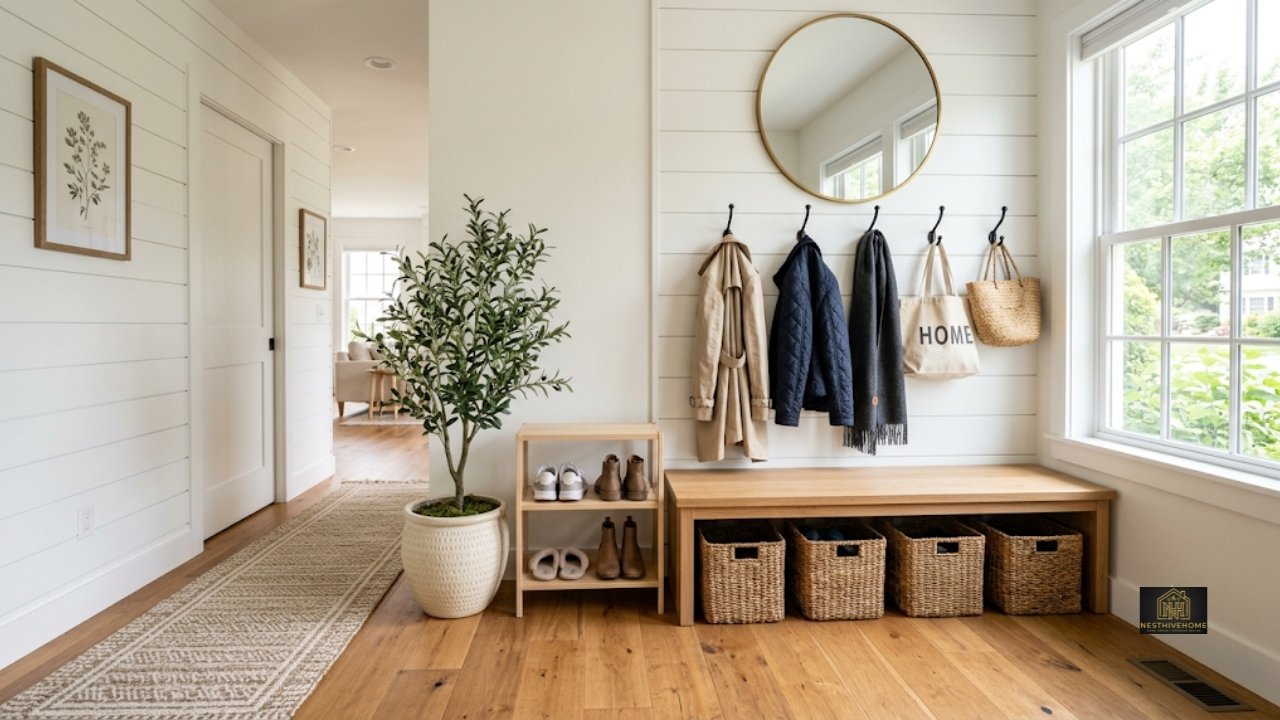
Here’s a truth nobody tells you when you move in: the entryway decides whether your whole house feels calm or chaotic. Shoes everywhere, coats on chairs, keys vanished into the void — it all starts at the front door. But you don’t need a renovation to fix it. These DIY mudroom ideas without renovation prove that hooks, baskets, and a little intention can give any entryway — apartment, rental, or house — the function of a custom mudroom. No contractor, no demolition, no landlord drama.
Install Removable Wall Hooks
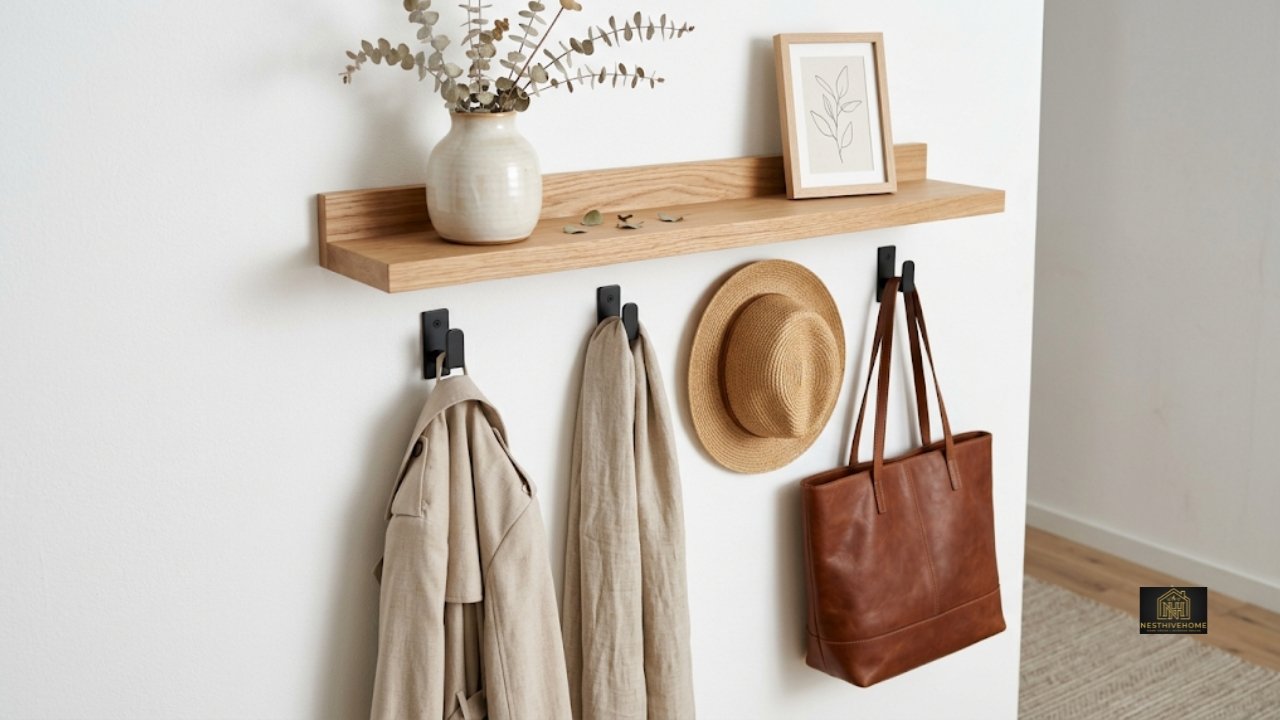
The single fastest mudroom upgrade in existence. A row of sturdy hooks instantly gives coats, backpacks, scarves, and bags a home — and ‘a home for everything’ is the entire philosophy of an organized entryway. Black metal reads modern, wood reads farmhouse; either way, space them evenly and give every family member their own spot. Renters: adhesive hooks come down clean, so there’s genuinely no excuse.
Add a Slim Shoe Rack
Shoes are entryway enemy number one. A slim rack — vertical if your hallway is narrow — corrals the chaos into one tidy zone. Even better: a wooden shoe bench, which adds a place to sit while you lace up. The real win isn’t just tidiness; keeping shoes in one spot dramatically cuts the dirt tracked through the rest of the house. Contain the shoes, contain the mess.
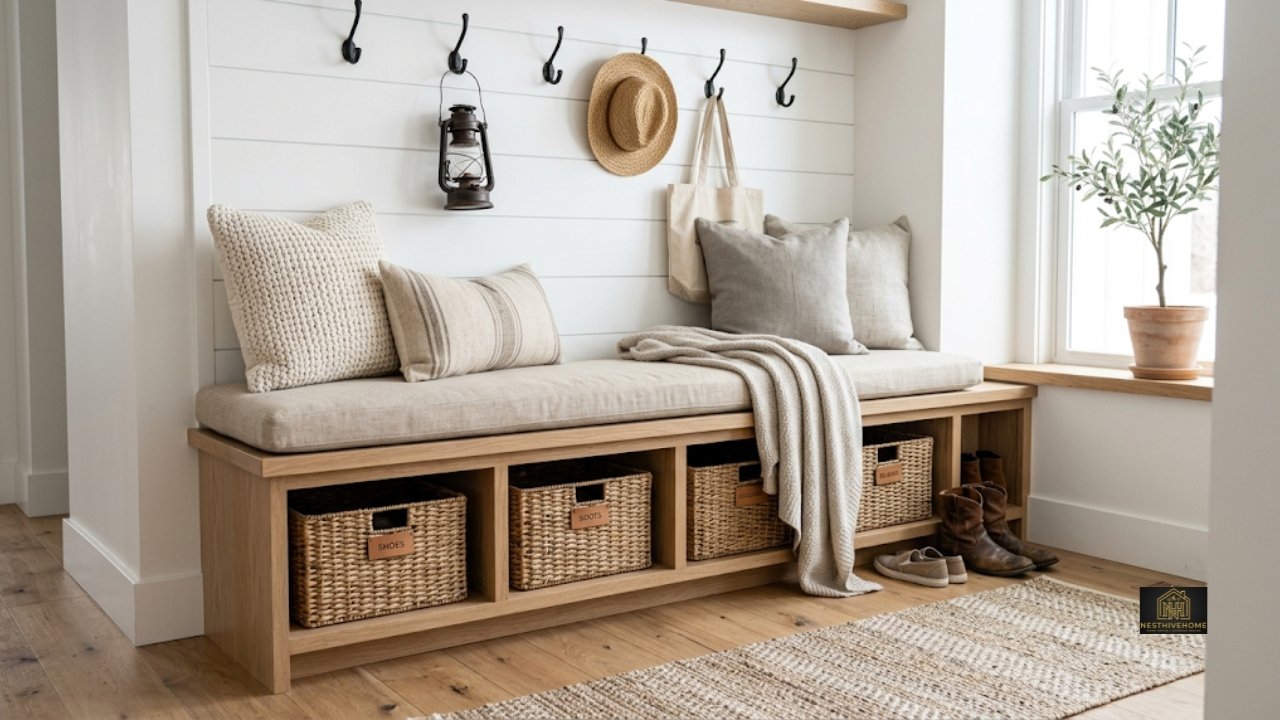
Create a Mudroom Bench with Storage Baskets
A bench with baskets underneath is the closest thing to a built-in mudroom you can get without construction. The bench is for sitting; the baskets are for everything else — sports gear, pet supplies, seasonal accessories, the kids’ inexplicable collections. Label each basket so the system survives contact with actual family members. It looks intentional, works hard, and costs a fraction of custom cabinetry.
Use a Decorative Entryway Rug
A rug does three jobs at once: defines the mudroom zone visually, protects your floors from mud and wet boots, and makes the entrance feel finished. Choose washable and high-traffic-rated — this rug will earn its keep. Neutrals suit modern spaces; patterns hide dirt between washes (a genuinely practical consideration). Pro move: layer a smaller decorative rug over a larger natural-fiber one for that designer look.
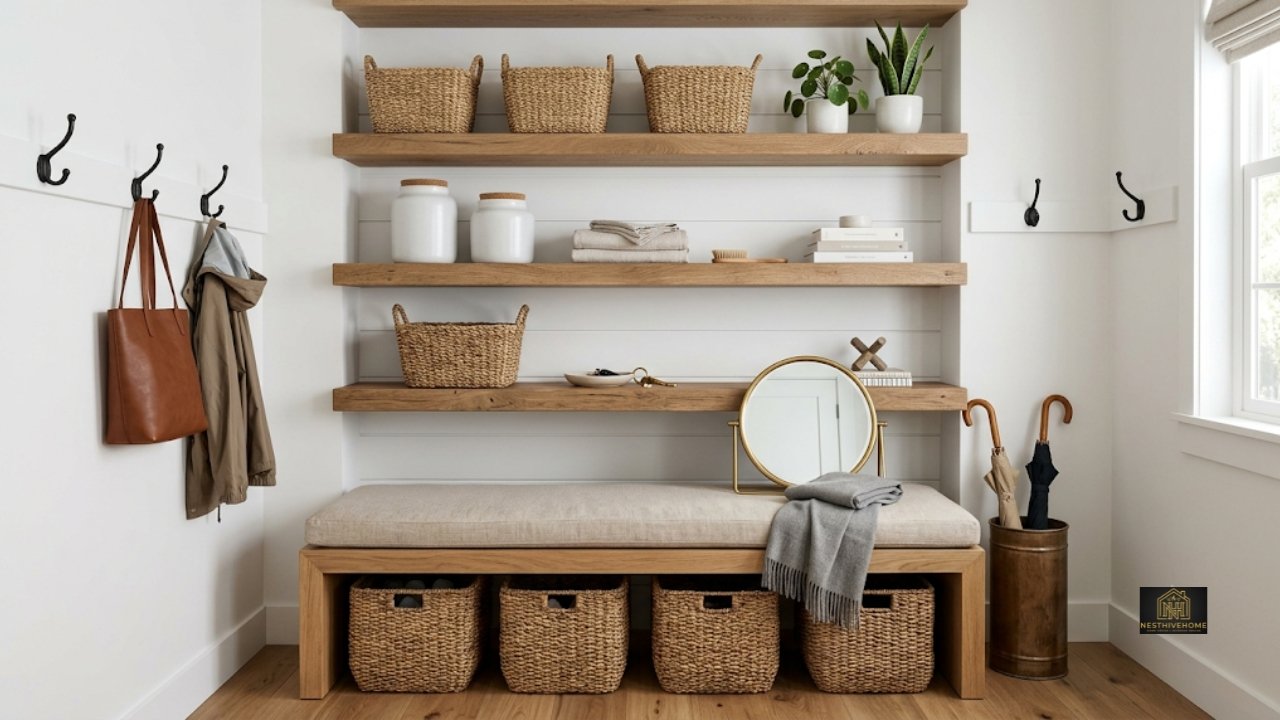
Maximize Vertical Wall Space
Entryways are usually narrow, which means the walls are your best storage asset. Floating shelves above your hooks hold baskets, plants, photos, and the things you want handy but not underfoot. It takes the same wall you’re already using and doubles its usefulness. Mix practical storage with a few decorative pieces so it reads as ‘designed entryway’ rather than ‘coat closet exploded.’
Organize Daily Essentials in Decorative Baskets
Keys, wallets, sunglasses, mail — the small stuff that creates visual noise when it has no home. Give each category a basket: woven, wire, or fabric, whatever matches your style. The texture alone makes the entryway feel warmer. But the real magic is the morning routine: when everything has a designated spot, you stop losing things. Baskets aren’t just storage; they’re a lifestyle upgrade.
Add a Full-Length Mirror
A full-length mirror in the entryway is pure practicality disguised as decor. Last outfit check before you leave, plus it bounces light around and makes small entryways feel significantly larger. Lean it casually against the wall for a relaxed modern look, or mount it for something more permanent. Match the frame to your decor — natural wood, black metal, white — and it becomes a feature, not just a mirror.
Introduce Greenery for a Fresh Look
Mudrooms skew functional, which is exactly why they need something alive. A snake plant, pothos, or ZZ plant thrives on neglect and instantly softens all that storage. No natural light? Good faux plants exist and nobody will check. One plant is the difference between ‘utility area’ and ‘welcoming entrance.’ It’s the cheapest warmth money can buy.
Style with Matching Storage Containers
Here’s the visual trick that makes busy family entryways look calm: matching containers. Identical baskets, bins, or crates in the same color and material turn a wall of stuff into a wall of design. Gloves, hats, pet gear, school supplies — it doesn’t matter what’s inside when the outside looks this coordinated. Consistency is the difference between clutter and collection.
Install a Peg Rail for Flexible Storage
Peg rails are the farmhouse-Scandinavian darling for good reason: unlike fixed hooks, you rearrange as life changes. Coats today, tote bags tomorrow, a wreath at Christmas. Hang what you need, where you need it, and move things around seasonally without tools or holes. It’s storage that adapts to you instead of the other way around — and it looks effortlessly charming doing it.
Use a Rolling Utility Cart
The unsung hero of small-space mudrooms. A rolling cart gives you three tiers of storage that moves wherever you need it — by the door in the morning, tucked in a closet at night. Load it with shoes, bags, umbrellas, pet supplies, cleaning products. Baskets on each shelf keep the small stuff contained. For apartments and rentals where permanent storage isn’t an option, this might be the single smartest purchase on the list.
Create a Family Drop Zone
Busy households need a system, not just storage. A drop zone assigns every person a spot — their hooks, their basket, their bin — for backpacks, keys, water bottles, and daily essentials. Personalize with labels or colors so there’s no confusion about whose mess is whose. Mornings get dramatically less stressful when everyone knows exactly where their things live. It’s organization as family diplomacy.
Decorate with Functional Wall Art
A mudroom can have personality too. Framed botanical prints, a landscape you love, simple typography — art makes the entryway feel like part of your home instead of a pit stop. Keep it simple and in neutral tones with natural frames so it complements rather than competes with all the storage. The goal is ‘welcoming,’ not ‘gallery.’ One or two pieces is plenty.
Use Decorative Trays for Small Essentials
The tiniest clutter — keys, coins, sunglasses, mail — needs the tiniest solution: a tray. One beautiful tray on a bench or narrow console becomes the designated landing pad for all of it. Wood, marble, or woven — pick something with texture that you enjoy looking at. It’s a two-second habit (drop things in the tray) that eliminates the ‘where are my keys’ panic forever.
Refresh the Space with Soft Lighting
Entryways are often the darkest part of the house, which makes them feel unwelcoming no matter how organized they are. A small table lamp or battery-operated wall light changes everything — warm light makes the space feel larger, safer, and genuinely inviting at 6am and 10pm alike. Match the fixture to your decor for a polished finish. Light is the most underrated mudroom upgrade there is.
Keep Seasonal Items Within Easy Reach
A smart mudroom rotates with the calendar. Winter: scarves, gloves, and umbrellas front and center. Summer: sun hats, light jackets, and picnic gear. The off-season stuff goes into labeled boxes in a closet or under the bench — accessible, but not in the way. This one habit prevents the slow creep of clutter that turns organized entryways back into chaos. Seasonal rotation is maintenance, not redecorating.
Style Your Mudroom with Natural Materials
Woven baskets, a wooden bench, linen cushions, a cotton rug, ceramic planters — natural materials bring warmth that no amount of plastic storage ever will. They work across styles (modern, rustic, coastal, farmhouse) because nature is the ultimate neutral. Keep the palette calm with touches of greenery and the whole entryway feels timeless rather than trendy. Texture is the luxury that costs nothing extra.
Tips for Maintaining an Organized Mudroom
Building the mudroom is the fun part; keeping it that way is the discipline. The whole system runs on three habits: shoes back on the rack, coats on hooks not furniture, and a five-minute evening reset. Wipe surfaces weekly, empty baskets before they overflow, and do a quick seasonal purge. Five minutes a day beats a weekend overhaul every time. An organized mudroom isn’t a project you finish — it’s a rhythm you keep.
Conclusion
You don’t need a renovation to have a mudroom — you need a system. Hooks for coats, a rack for shoes, baskets for the small stuff, and the discipline of five minutes a day. Start with the two ideas that address your biggest pain point (it’s the shoes, isn’t it?), then build from there. For more entryway inspiration, This Old House has excellent mudroom and entryway guides. Your front door is about to become the most organized square footage in your home.