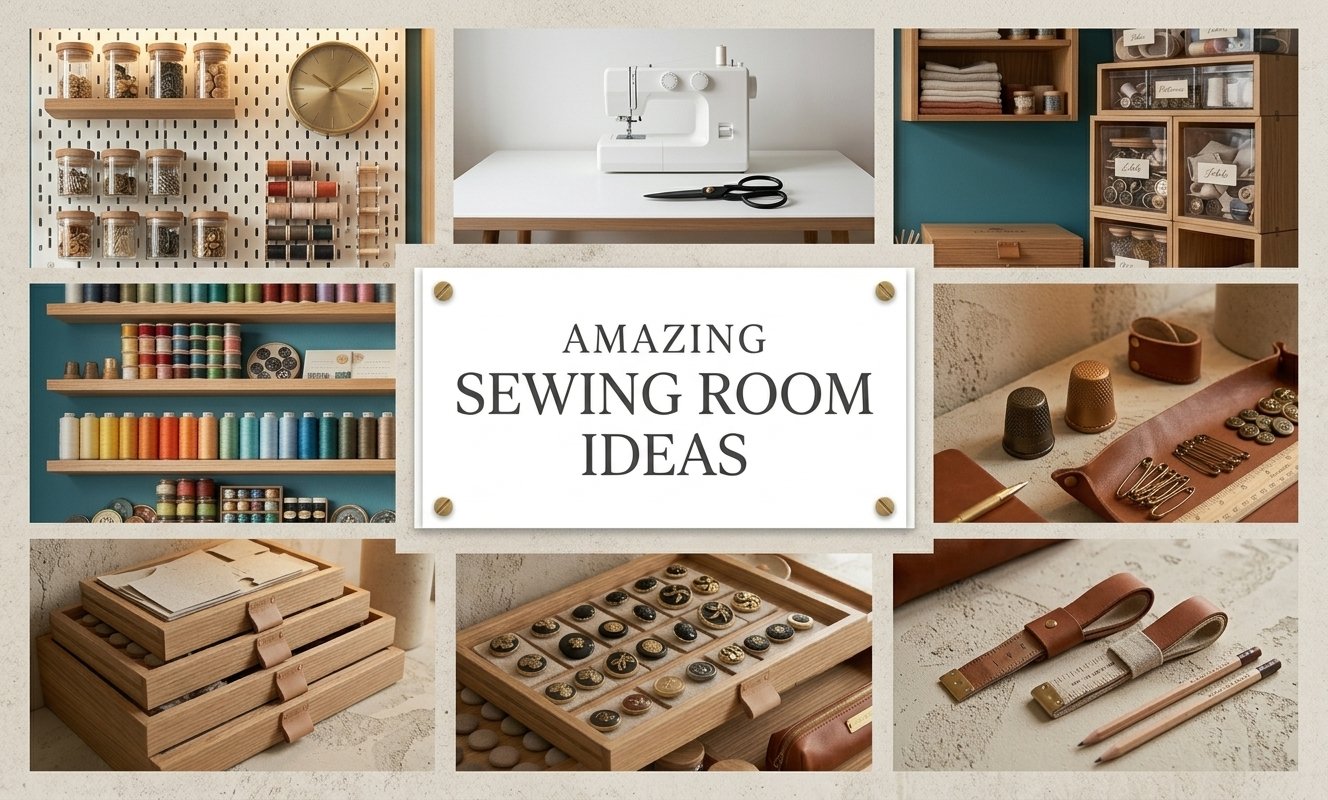
You don’t need a craft room — you need a craft corner that actually works. I’ve seen incredible sewing setups squeezed into closets, hallway nooks, and corners of bedrooms, and I’ve seen entire spare rooms that were unusable because of bad organization. These small sewing room ideas are about the second kind of problem: making every inch earn its place. Smart furniture, vertical thinking, and ruthless organization. Let’s build you a sewing space you’ll actually want to sit in.
1. Start With a Compact Sewing Desk
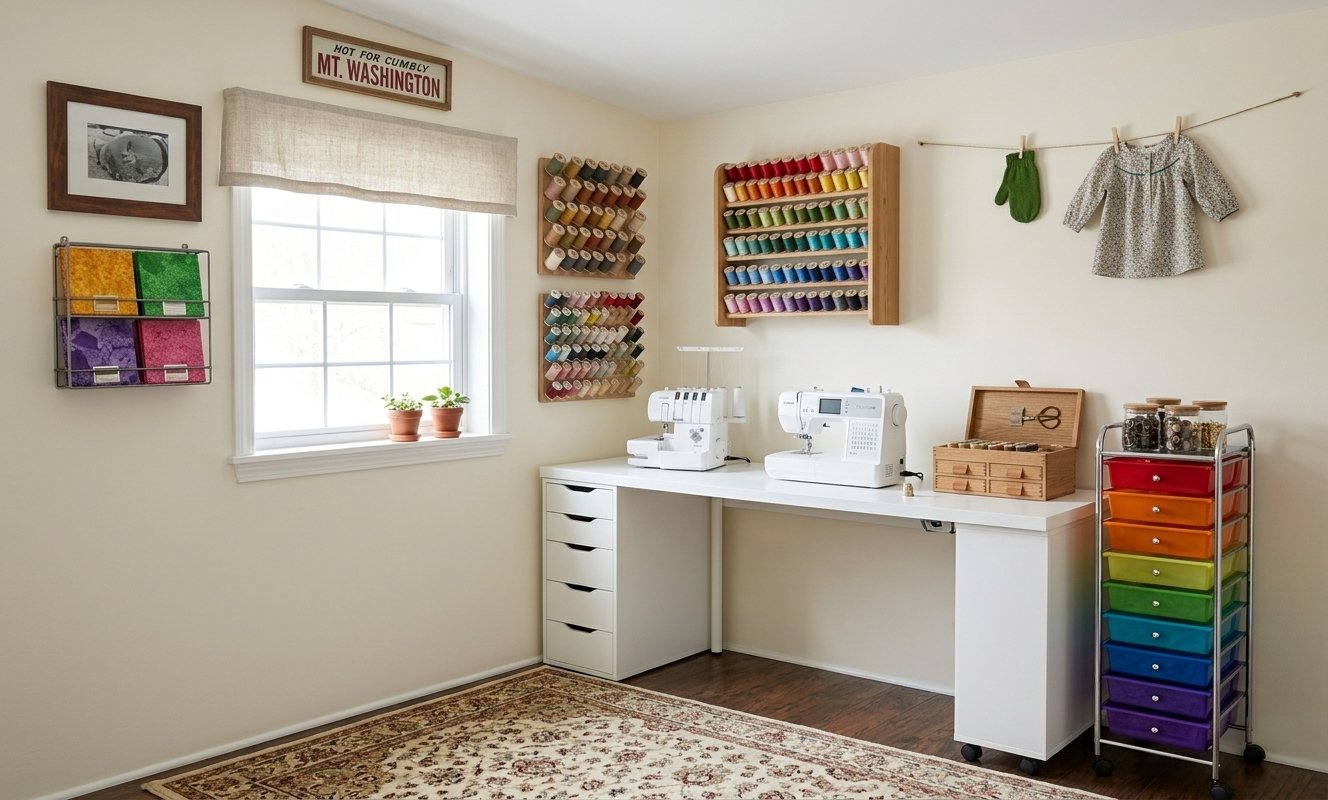
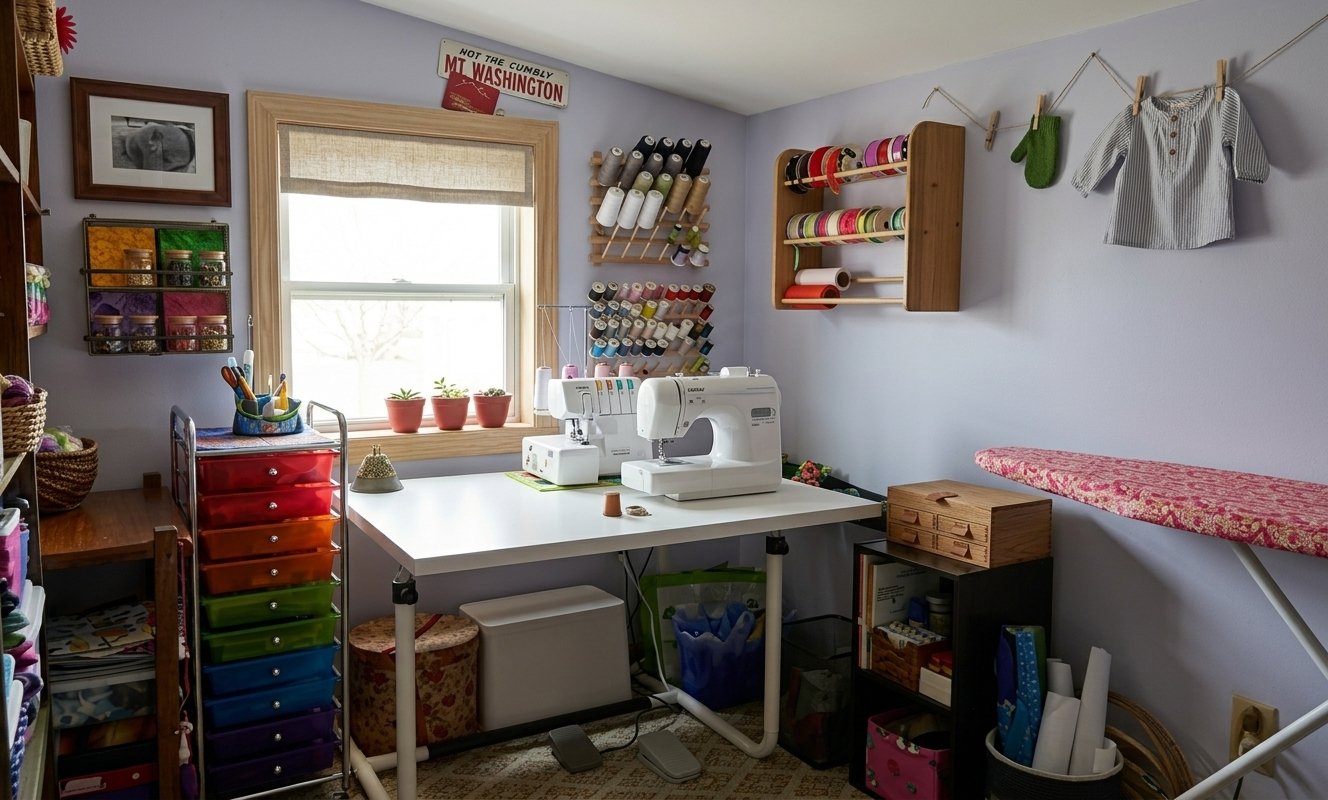
Everything revolves around the desk, so choose it like it matters — because it does. You need a sturdy surface that fits your machine with room to maneuver fabric, plus drawers underneath for the tools you grab constantly. Clean lines keep it visually light. And park it near a window if you possibly can; natural light is the free upgrade that changes everything about sewing comfort.
2. Go Vertical With Storage
Floor space is precious; wall space is free real estate. Floating shelves, pegboards, and narrow cabinets turn blank walls into storage for fabric, thread, scissors, and patterns. Daily-use items at arm’s reach, occasional stuff up high. This one shift — thinking up instead of out — does more for a tiny sewing room than any single piece of furniture.
3. Add a Fold-Down Cutting Table
Cutting needs a big flat surface, which is exactly what small rooms don’t have. A wall-mounted fold-down table solves the paradox: full-size workspace when you’re cutting, flat against the wall when you’re not. Mount it solidly, keep rulers and mats stored right beside it, and choose a surface that can take rotary cutter abuse. It’s the closest thing to magic in small-space sewing.
4. Hang a Pegboard
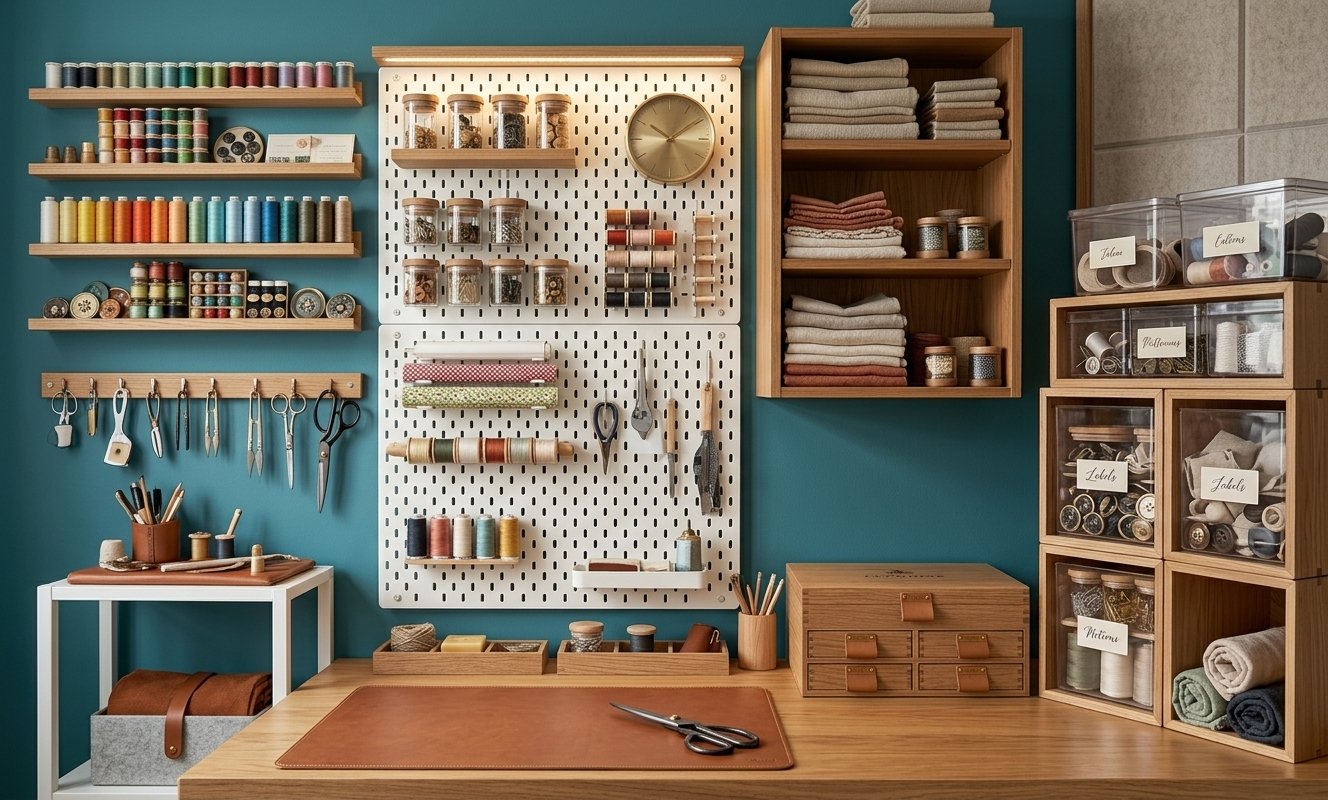
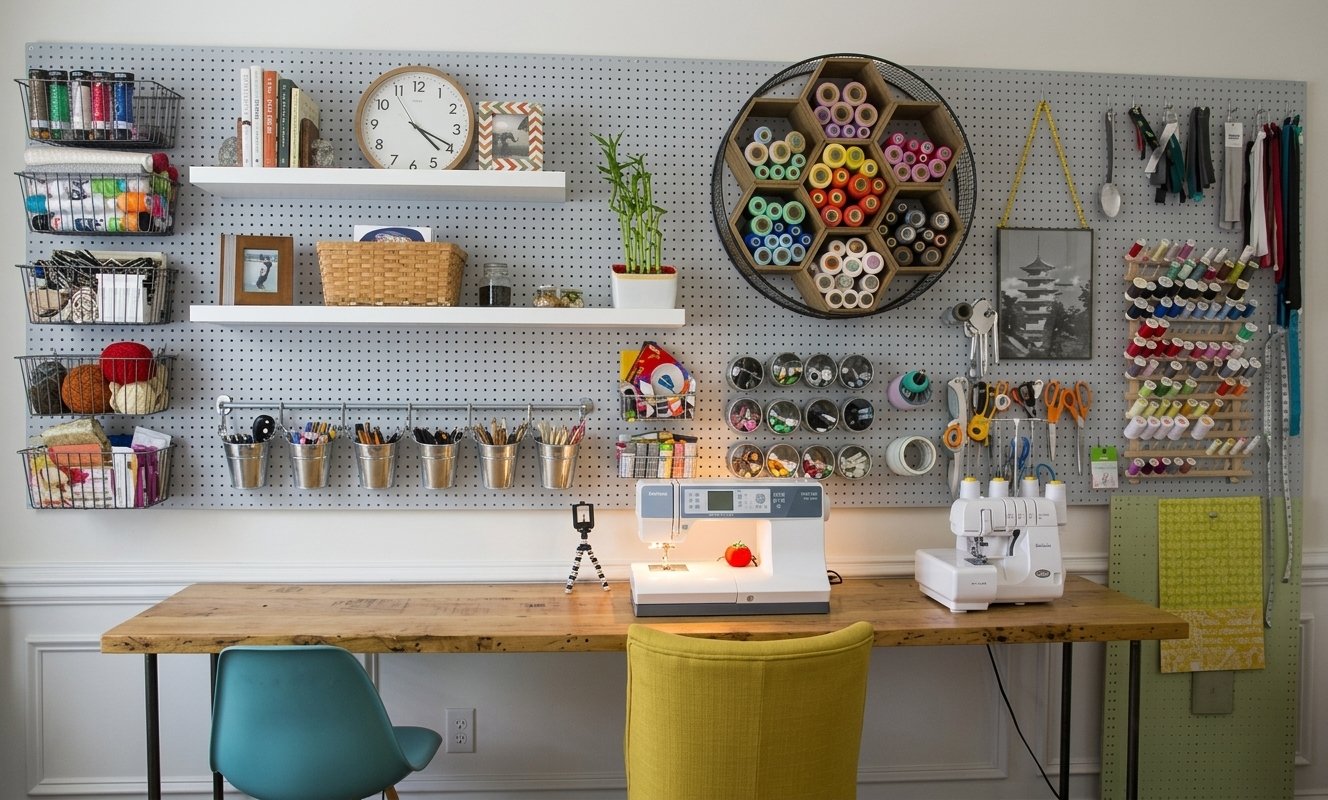
A pegboard is the hardest-working wall in a craft room. Scissors, rulers, measuring tapes, thread spools — everything visible, everything reachable, everything off your work surface. Hooks and small cups let you rearrange as projects change. And here’s the bonus: a well-organized pegboard looks genuinely beautiful, like functional art. Your tools become the decor.
5. Roll In a Storage Cart
A slim rolling cart is a sewing room’s best friend: thread on one level, notions on another, current project on top. Wheel it to the machine when you’re working, tuck it in a corner when you’re done. It’s storage that moves with you instead of anchoring you to one spot. Choose narrow over wide — in a small room, every inch of footprint counts.
6. Store Fabric in Clear Containers
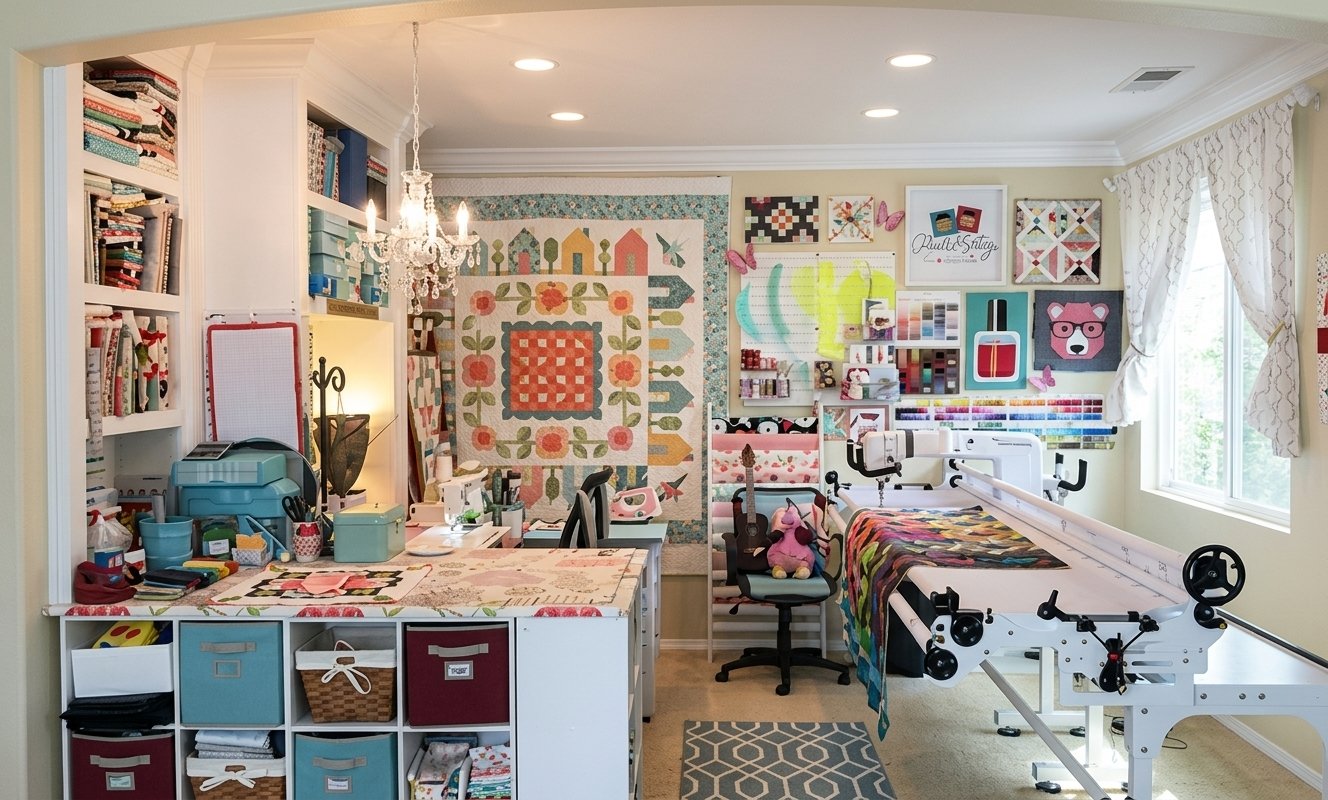
Opaque boxes are where fabric goes to be forgotten. Clear containers let you see every color and pattern at a glance, which means you’ll actually use your stash instead of rebuying what you already own. Stack them to use shelf height, label by type or color, and watch your fabric chaos turn into a library. Visible stash, usable stash.
7. Display Your Thread
Thread storage that hides your thread is thread storage you’ll fight with daily. A wall-mounted rack near your machine keeps every color visible and grabbable — no more digging through drawers mid-project. Group by color and it doubles as decor; a rainbow of spools is genuinely pretty. Function first, but there’s no rule against function looking good.
8. Choose Multi-Use Furniture
In a tiny sewing room, every piece should have a side hustle. An ottoman with hidden storage. A desk with deep drawers. A cutting table that doubles as a pressing station. Even your chair can fold away when you need floor space. Fewer pieces doing more jobs is the entire philosophy — it’s how small rooms feel spacious instead of stuffed.
9. Use the Space Under the Table
There’s a whole storage zone under your sewing table doing absolutely nothing. Rolling drawers, slim bins, or baskets slide right in for fabric scraps, patterns, and notions — just keep them shallow enough that your knees still fit comfortably. It’s free square footage you already own. The only cost is actually organizing it.
10. Build a Fabric Wall
If you have the stash, flaunt it — neatly. A wall of shallow shelves or cubbies with consistently folded fabric, organized by color, is both storage and inspiration. It turns a blank wall into the most beautiful thing in the room. Matching baskets handle the scraps and small cuts. Warning: guests will want to touch everything. That’s normal.
11. Slide In Under-Shelf Baskets
The dead air under existing shelves is wasted space, and under-shelf baskets reclaim it for free. They slide on, hold patterns, ribbons, tools, and small fabric pieces, and slide off when you need them. Cheap, instant, no installation drama. In a room where every inch matters, these are the definition of a no-brainer.
12. Pick a Foldable Chair
You need a comfortable chair for long sewing sessions — but you don’t need it eating floor space 24/7. A good foldable chair gives you proper support while you work and disappears against the wall when you don’t. Look for slim profile and real ergonomics, not just collapsibility. Comfort when sewing, space when not: that’s the deal.
13. Turn a Closet Into a Nook
No spare room? Steal a closet. Pull out the hanging rod, install a compact desk or fold-down surface, add wall organizers for tools and thread, and use the doors for pocket storage. When you’re done, close the doors and the ‘mess’ vanishes — perfect for shared spaces. Some of the most efficient sewing setups I’ve seen live behind bifold doors.
14. Mount Clear Wall Organizers
Buttons, zippers, needles, bobbins, ribbons — the tiny notions that vanish into drawers. Clear wall-mounted organizers keep them visible, sorted, and off your work surface. Label every compartment; future-you will be grateful mid-project. It’s a small system that eliminates one of sewing’s biggest time-wasters: hunting for the thing you know you own.
15. Light It Like You Mean It
Bad lighting ruins good sewing — eye strain, bad color matching, wonky seams. Start with the window: put your machine near natural daylight if possible. Then add a proper adjustable task lamp for close work; overhead room light alone creates shadows exactly where you’re stitching. Light walls bounce brightness around. This isn’t decor advice, it’s quality-of-work advice.
16. Organize by Frequency
Here’s the system pros use: everyday tools (scissors, seam ripper, measuring tape, current thread) live within arm’s reach. Weekly items get the nearby shelf. Specialty tools and seasonal supplies go high or deep. Every time you reach, stretch, or dig for something you use daily, that’s a layout failure. Arrange by frequency and your tiny room will work like a much bigger one.
17. Hide It in Drawers
Visual clutter shrinks rooms — it’s psychology, not opinion. Shallow drawers swallow needles, buttons, bobbins, and trims; deeper ones take fabric and works-in-progress. Labeled, obviously. Closed storage fronts give you the calm, clean look that makes small spaces feel bigger, while everything you need is still one pull away. Out of sight, fully organized, instantly accessible.
18. Set Up a Cutting Station
Cutting on the dining table gets old fast. Even in a tiny room, carve out a dedicated cutting spot — a narrow table or fold-down surface sized for your mat, with rulers and rotary cutters stored vertically right beside it. When everything has a home, setup takes seconds instead of being a whole production. A real workflow beats a big room every time.
19. Steal the Door
The back of your door is square footage you’re not using. An over-door organizer — slim enough to let the door close properly — holds patterns, ribbons, tools, and thread. Group like with like so you can find things without thinking. It’s invisible storage: the door looks the same, but suddenly you have a whole extra shelf of capacity.
20. Keep a Project Basket
Unfinished projects are clutter’s Trojan horse — they spread across every surface ‘temporarily’ and never leave. One dedicated basket per active project: fabric, pattern, thread, and tools all together, living under the desk or on a shelf. When inspiration strikes, you grab the basket and start in seconds. When you’re done, it all goes back. Simple habit, transformative results.
21. Embrace Minimalism
The final boss of small sewing rooms: editing. Keep visible only what you use constantly; everything else lives in labeled, closed storage. A restrained palette, minimal furniture, and one or two beautiful touches — a plant, a great fabric display, a piece of art. A calm room isn’t just prettier; it’s genuinely easier to create in. Clutter competes with creativity. Let creativity win.
Final Thoughts
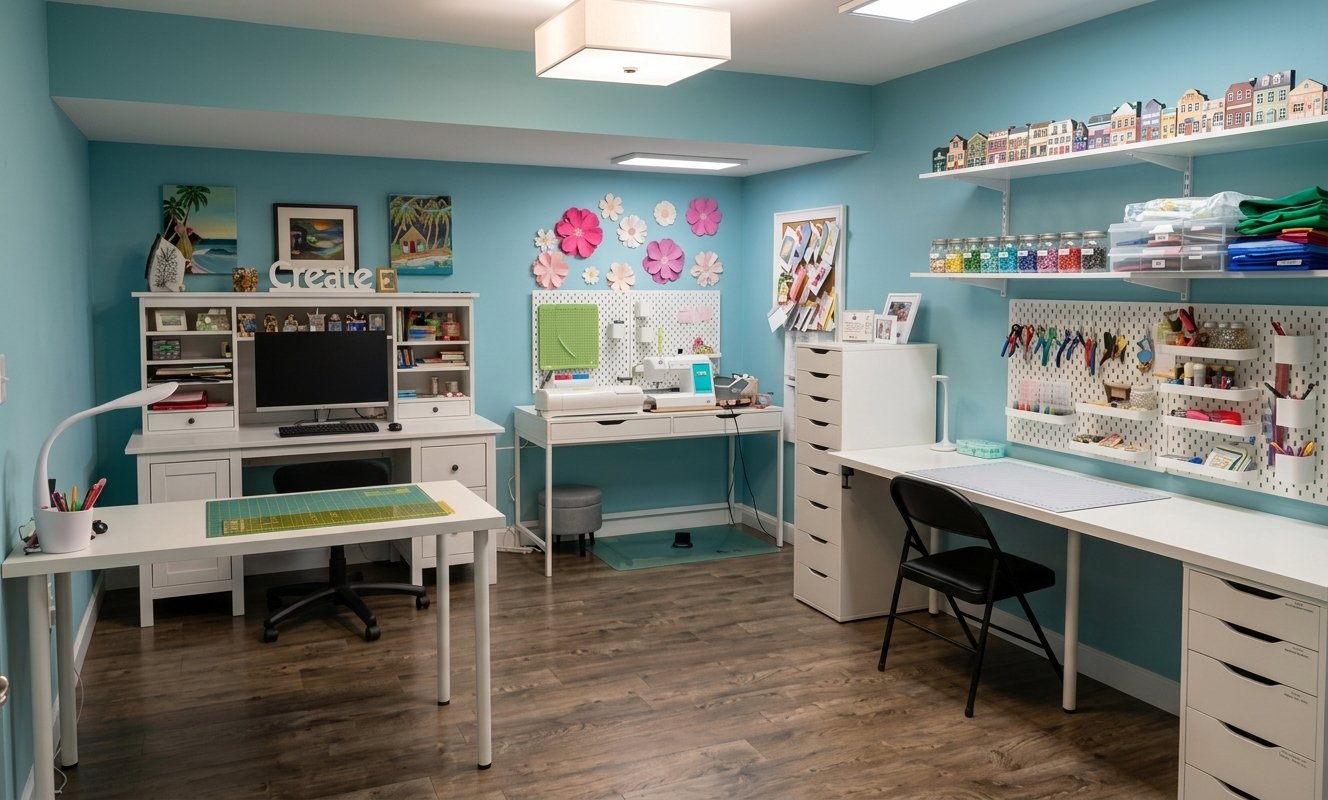
The best small sewing room ideas aren’t about square footage — they’re about systems. Vertical storage, furniture that folds, tools organized by frequency, and the discipline to put things away. Start with the desk placement and the lighting; everything else builds from there. Your tiny sewing space isn’t a limitation. It’s an excuse to be brilliantly organized.