

Fluted wood panel ideas are everywhere right now, and the appeal is easy to understand. Those rhythmic vertical grooves catch light and shadow all day long, adding architectural depth to walls that paint alone could never deliver. The best fluted wood panel ideas work in living rooms, bedrooms, kitchens, and hallways alike, because the texture itself does the decorating: one paneled wall can make a builder-grade room feel custom and considered.
This guide covers 14 ideas, from choosing materials and placements to DIY installation, costs, styling, and the mistakes that ruin a good panel job. Whether you wrap a kitchen island over a weekend or commission a full-height living room wall, these fluted wood panel ideas will help you get that high-end, tailored look without guesswork.
What Are Fluted Wood Panels?
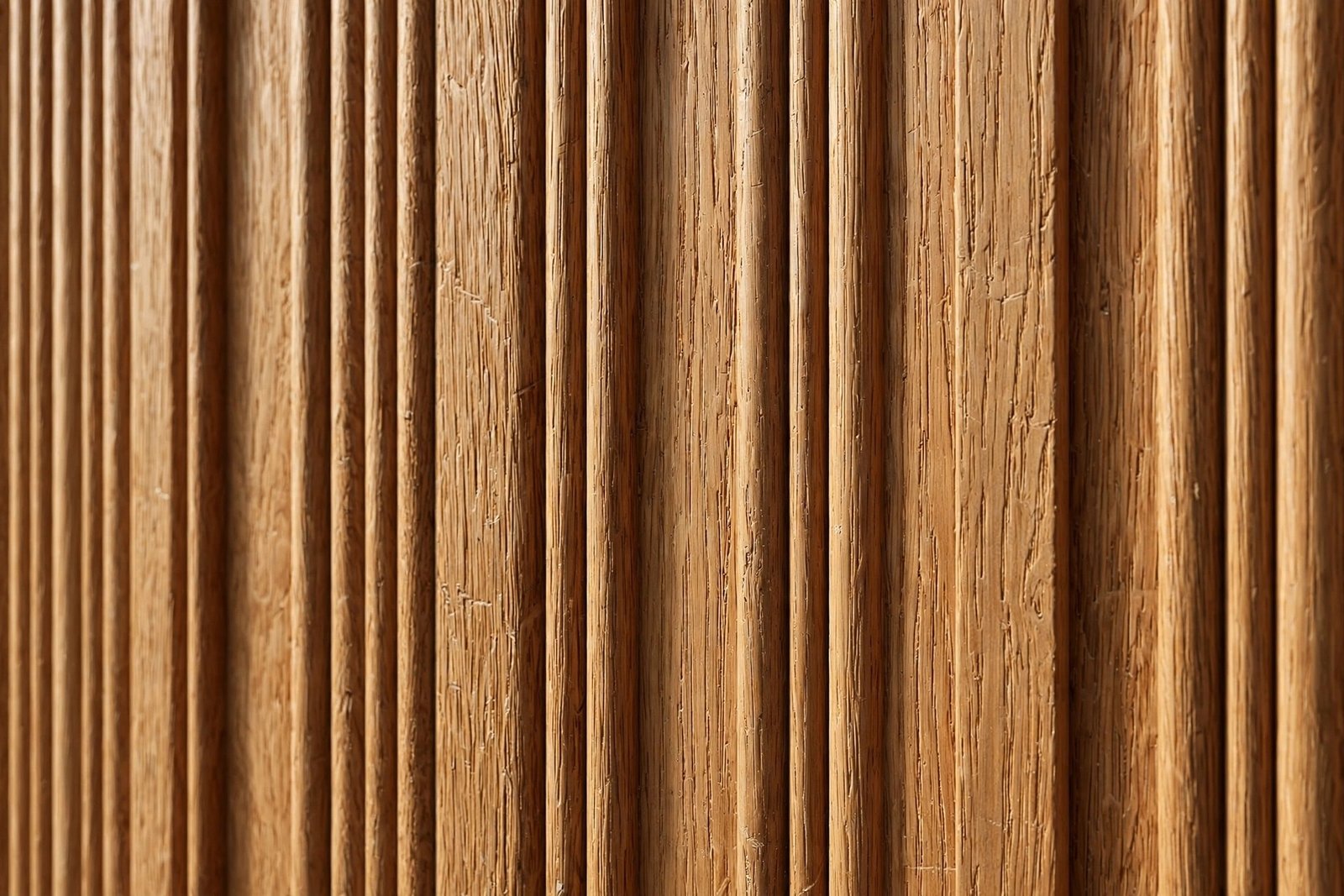
Fluted wood panels are wall panels cut or molded with evenly spaced vertical grooves, creating a ribbed texture that reads as both modern and timeless. The design echoes classical column fluting, which is why it feels architectural rather than trendy. Panels come in solid wood, MDF, and waterproof WPC (wood-plastic composite), in groove widths from subtle 3mm ribs to bold architectural flutes. Most residential panels mount on felt or MDF backers and install with adhesive, pin nails, or both, making them one of the most DIY-friendly statement walls available.
The grooves do more than look good: they diffuse sound, which softens echo in open-plan rooms, and the vertical lines draw the eye upward, making ceilings feel taller. That combination of beauty and function is why fluted wood panel ideas have moved from boutique hotels into everyday homes.
Fluted Wood Panel Ideas: Choosing Your Material
Material choice decides durability, cost, and where the panels can go. Get this right and the wall lasts for years; get it wrong and it swells, warps, or peels.
1. Solid Wood for the Premium Look
Nothing beats real wood for authenticity. Oak and walnut fluted panels show natural grain through the grooves, and the finish deepens beautifully with age. Solid wood is the priciest option, typically two to three times the cost of MDF, and it needs acclimation: let the panels sit in the room for at least 72 hours before installing, or seasonal movement can open gaps. Among fluted wood panel ideas, solid wood is the choice for forever-home feature walls where the budget allows.
2. MDF for Dry Areas on a Budget
MDF (medium-density fiberboard) panels are the affordable workhorse of fluted wood panel ideas, costing roughly half of solid wood while looking nearly identical once painted or veneered. The catch is moisture: MDF swells irreversibly when wet, so restrict it to dry, low-traffic walls like bedrooms and living rooms. Never install MDF flutes in bathrooms, behind sinks, or in damp basements. In the right dry spot, though, MDF delivers the look for less with easy cutting and installation.
3. WPC for Moisture Zones
WPC (wood-plastic composite) panels are the problem-solver: they look like wood, cut like wood, and shrug off moisture completely. That makes WPC the only safe pick among fluted wood panel ideas for bathrooms, kitchens, laundry rooms, and humid climates. WPC costs more than MDF but less than solid wood, and it needs no sealing or special maintenance. If there is any chance of steam, splashes, or humidity, WPC is not just the best choice, it is the only sensible one.
Where to Use Fluted Panels
Placement turns a nice material into great design. These are the rooms where fluted panels earn their keep.
4. The Living Room TV Wall
A full-height fluted panel wall behind the television is the signature move. It frames the screen, hides cable clutter visually, and turns the most-used wall in the house into a designed moment. Run the panels floor to ceiling and keep the media console low and simple; the grooves provide all the texture the wall needs. For styling the shelves and surfaces around it, our shelf styling ideas around a TV show how to layer books, ceramics, and art without fighting the panel texture. Warm LED strip lighting tucked at the top or sides will make the grooves glow in the evening.
5. The Bedroom Headboard Wall
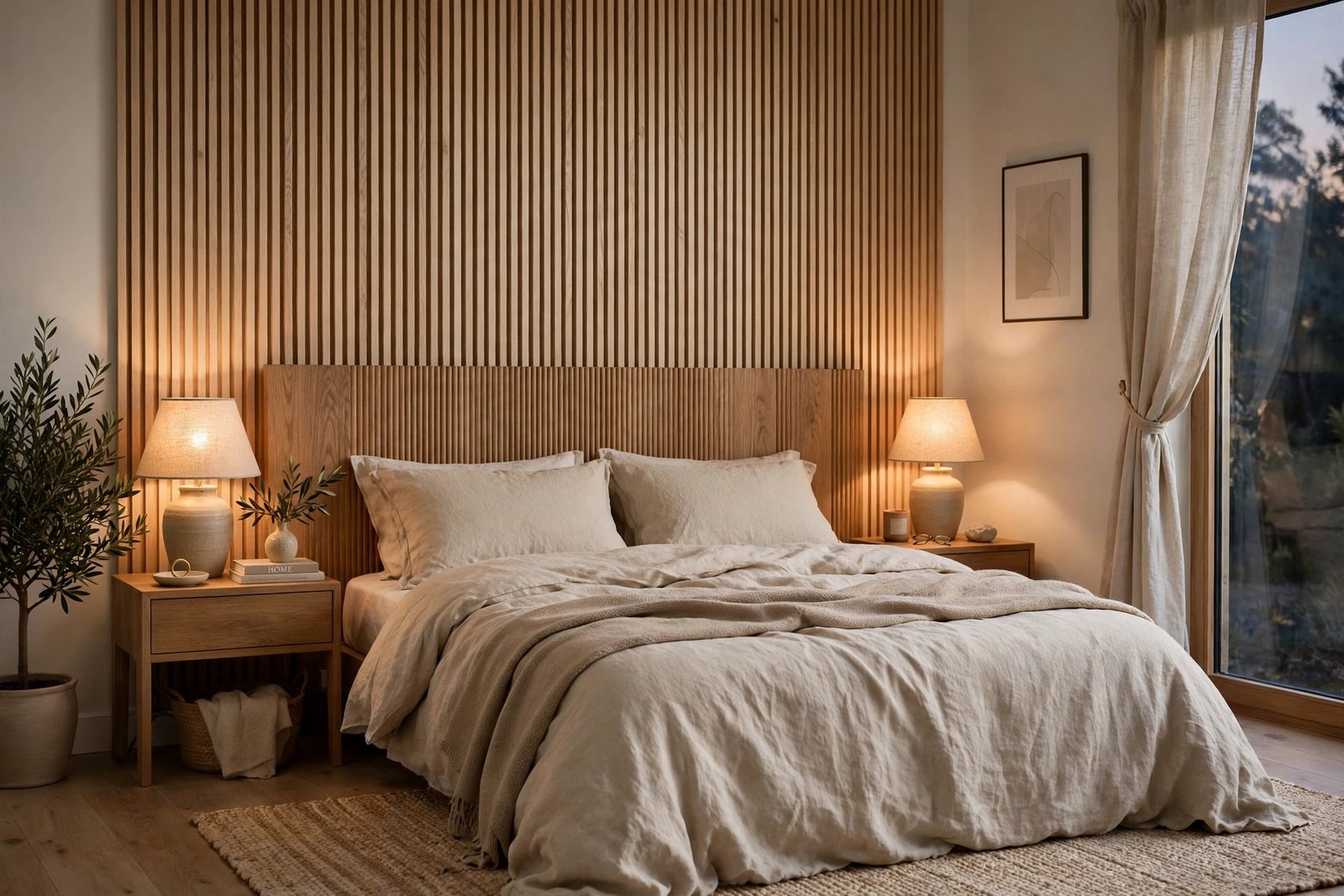
Fluted panels behind the bed create a built-in headboard effect that feels like a boutique hotel. Floor-to-ceiling panels in warm oak, paired with linen bedding and soft bedside lighting, make the bedroom feel layered without any additional art. This is one of the calmest fluted wood panel ideas because the texture reads as architecture rather than decoration. Keep the palette tonal, creams, taupes, warm whites, and let the grooves supply the visual interest.
6. The Kitchen Island Wrap
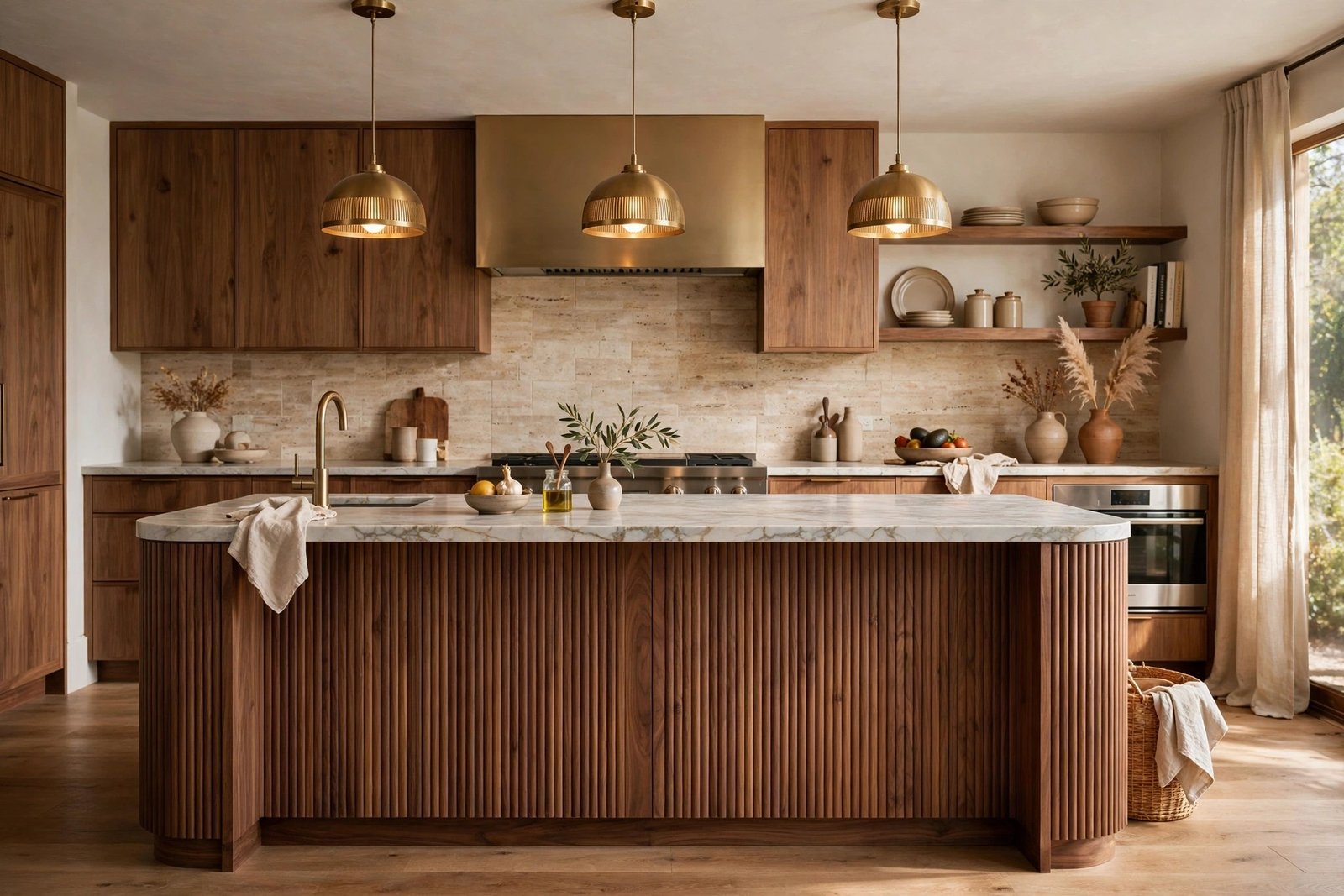
Wrapping a kitchen island in fluted panels is the highest-impact, lowest-cost upgrade in this guide. A plain builder-grade island becomes a custom furniture piece for the price of a few panels and a weekend. Use WPC or sealed solid wood here, since kitchens see moisture and the odd splash, and choose a tone that relates to your cabinetry: light oak for airy kitchens, dark walnut for moody ones. The vertical grooves also disguise the seams and imperfections that make stock islands look cheap.
7. Entryways and Hallways
Long, plain hallway walls are begging for flutes. A single paneled wall in an entryway adds instant architecture to the first thing guests see, and in hallways the vertical lines make the passage feel taller and less tunnel-like. Half-height paneling with a chair rail works beautifully in traditional homes, while full-height panels suit modern spaces. Because hallways take knocks, choose WPC or solid wood over MDF here, and consider a darker tone that hides scuffs gracefully.
Style Directions
Once the material and placement are set, the finish decides the mood. These three directions cover nearly every home.
8. Natural Oak Warmth
Light to mid-tone oak flutes are the warm minimalist’s dream: Scandinavian-calm, Japandi-friendly, and endlessly versatile. Natural oak fluted wood panel ideas pair with boucle, linen, travertine, and black accents for a look that feels current but not trendy. The light tone keeps rooms feeling open, which makes oak the best choice for smaller spaces and north-facing rooms that need all the brightness they can get.
9. Dark Walnut Drama
Deep walnut flutes bring the drama. Against dark panels, brass sconces glow, velvet looks richer, and the whole room takes on a cocooning, evening-ready mood. Use dark fluted wood panel ideas as a single feature wall, behind a bed, a sofa, or a dining table, balanced by lighter tones elsewhere so the room stays inviting. The grooves catch warm light beautifully, so this direction practically demands good lighting design.
10. Painted Flutes for Color
Do not assume flutes must show wood grain. Painting fluted panels in deep green, inky navy, warm terracotta, or even soft sage gives you texture plus color in one move. Painted fluted wood panel ideas work especially well in period homes, where the color can pick up existing architectural details. Use a matte or eggshell finish, satin at most; high gloss fights the soft shadow play that makes flutes beautiful. And always paint the wall behind the panels first in a matching dark tone, so no pale drywall shows through the grooves.
DIY Installation Essentials
Most fluted panel projects are genuinely weekend-friendly. The difference between a Pinterest-perfect wall and a wobbly one comes down to prep and patience, not master-level skill.
11. Prep and the Shadow Gap
The number one pro secret: paint the wall matte black or dark brown before installing the panels. This creates the “shadow gap” effect, deep dark lines between the flutes that make the installation look crisp and professional instead of DIY. Then check the wall for level and flatness; panels telegraph every bump underneath, so fill, sand, and prime first. Acclimate real wood panels in the room for 72 hours. For a deeper dive into materials and methods, this fluted wood panel costs, types, and installation guide covers the full process from acclimation to finishing with honest cost breakdowns.
12. Adhesive and Pin Nails
Apply a high-grab construction adhesive in a serpentine pattern on the panel backer, press firmly to the wall, and secure with a 23-gauge pin nailer for an invisible mechanical fix. Start from the most visible corner and work outward, checking level every few panels; flutes magnify any drift, and a wall that starts crooked ends crooked. Cut with a fine-tooth blade and dry-fit before committing adhesive. Most single walls take six to twelve hours including prep, which is why fluted wood panel ideas remain one of the best effort-to-impact ratios in home DIY.
Styling and Lighting Around Flutes
13. Light the Grooves
Fluted panels are a lighting designer’s playground. Side light, grazing down or across the grooves, creates dramatic shadow lines that change through the day; warm LED strips hidden in a ceiling cove or behind a floating shelf make the texture glow at night. Avoid flat frontal lighting, which washes the grooves out and wastes the whole point. If you do one thing after installing fluted wood panel ideas, make it thoughtful lighting: it is the difference between a nice wall and a stunning one.
14. Let the Texture Lead
The final idea is really a styling rule: once the flutes are up, edit everything else back. The panels are already providing pattern, rhythm, and depth, so keep art minimal, usually one quiet piece, keep textiles tonal, and resist filling every surface. This restraint is what separates designer-looking fluted wood panel ideas from busy DIY walls. A single sculptural vase, a low stack of books, or one branch in a ceramic vessel is all the styling a fluted wall needs.
Costs and Care
Budget realistically: MDF panels run roughly $8–$12 per square foot installed DIY, WPC $12–$18, and solid wood $25–$40, before adhesive and trim. A typical 8×10-foot feature wall lands between $400 and $1,300 in materials depending on the choice. For care, dust the grooves monthly with a soft brush or vacuum attachment; damp-wipe WPC and sealed wood with a wrung microfiber cloth, never soaking. Solid wood may need periodic oiling per the manufacturer’s guidance. With basic care, fluted wood panel ideas age gracefully, the grooves collecting character rather than just dust.
Mistakes to Avoid
Installing MDF in moisture zones is the classic expensive error; it swells and cannot be saved. Skipping the dark base coat leaves pale drywall winking through the grooves, instantly cheapening the look. Starting installation without checking level lets the flutes drift visibly crooked across the wall. Overloading the wall with busy art and clutter fights the texture instead of showcasing it. And choosing ultra-trendy painted colors for a whole wall can date quickly; if you love bold color, try it on one wall or commit to repainting in a few years. Avoid these and your fluted wood panel ideas will look professionally installed for years.
Bringing It All Together
The enduring power of fluted wood panel ideas is how much design they deliver for relatively little effort: rhythm, warmth, height, and a tailored finish, all from a weekend’s work and a wall’s worth of panels. Choose the right material for the room’s moisture, prep the wall properly, mind the shadow gap, light the grooves with intention, and then step back and let the texture do the talking. Done well, a fluted wall does not look like a trend; it looks like architecture, and architecture never goes out of style.