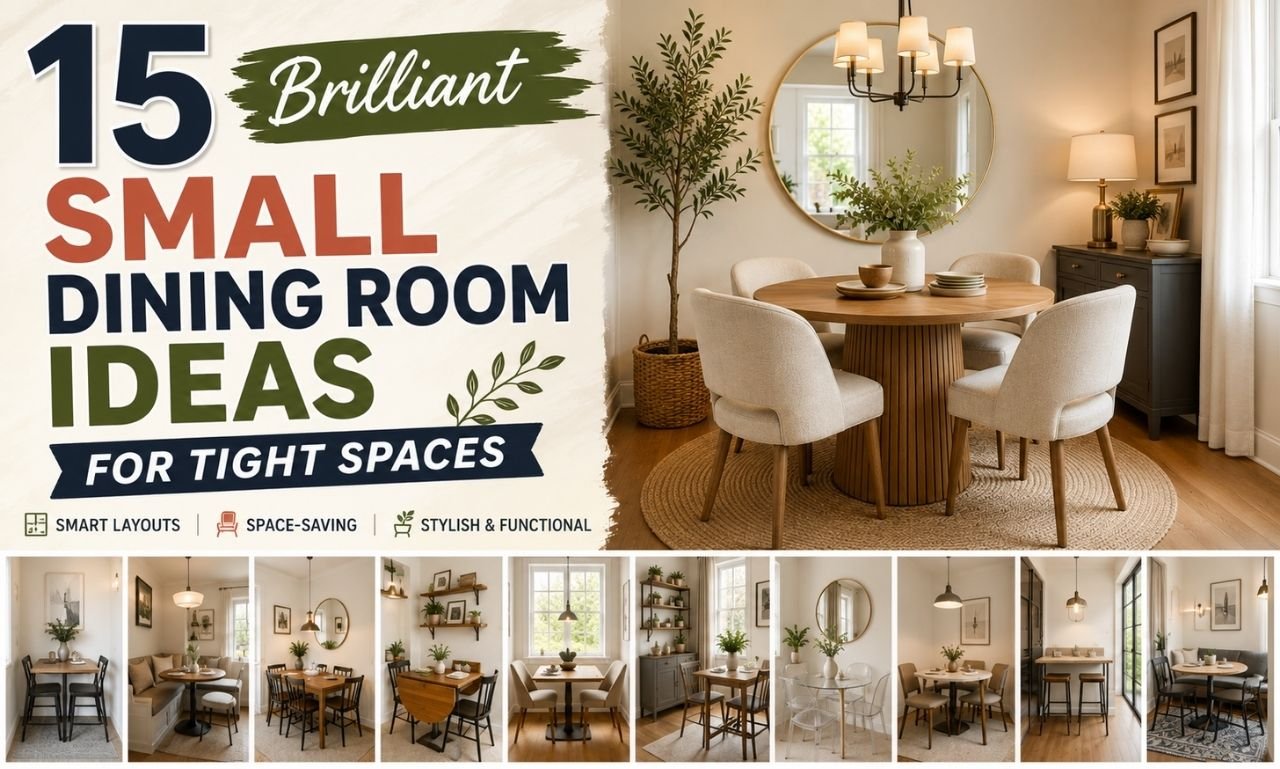
A small dining room isn’t a problem to solve — it’s a design puzzle with a really satisfying answer. The dining rooms that feel cramped aren’t small because of their square footage; they’re small because the furniture fights the room. Get the table shape right, keep pathways clear, and let light do its thing, and even the tiniest eating area feels intentional. These small dining room ideas are all about working with your space instead of against it.
1. Go Round
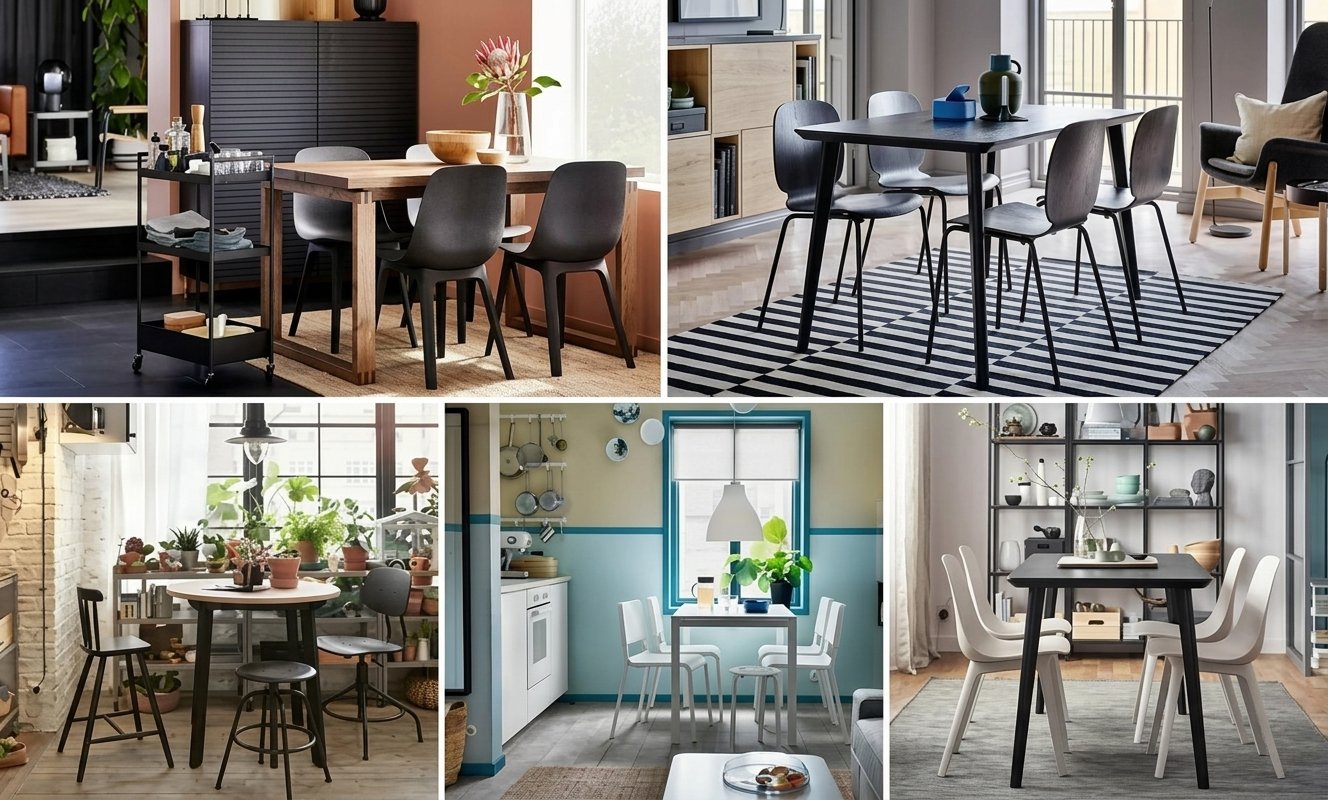
Round tables are the small-dining cheat code. No corners jutting into walkways, everyone sits a little closer, and a pedestal base means real legroom instead of wrestling table legs. Choose chairs that tuck completely underneath and the whole footprint shrinks when you’re not eating. A 36-inch round seats four comfortably — just leave about 36 inches behind the chairs for walkways, because dinners get awkward fast when nobody can push back.
2. Mount It to the Wall
When floor space is basically theoretical, a wall-mounted drop-leaf table is genius: up for dinner, folded flat against the wall after. For something permanent, a narrow floating tabletop with stools tucked beneath works beautifully in galley kitchens and studios. Keep the styling minimal — the whole point is visual lightness. This is the move for rooms that need to be something else 20 hours a day.
3. Build In a Bench
One bench instead of chairs on one side saves roughly a chair’s worth of floor space — and seats more people. Push it against the wall, add a cushion in washable fabric (because real life involves spills), and hide storage drawers underneath for linens and serving pieces. A narrow table opposite keeps the walkway clear. Instant cozy nook, zero bulk.
4. Think Narrow
Long narrow rooms want long narrow tables — sounds obvious, yet people keep cramming square tables into rectangular rooms. A slim table near the wall seats four without blocking traffic. Pair it with slim-profile chairs (skip the chunky arms) and hang one pendant above to define the zone. The result feels balanced and deliberate instead of squeezed in as an afterthought.
5. Get an Extendable Table
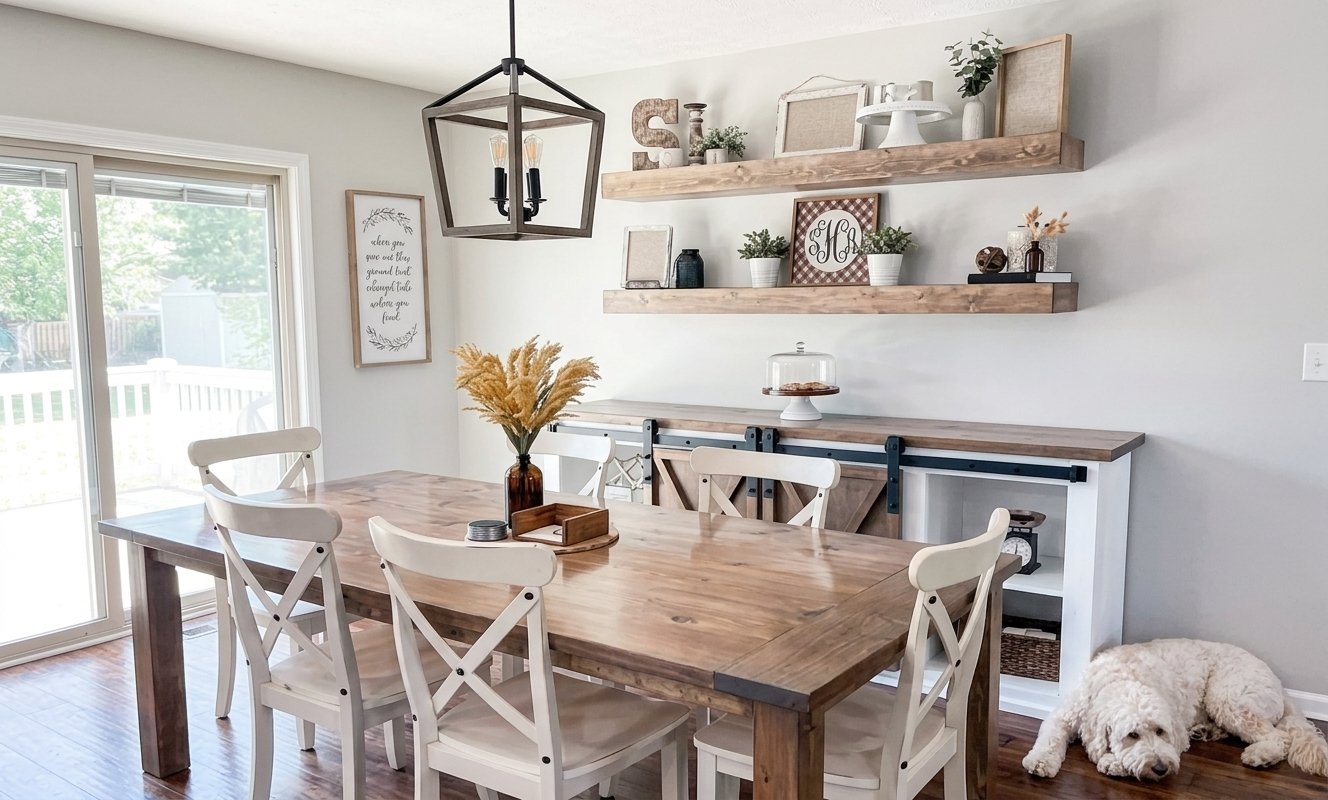
Daily life needs a small table; dinner parties need a big one. An extendable table is both. Drop-leaf and butterfly-leaf designs expand in seconds for guests and shrink back for Tuesday nights. Keep everyday seating minimal and stash stackable guest chairs nearby. Small dining rooms should flex, not commit — furniture that adapts is furniture that earns its footprint.
6. Fold the Chairs Away
Extra chairs are the clutter nobody talks about. A couple of good folding chairs — lightweight, genuinely comfortable — live against a wall or in a closet until guests arrive, then unfold in seconds. Your everyday setup stays streamlined with only the chairs you actually use. It’s flexibility without the furniture graveyard, and your room will thank you daily.
7. Hide Storage in Plain Sight
Dining rooms need storage too: table linens, serving dishes, the good glasses. A shallow sideboard or closed cabinet keeps it all invisible and the room calm. Wall-mounted shelves handle overflow without eating floor space, and matching baskets tame the small stuff. When storage looks like decor, everybody wins — the room stays serene and everything has a home.
8. Keep Colors Light
Light walls, light furniture, light textiles — the oldest small-space trick, because it works. Whites, creams, pale woods, and soft beiges bounce light around and visually push the walls outward. Add depth with a green plant or one piece of art rather than heavy dark pieces. A restrained palette is what makes a compact dining area feel calm and airy instead of cramped.
9. Mirror the Room Bigger
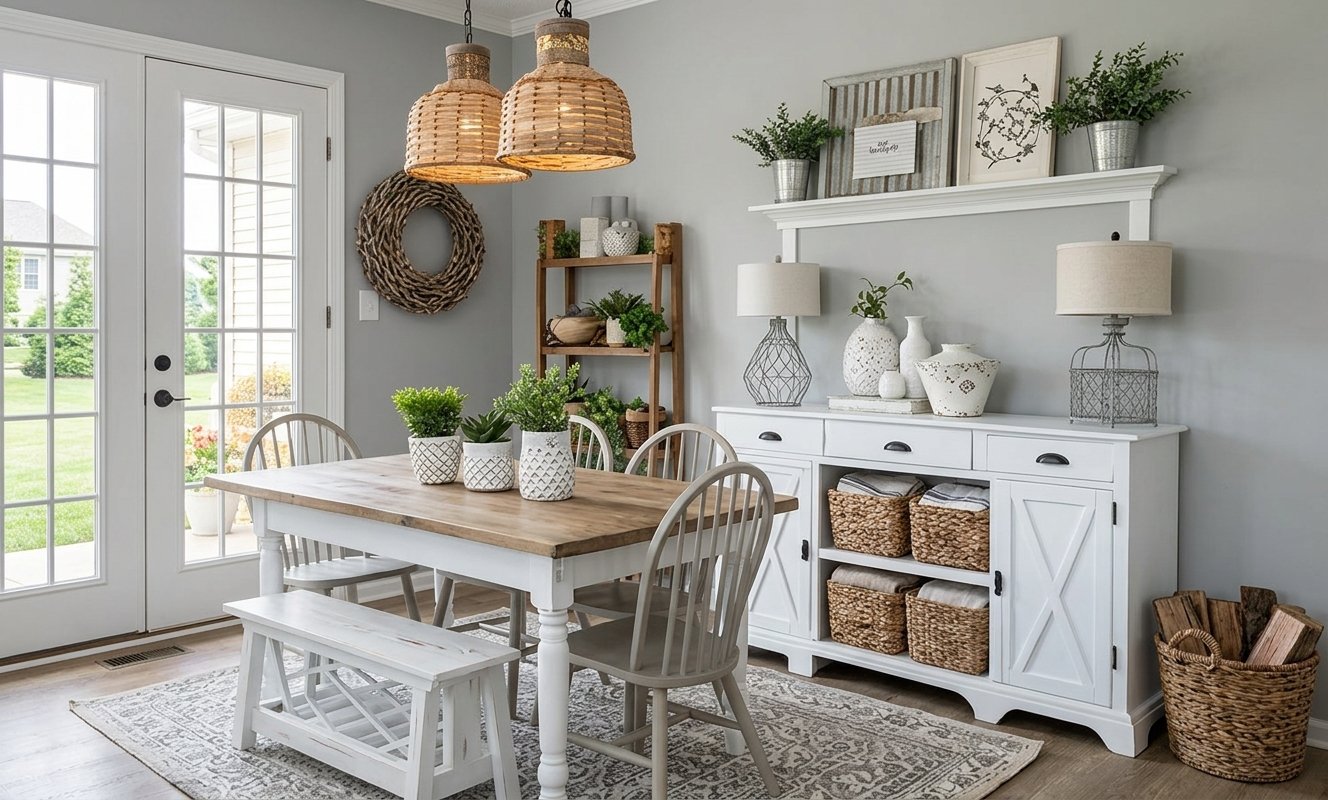
A large mirror does what no furniture can: it fakes square footage. Hang one where it catches natural light or reflects the table setting itself, and the room instantly doubles. Match the frame to your style — round mirrors love round tables. One generous mirror beats five small accessories every time; go big or don’t bother.
10. Corner Banquette Nook
Dead corners are wasted dining potential. A banquette along two walls turns an awkward corner into the most coveted seat in the house — restaurant booth energy, at home. Add a compact table with room to slide in, cushions for comfort, and storage under the seats for seasonal items. It’s efficient, cozy, and uses space that was doing absolutely nothing.
11. Decorate Up, Not Out
Floor and table space are precious; walls are free. Hang art, mount slim shelves, display a plate collection, or go tall with a mirror above the sideboard. Vertical arrangements draw the eye upward and make ceilings feel higher. Just don’t overcrowd — one thoughtful vertical moment beats a cluttered gallery wall in a small room. Restraint reads as confidence.
12. Light It Right
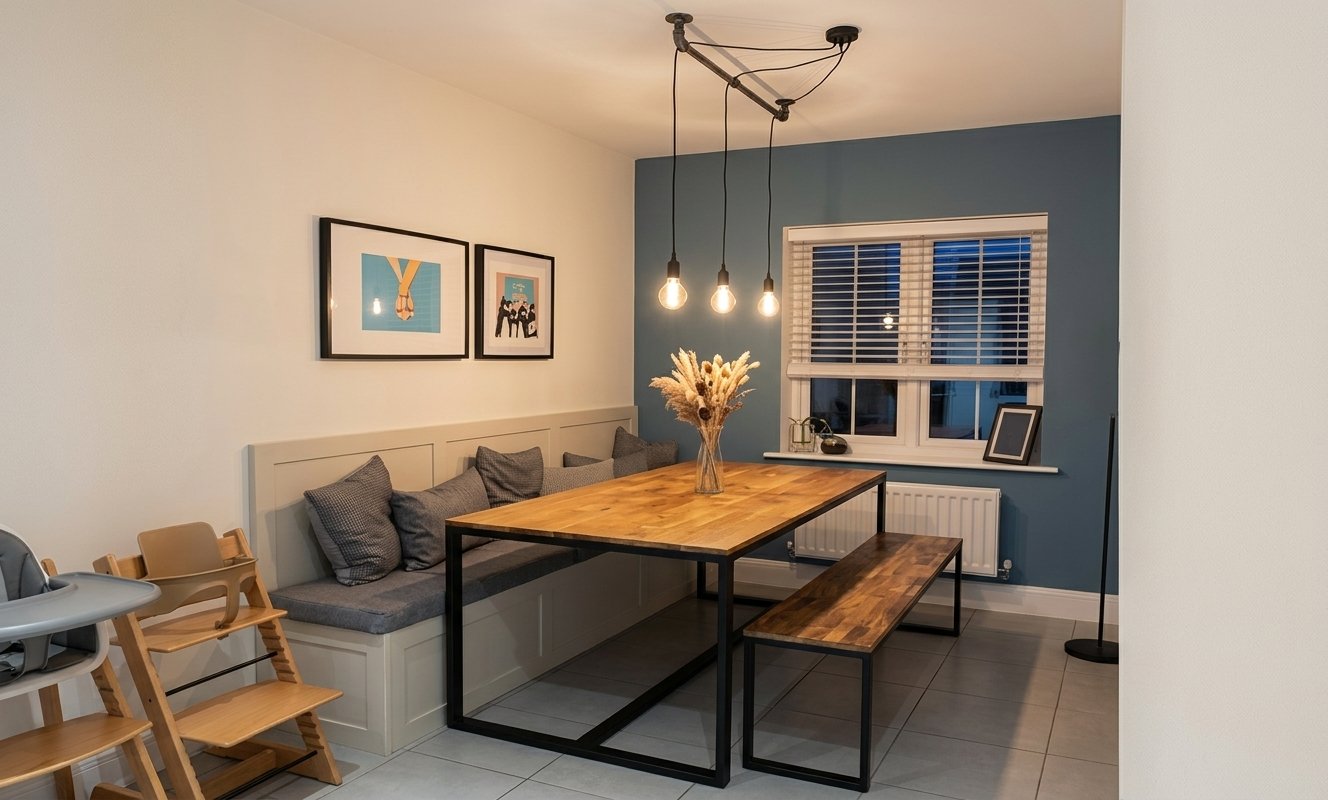
One well-chosen pendant over the table beats an oversized chandelier the room can’t handle. Scale the fixture to the table — roughly a third to half its width — and hang it low enough to feel intimate, about 30 inches above the tabletop. Wall sconces keep the table completely free. And always warm bulbs: they turn weeknight dinners into occasions.
13. Go Transparent
Glass tops and acrylic chairs are visual magic: the furniture is there, but your eye sees straight through to the floor beyond. The room instantly feels less crowded without losing a single seat. Warm it up with wood or woven textures so it doesn’t feel cold, and keep surrounding pieces simple. Less visual weight, same function — the perfect small-room trade.
14. Make It Multitask
In small homes the dining table is also the office, the homework station, and the craft table. Choose genuinely comfortable chairs — you’ll sit longer than you think — and add a nearby cabinet to stash work supplies when dinner starts. A dining area that earns its keep all day justifies every square foot it occupies. Single-purpose rooms are a luxury small homes can’t afford.
15. Edit Ruthlessly
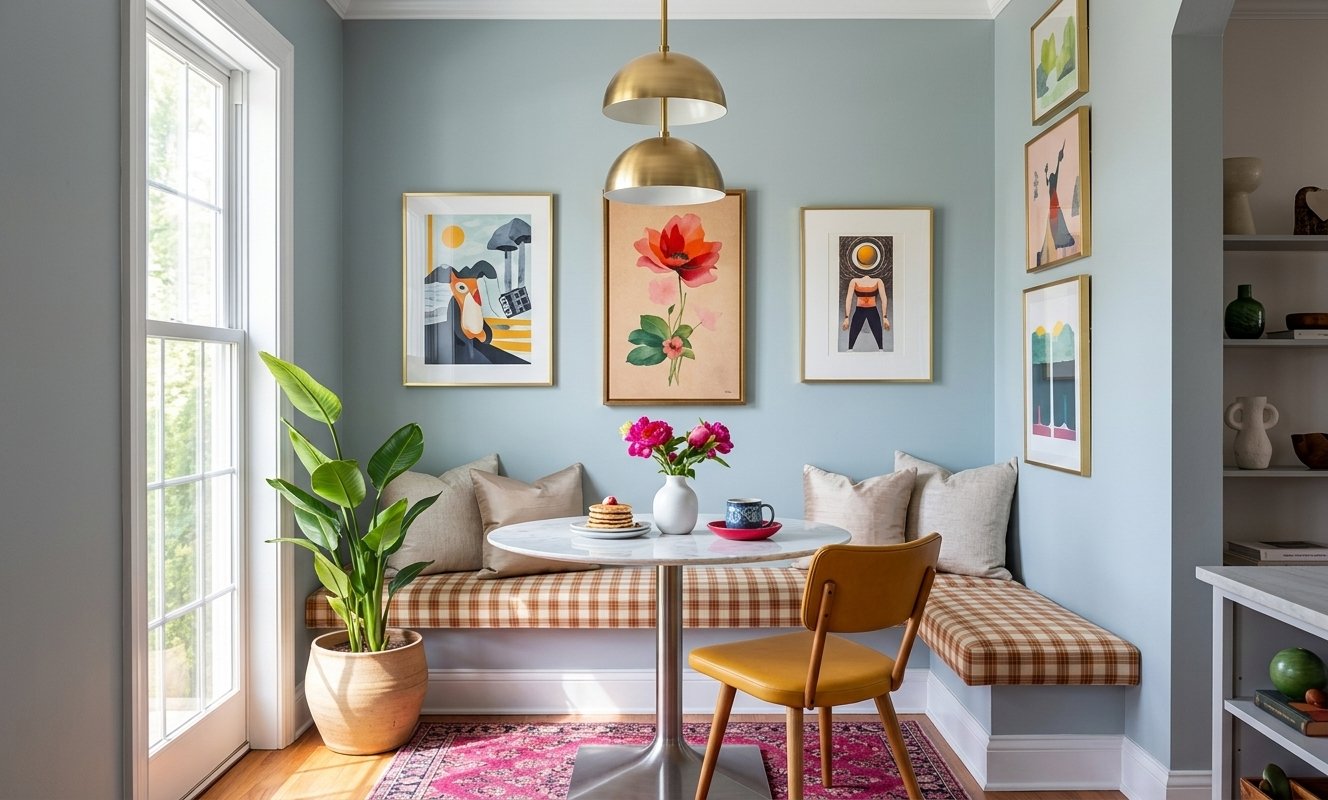
Small dining rooms die by a thousand decorative cuts. Keep the tabletop to two or three intentional pieces — a small vase, a candle, a bowl — and maintain clear pathways around the table. Clean lines, natural textures, breathing room. Minimalism isn’t empty; it’s edited. Let the architecture and the furniture do the talking instead of the accessories.
16. Zone It in Open Plans
No separate dining room? Make one anyway. A rug under the table, a pendant above it, and an inward-facing arrangement carve a dining zone out of open space. Keep walkways clear through the larger room and echo materials from nearby areas so it feels connected, not stranded. Zoning is what makes open-plan dining feel intentional rather than squeezed between other functions.
Final Thoughts
These small dining room ideas prove that limited space doesn’t limit style — it just demands better decisions. Start with furniture that fits the room, not the fantasy. Add mirrors, flexible seating, and smart lighting. Keep the palette calm and the pathways clear. Do that, and your compact dining area won’t just work — it’ll become the room everyone gravitates to.