
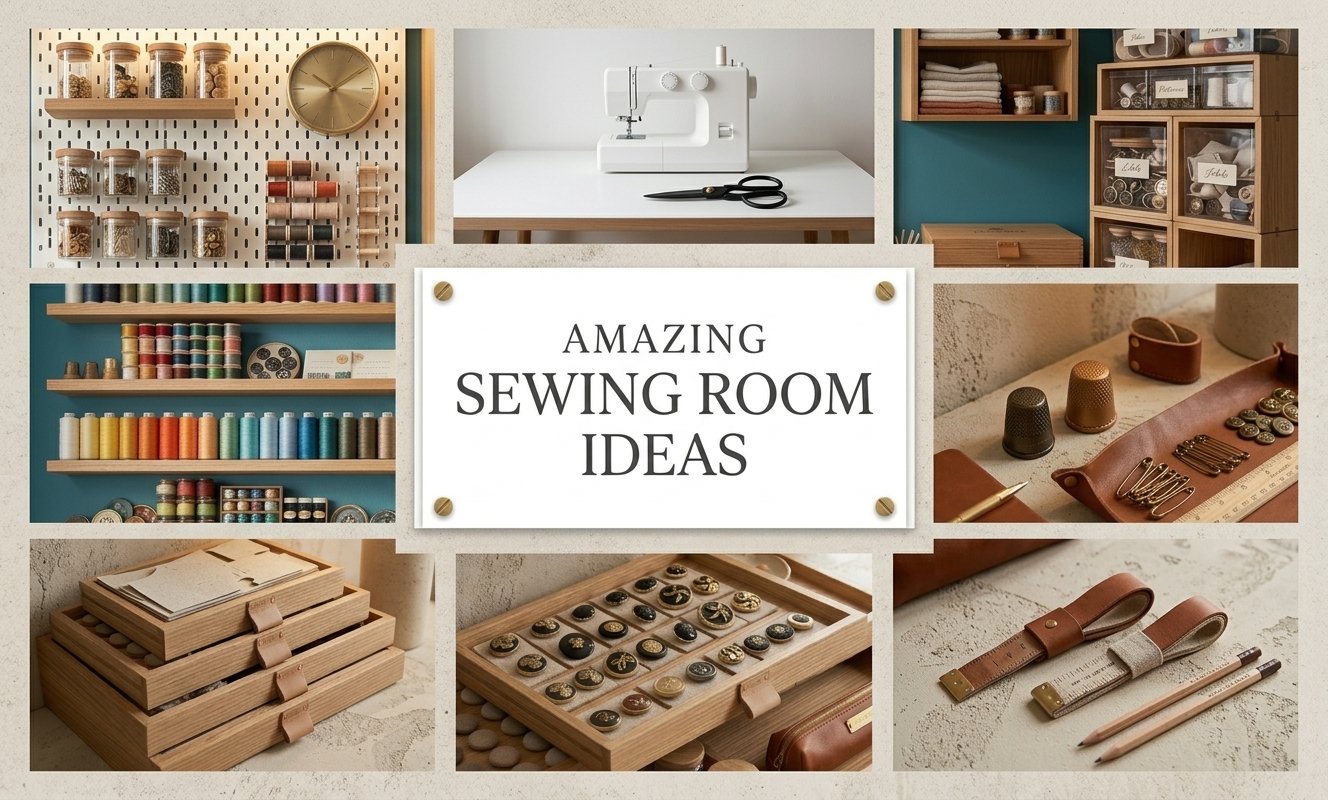
Small Sewing Room Ideas can help transform even the tiniest corner into a practical, beautiful, and inspiring creative workspace. Limited square footage does not mean you have to sacrifice organization, comfort, or style. With smart furniture, vertical storage, foldable surfaces, and carefully planned layouts, every inch can serve a useful purpose. A compact sewing area can accommodate your machine, fabrics, tools, and essential supplies without feeling crowded. These clever ideas will help you create a sewing space that feels organized, efficient, comfortable, and genuinely enjoyable to use.
1. Brilliant Compact Sewing Desk for Small Spaces
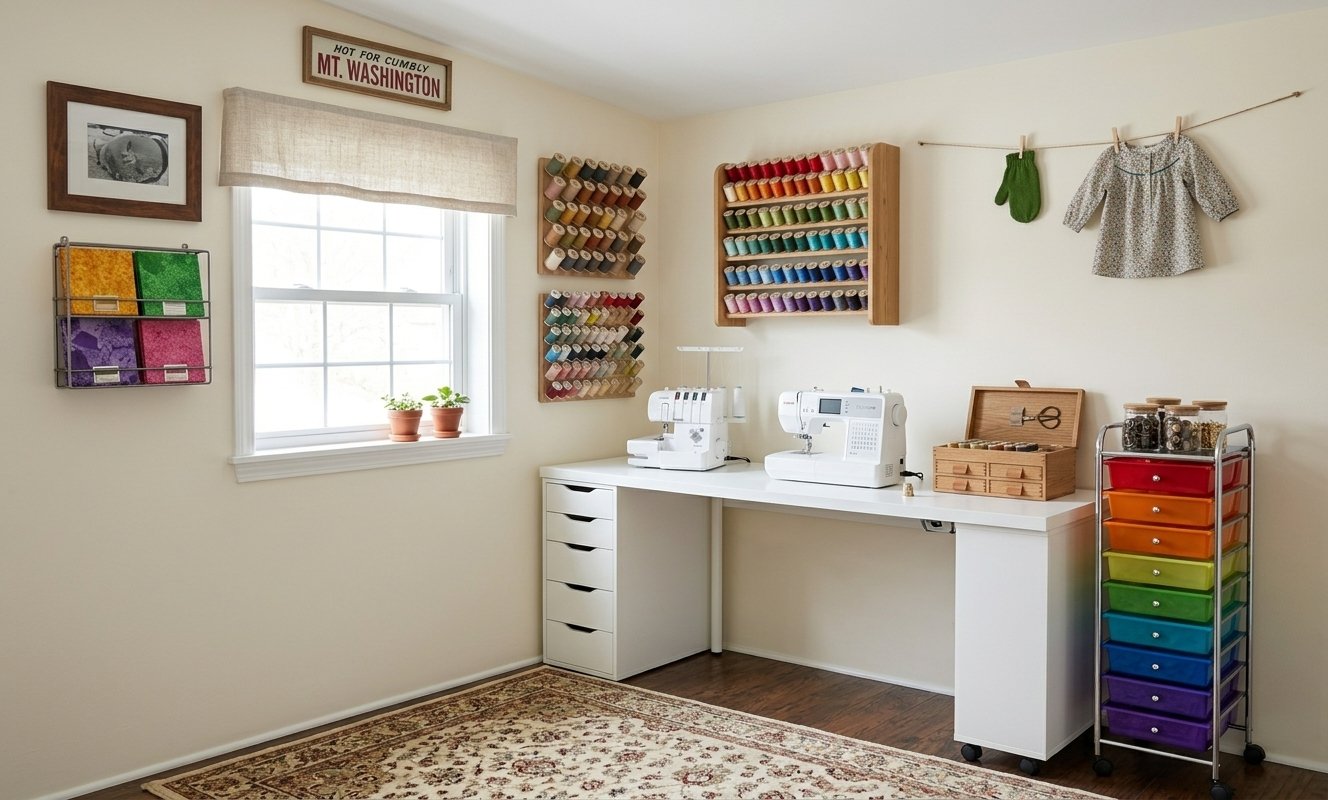
A compact sewing desk is an excellent starting point for a tiny creative room. Look for a sturdy surface that provides enough space for your sewing machine without taking over the room. Drawers underneath can keep frequently used tools organized and easy to reach. Choose a desk with clean lines to maintain an open visual appearance. Position it near natural light whenever possible for a brighter and more comfortable workspace.
2. Genius Vertical Storage for Small Sewing Rooms
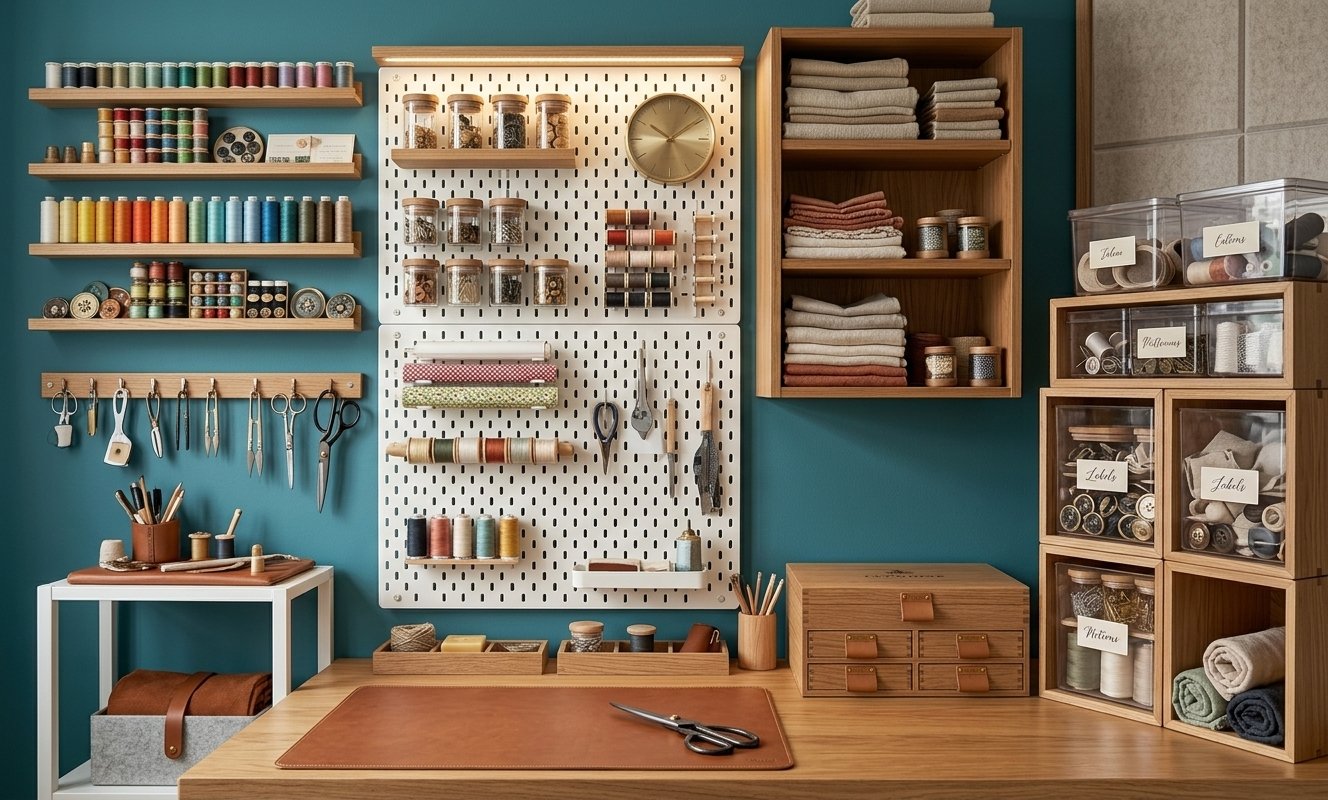
When floor space is limited, look upward and turn your walls into valuable storage. Floating shelves, pegboards, and narrow cabinets can hold fabric, thread, scissors, patterns, and other sewing essentials. Vertical organization keeps supplies accessible without filling the floor with bulky furniture. Arrange frequently used items within easy reach and reserve higher shelves for less-used materials. This simple strategy can dramatically improve the functionality of a small sewing room.
3. Smart Fold-Down Cutting Table for Tiny Spaces
A fold-down cutting table can provide valuable workspace without permanently occupying precious floor area. Mount the table securely against a wall and fold it away when sewing is finished. Add shallow storage compartments nearby for rulers, cutting mats, and pattern supplies. Choose a durable surface that can handle regular crafting projects. When closed, the table can blend into the wall and keep your room looking neat.
4. Brilliant Wall-Mounted Pegboard Organization
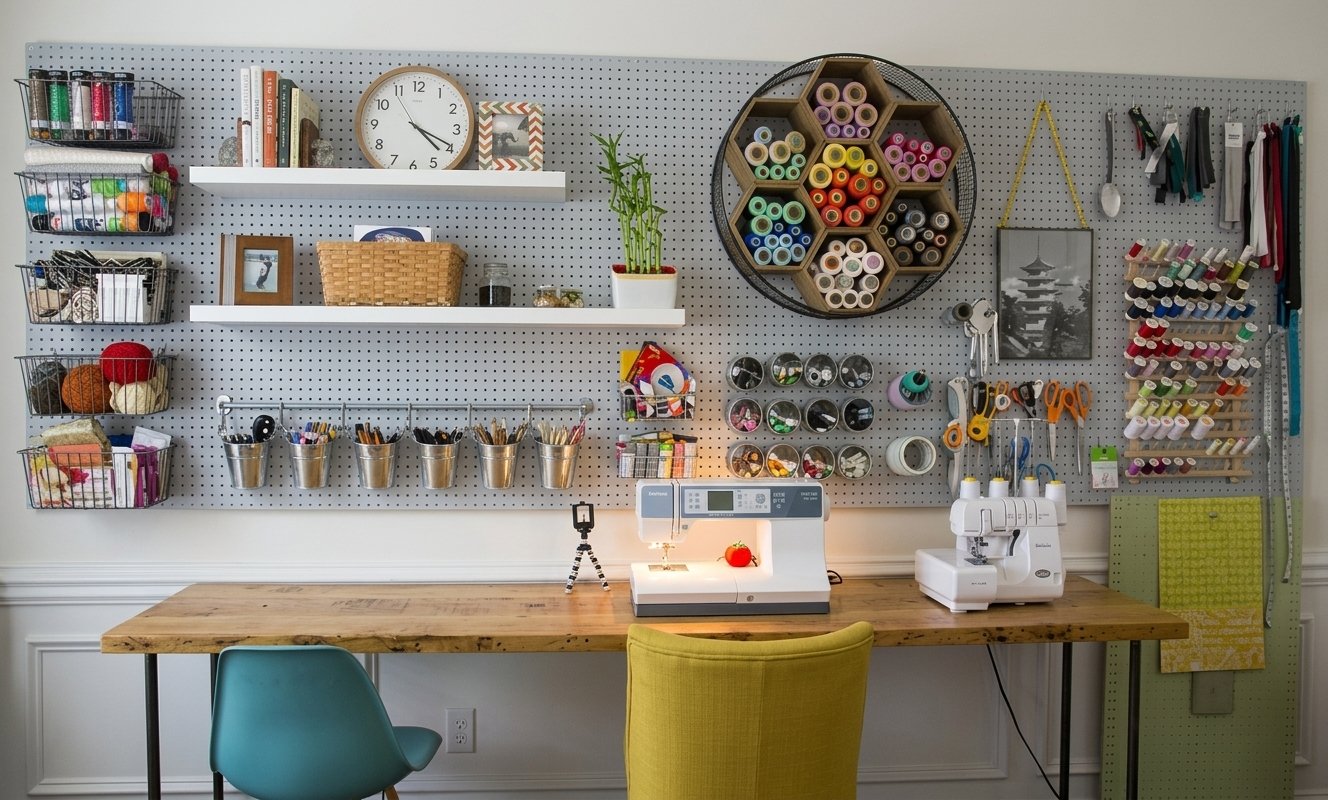
A pegboard offers flexible organization for sewing tools while making excellent use of unused wall space. Hang scissors, rulers, measuring tapes, thread, and other small accessories where they are easy to see. Use hooks and small containers to customize the arrangement as your needs change. Keeping tools visible can also save time when working on projects. A neatly arranged pegboard can become both a practical storage solution and a stylish feature wall.
5. Genius Rolling Storage Cart for Sewing Supplies
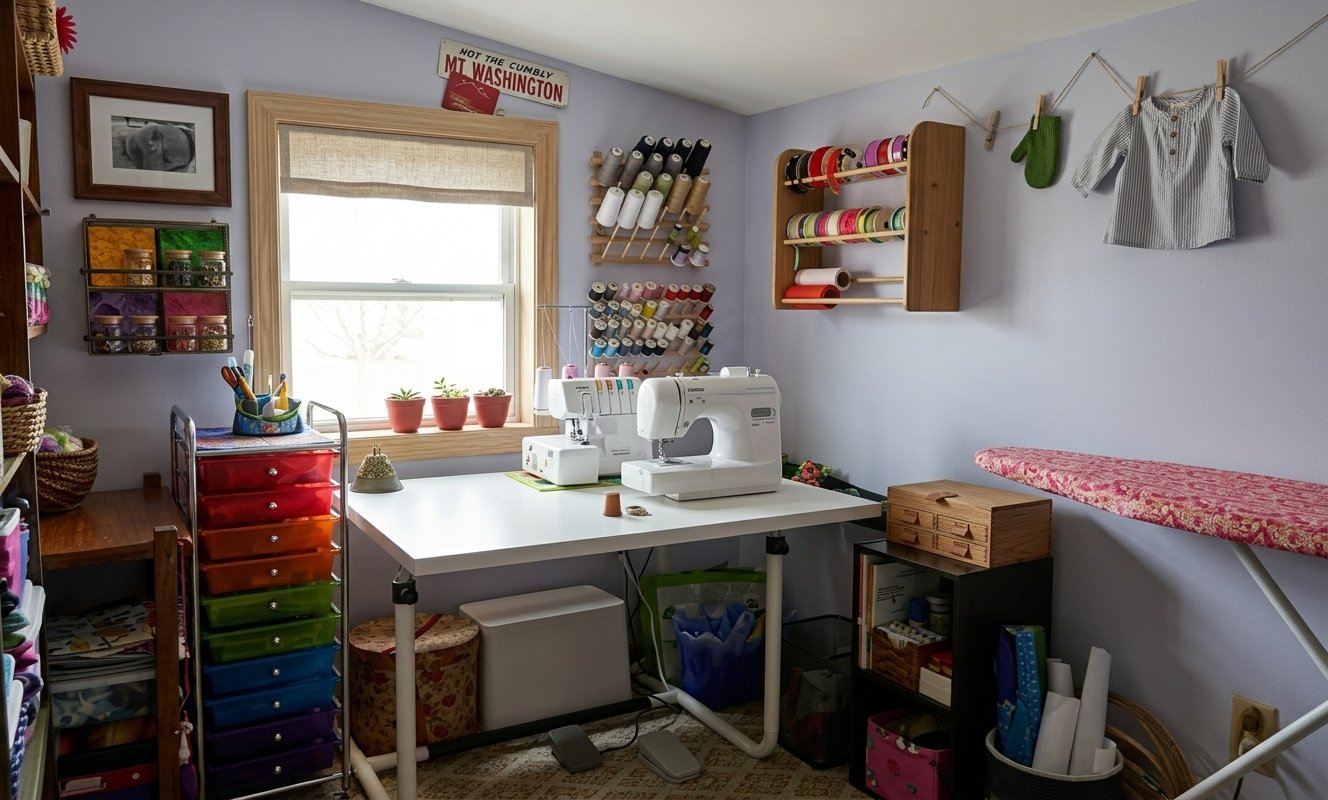
A rolling cart can provide flexible storage in a tiny sewing space. Use different levels for thread, fabric scraps, patterns, notions, and frequently used equipment. Wheels allow you to move the cart beside your sewing machine whenever you need supplies. When the project is finished, simply roll it into a corner or beneath a table. Choose a slim design so it provides maximum storage without creating unnecessary visual bulk.
6. Smart Fabric Storage With Clear Containers
Clear containers make fabric storage easier to organize and maintain. You can quickly see colors, patterns, and materials without opening multiple boxes. Stack containers vertically to make better use of shelves and cabinets. Label each container according to fabric type, color, or project for faster access. This approach keeps your collection protected while preventing small spaces from becoming overwhelmed by loose fabric.
7. Stylish Organized Thread Display for Small Spaces
Thread can become messy quickly, especially in a compact sewing room. Use wall-mounted thread racks or narrow organizers to keep spools neatly arranged and visible. Group colors together to make selecting the right thread faster during projects. Position the rack close to your sewing machine for maximum convenience. A well-organized thread display can also add a colorful decorative element to the workspace.
8. Brilliant Multi-Functional Furniture for Sewing Rooms
Furniture that serves more than one purpose can dramatically improve a tiny sewing room. Consider an ottoman with hidden storage, a desk with drawers, or a cutting table that doubles as a work surface. Foldable chairs can be stored away when additional floor space is needed. Look for pieces that provide functionality without making the room feel crowded. Multi-purpose furniture allows you to fit more capabilities into a much smaller footprint.
9. Genius Under-Table Storage for Small Sewing Rooms
The area beneath your sewing table can provide valuable hidden storage. Add rolling drawers, slim bins, or baskets for fabric scraps and sewing accessories. Keep the area organized so your legs and chair still have enough comfortable space. Use containers that can slide out easily when supplies are needed. Making use of this overlooked area can give you additional storage without requiring another piece of furniture.
10. Smart Fabric Storage Wall for Tiny Sewing Spaces
A narrow storage wall can hold an impressive fabric collection without consuming much floor space. Install shallow shelves or vertical cubbies and fold fabrics consistently for a clean appearance. Organize them by color, material, or project to make selection easier. Use matching baskets for smaller scraps and sewing supplies. This approach transforms a blank wall into an attractive and highly functional storage feature.
11. Brilliant Under-Shelf Baskets for Sewing Supplies
Under-shelf baskets can create extra storage in places that would otherwise remain unused. Slide them beneath existing shelves to store patterns, tools, ribbons, or smaller fabric pieces. Choose lightweight baskets that are easy to remove when needed. Matching baskets can also make the room look more organized and cohesive. This inexpensive solution is especially useful when every inch of storage matters.
12. Smart Foldable Sewing Chair for Tiny Rooms
A comfortable chair is essential, but it should not permanently consume valuable floor space. Choose a lightweight foldable chair that can be stored against a wall when the workspace is not being used. Make sure the seat provides adequate support during longer sewing sessions. A chair with a slim profile can remain attractive without visually crowding the room. This gives you flexibility without sacrificing comfort.
13. Genius Closet Sewing Nook for Small Spaces
An unused closet can become a surprisingly effective sewing workspace. Remove unnecessary shelving and install a compact desk or fold-down work surface inside. Add vertical organizers to the walls for thread, tools, and small supplies. Use the closet doors for additional pockets or hanging storage. When your project is finished, simply close the doors to hide the workspace and keep the room looking tidy.
14. Brilliant Clear Wall Organizers for Sewing Tools
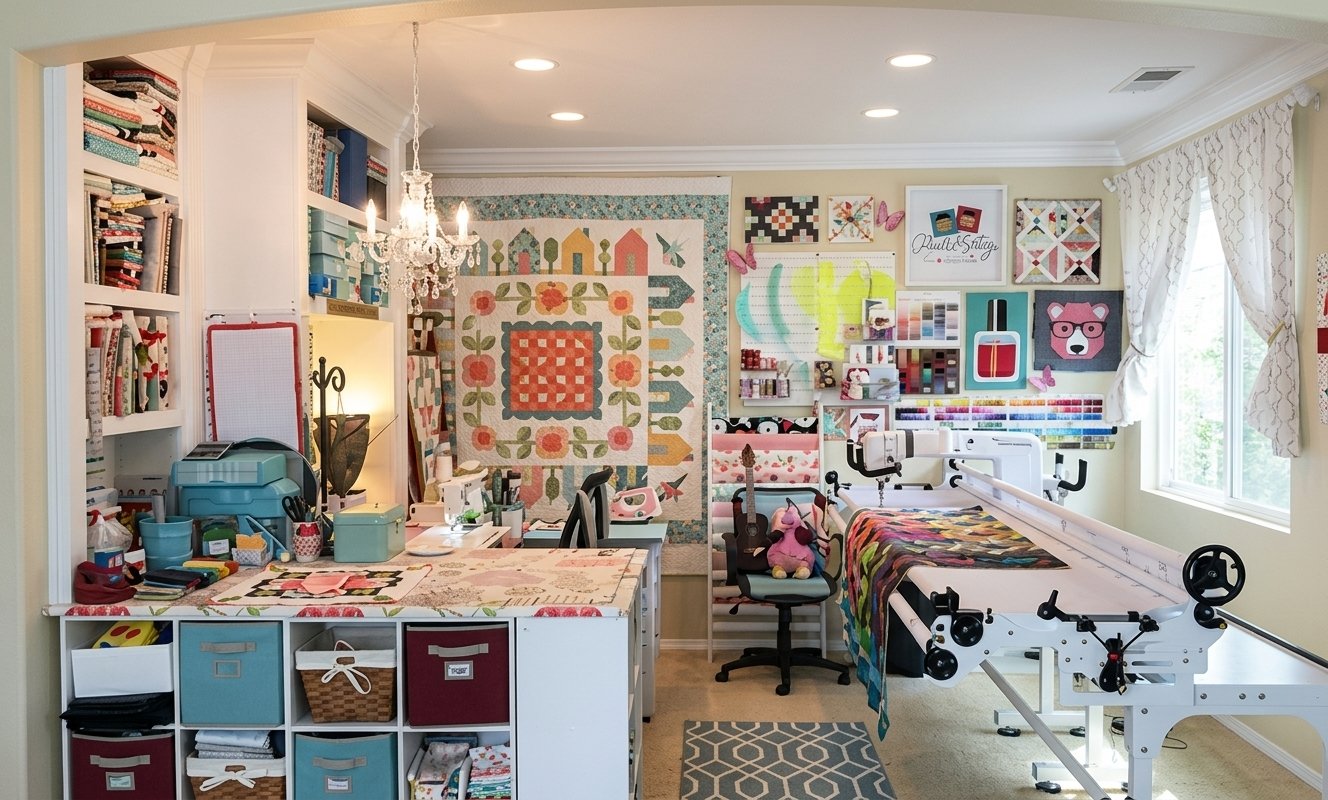
Clear organizers make small sewing supplies easy to find while keeping countertops free. Use them for buttons, zippers, needles, ribbons, bobbins, and other small notions. Wall-mounted designs take advantage of vertical space without adding bulky furniture. Label each compartment so everything has a dedicated location. This system can make even a very small sewing area feel remarkably organized.
15. Bright Small Sewing Room Ideas for Better Lighting
Good lighting can make a compact sewing space feel larger and more inviting. Position your workstation near a window when possible to benefit from natural daylight. Add an adjustable task lamp for detailed stitching and cutting work. Light-colored walls can also reflect available light throughout the room. A bright corner will feel more comfortable and can help create an inspiring atmosphere for creative projects.
16. Genius Sewing Tool Organization by Frequency
Organizing tools according to how often you use them can make a small room much more efficient. Keep everyday essentials such as scissors, measuring tape, needles, and thread within arm’s reach. Store seasonal supplies and specialty tools farther away or on higher shelves. This reduces unnecessary movement and keeps the main work surface clear. A thoughtful storage hierarchy can make a tiny sewing room feel surprisingly spacious.
17. Smart Hidden Storage Drawers for Sewing Supplies
Hidden drawers can keep sewing supplies organized without adding visual clutter. Use shallow drawers for needles, buttons, bobbins, trims, and other small accessories. Deeper drawers can hold fabric or larger project materials. Labeling each drawer makes it easier to find supplies quickly. Keeping storage behind closed fronts creates a cleaner and more polished appearance.
18. Brilliant Dedicated Cutting Station for Small Rooms
A dedicated cutting station can make sewing projects easier even when space is limited. Choose a narrow table or foldable surface that provides enough room for your cutting mat. Store rulers and rotary cutters vertically nearby to keep the surface clear. When not needed, the station can fold down or serve another purpose. This creates a practical workflow without requiring a large craft room.
19. Genius Door Storage for Small Sewing Rooms
The back of a door can become valuable storage in a tiny sewing room. Install an over-door organizer for patterns, ribbons, tools, thread, and smaller supplies. Choose a slim design that does not interfere with opening and closing the door. Group similar items together so everything remains easy to find. This hidden storage opportunity can add significant capacity without taking up floor space.
20. Smart Project Basket for a Clutter-Free Sewing Space
A dedicated project basket can prevent unfinished sewing projects from spreading across your workspace. Choose a basket that fits neatly beneath a desk or on a nearby shelf. Keep the current project’s fabric, pattern, thread, and tools together so you can resume quickly. Separate baskets can be used for different projects if space allows. This simple habit keeps the room organized while making creative sessions easier to start.
21. Stunning Minimal Sewing Studio for Tiny Spaces
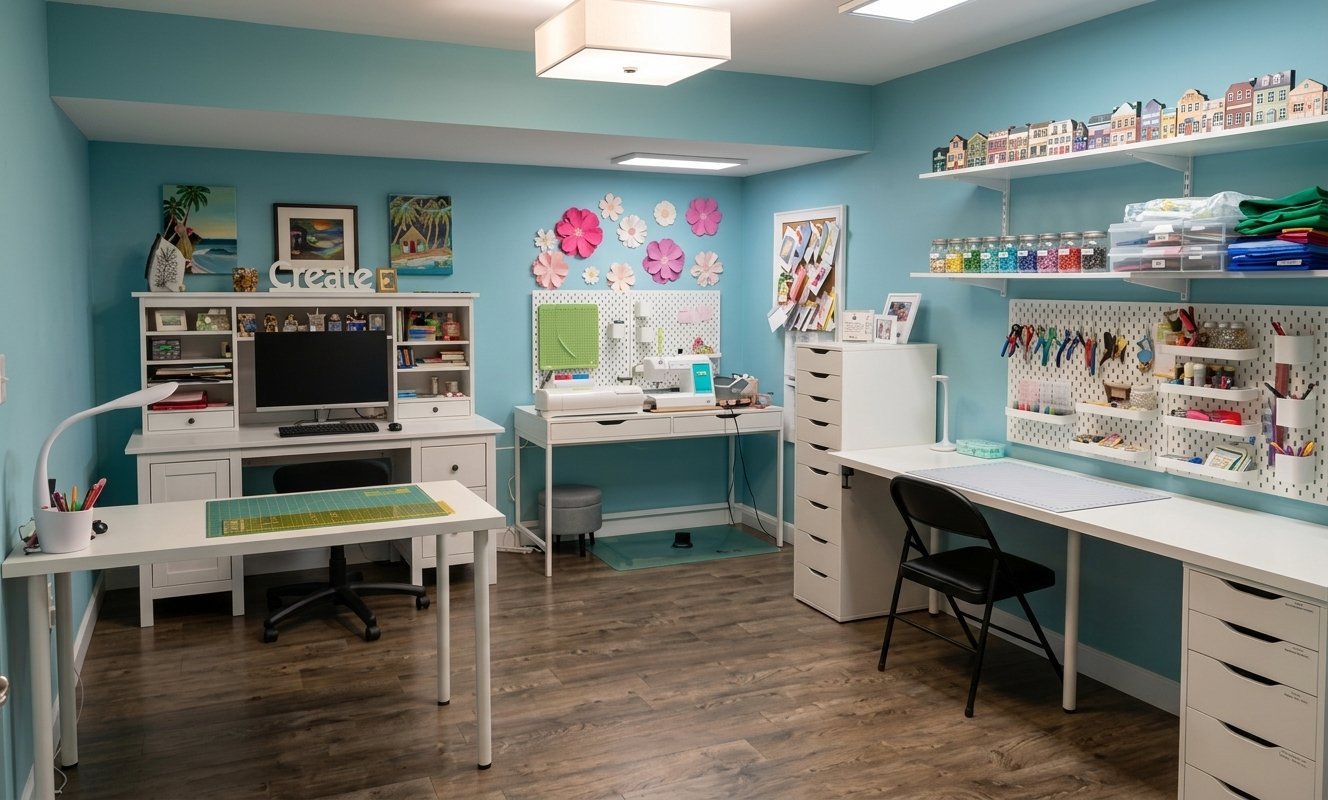
A minimalist approach can make a tiny sewing room feel larger and calmer. Keep only frequently used supplies visible and store everything else in organized cabinets, drawers, or labeled containers. Choose a simple color palette and avoid unnecessary furniture. Add one or two decorative touches such as artwork, plants, or a beautiful fabric display. A carefully edited space can be both highly functional and visually inspiring.
Final Thoughts: Small Sewing Room Ideas That Work
The best Small Sewing Room Ideas focus on smart organization rather than simply adding more storage. Vertical shelving, foldable furniture, rolling carts, hidden drawers, and multipurpose workstations can help you create a highly functional workspace in surprisingly little room. Keep frequently used tools close, store less-used supplies efficiently, and maintain a clear work surface whenever possible. With thoughtful planning, even a tiny sewing corner can feel comfortable, creative, and beautifully organized.